
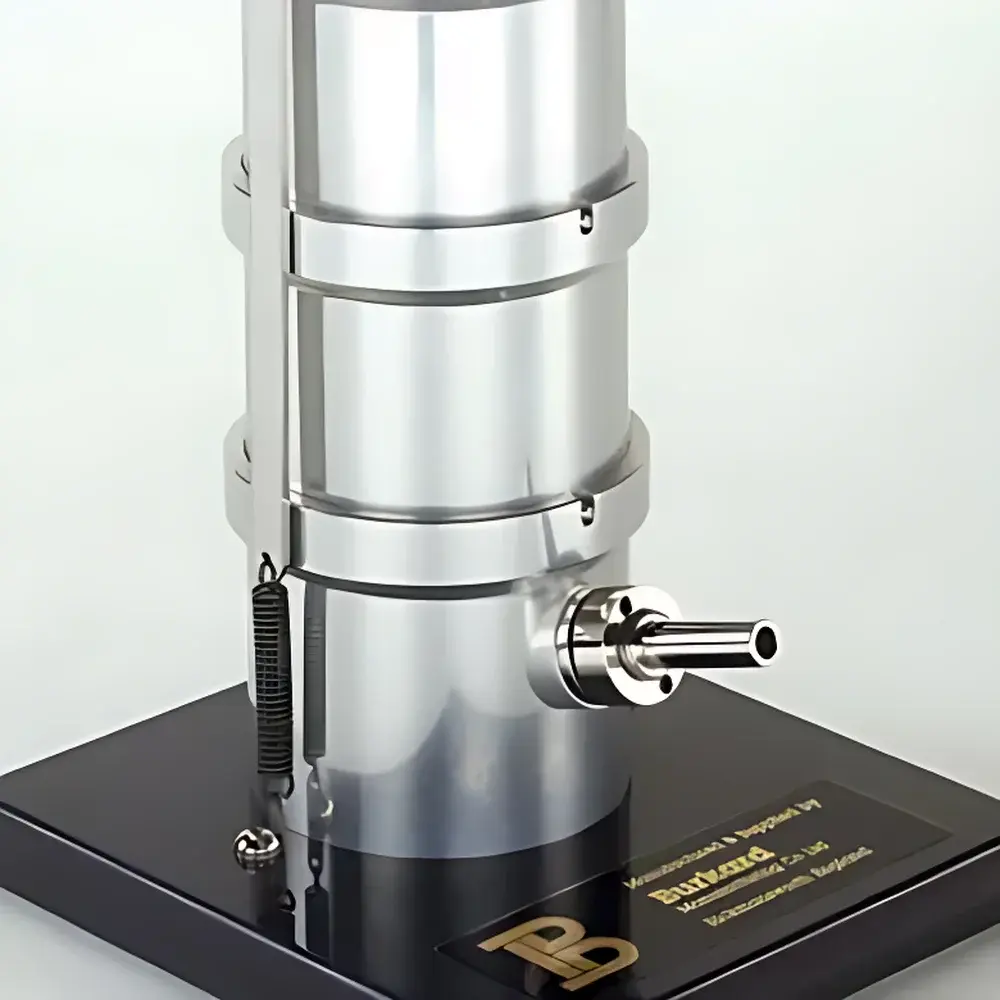
Burkard MEI0109 Multi-Stage Liquid Impaction Air Sampler
| Brand | Burkard |
|---|---|
| Origin | United Kingdom |
| Model | MEI0109 |
| Sampling Flow Rate | 20 L/min |
| Particle Size Cut Points | Stage 1 >10 µm, Stage 2 10–4 µm, Stage 3 <4 µm |
| Collection Liquid Volume per Stage | 6 mL |
| Vacuum Hose Port Diameter | 6 mm |
| Dimensions (L×W×H) | 115×100×145 mm |
| Net Weight | 670 g |
Overview
The Burkard MEI0109 Multi-Stage Liquid Impaction Air Sampler is an engineered solution for quantitative, size-resolved collection of viable and non-viable airborne microorganisms—including bacteria, fungi, yeasts, and spores—from ambient or controlled environments. Operating on the principle of inertial impaction across three sequential stages, the device separates particles by aerodynamic diameter under precisely regulated laminar flow conditions. Each stage features a calibrated critical orifice (located at Stage 3) that maintains a nominal sampling flow rate of 20 L/min—compliant with ISO 14698-1 Annex B and EU GMP Annex 1 guidance for environmental monitoring in cleanrooms and aseptic processing facilities. Constructed from anodized aluminum alloy (with stainless steel variants available upon request), the sampler ensures dimensional stability, corrosion resistance, and compatibility with standard sterilization protocols including autoclaving (121 °C, 15 min) and chemical disinfection. Its vertical pressurization mechanism guarantees leak-tight integrity during operation and enables rapid, tool-free disassembly for cleaning and maintenance.
Key Features
- Three-stage cascade impaction design enabling simultaneous size-fractionated collection into liquid media (6 mL per stage)
- Critical orifice flow control at Stage 3 ensures consistent 20 L/min volumetric flow when paired with a vacuum source capable of sustaining ≥180 mmHg pressure differential
- Integrated stagnation point shield enhances aspiration efficiency in dynamic airflow environments (e.g., ventilated rooms, livestock barns, outdoor monitoring)
- Modular construction allows full disassembly without tools; all wetted surfaces are accessible for visual inspection, residue removal, and validation of cleaning efficacy
- Compact footprint (115 × 100 × 145 mm) and low mass (670 g) facilitate field deployment, mobile laboratory use, and integration into fixed monitoring stations
- Compatible with standard microbiological culture media (e.g., TSB, Sabouraud Dextrose Broth) and molecular collection buffers (e.g., RNAlater, DNA/RNA Shield) for downstream culturing, PCR, or metagenomic analysis
Sample Compatibility & Compliance
The MEI0109 is validated for use in both viable and non-viable aerosol sampling applications where regulatory traceability and method reproducibility are required. It supports compliance with ISO 14698-1 (Biocontamination control), ISO 8573-7 (Compressed air — Part 7: Viability testing), and USP (Microbiological Control and Monitoring of Aseptic Processing Environments). When operated within defined parameters—including verified flow rate, collection liquid volume, and post-sampling incubation time—the sampler delivers high recovery efficiency (>70%) for common bioaerosol surrogates such as Bacillus atrophaeus spores and Aspergillus niger conidia. All components meet EU RoHS Directive 2011/65/EU requirements. Documentation packages include factory calibration certificates, material declarations, and installation qualification (IQ) templates suitable for GLP and GMP audit readiness.
Software & Data Management
While the MEI0109 operates as a standalone mechanical sampler, its performance is fully integrable into digital environmental monitoring systems (EMS). Flow verification data from inline mass flow meters or calibrated rotameters can be logged via analog 4–20 mA or digital RS-485 interfaces using third-party controllers (e.g., Siemens Desigo, Honeywell Experion). Raw sample identifiers, collection duration, and environmental metadata (temperature, RH, barometric pressure) may be recorded in compliant electronic lab notebooks (ELN) supporting 21 CFR Part 11 audit trails. Burkard provides SOP templates aligned with Annex 1 and ISO 14644-2 for routine operational qualification (OQ), preventive maintenance scheduling, and requalification after component replacement.
Applications
- Pharmaceutical manufacturing: Routine monitoring of Grade A/B cleanroom air for microbial load and particle-size distribution trends
- Hospital infection control: Assessment of airborne pathogen dispersion near isolation rooms, operating theatres, and HVAC exhaust points
- Agricultural bioaerosol research: Long-term characterization of fungal spore dynamics in poultry houses, swine barns, and composting facilities
- Indoor air quality (IAQ) studies: Source apportionment of microbial contaminants in schools, offices, and museums
- Biodefense and public health surveillance: Field-deployable collection of suspect biological agents for confirmatory identification
- Method development laboratories: Reference-grade impaction platform for validating alternative samplers and culture media formulations
FAQ
What vacuum pump specifications are required to maintain 20 L/min flow?
A pump capable of sustaining a minimum pressure differential of 180 mmHg (≈24 kPa) across the sampler is mandatory. Rotary vane or diaphragm pumps with ≥30 L/min free-air capacity and oil-free operation are recommended for microbiological integrity.
Can the MEI0109 be used with viscous or protein-rich collection media?
Yes—however, media viscosity above 10 cP may reduce impaction efficiency at Stage 3; pre-filtration or dilution is advised. Validation data for specific media must be established per ISO 14698-2 Annex C.
Is sterilization validation data available for this model?
Burkard supplies autoclave cycle validation reports (including temperature mapping and biological indicator challenge data) upon request for IQ/OQ documentation.
How often should critical orifices be inspected or replaced?
Visual inspection is required before each use; dimensional verification with optical calipers every 50 operational hours; replacement recommended after 200 hours or following exposure to particulate-laden or corrosive airstreams.
Does the sampler comply with FDA 21 CFR Part 11 for electronic records?
The hardware itself does not generate electronic records; however, when integrated with compliant EMS platforms, full Part 11 functionality—including audit trail, electronic signature, and record retention—is achievable through system-level validation.







