
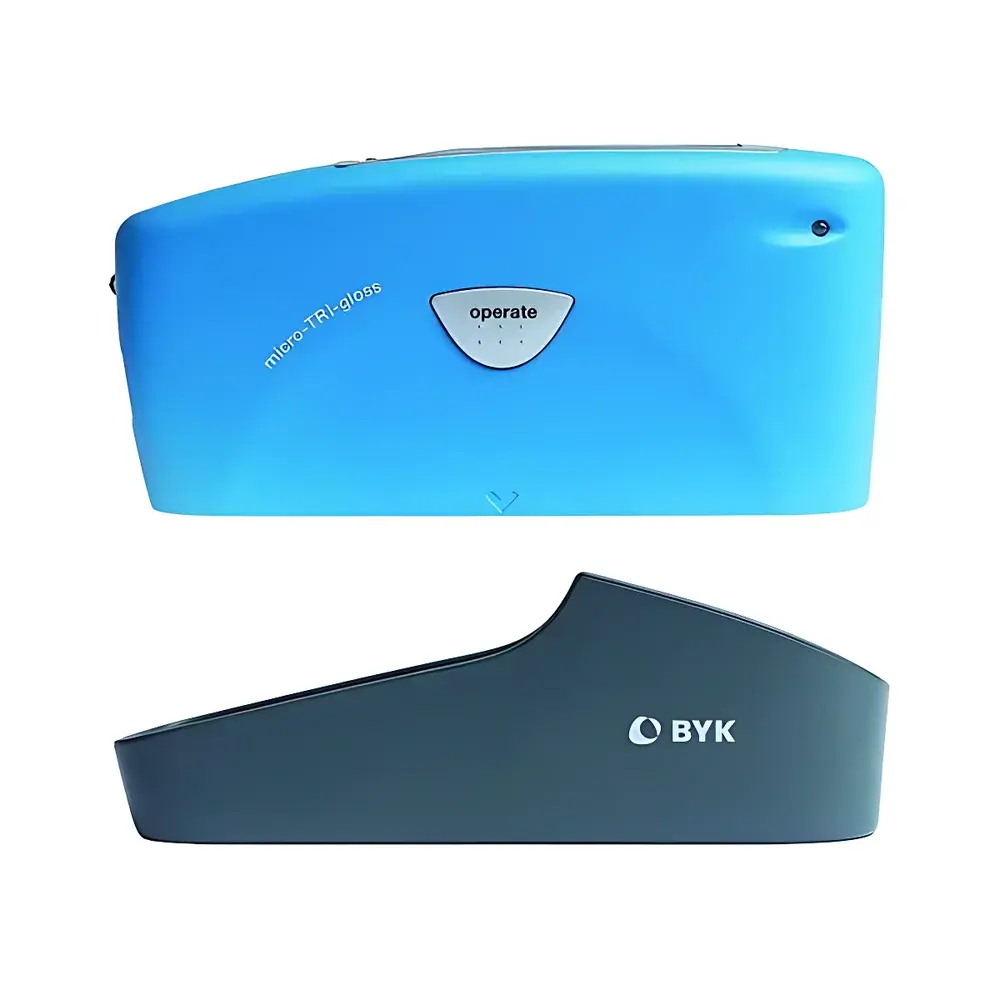
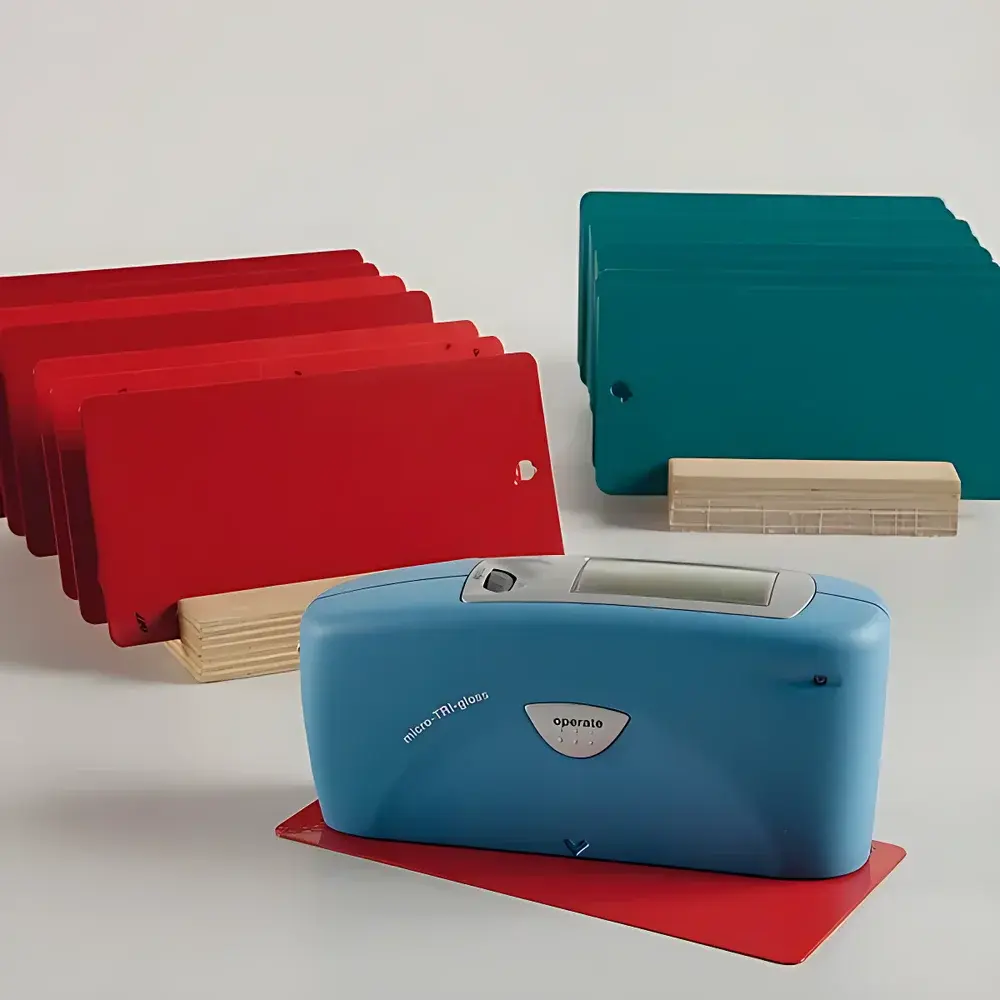
BYK A-4430 Multi-Angle Portable Gloss Meter
| Brand | BYK |
|---|---|
| Origin | Germany |
| Model | A-4430 |
| Measurement Angles | 20° / 60° / 85° |
| Geometry | Single-beam, fixed-angle reflectance |
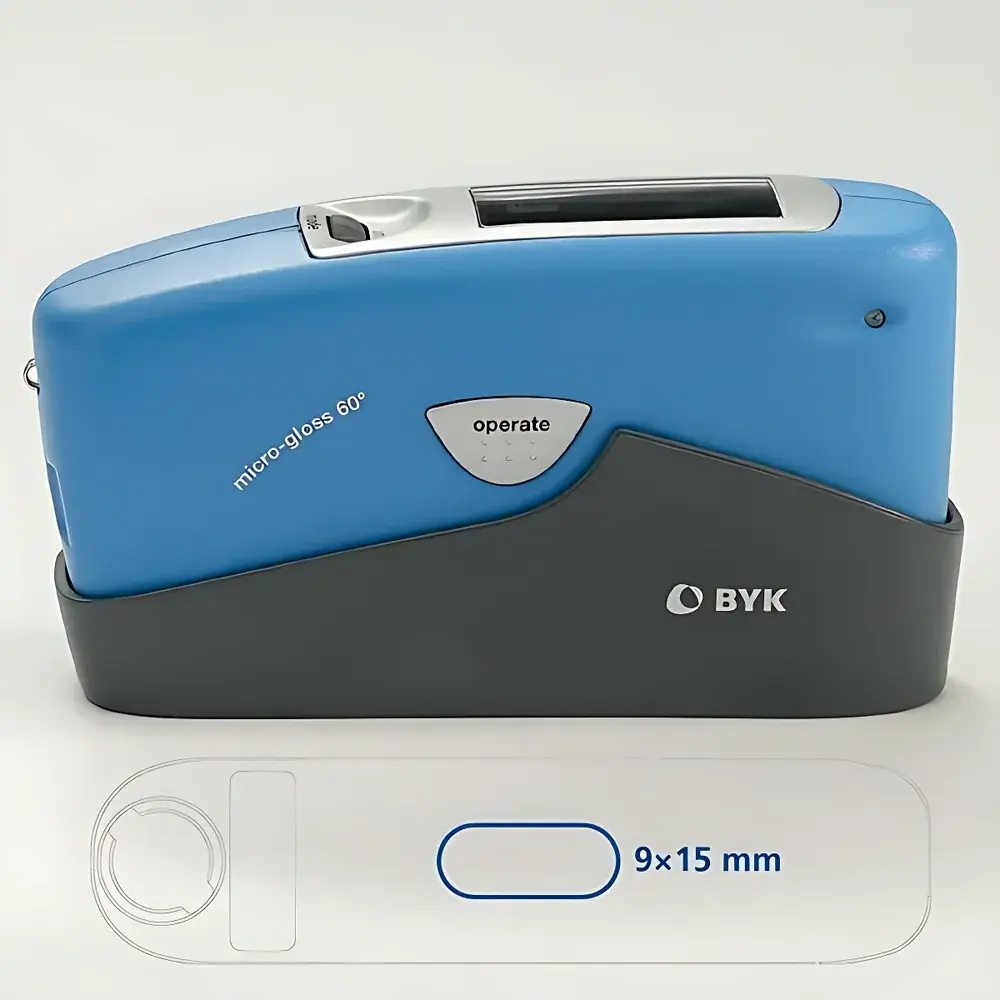
| Measurement Area | 9 mm × 18 mm (60°), 9 mm × 9 mm (20°), 7 mm × 72 mm (85°) |
| Gloss Unit (GU) Range | 20°: 0–2000 GU |
| 60° | 0–1000 GU |
| 85° | 0–160 GU |
| Repeatability | ±0.5 GU (0–99.9 GU), ±0.2% (100–2000 GU) |
| Reproducibility | ±1 GU (0–99.9 GU), ±0.5% (100–2000 GU) |
| Light Source | Tungsten filament lamp (2.5 V / 60 mA) |
| Detector | Silicon photodiode |
| Data Storage | 999 readings across 50 user-defined groups |
| Interface | RS232 |
| Compliance | ISO 2813, ASTM D523, DIN 67530, JIS Z 8741, BS 3900-D5 |
| Traceability | Calibrated against BAM (Bundesanstalt für Materialforschung und -prüfung) and NRC (National Research Council Canada) reference standards |
| Power | One AA alkaline battery (up to 10,000 measurements) |
| Dimensions | 55 × 148 × 72 mm |
| Weight | 500 g |
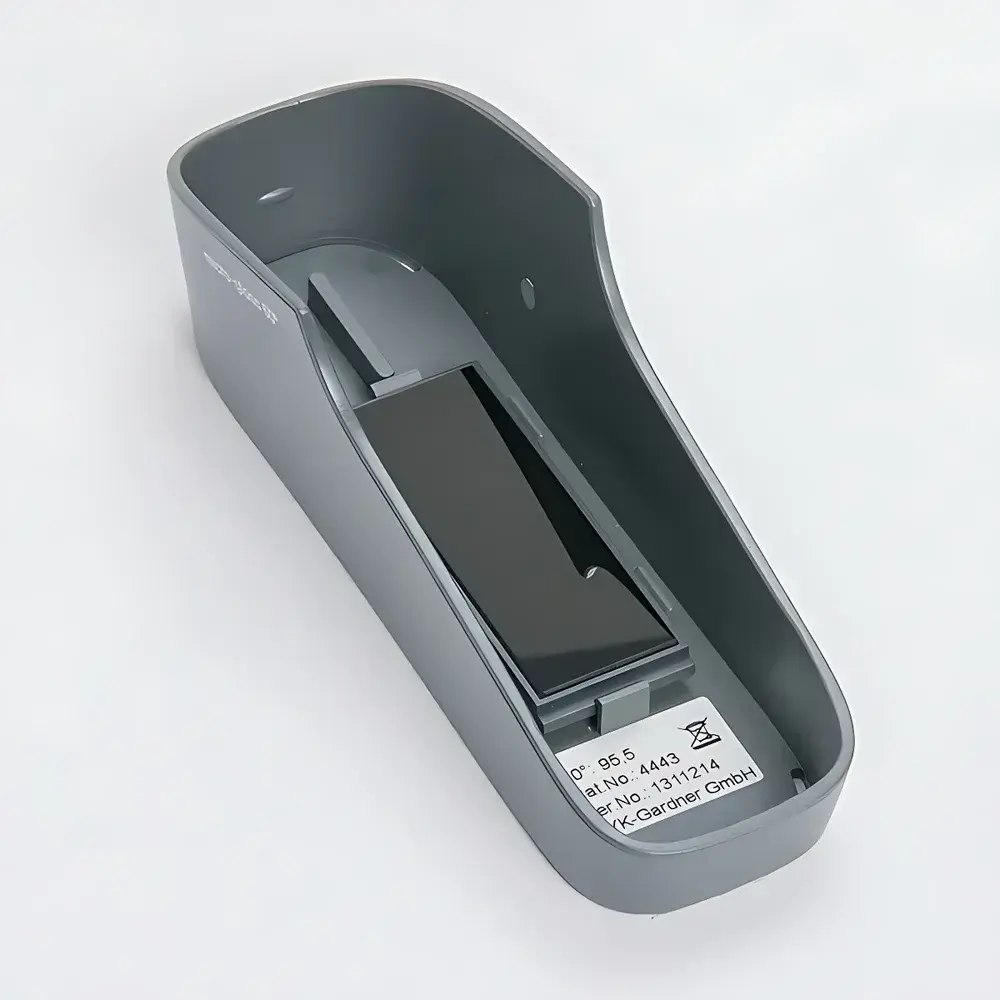
| Enclosure | Impact-resistant polymer housing with integrated calibration base |
Overview
The BYK A-4430 Multi-Angle Portable Gloss Meter is an engineered precision instrument designed for rapid, repeatable surface gloss evaluation across industrial quality control, R&D, and field inspection environments. Operating on the principle of specular reflectance—measuring the ratio of reflected luminous flux to incident flux at defined geometries—the A-4430 implements three standardized measurement angles (20°, 60°, and 85°) in a single handheld unit. This tri-angle configuration enables comprehensive characterization of surfaces ranging from high-gloss automotive clearcoats (20°) and medium-gloss architectural paints (60°) to low-gloss matte plastics and paper substrates (85°). Its optical architecture conforms strictly to ISO 2813 and ASTM D523 requirements for geometric consistency, including collimated illumination, precise aperture definition, and detector angular acceptance matched to each angle. The tungsten-filament light source provides stable spectral output in the visible range (approx. 400–700 nm), while the silicon photodiode detector ensures linear response and long-term stability under repeated thermal and mechanical cycling.
Key Features
- Tri-angle capability (20°/60°/85°) in one compact, ergonomic housing—no manual optic swapping or recalibration required between angles
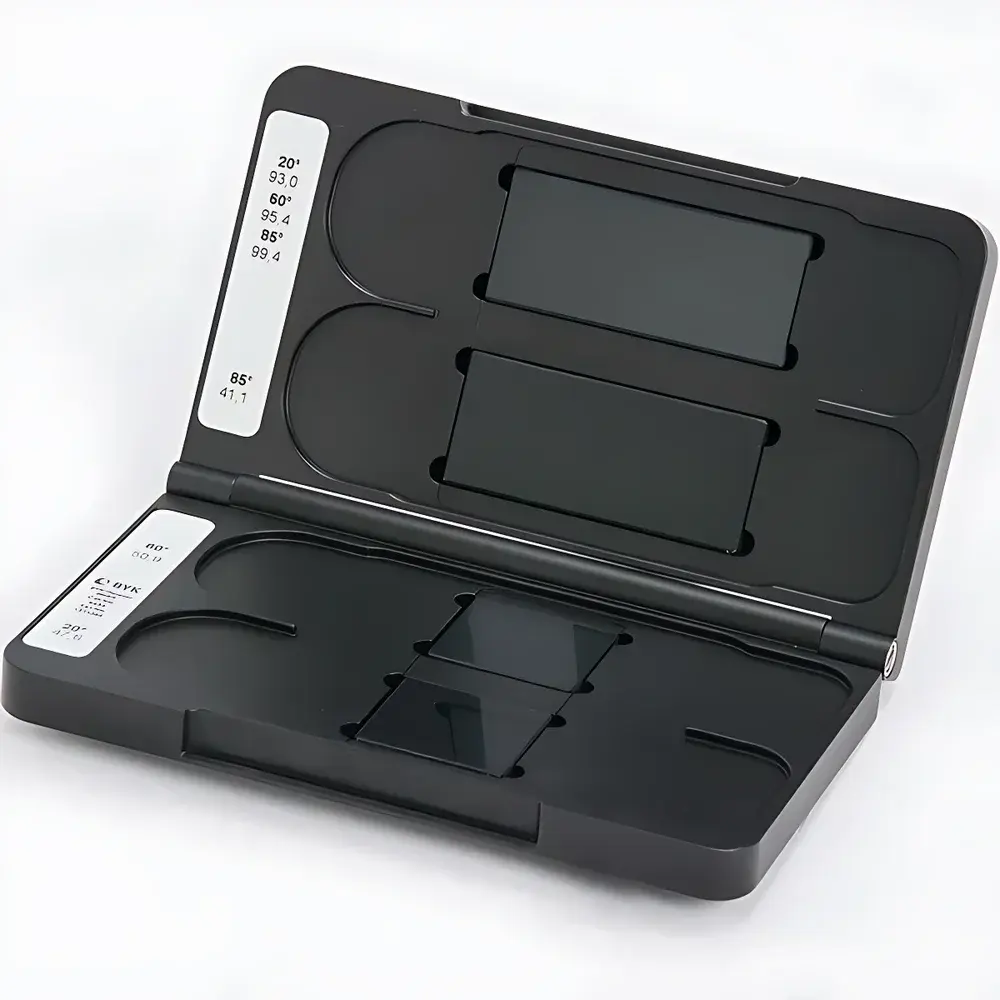
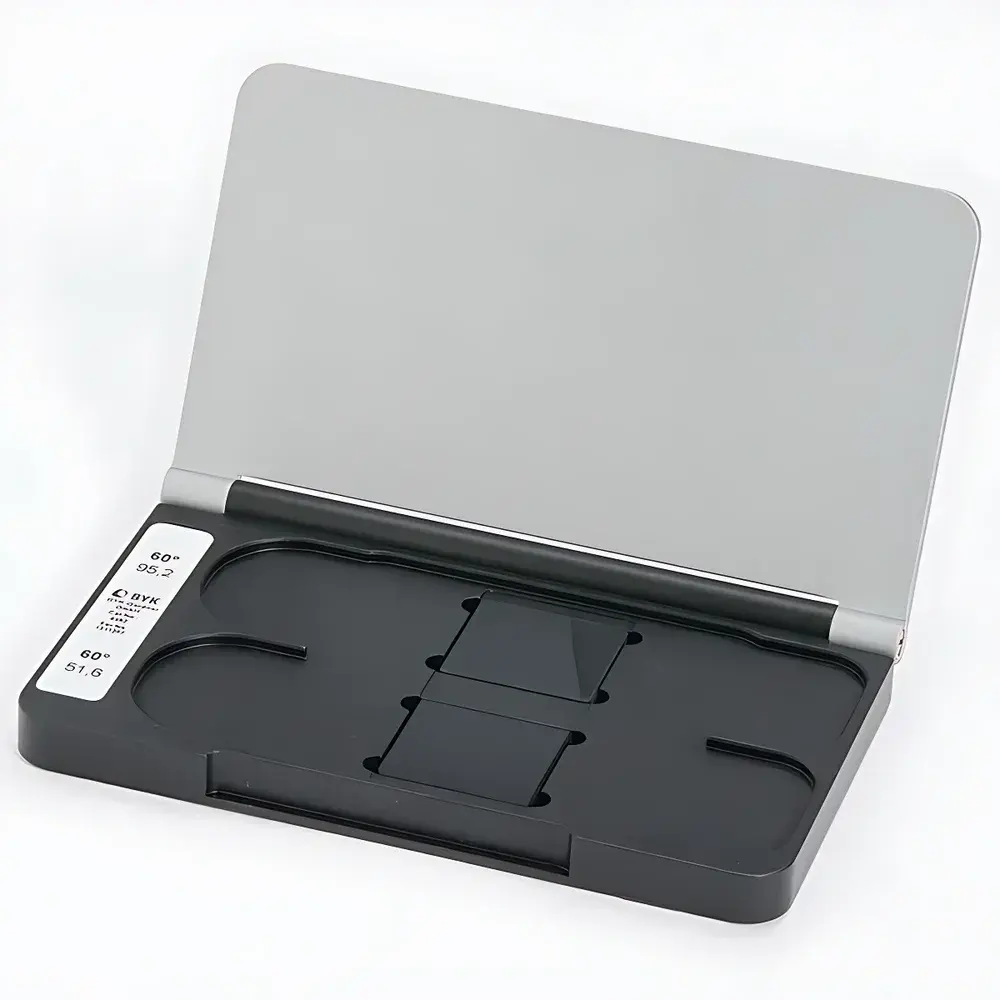
- Integrated calibration base with certified reference standards (gloss tiles traceable to BAM and NRC), enabling on-site verification without external equipment
- One-touch auto-calibration with guided menu interface—eliminates operator-induced alignment error and reduces setup time to <5 seconds
- Dual measurement modes: single-shot acquisition for spot checks and statistical mode (n = 2–99) delivering mean, standard deviation, min/max, and count per group
- Large internal memory (999 readings across 50 independent data groups) with timestamping and angle-tagged metadata storage
- RS232 serial interface supporting bidirectional communication with Windows-based PCs; compatible with BYK’s Gloss-Link and Easy-Link software for report generation, trend analysis, and SPC charting
- Robust polymer enclosure rated for industrial use (IP52 dust resistance, shock-absorbing corners), weighing only 500 g for extended handheld operation
- Extended battery life: up to 10,000 measurements on a single AA alkaline cell, with low-battery warning and graceful shutdown protocol
Sample Compatibility & Compliance
The A-4430 accommodates flat, curved, and textured surfaces with radii down to 50 mm, provided the measurement area lies fully within the defined aperture footprint. It is routinely deployed for QC of automotive OEM coatings, coil-coated metal, printed packaging films, ceramic glazes, and coated paperboard. All optical and electronic components are manufactured to DIN EN ISO 9001-certified processes at BYK’s facility in Geretsried, Germany. Device-level compliance includes full adherence to ISO 2813:2014 (paints and varnishes), ASTM D523-14 (standard test method for specular gloss), DIN 67530 (German national gloss standard), JIS Z 8741 (Japanese Industrial Standard), and BS 3900-D5 (British Standard). Calibration certificates include uncertainty budgets per ISO/IEC 17025 and are issued with traceability statements referencing primary standards maintained by BAM (Germany) and NRC (Canada). The instrument supports GLP-compliant workflows through audit-trail-capable software export and user-accessible calibration history logs.
Software & Data Management
Gloss-Link and Easy-Link software packages provide full configuration, data retrieval, and reporting functionality. Gloss-Link offers advanced features including multi-instrument fleet management, customizable pass/fail limits per angle and material class, automated PDF report generation with embedded calibration status, and integration-ready CSV/XML exports for LIMS or MES systems. Both applications support FDA 21 CFR Part 11 compliance when deployed with appropriate IT controls (user authentication, electronic signatures, and immutable audit trails). Raw measurement files retain all contextual metadata—including date/time stamp, operator ID (if assigned), angle selection, group identifier, and battery voltage at time of acquisition—ensuring full data lineage for regulatory review.
Applications
- Automotive: In-line gloss verification of basecoats, clearcoats, and plastic trim; inter-lab correlation studies for supplier qualification
- Coatings & Paints: Batch release testing per ASTM D523; formulation development feedback for gloss modifiers and flattening agents
- Packaging: Gloss uniformity assessment of laminated films, metallized PET, and UV-cured overprint varnishes
- Plastics & Polymers: Process validation of injection-molded parts; surface finish grading of extruded profiles
- Printing & Paper: Quantitative evaluation of calendering effectiveness, coating weight impact, and ink film integrity
- Quality Audits: Third-party verification against customer specifications (e.g., OEM gloss tolerances: ±2 GU at 60°)
FAQ
Does the A-4430 require annual recalibration?
Yes—BYK recommends annual recalibration by an accredited service laboratory to maintain traceability to national standards; field verification using the included calibration tiles should be performed before each shift.
Can the device measure curved surfaces?
It supports convex surfaces with radii ≥50 mm; concave surfaces are not recommended due to aperture vignetting and beam divergence effects.
Is USB connectivity supported?
No—only RS232 serial interface is provided; USB-to-serial adapters are validated for use with Gloss-Link software.
How is measurement repeatability verified?
Repeatability is assessed per ISO 2813 Annex B: ten consecutive readings on a stable reference tile under controlled temperature (23 ± 2 °C) and humidity (50 ± 5 % RH); results must fall within ±0.5 GU (0–99.9 GU) or ±0.2% (100–2000 GU).
Are calibration standards included with the instrument?
Yes—the base station incorporates two certified gloss reference tiles (high and medium range) with individual calibration certificates traceable to BAM and NRC.




