
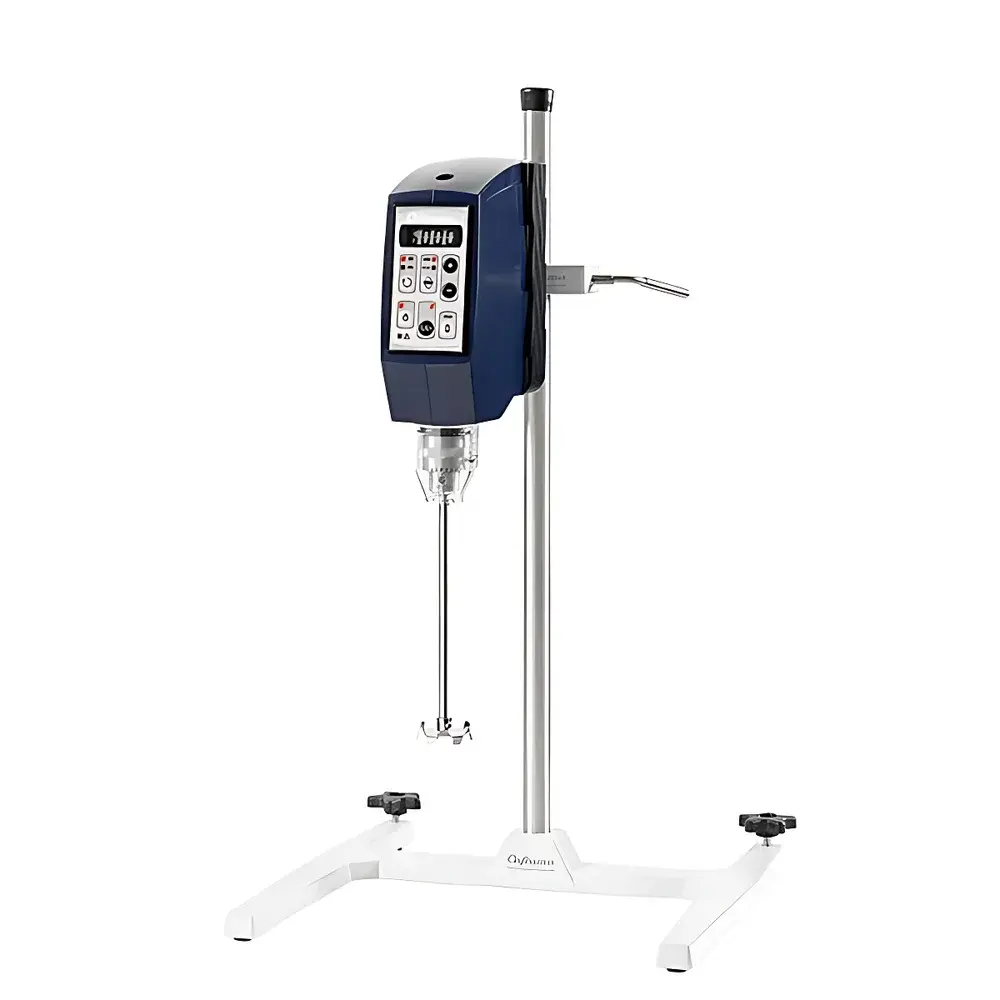
Caframo BDC6015 Dual-Speed Overhead Stirrer
| Brand | Caframo |
|---|---|
| Origin | USA |
| Model | BDC6015 |
| Stirrer Type | Electric Overhead Stirrer |
| Max. Mixing Volume | 25 L |
| Speed Range | 40–6000 rpm |
| Temperature Operating Range | 5–40 °C |
| Max. Viscosity | 20,000 mPa·s |
| Max. Torque (Low Speed) | 170 N·cm |
| Max. Torque (High Speed) | 34 N·cm |
| Power Output | 150 W |
| Speed Accuracy | ±1 rpm or ±1% of reading |
| Torque Accuracy | ±12 N·cm or ±5% of reading |
| Chuck Max. Shaft Diameter | 10 mm |
| Enclosure Material | Cast Aluminum |
| Certifications | CSA (US/Canada) |
Overview
The Caframo BDC6015 Dual-Speed Overhead Stirrer is an engineered solution for laboratories requiring precise, high-shear mixing across a broad viscosity spectrum—from low-viscosity solvents and emulsions to highly concentrated suspensions and microencapsulation formulations. Based on Couette flow principles and optimized impeller-driven shear dynamics, the BDC6015 delivers reproducible agitation performance in applications where thermal stability, torque consistency, and rotational fidelity are critical. Its dual-range electronic gearbox enables seamless transition between high-torque (40–1200 rpm) and high-speed (1200–6000 rpm) operation—ensuring optimal energy transfer whether dispersing nanoparticles into aqueous media or homogenizing polymer melts. Designed for continuous-duty operation in regulated environments, the unit complies with CSA safety standards for North America and integrates seamlessly into GLP-compliant workflows where auditability and operational traceability are required.
Key Features
- Brushless DC motor with closed-loop speed regulation ensures stable rotational output under variable load conditions and eliminates brush wear—reducing long-term maintenance and downtime.
- Two-speed electronic transmission with automatic range selection: low-speed mode delivers up to 170 N·cm torque for viscous pastes; high-speed mode achieves up to 6000 rpm for fine particle dispersion and emulsion stabilization.
- Fully enclosed cast aluminum housing provides mechanical rigidity, electromagnetic interference (EMI) shielding, and resistance to chemical splashes and ambient dust ingress.
- Integrated digital display shows real-time speed (rpm) and torque (N·cm), with accuracy certified to ±1 rpm or ±1% and ±12 N·cm or ±5%, respectively—enabling quantitative process documentation.
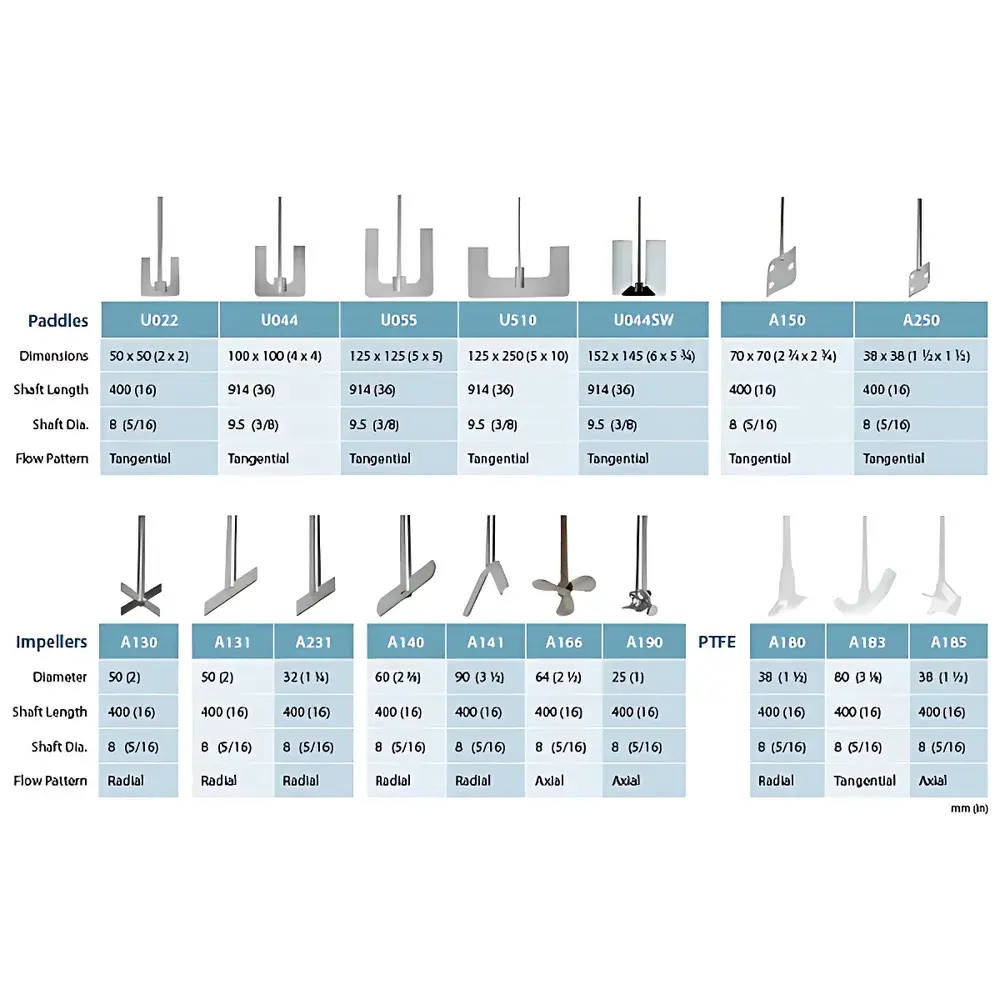
- Through-shaft design accommodates standard laboratory impellers and custom shafts up to 10 mm diameter, supporting ISO-standard anchor, paddle, and turbine geometries.
- Chuck guard assembly fully encloses rotating components per ANSI Z244.1 and CSA C22.2 No. 61010-1 requirements, mitigating risk of entanglement and material ejection during high-RPM operation.
- Thermal overload protection and torque-limiting circuitry automatically shut down the drive if motor temperature exceeds 85 °C or instantaneous torque exceeds calibrated thresholds—preserving motor longevity and experimental integrity.
Sample Compatibility & Compliance
The BDC6015 supports mixing of aqueous, organic, and semi-aqueous systems up to 25 L volume and 20,000 mPa·s viscosity—covering ASTM D1200 (efflux viscosity), ISO 2555 (glass transition behavior via suspension rheology), and USP (dispersibility testing) sample matrices. Its operating temperature envelope (5–40 °C) aligns with ICH Q5C stability guidelines for biopharmaceutical intermediates. The unit’s CSA certification confirms compliance with electrical safety (IEC 61010-1), mechanical guarding (ANSI B11.19), and EMC immunity (CISPR 11 Group 1 Class A). When used with validated impeller configurations and documented SOPs, it meets FDA 21 CFR Part 11 requirements for electronic records when paired with compliant data acquisition software.
Software & Data Management
While the BDC6015 operates as a standalone instrument with local digital interface, its analog torque and speed outputs (0–10 V DC) are compatible with third-party data loggers and SCADA systems for time-stamped parameter capture. Optional RS-232 or USB-to-serial adapters enable integration with LabVIEW™, MATLAB®, or custom Python-based control scripts for automated ramp-and-hold protocols. All operational parameters—including start/stop timestamps, speed setpoints, and torque maxima—are manually recordable in batch logs aligned with ALCOA+ (Attributable, Legible, Contemporaneous, Original, Accurate, Complete, Consistent, Enduring, Available) data governance principles.
Applications
- High-shear dispersion of nanomaterials (e.g., graphene oxide, TiO₂ nanoparticles) in polymer precursors and coating formulations.
- Emulsion preparation for pharmaceutical suspensions (e.g., oil-in-water systems per USP ) and cosmetic actives.
- Microencapsulation processes involving phase separation and interfacial polymerization under controlled shear stress.
- QC/QA testing of adhesive viscosity profiles, paint rheology, and battery slurry homogeneity prior to coating.
- Bioreactor seed train preparation where oxygen transfer efficiency correlates with impeller tip speed and power input.
- Academic research in colloid science, soft matter physics, and non-Newtonian fluid characterization.
FAQ
What impeller types are compatible with the BDC6015?
Standard laboratory impellers—including Rushton turbines, pitched-blade turbines, anchors, and helical ribbons—with shaft diameters ≤10 mm and ISO 228 thread compatibility can be mounted using the included key-type chuck.
Is the BDC6015 suitable for use in fume hoods or inert-atmosphere gloveboxes?
Yes—the unit’s sealed aluminum housing and absence of ventilation grilles allow safe operation in Class I/II biosafety cabinets and nitrogen-purged gloveboxes, provided ambient temperature remains within 5–40 °C and relative humidity stays below 80% RH.
Does the BDC6015 support external triggering or programmable ramp profiles?
No internal programmability exists; however, analog voltage inputs (0–10 V) accept external speed setpoint signals from PLCs or function generators, enabling externally defined linear or stepwise ramp sequences.
What certifications apply to the 220 V version (BDC6015-220U1)?
The 220–240 V / 50–60 Hz variant carries CE marking per EU Machinery Directive 2006/42/EC and Low Voltage Directive 2014/35/EU, along with UKCA marking for Great Britain market access.
Can torque data be exported digitally?
Torque output is available as an analog signal (0–10 V proportional to 0–170 N·cm); direct digital export requires connection to a DAQ system with appropriate scaling and calibration verification per ISO/IEC 17025 Annex A.3.



