
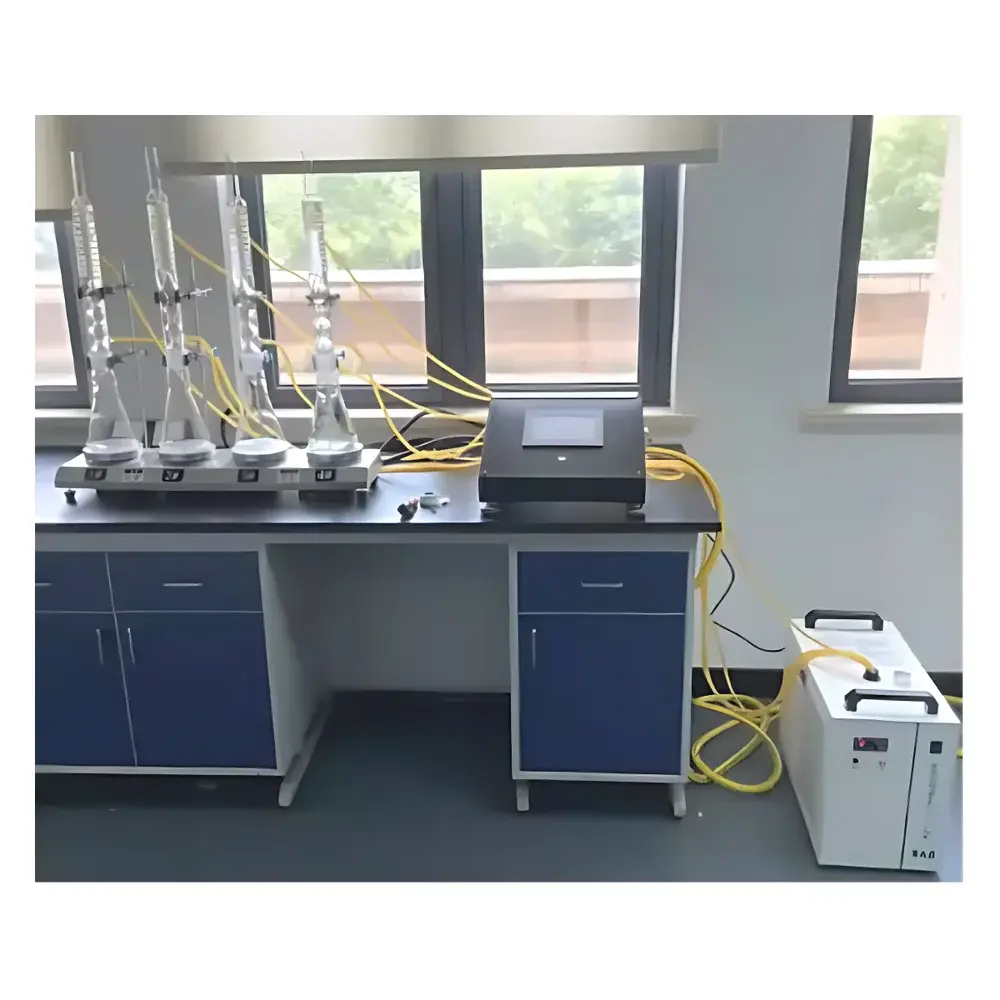
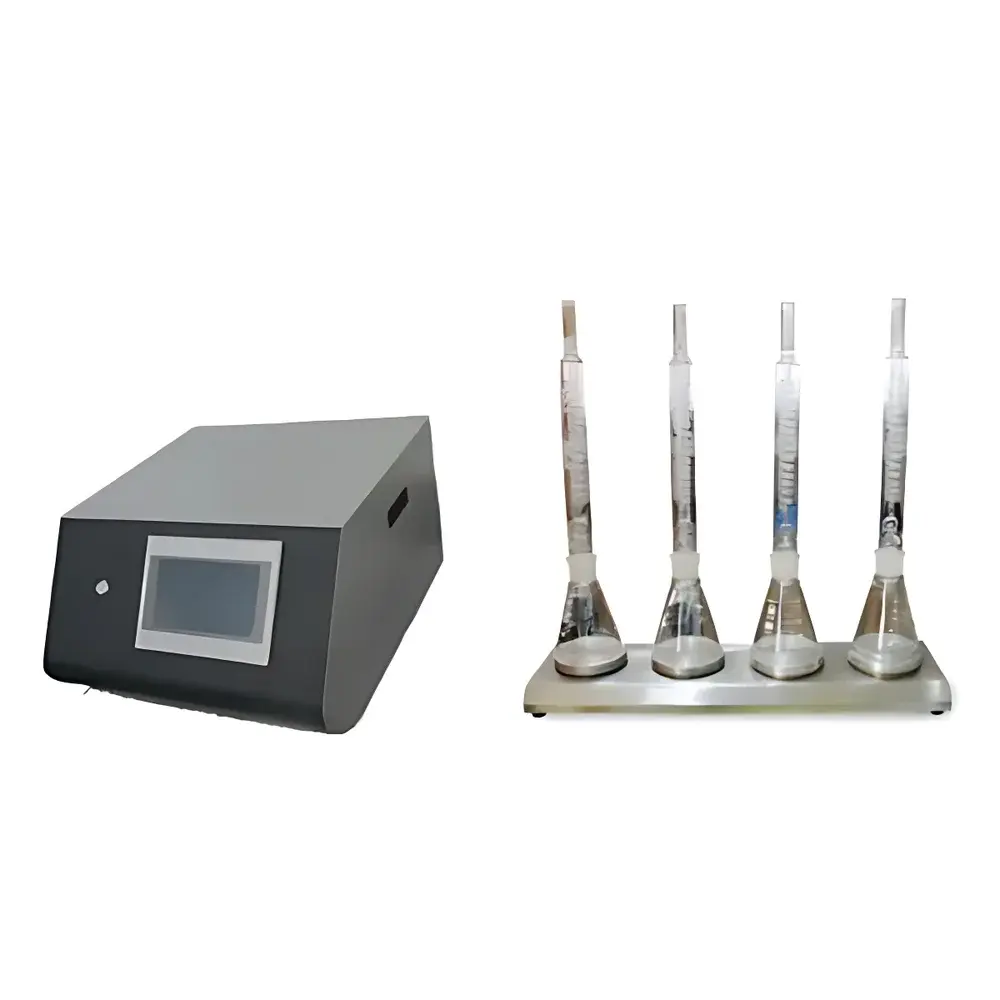
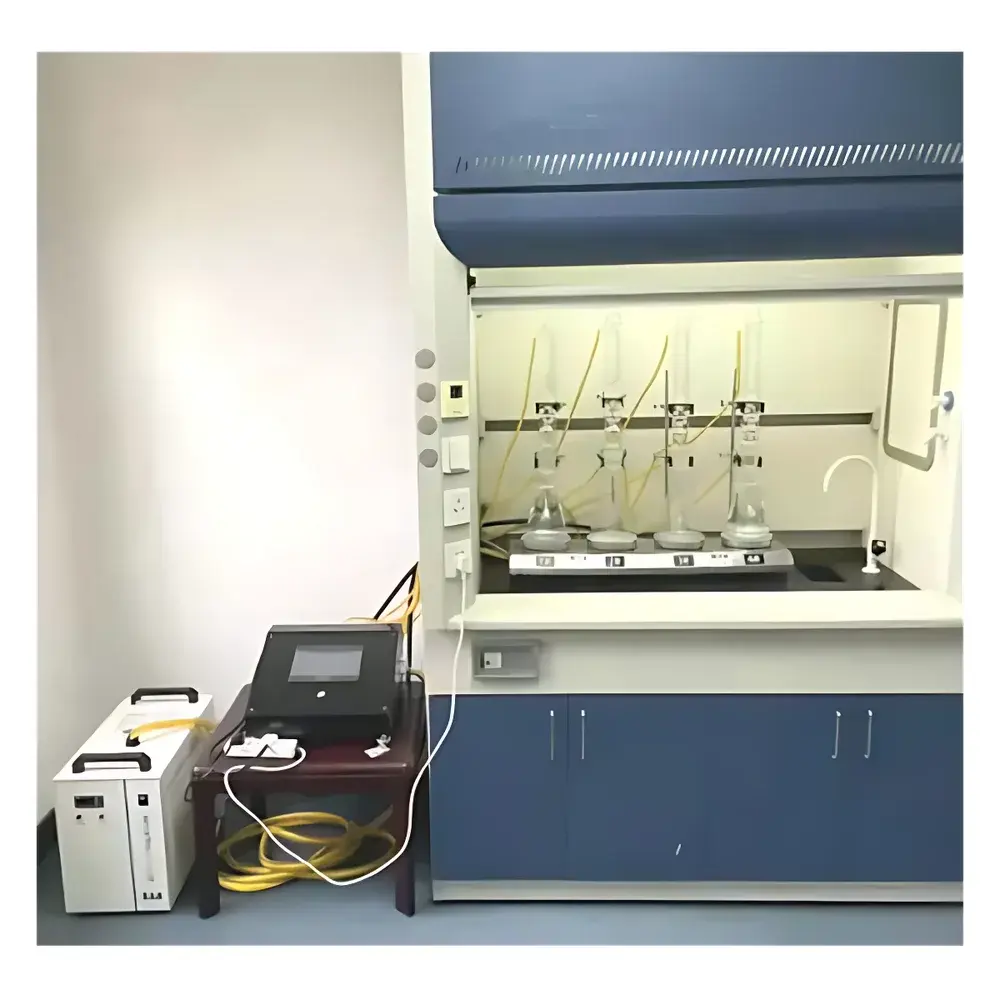
Caikon CKJF-4G Intergranular Corrosion Testing System
| Key | Brand: Caikon |
|---|---|
| Origin | Shanghai, China |
| Manufacturer Type | Manufacturer |
| Product Category | Domestic Instrument |
| Model | CKJF-4G |
| Price Range | USD 2,650 – 2,950 |
| Compliance | GB/T 4334–2020, ASTM A262–2015 |
| Heating Capacity | 2000 W total (4 × 500 W independent stations) |
| Max Operating Temperature | 400 °C |
| Simultaneous Samples | 4 |
| Control System | PLC + PID with touchscreen HMI |
| Cooling | Integrated reflux condensation system (no external water source required) |
| Safety Features | Dry-run alarm, overtemperature cutoff, power-interruption resume function |
Overview
The Caikon CKJF-4G Intergranular Corrosion Testing System is an engineered laboratory instrument designed for standardized evaluation of intergranular corrosion (IGC) susceptibility in austenitic stainless steels, aluminum alloys, nickel-based superalloys, and other susceptible metallic materials. Intergranular corrosion arises from electrochemical potential differences along grain boundaries—often induced by chromium depletion (e.g., due to carbide precipitation during improper heat treatment), segregation of impurities (e.g., sulfur, phosphorus), or residual stresses. This localized degradation mechanism proceeds preferentially along grain interfaces without significant surface indication, yet critically compromises tensile strength, ductility, and fatigue resistance. The CKJF-4G implements controlled thermal-acid exposure per internationally recognized test protocols—including the oxalic acid etch test (ASTM A262 Practice A) and boiling nitric acid test (GB/T 4334–2020 Method E)—to quantitatively assess microstructural stability and heat treatment adequacy.
Key Features
- Four independent heating stations (500 W each), enabling parallel testing of up to four specimens under identical or differential thermal profiles.
- PLC-based PID temperature control with ±1 °C stability across the full operating range (ambient to 400 °C), ensuring reproducible thermal ramping, hold times, and cooling kinetics.
- Integrated reflux condensation system: Air-cooled or optional chiller-coupled condensers return evaporated reagent vapor directly to the reaction vessel, minimizing concentration drift and eliminating manual replenishment.
- Touchscreen human-machine interface (HMI) with intuitive parameter entry, real-time temperature/time logging, and event-triggered alarm history (e.g., low coolant, overtemperature, power loss).
- Intelligent power-resume functionality: Upon restoration after unexpected power interruption, the system automatically resumes the remaining test duration from the pre-failure timestamp—critical for long-duration (e.g., 12–48 h) ASTM-compliant exposures.
- Fail-safe architecture: Dual redundant thermal cutoffs, dry-run detection via flow/pressure sensing, and hardware-enforced maximum temperature limits protect both operator safety and equipment longevity.
Sample Compatibility & Compliance
The CKJF-4G supports standardized IGC testing of flat sheet, rod, and welded specimens (typically 10–30 mm × 10–30 mm × 1–3 mm) in accordance with:
- GB/T 4334–2020 “Methods for intergranular corrosion tests of stainless steels” (Methods A–E, including nitric acid mass loss and copper sulfate–sulfuric acid tests)
- ASTM A262–2015 “Standard Practices for Detecting Susceptibility to Intergranular Attack in Austenitic Stainless Steels” (Practices A, B, C, D, E, F)
- ISO 3651-2:1998 “Determination of resistance to intergranular corrosion of stainless steels — Part 2: Ferritic and austenitic-ferritic (duplex) stainless steels”
Test vessels accommodate standard 1000 mL borosilicate glass beakers; condenser assemblies utilize 50/45 ground-glass joints for leak-tight reflux. The system is compatible with aggressive reagents including 65% nitric acid (HNO₃), 10% oxalic acid (HOOC–COOH), and mixed copper sulfate–sulfuric acid solutions.
Software & Data Management
Optional remote monitoring enables GLP-compliant operation: A secure web-based dashboard and WeChat Mini Program provide authenticated access (two-factor login) for real-time status visualization, parameter modification (setpoint, dwell time, ramp rate), and automated alerting. All operational events—including temperature deviations >±2 °C, coolant flow interruption, and emergency shutdowns—are timestamped and stored locally on embedded SD card with exportable CSV logs. Audit trail functionality meets FDA 21 CFR Part 11 requirements when paired with user role management and electronic signature modules (available as validated software add-on).
Applications
- Qualification of stainless steel grades (e.g., 304, 316, 321, 347) following solution annealing, welding, or sensitization heat treatments
- Verification of alloy composition homogeneity and secondary phase precipitation behavior in duplex and super-austenitic grades
- Process validation for aerospace aluminum alloys (e.g., AA2024, AA7075) subjected to aging or stress-corrosion cracking mitigation protocols
- QC/QA in metallurgical laboratories, third-party certification bodies (e.g., TÜV, SGS), and OEM manufacturing facilities
- Research into grain boundary engineering, thermomechanical processing optimization, and corrosion inhibitor efficacy screening
FAQ
What standards does the CKJF-4G support out-of-the-box?
The base configuration fully complies with GB/T 4334–2020 and ASTM A262–2015 for Practices A (oxalic acid etch), B (ferric sulfate–sulfuric acid), and E (nitric acid mass loss). Additional methods require optional accessories (e.g., specialized fixtures for bent-beam testing).
Can the system operate unattended for extended durations (e.g., 48 hours)?
Yes—integrated data logging, thermal redundancy, and auto-resume capability enable fully autonomous operation. Recommended maximum continuous duty at 350 °C is 24 h to preserve heater element service life.
Is external cooling water required?
No. The standard air-cooled condenser eliminates dependency on municipal water. For high-throughput labs or ambient temperatures >35 °C, the optional closed-loop chiller ensures consistent reflux efficiency.
How is calibration traceability maintained?
Each unit ships with NIST-traceable temperature calibration certificate (valid for 12 months). Field recalibration uses certified RTD probes and follows ISO/IEC 17025 procedures documented in the included QA manual.
What safety certifications does the instrument carry?
CE marking (EMC Directive 2014/30/EU, Low Voltage Directive 2014/35/EU), RoHS 2011/65/EU compliance, and IP20 enclosure rating. Optional explosion-proof variants available for hazardous area deployment (ATEX Zone 2).





