
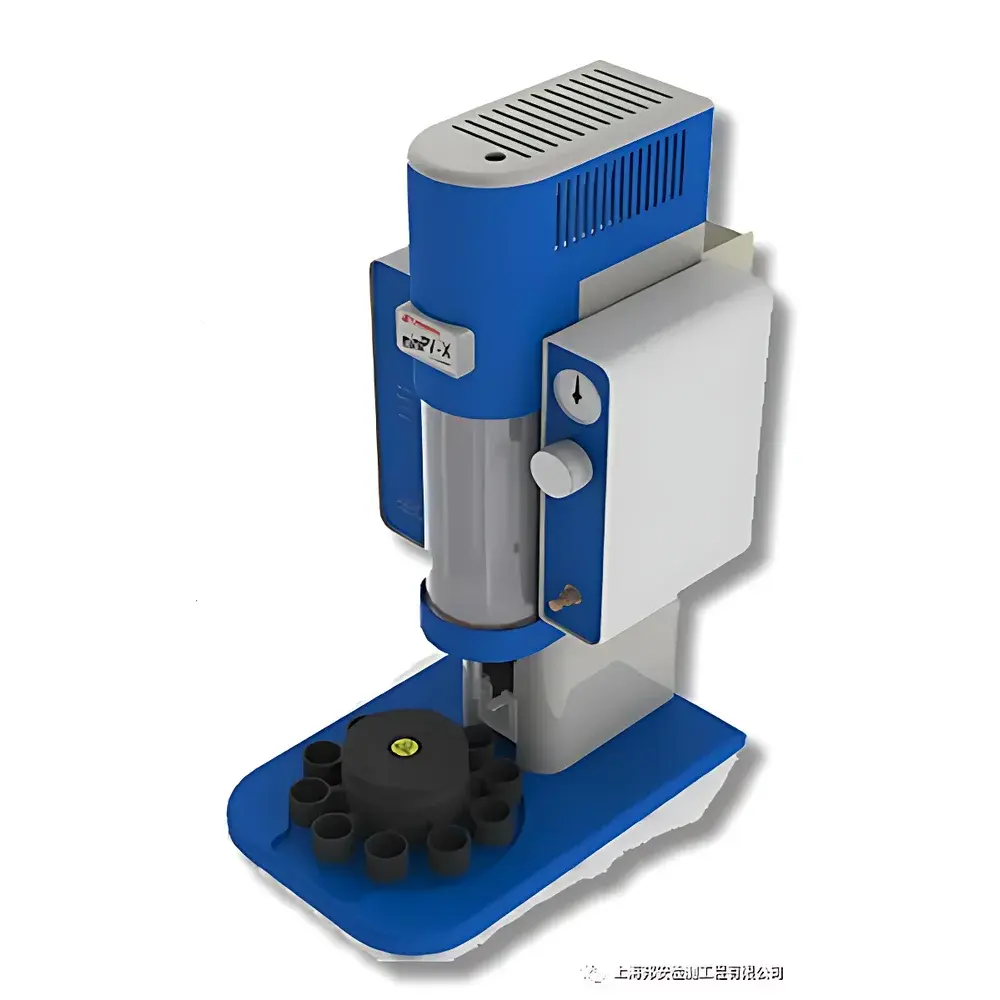
CANNON miniPV Automated Polymer Viscometer
| Brand | CANNON |
|---|---|
| Origin | USA |
| Model | miniPV |
| Instrument Type | Capillary Viscometer (Fixed-Station) |
| Viscosity Range | 0.3–20,000 cSt |
| Temperature Range | 15–100 °C |
| Temperature Resolution | 0.001 °C |
| Temperature Accuracy | ±0.01 °C |
| Sample Volume | ~15 mL |
| Flow Time Resolution | 0.01 s |
| Cooling Method | Peltier-based (no external chiller required) |
| Sample Capacity | 10-position auto-sampler |
| Cleaning System | Dual-solvent + compressed air drying |
Overview
The CANNON miniPV Automated Polymer Viscometer is a benchtop capillary viscometer engineered for high-precision, reproducible measurement of intrinsic, relative, specific, and inherent viscosities of polymer solutions. It operates on the principle of gravity-driven laminar flow through calibrated capillary tubes—specifically an improved Ubbelohde-type viscometer—where kinematic viscosity (ν, in cSt) is calculated from measured efflux time and instrument-specific calibration constants. Designed for routine QC/QA and R&D laboratories handling synthetic and natural polymers, the miniPV delivers traceable, standards-compliant results across a broad dynamic range (0.3–20,000 cSt) under tightly controlled thermal conditions (15–100 °C, ±0.01 °C accuracy, 0.001 °C resolution). Its Peltier-based temperature control eliminates dependency on external refrigeration units, enabling stable sub-ambient operation without auxiliary infrastructure—critical for temperature-sensitive biopolymers or low-Tg elastomers.
Key Features
- Automated 10-position sample carousel minimizes manual handling and exposure to hazardous solvents, supporting unattended batch analysis.
- Improved Ubbelohde capillary geometry ensures optimal meniscus stability and reduced wall effects, enhancing repeatability for dilute polymer solutions.
- Dual-solvent cleaning cycle followed by compressed-air drying prevents cross-contamination and residue buildup between runs—essential for viscous or high-molecular-weight samples.
- Integrated high-resolution timing system records efflux times to 0.01-second precision, directly contributing to <0.1% relative standard deviation in kinematic viscosity calculations.
- Compact footprint (<40 cm × 35 cm × 30 cm) suits space-constrained lab environments while maintaining full ASTM/ISO compliance.
- Peltier thermoelectric module provides rapid, bidirectional temperature regulation (cooling & heating) without coolant circulation or external chillers—reducing maintenance overhead and operational noise.
Sample Compatibility & Compliance
The miniPV accommodates solutions of thermoplastics (e.g., PET, PC), elastomers (TPE, SBS), bio-based polymers (PLA, PHA), oligomers, prepolymers, resins, and viscosity index improvers dissolved in common organic solvents (e.g., chloroform, phenol/o-chlorophenol, HFIP, DMF). It fully supports standardized test methods including ASTM D445 (standard test for kinematic viscosity), ASTM D2857 (inherent viscosity of polyethylene terephthalate), ISO 1628 (determination of viscosity number), USP (viscosity of polymer solutions), TAPPI T230 (viscosity of pulp solutions), SCAN-CM 15:99, and PAPTAC G.24P. All temperature and timing parameters are logged with timestamped audit trails, ensuring alignment with GLP and FDA 21 CFR Part 11 requirements when configured with VISCPRO II® software’s electronic signature and user access controls.
Software & Data Management
VISCPRO II® software serves as the central interface for instrument control, method definition, real-time monitoring, and automated calculation of polymer-specific viscosity parameters—including [η], ηrel, ηsp, and ηinh. It supports customizable calibration curves (Huggins, Kraemer, Schulz-Blaschke), automatic dilution series processing, and statistical reporting (mean, SD, CV%, confidence intervals). Raw data files (.vpr) are stored in a structured, non-proprietary format compatible with LIMS integration. Audit trail functionality logs all user actions, parameter changes, and result modifications—meeting regulatory expectations for data integrity in pharmaceutical, medical device, and contract manufacturing environments.
Applications
- Quality control of polymer feedstocks and finished resins in chemical and plastics manufacturing.
- Molecular weight estimation of linear polymers via Mark–Houwink–Sakurada relationships using intrinsic viscosity data.
- Batch-to-batch consistency verification for biomedical hydrogels, drug delivery carriers, and tissue engineering scaffolds.
- Process optimization of polymerization reactions by tracking viscosity evolution during synthesis.
- Regulatory submission support for USP, EP, and JP monographs requiring viscosity specifications for polymer-based excipients.
- Research into structure–property relationships of novel copolymers, ionomers, and stimuli-responsive macromolecules.
FAQ
Which capillary type is used in the miniPV system?
The miniPV employs a modified Ubbelohde viscometer with precisely laser-calibrated capillary dimensions, optimized for polymer solution rheology and compliant with ISO 3104 and ASTM D445 geometrical tolerances.
Can the miniPV measure dynamic viscosity directly?
No—it measures kinematic viscosity (cSt) via efflux time; dynamic viscosity (cP) is derived by multiplying kinematic viscosity by the solvent density at test temperature, which must be entered or imported into VISCPRO II®.
Is the system compliant with 21 CFR Part 11 for electronic records?
Yes—when deployed with VISCPRO II® in validated configuration (role-based access, electronic signatures, immutable audit trails), it satisfies FDA 21 CFR Part 11 requirements for regulated laboratories.
What solvent compatibility limitations should users consider?
While broadly compatible with halogenated and polar aprotic solvents, aggressive media (e.g., concentrated sulfuric acid, molten salts) may degrade capillary glass or O-rings; consult CANNON’s chemical resistance guide prior to method development.
How often does the capillary require recalibration?
Calibration is traceable to NIST-certified standard oils; annual verification is recommended, or after any physical impact, thermal shock, or cleaning protocol deviation.



