
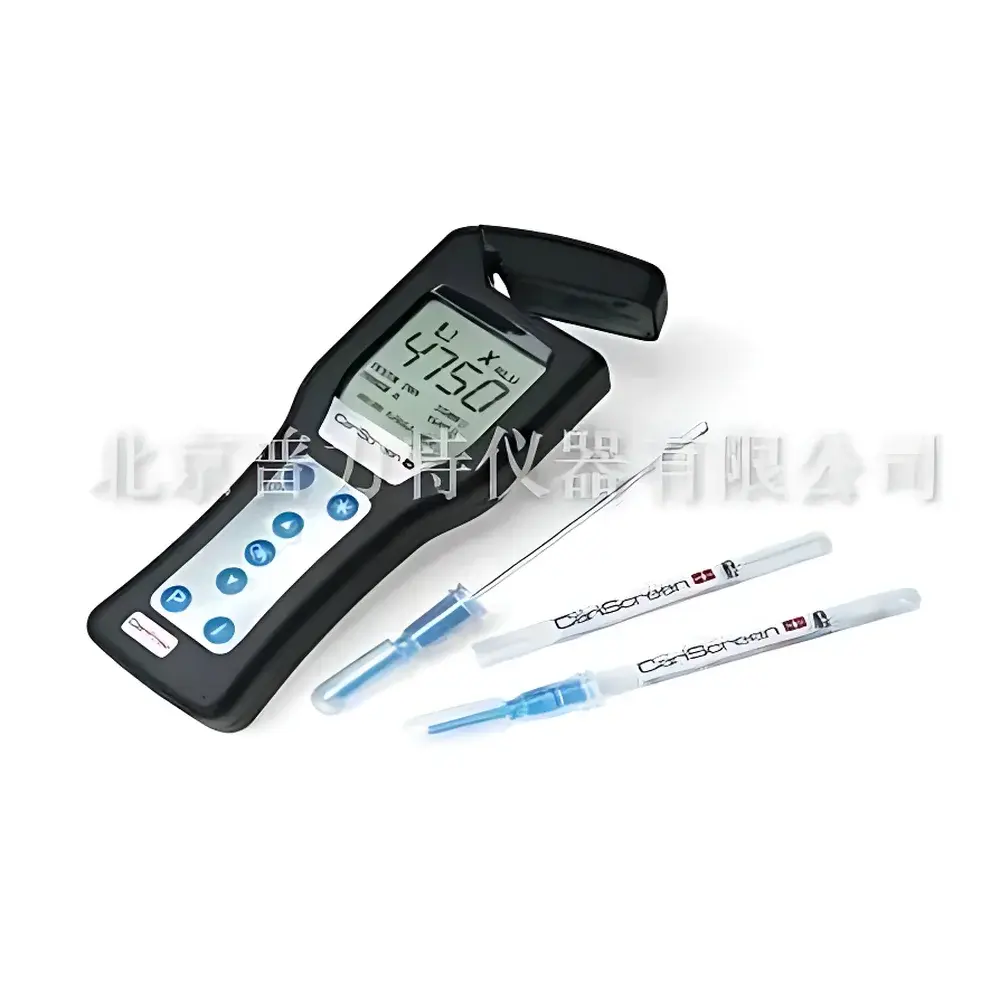
CariScreen ATP Bioluminescence Detector
| Origin | USA |
|---|---|
| Manufacturer Type | Authorized Distributor |
| Origin Category | Imported |
| Model | CariScreen |
| Price Range | USD 2,800–7,000 |
Overview
The CariScreen ATP Bioluminescence Detector is a field-deployable, handheld luminometer engineered for rapid, quantitative assessment of surface and liquid hygiene status via adenosine triphosphate (ATP) bioluminescence. It operates on the well-established biochemical principle that intracellular ATP concentration correlates linearly with viable microbial biomass—enabling indirect quantification of total aerobic microorganisms (colony-forming units, CFU) in real time. Unlike culture-based methods requiring 24–72 hours, CariScreen delivers objective, instrument-calibrated Relative Light Unit (RLU) readings within 15 seconds per test, making it a foundational tool for environmental monitoring programs aligned with HACCP, ISO 22000, and FDA Food Safety Modernization Act (FSMA) preventive controls frameworks.
Key Features
- Compact ergonomic design: Dimensions of 72 × 191 × 32 mm and weight of 260 g enable single-hand operation and extended field use without fatigue.
- High-sensitivity photomultiplier tube (PMT) detector optimized for low-light bioluminescent signal capture across the 350–650 nm spectral range.
- Backlit LCD display with intuitive icon-driven menu navigation—no software training required for routine operation.
- Robust thermal stability: Validated performance across 5–40 °C ambient temperature and 20–85% non-condensing relative humidity.
- Reproducible quantification: Measurement repeatability ≤ ±5% RLU or ±5 RLU (whichever is greater), verified per ASTM E2694-21 standard practice for ATP bioluminescence hygiene monitoring.
- Onboard data storage for up to 2,000 test records—including timestamp, RLU value, and user-defined location tags—supporting audit-ready documentation.
Sample Compatibility & Compliance
CariScreen accepts standardized ATP swab assays (12 mm diameter × 155 mm length) compatible with globally recognized reagent chemistries (e.g., luciferin-luciferase systems meeting ISO 22000 Annex A.7 requirements). Swabs are validated for recovery efficiency ≥ 85% from stainless steel, glass, plastic, and food-contact surfaces per AOAC Official Method 2015.03. The instrument complies with IEC 61010-1:2010 safety standards for electrical equipment used in laboratory environments and supports GLP/GMP traceability through secure, non-editable RLU logs. Reagent shelf life is 12 months when stored at 2–8 °C; no calibration drift observed over 10,000 measurement cycles under routine maintenance protocols.
Software & Data Management
Data export is supported via USB-C interface to Windows/macOS platforms using vendor-provided CSV-compatible desktop utility. Exported files include RLU values, test IDs, timestamps, operator codes, and optional geo-tagging metadata—structured to meet FDA 21 CFR Part 11 requirements for electronic records and signatures when paired with institutional access controls. Audit trail functionality logs all configuration changes, firmware updates, and user login events. No cloud dependency: all processing occurs locally on-device to ensure data sovereignty and compliance with EU GDPR and HIPAA-regulated environments.
Applications
- Food & beverage manufacturing: Verification of cleaning-in-place (CIP) efficacy, post-sanitization surface validation, and raw material screening per SQF Code Edition 9.2 Section 5.2.
- Healthcare facilities: Environmental surface monitoring in operating rooms, ICU zones, and endoscope reprocessing areas per CDC Guideline for Disinfection and Sterilization.
- Public health laboratories: Rapid outbreak response sampling in water distribution systems, wastewater treatment effluents, and foodborne illness investigations.
- Hospitality & retail: Daily verification of high-touch surfaces (kitchen counters, dining tables, HVAC components) against internal hygiene KPIs.
- Animal agriculture: Monitoring biosecurity compliance in hatcheries, milking parlors, and feed mill conveyors per USDA-FSIS Directive 7120.1.
FAQ
What does an RLU reading represent, and how is it correlated to microbial load?
RLU (Relative Light Unit) is a device-specific photometric output proportional to ATP concentration. Calibration curves generated using certified reference standards (e.g., Bacillus subtilis suspensions) establish empirical RLU-to-CFU relationships—typically ranging from 1–10 RLU = 1 CFU/cm² for cleanroom-grade surfaces to >100 RLU = 10³ CFU/cm² for heavily contaminated food contact zones.
Can CariScreen differentiate between bacterial ATP and residual organic matter?
No—ATP originates from all metabolically active cells (bacteria, yeasts, molds, mammalian debris). Therefore, RLU reflects total bioburden. For bacterial specificity, users must pair CariScreen with enzymatic or chemical pretreatment steps (e.g., DNase/RNase digestion) or confirmatory microbiological culture.
Is firmware update capability available, and how is it performed?
Yes—firmware updates are delivered quarterly via encrypted USB drive and installed through the device’s Settings > System Update menu. Each release includes enhanced noise suppression algorithms and expanded regulatory reporting templates.
What battery life can be expected during continuous field use?
Two AA alkaline batteries provide ≥ 8 hours of continuous operation (≈ 200 tests) at 25 °C. Low-power mode automatically engages after 60 seconds of inactivity to extend service life.
Does CariScreen support multi-user authentication for regulated environments?
Yes—administrator-configurable user profiles (up to 16) with role-based permissions (Operator, Supervisor, Admin) enforce procedural accountability per ISO/IEC 17025:2017 clause 6.2.3.






