
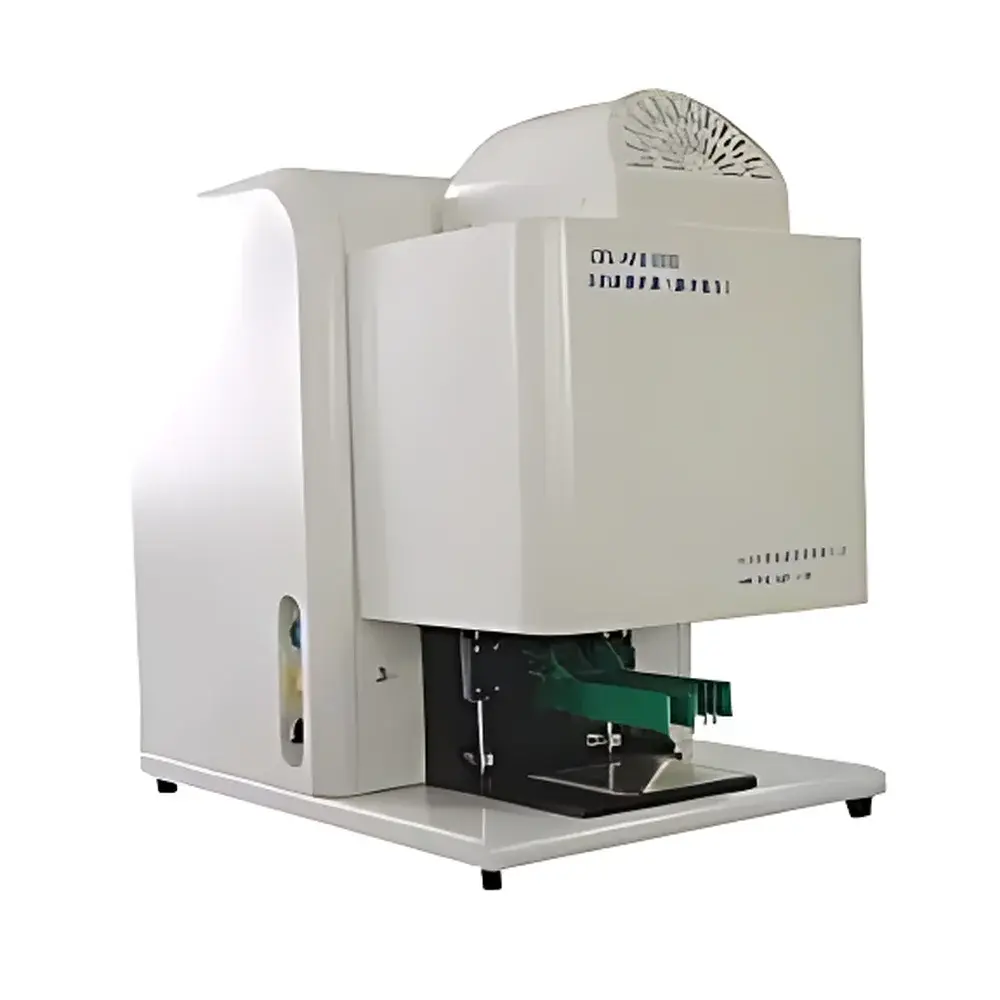
CEL-AFS1000 Solar Simulator by CEA (China Education AuLight Source)
| Brand | CEA |
|---|---|
| Origin | Beijing, China |
| Manufacturer Type | OEM Manufacturer |
| Country of Origin | China |
| Model | CEL-AFS1000 |
| Price Range | USD 14,000 – 42,000 |
| Trigger Mode | Pulsed Xenon |
| Spectral Class | IEC 60904-9 AM1.5G Class A |
| Illuminated Area | 1000 px × 1000 px (≈ 25.4 cm × 25.4 cm) |
| Irradiance Uniformity | ±2% |
| Long-Term Instability (LTI) | ±1% |
| Short-Term Instability (STI) | ±0.5% |
| Pulse Width | 10 ms |
| Lamp Lifetime | 200,000 flashes |
| Irradiance Range | 200–1200 mW/cm² (calibrated at 1000 mW/cm²) |
| Voltage Measurement Range | 0–1.000 V |
| Current Measurement Range | 0–0.2 A / 0–2.0 A / 0–12.0 A |
| Reverse Voltage Range | 0–20 V |
| Reverse Current Range | 0–5 A |
| Voltage Resolution | 1 mV |
| Current Resolution | 1 mA |
| Temperature Resolution | 0.1 °C |
| Measurement Repeatability | < ±0.5% |
| Test Cycle Time | < 2 s |
Overview
The CEL-AFS1000 Solar Simulator is a Class A pulsed xenon-based photovoltaic characterization system engineered for high-throughput, metrologically traceable evaluation of solar energy conversion devices. It operates on the principle of flash-type illumination—delivering a precisely timed, spectrally matched (IEC 60904-9 AM1.5G) light pulse to minimize thermal loading during measurement while enabling rapid device interrogation. Designed for laboratory and pilot-line environments, the system supports standardized photovoltaic parameter extraction—including open-circuit voltage (Voc), short-circuit current (Isc), maximum power point (Pmax), fill factor (FF), power conversion efficiency (η), series resistance (Rs), shunt resistance (Rsh), reverse saturation current, and temperature-corrected I-V-P curve generation. Its 25.4 cm × 25.4 cm (1000 px × 1000 px) uniform irradiation field accommodates standard silicon wafers (e.g., 156 mm × 156 mm), perovskite mini-modules, dye-sensitized cells, and thin-film substrates up to 10 cm × 10 cm without edge effects.
Key Features
- IEC 60904-9:2020 Class A spectral match (AM1.5G), verified via NIST-traceable spectroradiometric calibration
- Pulsed xenon lamp with 10 ms pulse width, optimized for low-thermal-drift measurement of temperature-sensitive devices
- Irradiance uniformity ≤ ±2% across full 25.4 cm × 25.4 cm test area, validated using ISO 9050-compliant mapping protocol
- Long-term irradiance stability ≤ ±1% (LTI) and short-term stability ≤ ±0.5% (STI) over 1000 consecutive flashes
- Four-wire (Kelvin) voltage/current sensing architecture eliminates lead resistance error in low-impedance PV devices
- Integrated pneumatic buffer mechanism ensures consistent contact pressure and mechanical repeatability across >800 samples/hour
- Real-time auto-compensation for irradiance drift and temperature-induced voltage shift during sequential testing
- Modular hardware design supports optional IR pyrometer integration for non-contact surface temperature monitoring (±0.5 °C accuracy)
Sample Compatibility & Compliance
The CEL-AFS1000 is compatible with crystalline silicon (c-Si), multicrystalline silicon (mc-Si), CIGS, CdTe, organic photovoltaics (OPV), perovskite solar cells (PSCs), and dye-sensitized solar cells (DSSCs). All electrical measurements adhere to ASTM E1036, IEC 61215, IEC 61646, and IEC 60904-1 standards for PV device characterization. The system’s firmware and data logging architecture support GLP-compliant audit trails, including timestamped operator ID, calibration certificate references, ambient temperature/humidity metadata, and lamp flash count tracking. While not FDA 21 CFR Part 11-certified out-of-the-box, its database export functions (CSV, SQLite, XML) enable integration into validated LIMS environments requiring electronic record integrity.
Software & Data Management
The embedded control software provides real-time I-V curve visualization, automatic Pmax detection, and configurable sweep parameters (voltage step size, dwell time, polarity reversal). Raw data—including voltage, current, irradiance, and thermocouple readings—is stored with 16-bit resolution and synchronized timestamps. Export formats include IEEE-compliant .ivt files for third-party analysis (e.g., PVsyst, SCAPS), as well as printable PDF reports with pass/fail flags against user-defined efficiency or Rs/Rsh thresholds. Database management supports batch-level grouping, statistical process control (SPC) charts (X-bar/R), and automated binning by performance tier (e.g., Grade A/B/C per IEC 61215 Annex A). Firmware updates are delivered via secure USB interface with SHA-256 signature verification.
Applications
- R&D labs evaluating novel absorber materials under standardized illumination conditions
- Quality assurance workflows for wafer-level and module-level PV production lines
- Stability testing protocols (e.g., ISOS-L-1) requiring repeatable flash-to-flash irradiance delivery
- Temperature-dependent quantum efficiency studies using synchronized IR thermometry
- Calibration transfer between reference cells and working standards in metrology laboratories
- Education platforms demonstrating fundamental PV physics principles (e.g., diode ideality factor extraction)
FAQ
What standards does the CEL-AFS1000 comply with for spectral classification?
It meets IEC 60904-9:2020 Class A requirements for spectral match, spatial uniformity, and temporal stability, verified with calibrated spectroradiometers traceable to NIM (National Institute of Metrology, China).
Can the system measure devices larger than 156 mm × 156 mm?
The 25.4 cm × 25.4 cm uniform field supports substrates up to 100 mm × 100 mm at full Class A uniformity; larger areas require custom collimation optics or multi-flash stitching protocols.
Is four-wire measurement mandatory for all test configurations?
Yes—the instrument’s current source and voltage sense terminals are hardwired in Kelvin configuration to eliminate contact resistance artifacts, especially critical for low-Rs thin-film devices.
How is lamp aging compensated during long-term operation?
Each flash cycle logs integrated irradiance via built-in photodiode array; software applies real-time gain correction to maintain 1000 mW/cm² equivalence across the lamp’s 200,000-flash service life.
Does the system support external trigger synchronization with other instruments?
Yes—it features TTL-compatible trigger input/output ports for phase-locked acquisition with oscilloscopes, lock-in amplifiers, or environmental chambers.



