
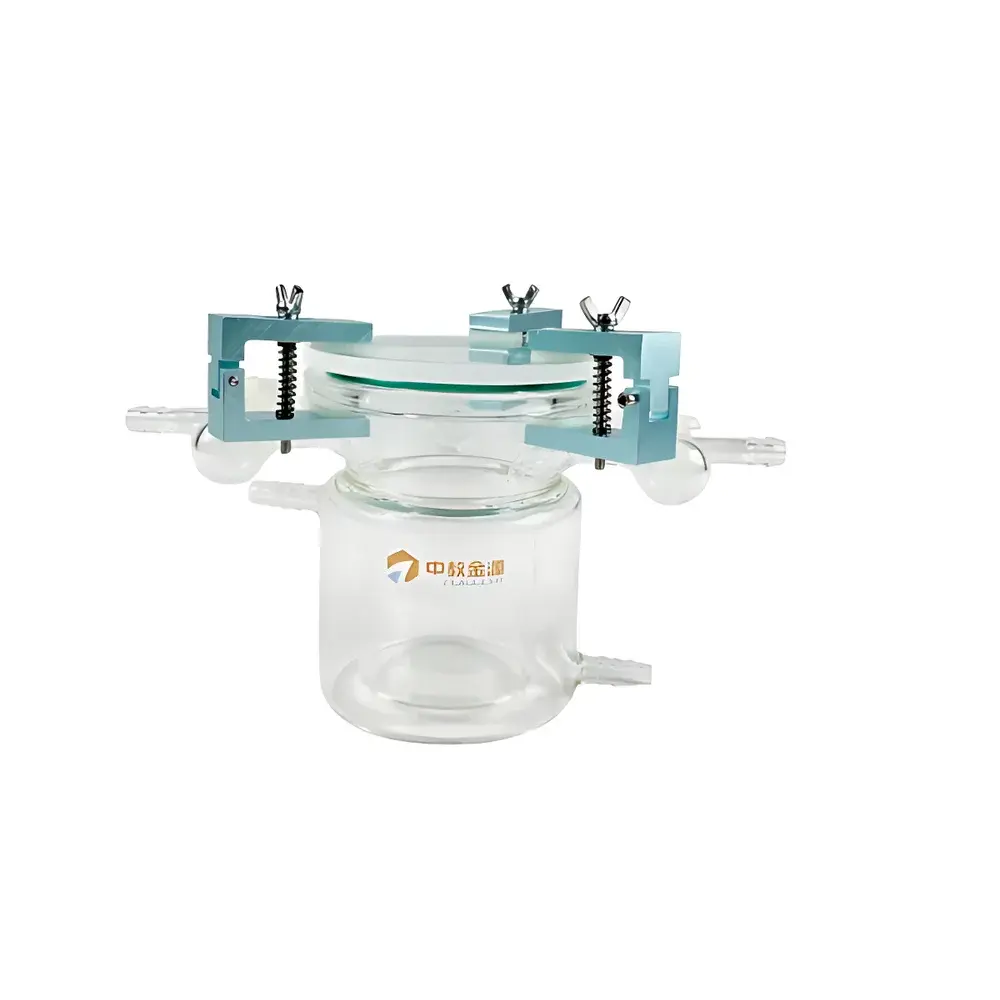
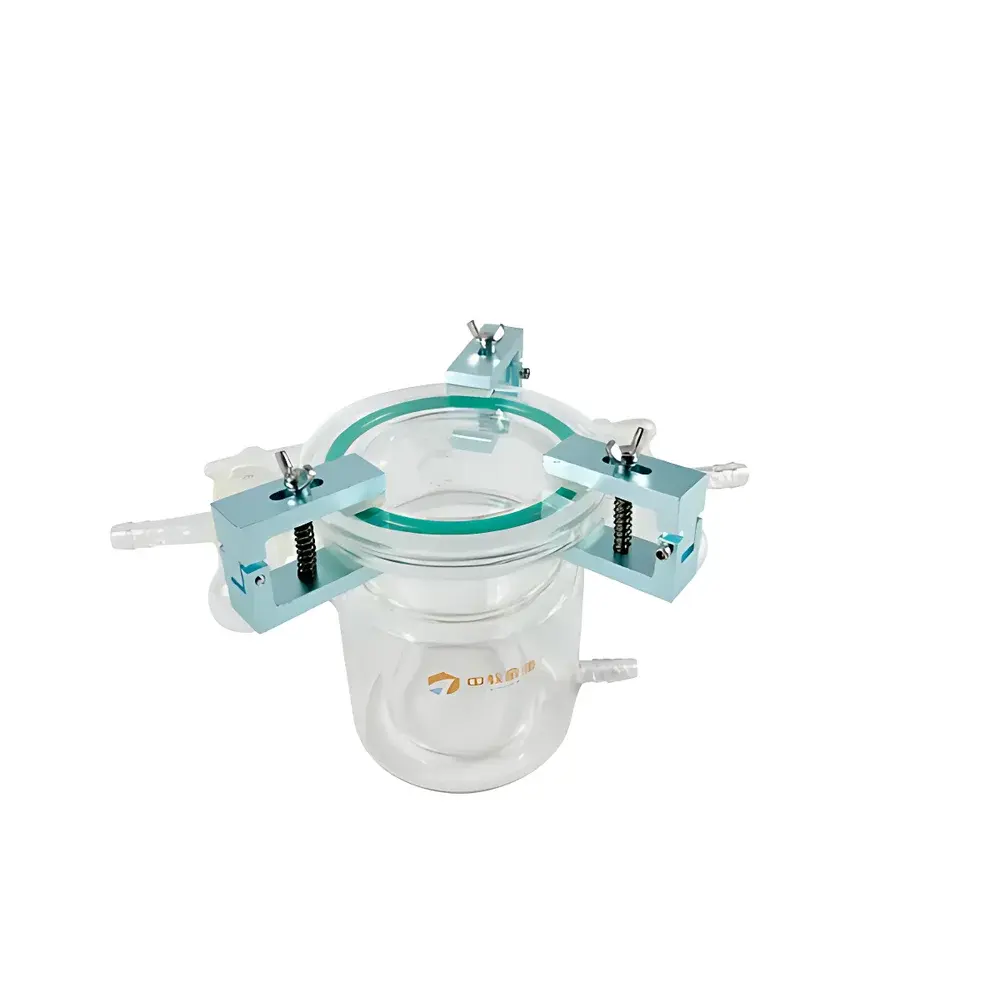
CEL-APR100H-3 Photocatalytic Reactor with Integrated Temperature Control
| Brand | CEL (China Education Goldsource) |
|---|---|
| Origin | Beijing, China |
| Manufacturer Type | Direct Manufacturer |
| Origin Category | Domestic (China) |
| Model | CEL-APR100H-3 |
| Volume Capacity | 100 mL |
| Construction Material | Borosilicate Glass (一体成型, seamless borosilicate glass body) |
| Operating Pressure | Ambient (atmospheric) |
| Jacket Type | Integrated Circulating Water Jacket for Precise Temperature Control |
| Optical Window | UV-Grade Fused Silica Quartz (≥185 nm transmission) |
| Gas Inlet | Bottom-Submerged Tubing with Inline Glass Stopcock |
| Sampling Port | Standardized Septum-Piercing Inlet (1/4″ NPT or GL14 compatible) |
| Sealing | Dual O-Ring C-Type Flange Assembly |
| Accessories Included | (1) UV-Grade Quartz Plate, (2) 2 × Chemically Resistant Fluoroelastomer (FKM) O-Rings, (3) 3 × Stainless Steel C-Clamps, (4) 2 × 10 mL Luer-Lock Plastic Syringes, (5) 1 × Stainless Steel Hypodermic Needle (22G, 40 mm) |
Overview
The CEL-APR100H-3 Photocatalytic Reactor with Integrated Temperature Control is a purpose-engineered benchtop system designed for reproducible, parameter-controlled photochemical reaction studies under ambient pressure. Built around a monolithic, seamless borosilicate glass vessel, the reactor integrates a precision-machined double-wall water jacket enabling active thermal regulation via external circulator coupling (e.g., ±0.1 °C stability over 0–80 °C range). Its optical architecture centers on a vertically mounted, 25.4 mm diameter UV-grade fused silica quartz window (transmission >85% down to 185 nm), positioned orthogonal to incident irradiation—ensuring uniform photon flux delivery across the reaction volume. The bottom-submerged gas inlet tube and inline borosilicate glass stopcock allow controlled introduction and isolation of reactive gases (e.g., H₂, O₂, CO₂, Ar), while the septum-piercing sampling port supports in-situ liquid-phase extraction without system depressurization. This configuration satisfies fundamental requirements for mechanistic photocatalysis research, including light-driven hydrogen evolution (HER), oxygen evolution (OER), CO₂ photoreduction, and organic pollutant degradation.
Key Features
- Monolithic borosilicate glass construction with chemically inert surface and high thermal shock resistance (up to ΔT = 120 °C)
- Integrated double-wall water jacket with standardized 6 mm quick-connect fittings for seamless integration with laboratory chillers or heating circulators
- UV-transparent fused silica quartz optical window certified for spectral transmission ≥85% at 254 nm and ≥70% at 185 nm
- Bottom-fed gas dispersion system with calibrated glass stopcock (0–100% flow modulation) and leak-tight VCR-compatible tubing interface
- GL14-threaded or 1/4″ NPT sampling port fitted with PTFE/silicone septum for repeated syringe-based liquid sampling under inert atmosphere
- C-type stainless steel flange clamping system with dual FKM O-rings ensuring ASTM E2912-compliant sealing integrity at ambient pressure
- No internal metal components—eliminates catalytic interference or leaching during sensitive redox photocatalysis
Sample Compatibility & Compliance
The CEL-APR100H-3 accommodates heterogeneous photocatalysts (e.g., TiO₂, g-C₃N₄, MOFs), colloidal suspensions, and gas-saturated aqueous/organic solutions. Its all-glass wetted path complies with ISO 3585 specifications for borosilicate glass 3.3 and meets USP Class VI biocompatibility requirements for extractables testing. The reactor design aligns with ASTM E2912 (Standard Practice for Testing Photocatalytic Activity) and supports GLP-compliant experimental documentation when paired with validated temperature logging and irradiance calibration protocols. No electrical components reside within the reaction zone—ensuring intrinsic safety per IEC 60079-0 for use with flammable vapors.
Software & Data Management
As a hardware-only platform, the CEL-APR100H-3 operates without embedded firmware or proprietary software. Temperature monitoring and control are executed externally via industry-standard PID controllers (e.g., Huber, Julabo, Thermo Fisher) interfaced through 0–10 V analog or RS485 Modbus RTU signals. Irradiance data must be acquired separately using NIST-traceable radiometers (e.g., ILT950UV, Gigahertz-Optik X1). All operational parameters—including jacket inlet/outlet temperatures, gas flow rates (via mass flow controller), and sampling timestamps—are recorded manually or imported into ELN systems (e.g., LabArchives, Benchling) to satisfy FDA 21 CFR Part 11 audit trail requirements.
Applications
- Quantitative assessment of quantum yield in photocatalytic H₂ production using Pt/TiO₂ under simulated solar irradiation
- Kinetic modeling of gas-phase VOC oxidation on WO₃ under UVA (365 nm) excitation
- In-situ monitoring of CO₂ reduction intermediates (e.g., formate, methanol) via periodic headspace GC analysis
- Comparative screening of perovskite photocatalysts for selective O₂ evolution in neutral pH electrolytes
- Photostability evaluation of organic dyes under controlled thermal load (e.g., 25 °C vs. 60 °C) to decouple thermal from photochemical degradation pathways
FAQ
Is the quartz window replaceable, and what is its maximum service temperature?
Yes—the UV-grade fused silica plate is field-replaceable using standard torque-limited flange assembly; continuous service limit is 800 °C in inert atmosphere, though operational ceiling is constrained by O-ring rating (200 °C for FKM).
Can this reactor be adapted for vacuum operation?
No—it is engineered exclusively for ambient-pressure applications; vacuum compatibility would require redesign of the flange geometry, seal compression profile, and structural wall thickness per ASME BPVC Section VIII.
What light sources are compatible with the optical window?
Xenon arc lamps (with AM1.5G filters), LED arrays (365/405/450 nm), and low-pressure mercury lamps (254 nm); collimated beam diameters ≤22 mm ensure full window illumination without vignetting.
Does the reactor support automated gas dosing?
Not natively—but it interfaces directly with commercial mass flow controllers (e.g., Brooks 4800 series) via the bottom gas inlet and glass stopcock, enabling programmable multi-gas sequences when integrated into custom automation frameworks.



