
CEL-GS100 Reflux-Type Gas–Solid Photoreaction Module
| Brand | CEL (China Education Goldsource) |
|---|---|
| Model | CEL-GS100 |
| Reactor Compatibility | CEL-HPR100T, CEL-MPR100, CEL-HPR250T, CEL-MPR250 |
| Construction Material | ASTM A240 316L stainless steel |
| Sintered Frit Pore Size | <30 µm |
| Inlet Connection | M3 threaded port |
| Operating Conditions | High-temperature & high-pressure compatible |
| Origin | Beijing, China |
| Manufacturer Type | OEM producer |
| Origin Classification | Domestic (China-manufactured) |
Overview
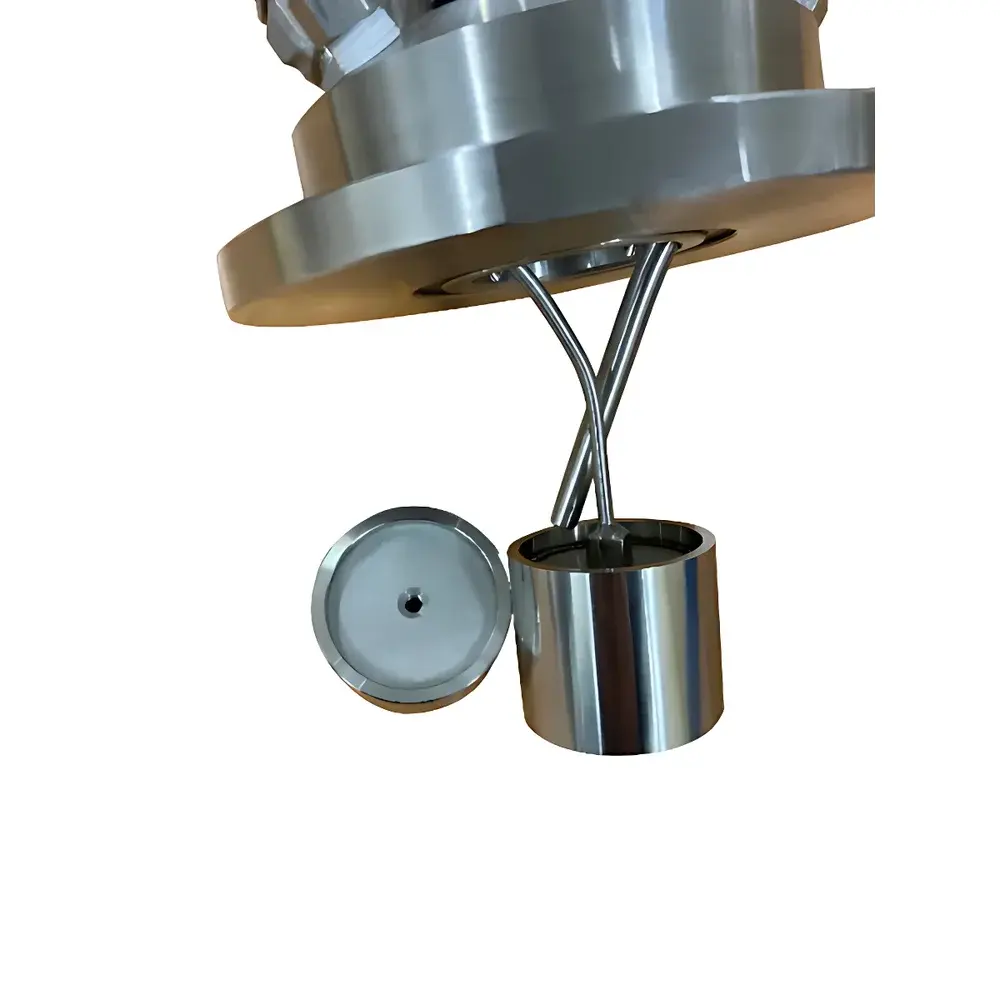
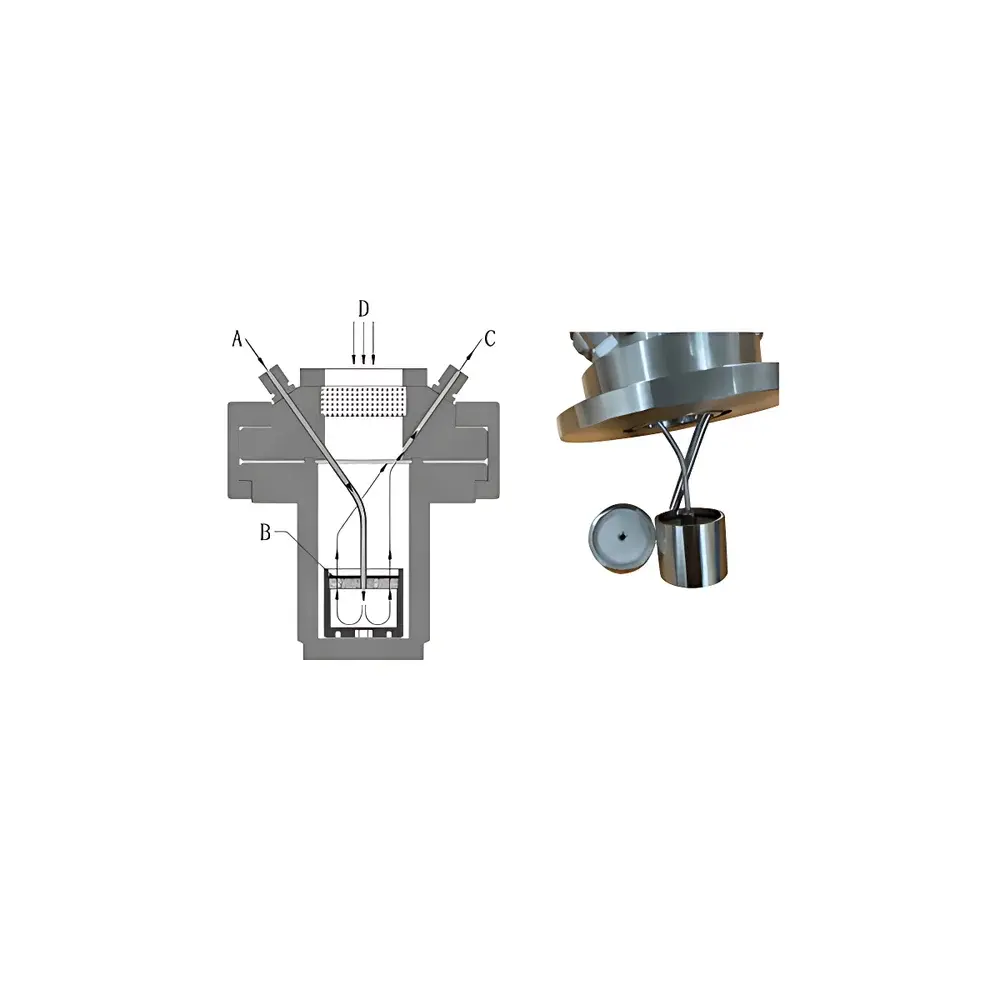
The CEL-GS100 Reflux-Type Gas–Solid Photoreaction Module is an engineered add-on component designed to convert standard liquid-phase photochemical batch reactors—such as the CEL-HPR100T, CEL-MPR100, CEL-HPR250T, and CEL-MPR250—into fully functional gas–solid heterogeneous photoreactors. Unlike conventional gas-introduction configurations where reactant gases flow directly over or through loosely packed catalyst beds, the CEL-GS100 employs a purpose-built reflux architecture: incoming process gas first enters a dedicated reflux chamber, then passes uniformly through a precision-sintered 316L stainless steel frit (<30 µm pore size) before contacting the photocatalyst layer. This hydrodynamic design ensures laminar, low-resistance gas distribution across the entire irradiated catalyst surface—maximizing photon utilization efficiency, minimizing thermal and concentration gradients, and enabling true kinetic control in gas-phase photocatalytic studies (e.g., CO₂ reduction, H₂ evolution, VOC oxidation, and selective organic transformations under UV–vis illumination).
Key Features
- Reflux-driven gas distribution architecture for uniform catalyst exposure and minimized channeling effects
- High-integrity 316L stainless steel construction with electropolished internal surfaces—certified for sustained operation under elevated temperature (≤400 °C) and pressure (≤10 MPa) conditions
- Sintered metal frit (pore size <30 µm) providing consistent gas dispersion, mechanical stability, and resistance to thermal shock and chemical corrosion
- Direct M3-threaded inlet interface—enabling rapid, leak-tight integration without adapters or gasket dependency
- Optimized optical path geometry: maximized irradiated surface area while maintaining full reactor volume accessibility for in situ spectroscopic monitoring (e.g., DRIFTS, Raman)
- Modular design allows easy disassembly, catalyst reloading, and ultrasonic cleaning—reducing cross-contamination risk between experiments
- No internal dead volumes or stagnant zones—ensuring quantitative separation of feed and product streams for accurate turnover frequency (TOF) and selectivity assessment
Sample Compatibility & Compliance
The CEL-GS100 supports a broad range of solid photocatalysts—including TiO₂, g-C₃N₄, MOFs, perovskites, and plasmonic nanoparticles—mounted as thin films, pressed pellets, or loose powders on compatible substrates. Its all-metal wetted path complies with ASTM F899 (standard specification for stainless steels used in surgical instruments) and meets material traceability requirements per ISO 10474. The module is compatible with GLP-compliant experimental workflows when integrated into CEL’s certified photoreactor systems; full audit trails for operational parameters (gas flow, temperature, irradiance) can be maintained via optional digital I/O interfaces aligned with FDA 21 CFR Part 11 data integrity guidelines.
Software & Data Management
While the CEL-GS100 itself is a passive hardware module, it is fully interoperable with CEL’s proprietary reaction control software suite (v5.2+), which enables synchronized logging of mass flow controller outputs, thermocouple readings, light source intensity profiles, and online GC/FID or MS detector signals. All timestamps, setpoints, and system events are stored in encrypted SQLite databases with SHA-256 hash verification—supporting retrospective validation and electronic signature workflows required under ISO/IEC 17025 and GMP Annex 11.
Applications
- Gas-phase photocatalytic hydrogen production from humidified methanol or water vapor
- CO₂ photoreduction to CH₄, CO, or C₂H₄ under simulated solar irradiation
- Photocatalytic degradation of NOₓ, NH₃, or formaldehyde in air purification research
- Structure–activity relationship studies requiring precise control of gas residence time and surface coverage
- Accelerated catalyst screening under industrially relevant T/P conditions (e.g., 150–300 °C, 1–5 bar)
- In situ/operando characterization coupling (e.g., XAS, ambient-pressure XPS) due to its planar optical access and vacuum-compatible sealing
FAQ
Can the CEL-GS100 be used with non-CEL reactor systems?
Yes—provided the host reactor features a standardized 10–32 UNF or M3 threaded port and sufficient internal headspace (≥25 mm clearance above catalyst bed) for reflux chamber integration.
Is the sintered frit replaceable?
Yes—the frit is press-fit into a removable 316L carrier sleeve and can be exchanged using standard torque-controlled tools without welding or machining.
Does the module affect photon flux distribution inside the reactor?
No—its low-profile design and optically transparent quartz window (optional upgrade) preserve >98.5% of incident irradiance across 250–800 nm, verified by calibrated spectroradiometry per ISO/CIE 19476.
What maintenance protocols are recommended?
After each high-temperature run (>200 °C), perform ultrasonic cleaning in 10% nitric acid (ASTM A967 passivation solution), followed by deionized water rinse and nitrogen purge—validated per ASTM A380 cleaning verification standards.
Is third-party calibration support available?
CEL provides NIST-traceable flow and temperature calibration certificates upon request; field verification services are offered through authorized regional partners in EU, NA, and APAC regions.
Related Products



