
CEL-HT5 Offline Photoelectrochemical Reaction Cell
| Brand | CEL |
|---|---|
| Origin | Beijing, China |
| Manufacturer Type | Direct Manufacturer |
| Origin Category | Domestic (China) |
| Model | CEL-HT5 |
| Price | USD 2,450 (approx.) |
Overview
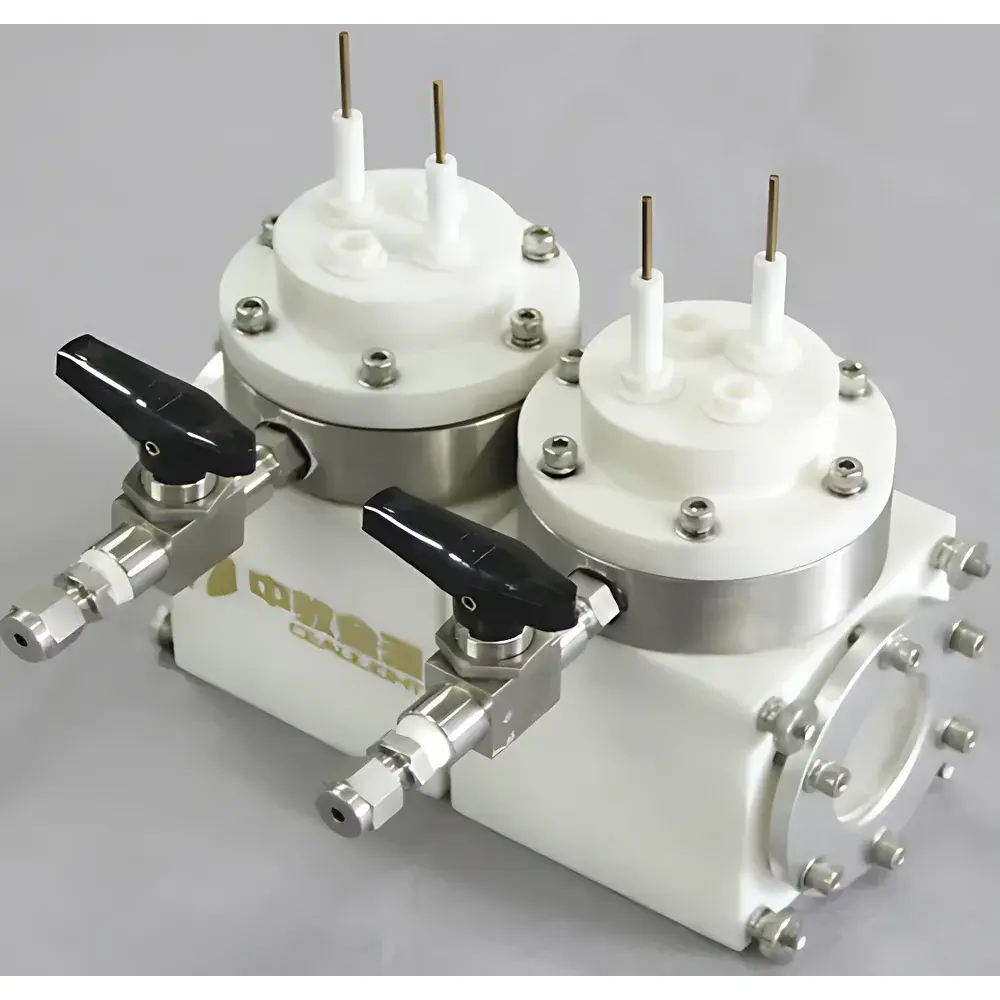
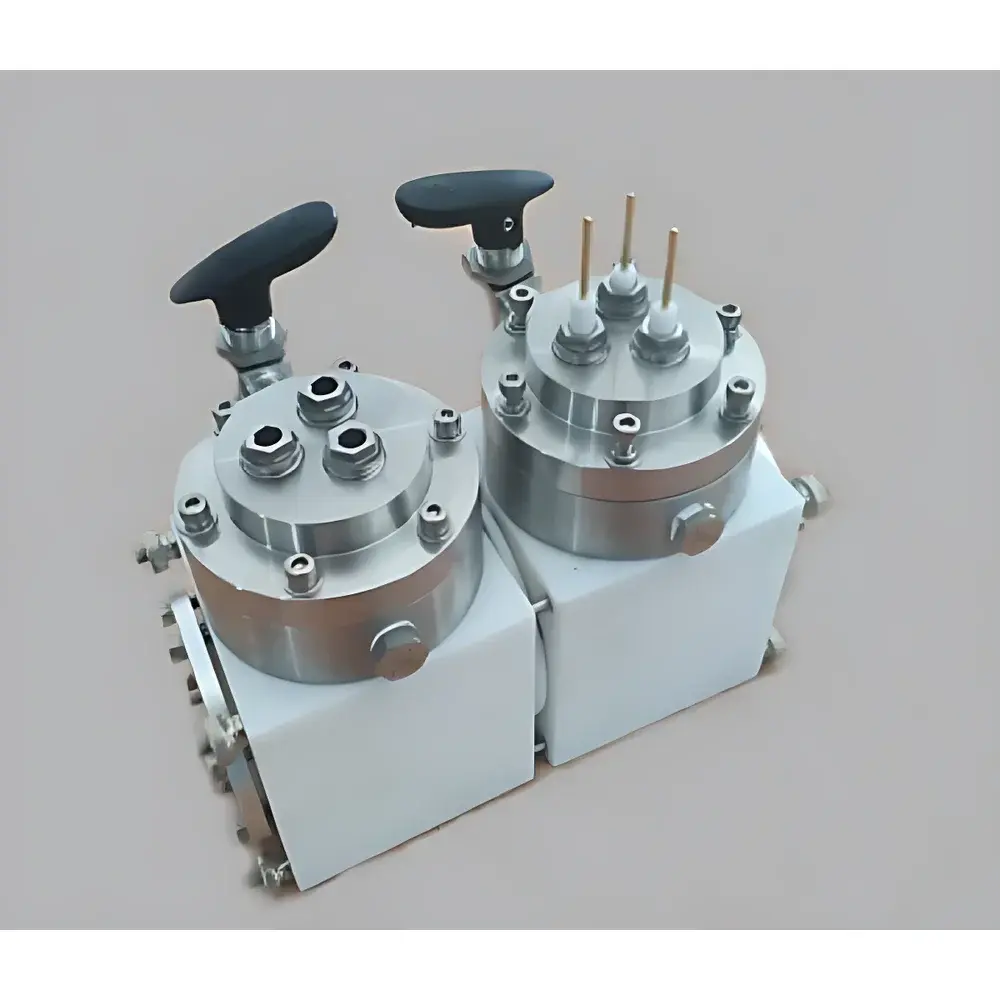
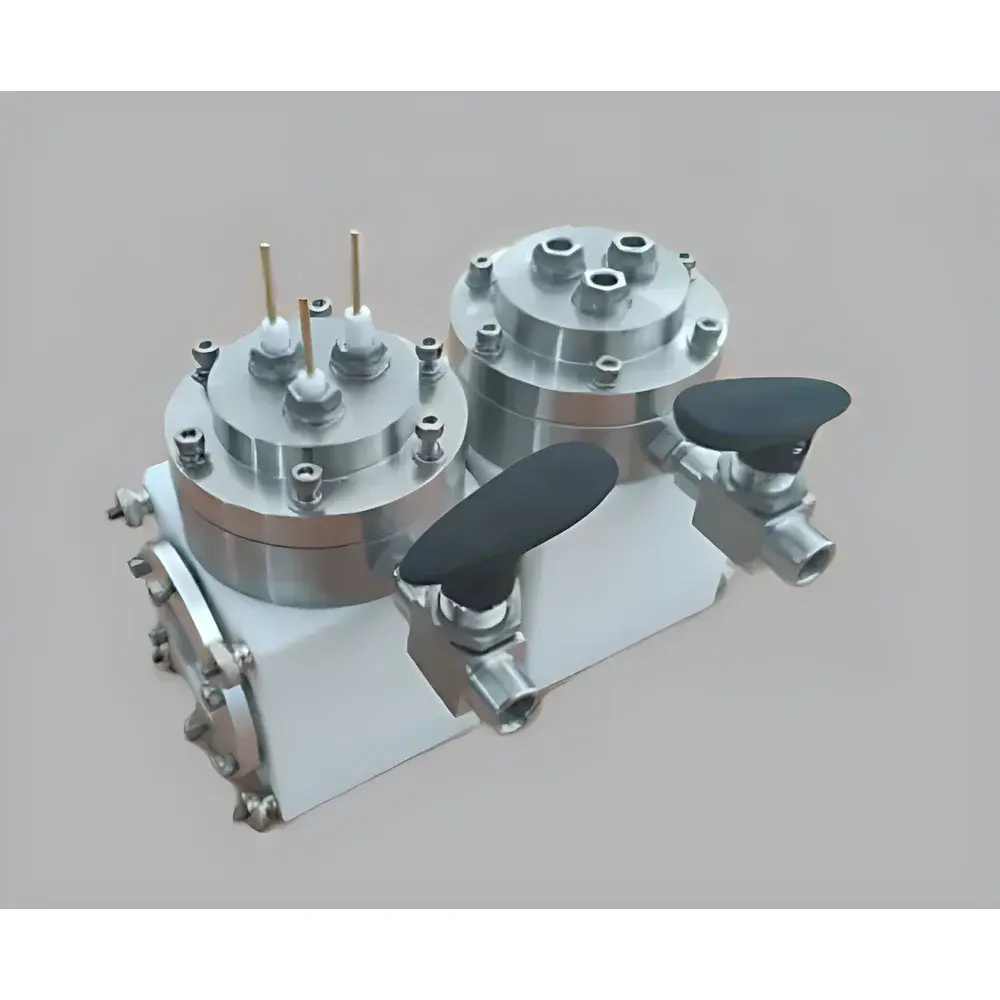
The CEL-HT5 Offline Photoelectrochemical Reaction Cell is a dual-compartment, modular electrochemical cell engineered for controlled photoelectrochemical (PEC) characterization under ambient or inert atmosphere conditions. It operates on the principle of spatially separated redox reactions—where photoexcitation occurs in one chamber (typically the photoanode or photocathode compartment) while counter-electrode processes occur in the other—enabling precise measurement of photocurrent, incident photon-to-current efficiency (IPCE), and charge-transfer kinetics. Designed for benchtop offline use, the CEL-HT5 eliminates integration constraints of in-situ flow systems while maintaining compatibility with standard potentiostats, light sources (including solar simulators and monochromated LEDs), and optical spectrometers. Its flanged mechanical architecture ensures gas-tight sealing, reproducible electrode alignment, and straightforward disassembly for cleaning or component replacement.
Key Features
- Dual independent reaction chambers with removable central partition—enables asymmetric electrolyte composition, selective ion transport control, and true two-electrode or three-electrode PEC configuration.
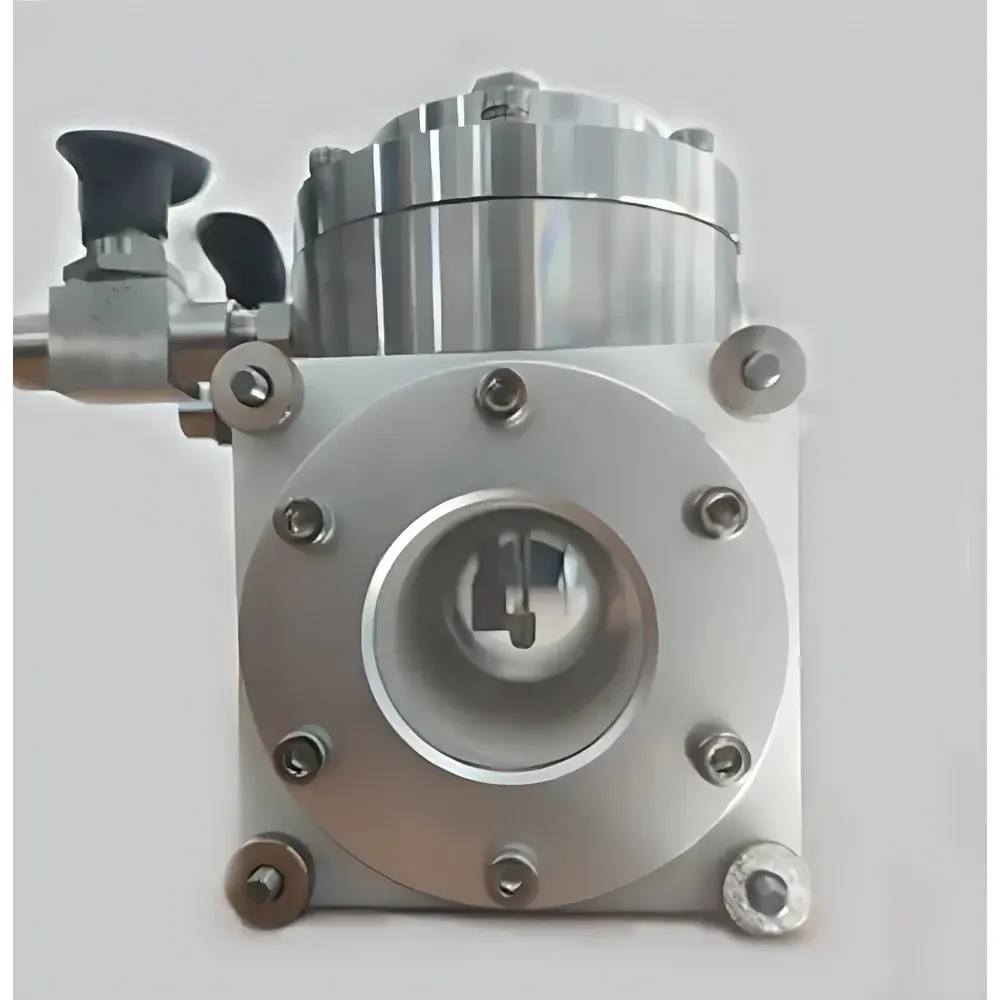
- Standard quartz optical windows (10 mm diameter, ≥92% transmission from 190–2500 nm) mounted via stainless-steel compression flanges; compatible with optional CaF₂ (UV-transmissive down to 125 nm) or KBr (IR-transmissive up to 25 µm) windows upon request.
- Integrated ion-exchange membrane slot accommodating standard 25 mm diameter membranes (e.g., Nafion® 117, Fumasep® FAA-3, or custom porous separators) with defined hydraulic resistance and cation/anion selectivity.
- Electrode port geometry optimized for 6 mm OD working, counter, and reference electrodes—including Luggin capillaries—with O-ring-sealed feedthroughs and standardized BNC/SMA electrical interfaces.
- Modular design supports direct coupling to automated liquid handling modules or syringe-pump-driven offline sampling manifolds for sequential electrolyte exchange without cell disassembly.
- Constructed from electropolished 316 stainless steel and PTFE-sealed components to ensure chemical resistance against aqueous, non-aqueous, and corrosive electrolytes (pH 0–14, ≤1 M H₂SO₄ or KOH).
Sample Compatibility & Compliance
The CEL-HT5 accommodates solid-state photoelectrodes (e.g., TiO₂ nanotube arrays, BiVO₄ thin films, perovskite-coated FTO/ITO substrates), suspended photocatalyst slurries (with optional magnetic stirring inserts), and molecular photosensitizers in solution-phase configurations. All wetted materials comply with ISO 8502-3 for surface cleanliness and ASTM F86 for metallic implant-grade passivation. The cell’s mechanical integrity meets ASME B31.3 process piping standards for low-pressure static operation (<0.3 MPa). When used with certified reference electrodes (e.g., Ag/AgCl in 3 M KCl) and calibrated light sources traceable to NIST SRM 2241, data generated satisfies GLP documentation requirements for academic publication and industrial R&D reporting.
Software & Data Management
While the CEL-HT5 itself is hardware-only and requires external instrumentation control, it is fully interoperable with industry-standard electrochemical workstations (BioLogic SP-300, CH Instruments 760E, PalmSens EmStat GO) and spectral acquisition platforms (Ocean Insight USB2000+, Hamamatsu C12880MA). Experimental protocols—including chronoamperometry under chopped illumination, linear sweep voltammetry with simultaneous UV-Vis absorption monitoring, and Mott-Schottky analysis—can be scripted using Python-based libraries (e.g., PyChrono, Pycroscopy) or MATLAB Electrochemistry Toolbox. All raw current/voltage/time and wavelength/intensity datasets export in HDF5 or ASCII-compatible formats compliant with FAIR data principles (Findable, Accessible, Interoperable, Reusable), supporting long-term archival and cross-laboratory meta-analysis.
Applications
- Quantitative evaluation of semiconductor photoanode stability under operational bias in simulated seawater or acidic electrolytes.
- Screening of co-catalyst loading effects on hole-transfer kinetics via transient photocurrent decay analysis.
- Development of Z-scheme heterojunctions using membrane-separated redox mediators (e.g., IO₃⁻/I⁻, Fe³⁺/Fe²⁺).
- In situ spectroelectrochemical correlation studies combining time-resolved photocurrent with operando Raman or UV-Vis-NIR absorption.
- Calibration of quantum yield measurements for CO₂ reduction or H₂ evolution using gas chromatography-coupled headspace sampling.
FAQ
Can the CEL-HT5 be used under positive pressure or vacuum?
Yes—the flanged construction supports static pressures from 10⁻³ mbar to 0.3 MPa when equipped with appropriate elastomer gaskets (Viton® for organic solvents; EPDM for alkaline media).
Is electrode alignment adjustable within the chambers?
No—electrode positions are fixed relative to window centers for optical path consistency; however, custom-machined electrode holders with ±0.5 mm XYZ micro-adjustment are available as an OEM option.
Does the cell support rotating disk electrode (RDE) configurations?
Not natively; the CEL-HT5 is designed for stationary electrode operation. For mass-transport-controlled studies, users may integrate external rotating shafts via modified top flanges (engineering drawings provided upon request).
What certifications accompany the CEL-HT5 unit?
Each unit ships with a Certificate of Conformance (CoC) detailing material traceability (SS316 mill test report), dimensional inspection records, and leak-test validation at 0.2 MPa with helium mass spectrometry (≤1×10⁻⁹ mbar·L/s).
Can I integrate the CEL-HT5 into an automated high-throughput screening platform?
Yes—standardized 1/4″-28 UNF threaded ports and 34 mm center-to-center flange bolt patterns enable robotic arm mounting and fluidic interface via ISO-KF 16 or Swagelok® SS-4-M2 tube fittings.



