
CEL-KPR Compact High-Pressure Laboratory Reactor
| Brand | CEL (Zhongjiao Jinyuan) |
|---|---|
| Origin | Beijing, China |
| Manufacturer Type | Direct Manufacturer |
| Country of Origin | China |
| Model | CEL-KPR |
| Price | USD 1,400 (approx.) |
| Usable Volume | Micro-scale |
| Vessel Material | 316L Stainless Steel |
| Maximum Operating Pressure | 10 MPa |
| Available Capacities | 25 mL, 50 mL, 100 mL, 250 mL |
| Ultimate Vacuum | 0.1 Pa |
| Standard Sealing | Dual-line O-ring with high-temp composite gasket |
| Safety Relief Setpoint | 8 MPa |
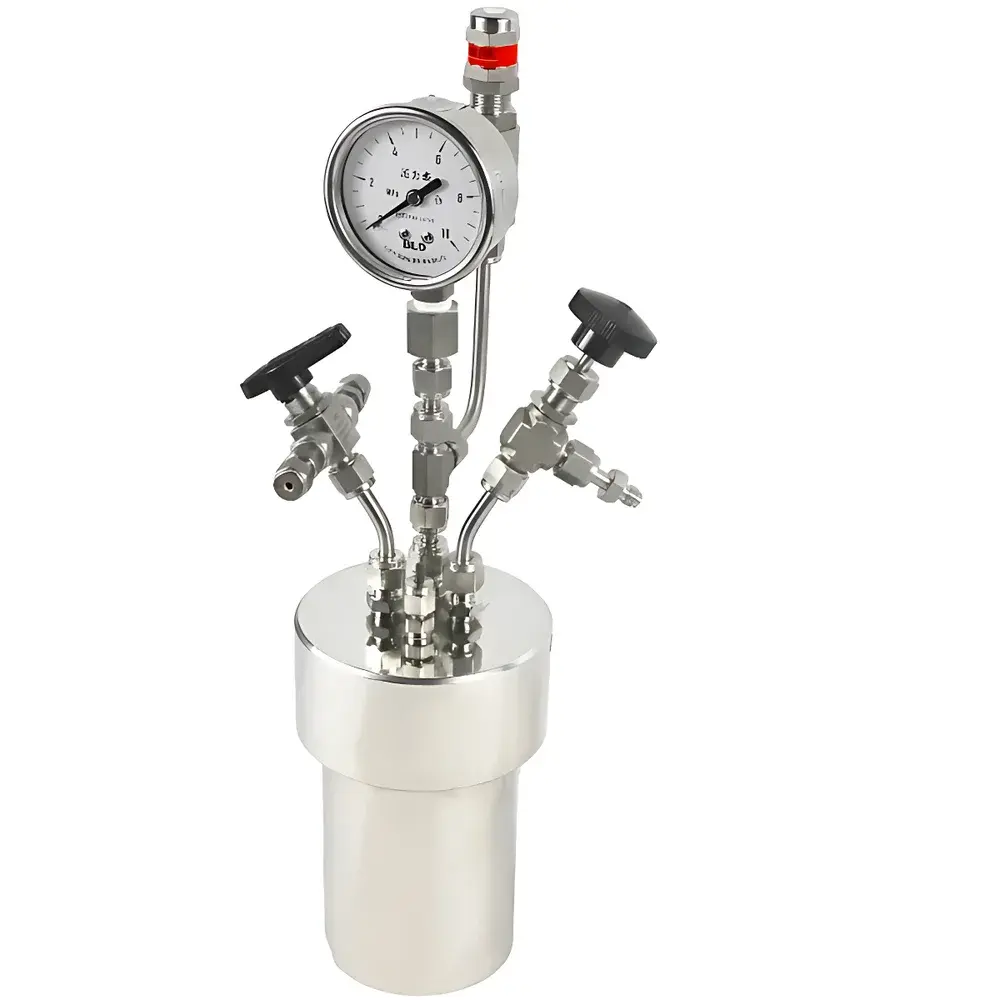
| Standard Fittings | Anlok needle valve, 3-way ball valve, pressure relief valve, thermocouple port, analog pressure gauge, spare ports |
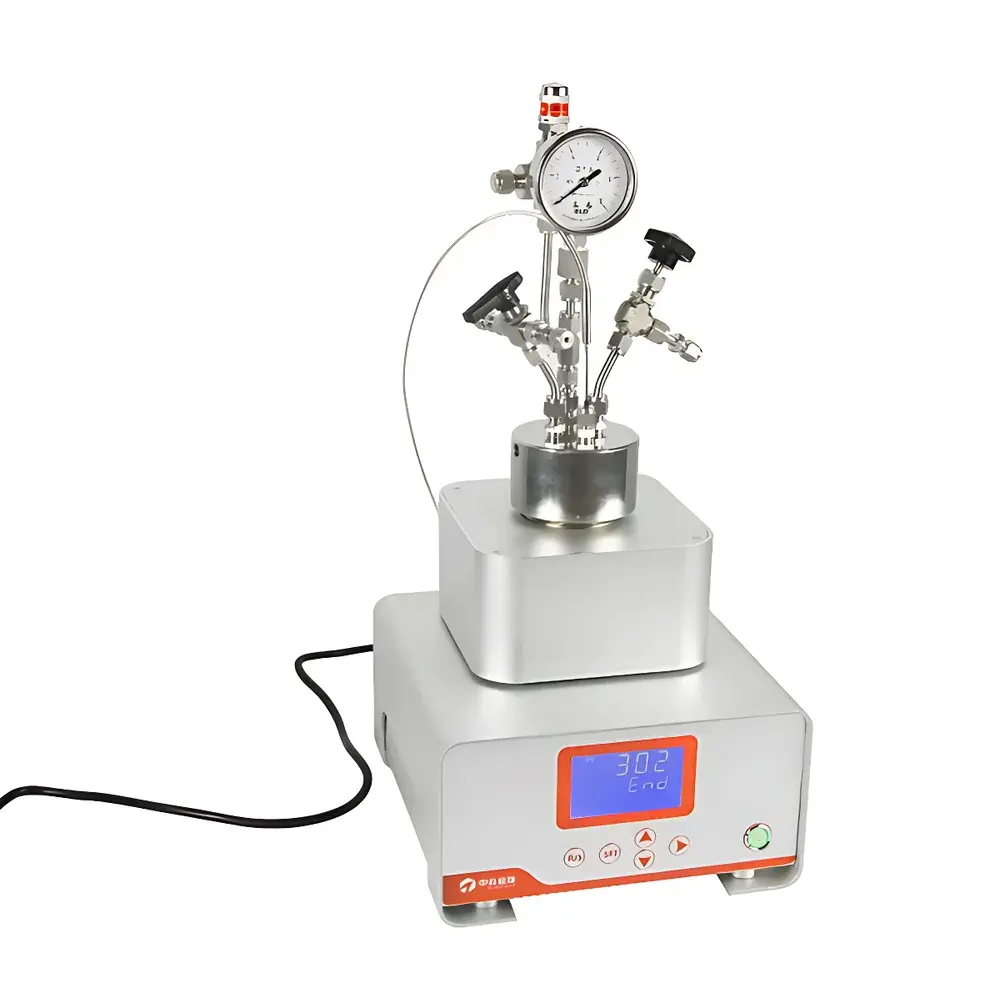
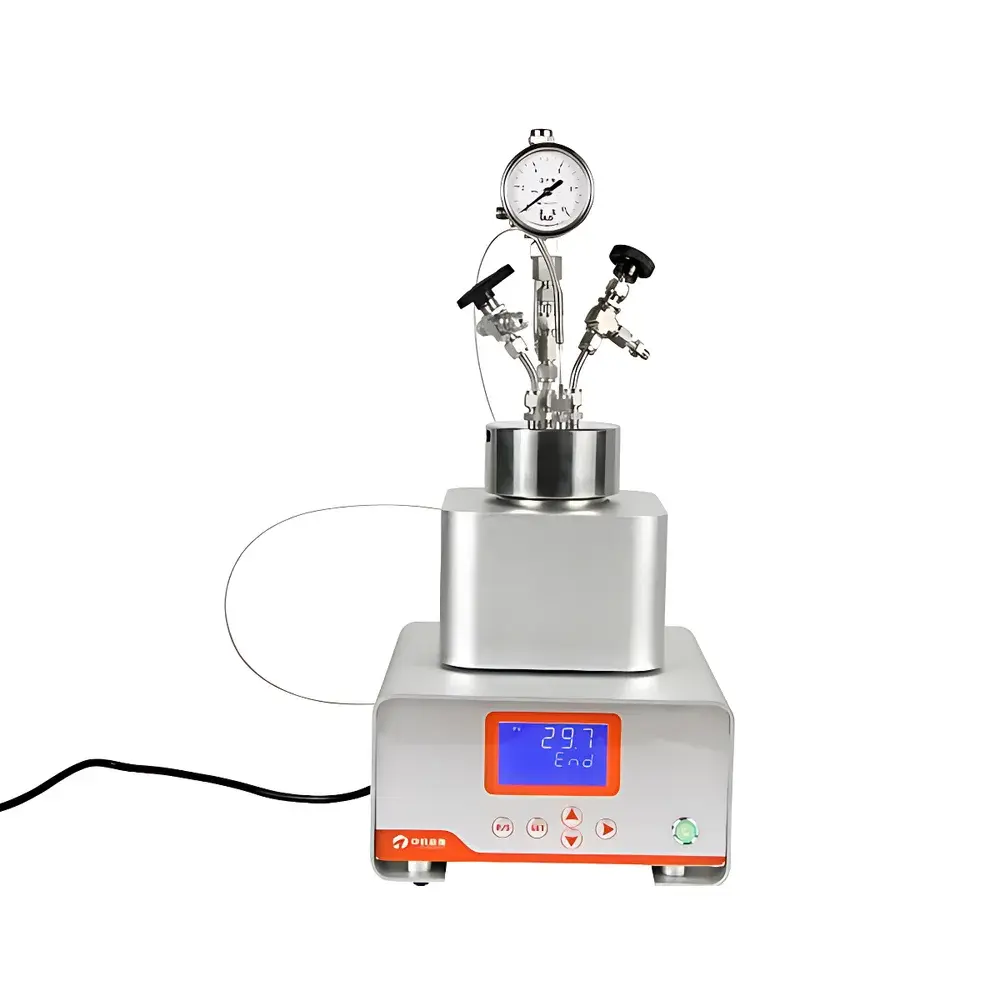
| Optional Accessories | Quartz liner (standard), PTFE-coated interior (optional), CEL-HKT100 magnetic stirring heating mantle with PID temperature control and real-time display |
Overview
The CEL-KPR Compact High-Pressure Laboratory Reactor is an engineered solution for controlled micro-scale chemical synthesis under elevated temperature and pressure conditions. Designed around Couette-type static sealing architecture with dual-line elastomeric O-ring compression and precision-machined threaded closure, the reactor eliminates the need for torque tools or external clamping systems—enabling rapid assembly, sample exchange, and cleaning between experiments. Its core measurement and operational paradigm centers on static batch reaction environments where pressure, temperature, and gas/liquid phase composition are independently monitored and maintained. The reactor operates within a validated pressure envelope up to 10 MPa (1,450 psi) and withstands continuous thermal exposure up to 350 °C when equipped with optional quartz liners and high-temperature gaskets—making it suitable for hydrothermal synthesis, catalytic hydrogenation, supercritical fluid reactions, and photochemical processes under inert or reactive atmospheres.
Key Features
- Threaded closure system with dual-line fluorosilicone O-rings ensures leak-tight sealing at pressures up to 10 MPa without auxiliary tools or hydraulic clamps.
- Modular top-head configuration includes standard Anlok-brand stainless steel needle valve, three-way ball valve, mechanical pressure relief valve (set at 8 MPa), calibrated analog pressure gauge (range selectable: 1–10 MPa), K-type thermocouple port, and two spare NPT 1/4″ ports for gas inlet/outlet or sensor integration.
- Vessel body constructed from ASTM A240 Grade 316L stainless steel; optional Hastelloy C-276 construction available upon request for extreme corrosion resistance in halide-rich or acidic media.
- Standard quartz liner provides optical transparency for in situ monitoring (e.g., UV-Vis spectroscopy, Raman probing) and chemical inertness; optional full internal PTFE coating enhances compatibility with HF, strong oxidizers, and alkali melts.
- Vacuum integrity verified to ≤0.1 Pa using calibrated Pirani gauges—enabling degassing, solvent removal, and inert atmosphere purging prior to pressurization.
- Interchangeable volume options (25 mL, 50 mL, 100 mL, 250 mL) support scalability studies while maintaining consistent geometry-to-volume ratio for reproducible mass/heat transfer characteristics.
Sample Compatibility & Compliance
The CEL-KPR reactor accommodates heterogeneous, homogeneous, and multiphase reaction systems—including solid catalysts, colloidal suspensions, viscous polymer precursors, and volatile solvents. Its material compatibility profile aligns with ISO 15142-1 for laboratory pressure equipment and meets mechanical design requirements outlined in PED 2014/68/EU Annex I (Group 1, Fluid Category 1) when operated within rated limits. All pressure-bearing components undergo hydrostatic testing at 1.5× maximum allowable working pressure (MAWP) and certified non-destructive examination (NDE) per ASME BPVC Section VIII, Division 1. Documentation includes traceable material test reports (MTRs), calibration certificates for pressure and temperature instrumentation, and CE marking for EU conformity. For regulated environments, the system supports GLP-compliant operation when paired with validated data loggers and audit-trail-enabled controllers (e.g., CEL-HKT100 base unit with 21 CFR Part 11–compliant firmware).
Software & Data Management
While the base CEL-KPR reactor operates manually, integration with the optional CEL-HKT100 intelligent heating/stirring platform enables digital process control. The HKT100 module features a 32-bit ARM-based controller with embedded PID algorithm, real-time temperature logging (±0.3 °C accuracy), programmable ramp-soak profiles, and RS485 Modbus RTU interface for SCADA-level data acquisition. Raw sensor outputs—including pressure (via optional digital transducer), temperature, stir speed, and time—are timestamped and exportable as CSV files compatible with MATLAB, Python pandas, or LIMS platforms. Audit trail functionality records all parameter changes, operator IDs, and system events—supporting FDA 21 CFR Part 11 compliance when deployed with electronic signature protocols and role-based access control.
Applications
- Synthesis of metal–organic frameworks (MOFs), perovskites, and quantum dot nanocrystals via solvothermal or hydrothermal routes.
- High-pressure hydrogenation of unsaturated organic compounds using supported Pd/C or Ru-based catalysts.
- Photocatalytic CO₂ reduction and water splitting experiments requiring simultaneous light irradiation, vacuum evacuation, and controlled gas dosing.
- Thermal decomposition kinetics studies of energetic materials and battery electrode precursors under inert argon or nitrogen atmospheres.
- Crystallization screening of pharmaceutical polymorphs under variable p–T conditions compliant with ICH Q5A guidelines.
- Corrosion testing of candidate alloys in simulated geothermal brines or flue gas desulfurization slurries.
FAQ
What is the maximum recommended operating temperature for the standard CEL-KPR reactor?
The standard configuration with 316L stainless steel vessel and composite gasket is rated for continuous use up to 350 °C. Higher temperatures require optional Inconel 718 construction and metal-C seal variants.
Can the CEL-KPR be used for reactions involving hydrogen gas?
Yes—provided appropriate leak-check procedures are performed (e.g., helium mass spectrometry), and all fittings are tightened to specified torque values. Hydrogen service necessitates use of hydrogen-compatible gasket materials and avoidance of nickel-containing alloys in critical stress zones.
Is the pressure gauge calibrated and traceable to NIST standards?
Each unit ships with a factory-calibrated analog Bourdon-tube pressure gauge; NIST-traceable calibration certificates are available as a value-added option.
How is temperature measured inside the reaction chamber?
A K-type thermocouple is inserted through a dedicated port in the top head, with its junction positioned near the center of the liquid phase. External PID controllers regulate heater surface temperature, while internal thermocouple feedback enables closed-loop correction.
Does the CEL-KPR support automated pressure control?
Not natively—but integration with external pressure controllers (e.g., Parker IQ+ series) via the spare NPT ports allows for active back-pressure regulation and dynamic pressure profiling.



