
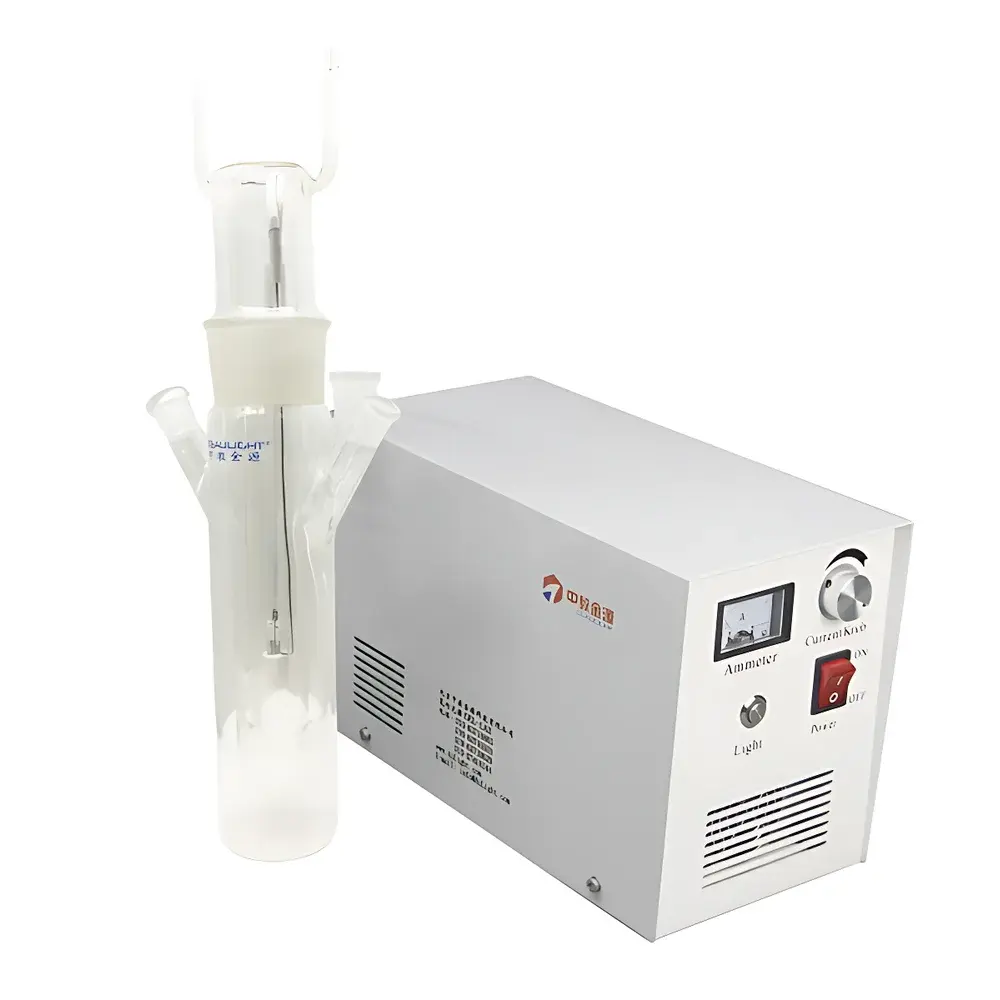
CEL-LAX500 Long-Arc Xenon Lamp System
| Brand | CEL (China Education Goldsource) |
|---|---|
| Origin | Beijing, China |
| Manufacturer Type | OEM Manufacturer |
| Country of Origin | China |
| Model | CEL-LAX500 |
| Light Source Type | Long-Arc Xenon Lamp |
| Illumination Mode | External Irradiation |
| Input Power | 500 W |
| Lamp Total Length | 220 mm |
| Supply Voltage | 220 V AC |
| Cooling Interface | Quartz Cold Finger CEQW60 (60/40 ground joint, effective length 220 mm) |
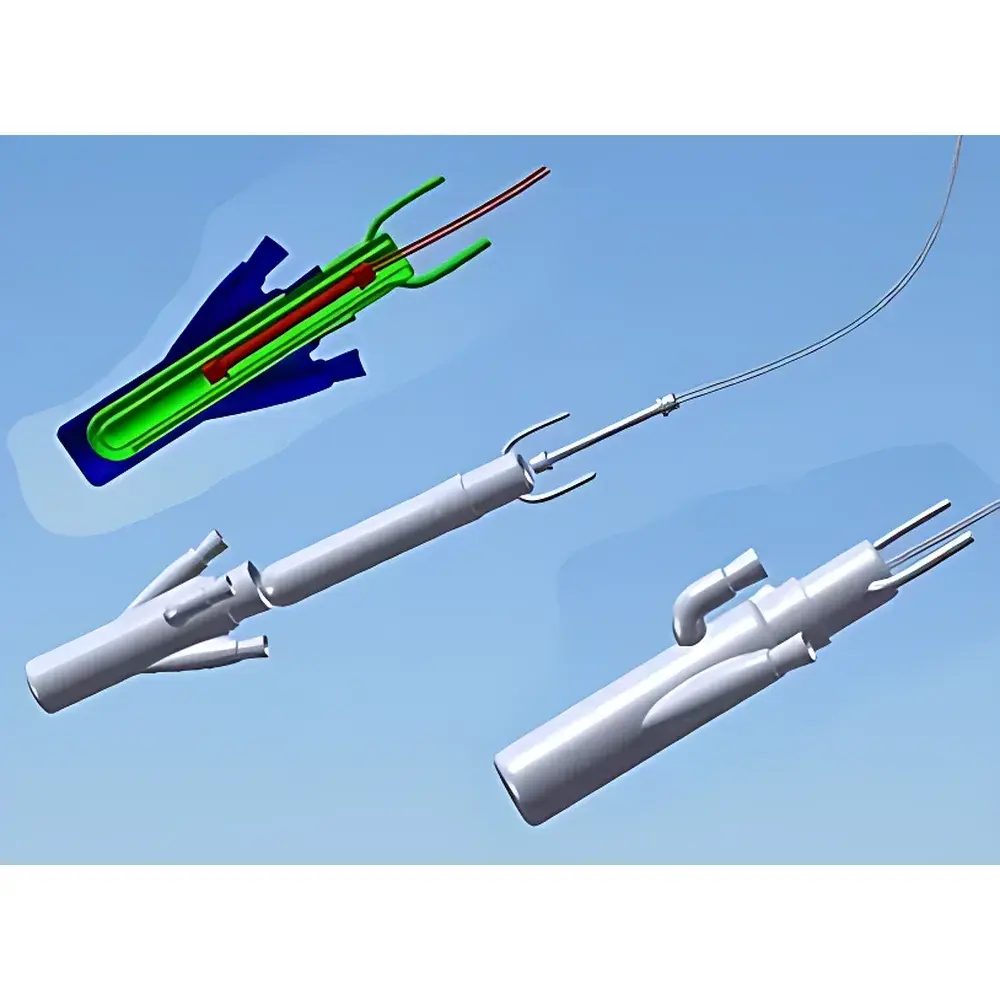
| Compatible Reactors | CEPR250 (250 mL, borosilicate glass, multiple standard joints) and CEPR500 (500 mL, borosilicate glass, same joint options) |
| Spectral Range | ~250–1100 nm (continuous, solar-simulated output) |
Overview
The CEL-LAX500 Long-Arc Xenon Lamp System is a purpose-engineered optical light source designed for reproducible, stable, and spectrally broad illumination in photochemical research laboratories. Based on the principle of high-pressure DC arc discharge in xenon gas, the lamp emits a continuous spectrum spanning the UV-A, visible, and near-infrared regions (approximately 250–1100 nm), closely approximating natural sunlight—making it suitable for solar simulation applications compliant with ASTM G173-03 and ISO 9845-1 reference spectra. Unlike pulsed or short-arc configurations, the long-arc geometry provides uniform linear emission along its 220 mm active length, enabling homogeneous irradiation across multi-vessel reactor arrays. The system operates at a nominal input power of 500 W and is engineered for continuous-duty operation under controlled thermal management, supporting extended-duration experiments typical in photocatalytic hydrogen evolution, pollutant photodegradation, and photoinduced organic synthesis.
Key Features
- Stable long-arc xenon discharge architecture delivering high spectral continuity and low temporal intensity drift (<±2% over 4 h)
- Integrated external irradiation configuration compatible with standard laboratory glassware via 60/40 ground-joint interface
- Dedicated quartz cold finger (CEQW60) with water-cooling channel to attenuate IR radiation (>800 nm), minimizing thermal artifacts in temperature-sensitive reactions
- Modular reactor compatibility: supports CEPR250 (250 mL) and CEPR500 (500 mL) borosilicate (Pyrex®-grade) reaction vessels with interchangeable joints (14/23, 19/26, 24/29)
- OEM-manufactured power supply with regulated DC output, soft-start circuitry, and overcurrent/overtemperature protection
- Designed for parallel experimentation—up to six identical reactors can be uniformly illuminated using optional beam-splitting optics and collimation accessories
Sample Compatibility & Compliance
The CEL-LAX500 is routinely deployed in GLP-aligned photochemical workflows involving aqueous and organic-phase suspensions, colloidal catalysts (e.g., TiO₂, g-C₃N₄, MOFs), and gas-phase photocatalytic reactors. Its spectral profile meets the minimum requirements for ISO 10678:2010 (determination of photocatalytic activity) and supports experimental validation per USP for light stability testing. All glass components conform to DIN ISO 3585 specifications for borosilicate 3.3 and ASTM E438 Type I, Class A. The system does not incorporate internal electronics requiring FDA 21 CFR Part 11 compliance; however, when integrated with validated data acquisition platforms (e.g., LabVIEW-controlled spectroradiometers), full audit-trail capability can be achieved per ALCOA+ principles.
Software & Data Management
The CEL-LAX500 operates as a hardware-stable analog light source without embedded firmware or digital control interfaces. Intensity calibration is performed externally using NIST-traceable spectroradiometers (e.g., Ocean Insight HDX or Bentham DMc series) referenced to irradiance units (W·m⁻²·nm⁻¹) at defined wavelengths (e.g., 365 nm, 420 nm, AM1.5G-weighted). Users commonly integrate the lamp into custom Python- or MATLAB-based automation scripts via relay-controlled power cycling. For long-term stability monitoring, time-series irradiance logs are recorded using calibrated photodiode sensors coupled to USB data loggers (e.g., Thorlabs PDA series), enabling post-hoc normalization of kinetic data against real-time photon flux.
Applications
- Photocatalytic water splitting for H₂ production under simulated solar irradiation
- Gas-phase degradation of VOCs (e.g., formaldehyde, NOₓ) and aqueous-phase mineralization of dyes (e.g., methylene blue, rhodamine B)
- Photochemical C–C bond formation and [2+2] cycloadditions requiring broadband activation
- Accelerated photostability screening of pharmaceuticals and polymer additives per ICH Q1B guidelines
- Quantitative actinometry using ferrioxalate or Aberchrome 540 methods for absolute photon flux determination
- Multi-parameter catalyst screening across combinatorial libraries in parallel reactor manifolds
FAQ
What is the recommended operating lifetime of the CEL-LAX500 lamp under continuous DC operation?
Typical rated lifetime is 500–800 hours at nominal current; output decay exceeds 20% after ~600 h, necessitating recalibration or replacement.
Can the CEL-LAX500 be used with optical filters to isolate specific wavelength bands?
Yes—standard 25 mm or 50 mm diameter bandpass, longpass, and cut-on filters (e.g., Semrock, Omega Optical) mount directly onto the cold finger or reactor port using retaining rings.
Is ozone generation a concern during UV-rich operation?
Minimal ozone is produced below 240 nm; the quartz envelope transmits only down to ~250 nm, and ambient ventilation is sufficient for standard fume hood use.
Does the system include radiometric calibration data?
No factory-provided calibration certificate is included; users must perform initial spectral irradiance mapping using a calibrated spectroradiometer prior to quantitative experiments.
How is thermal management implemented beyond the cold finger?
The lamp housing includes forced-air convection via dual low-noise fans; ambient lab temperature should remain ≤25°C for optimal thermal stability and lamp longevity.




