
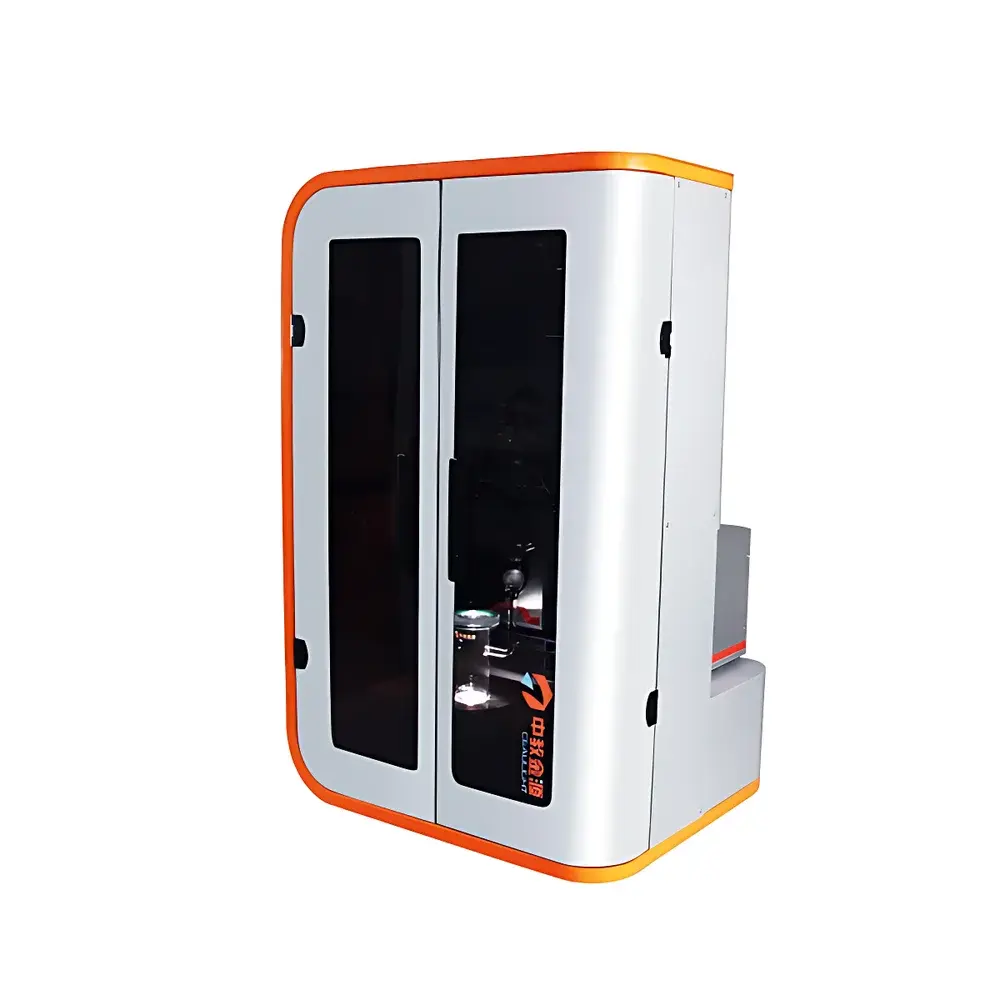
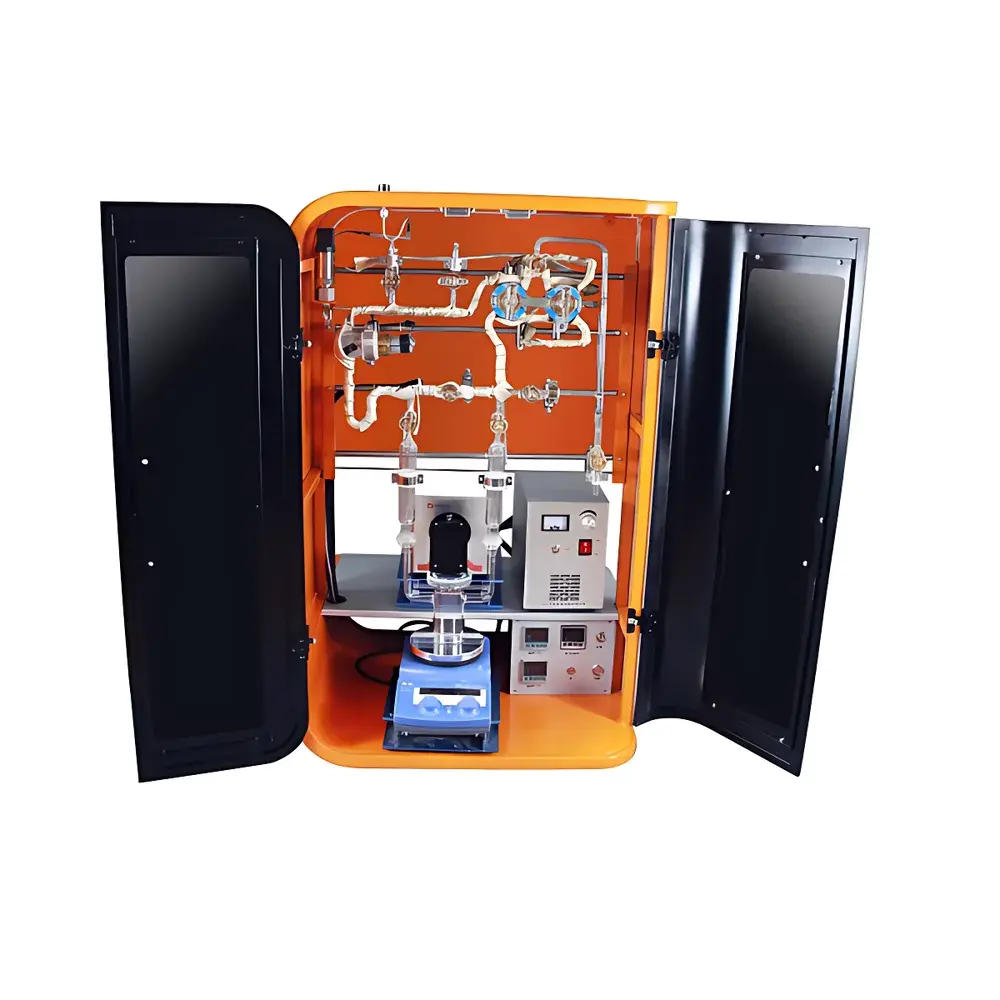
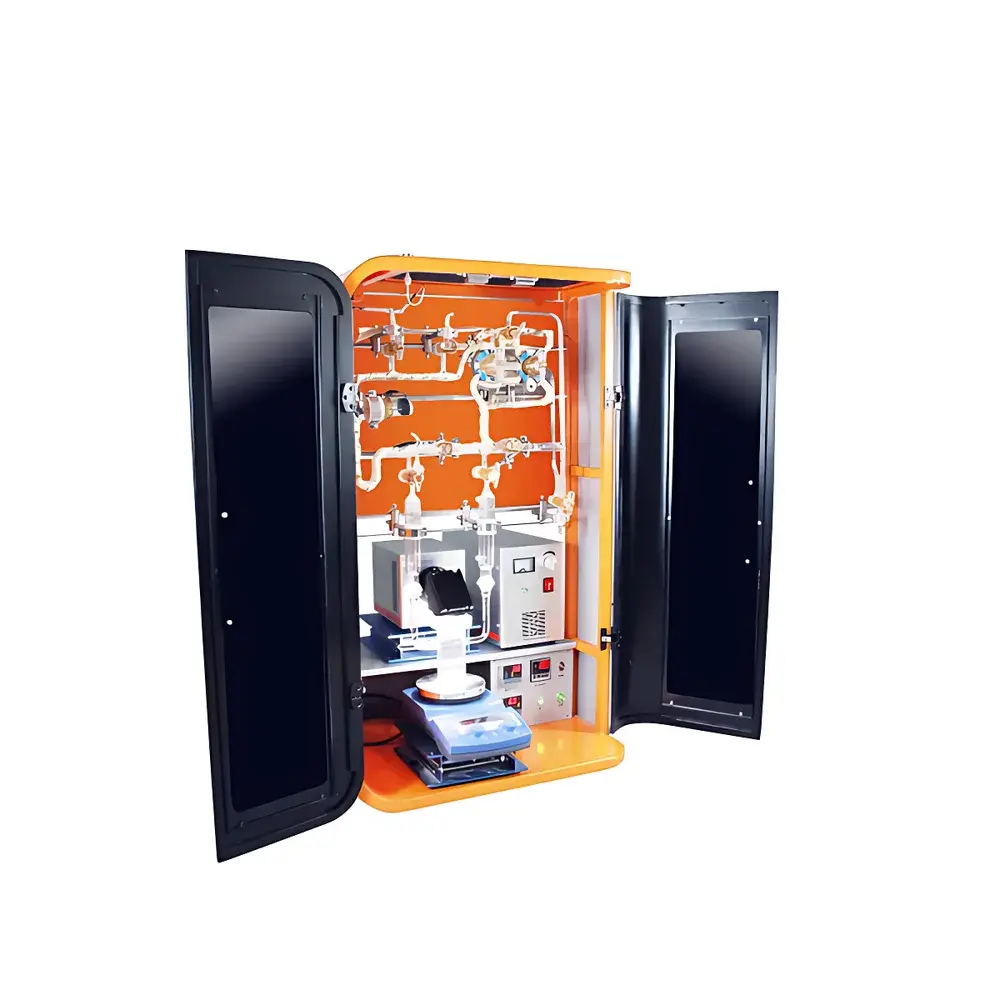
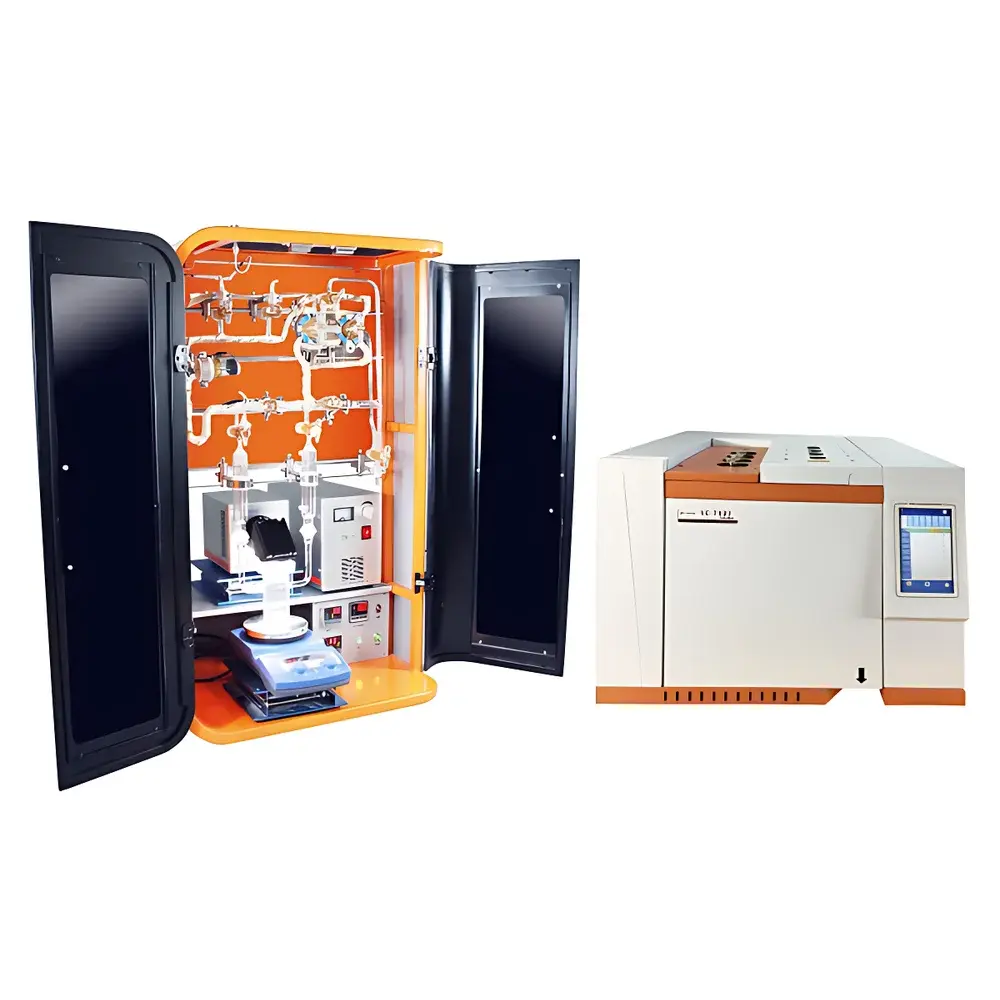
CEL-PAEM-D8Plus Photocatalytic Activity Evaluation System
| Brand | CEL (Zhongjiao Jinyuan) |
|---|---|
| Origin | Beijing, China |
| Manufacturer Type | Direct Manufacturer |
| Country of Origin | China |
| Model | CEL-PAEM-D8Plus |
| Positioning Stage | 1 integrated motorized XYZ translation stage |
| Reaction Vessel Options | 25 / 50 / 100 / 250 mL |
| Gas Loop Circulation | Corrosion-resistant fan, 1.8 L/s |
| Vacuum Performance | –0.1 MPa (dynamic, 72 h hold) |
| Vacuum Pump | 2 L/s with anti-backflow solenoid valve (KF16 interface) |
| Temperature Control Zones | 7 independent zones (reaction, condensation, circulation, sampling, analysis, valve manifold, U-tube cold trap), all controllable up to 200 °C |
| Sampling Modes | Manual / Semi-automatic / Fully automatic (pneumatically actuated valves, valve body heated ≤200 °C, transfer lines heated ≤100 °C) |
| Detection Limits | H₂/O₂ ≥ 0.001 mL |
| Gas Analysis Compatibility | Universal GC interfacing (USB/RS232 software reverse control, supports Agilent, Shimadzu, Thermo, and custom GC systems) |
| Enclosure Dimensions | 560 mm (W) × 470 mm (D) × 860 mm (H) |
| Internal Cold Trap | Integrated U-shaped glass cold trap in gas pathway for solvent vapor separation and vacuum enhancement |
| System Integration | All-glass fluidic architecture with patented glass valves |
Overview
The CEL-PAEM-D8Plus Photocatalytic Activity Evaluation System is an engineered platform for quantitative, reproducible assessment of photocatalytic performance under controlled anaerobic or inert atmospheres. Designed specifically for CO₂ photoreduction and overall water splitting (H₂O → H₂ + ½O₂), it operates on the principle of sealed-system gas evolution monitoring via high-sensitivity chromatographic detection. Unlike open-loop or batch-reactor configurations, the D8Plus implements a fully recirculating, temperature-regulated glass manifold—enabling continuous gas-phase sampling without system venting or pressure perturbation. Its core architecture integrates reaction, condensation, gas circulation, automated sampling, and analytical interfacing into a single, modular enclosure. This design eliminates external tubing dead volumes, minimizes adsorption losses, and ensures trace-level quantification of low-yield gaseous and volatile liquid products—including H₂, O₂, CO, CO₂, CH₄, C₂H₆, CH₃OH, HCOOH, CH₃CHO, and HCHO—under rigorously defined thermal and vacuum conditions.
Key Features
- Seven-zone independent temperature control (up to 200 °C), covering reactor, condenser, loop manifold, sampling valve block, cold trap, analytical interface, and transfer lines—ensuring thermal stability across all process stages.
- Patented all-glass fluidic path with pneumatically actuated glass valves; no metal or polymer wetted surfaces to avoid catalytic interference or leaching.
- Integrated U-shaped glass cold trap within the main gas loop, enabling real-time separation of volatile organic solvents (e.g., methanol, acetonitrile, triethanolamine) from target analytes prior to GC injection.
- Motorized XYZ translation stage (1 unit included) for precise spatial alignment of light sources (Xe, LED, or laser) relative to reactor geometry—critical for irradiance uniformity and photon flux calibration per ISO 18639 and ASTM E2739 standards.
- Dynamic vacuum maintenance at –0.1 MPa over 72 hours, verified by digital or analog vacuum gauge; KF16-compatible pump interface supports dual-cold-trap expansion for ultra-high-purity inert environments.
- Software-controlled automation (USB/RS232) with 8-channel sequencing logic: vacuum evacuation, purge cycles, irradiation timing, sampling triggers, valve actuation, and pump start/stop—all auditable and timestamped for GLP/GMP compliance.
- Modular front-panel access: semi-transparent acrylic enclosure permits real-time visual monitoring while blocking ambient UV/visible stray light—essential for artifact-free photochemical kinetics.
Sample Compatibility & Compliance
The D8Plus accommodates heterogeneous photocatalysts in powder, thin-film, or monolithic forms—including TiO₂, g-C₃N₄, CdS, MOFs, perovskites, and co-catalyst-loaded composites. It supports gas-solid, liquid-phase, and hybrid气固-液三相 reactions under tunable humidity, CO₂ partial pressure (0.1–100 kPa), and sacrificial reagent concentrations. All components comply with ISO 8573-1 (compressed air purity), ASTM E2500 (verification of analytical instrumentation), and ICH Q5C (stability testing of biocatalytic systems). Vacuum integrity and thermal profiles are documented per IQ/OQ protocols; data audit trails meet FDA 21 CFR Part 11 requirements when paired with validated GC control software.
Software & Data Management
CEL’s proprietary PAEM Control Suite provides deterministic sequence scripting, real-time status visualization, and event-logged parameter tracking (temperature setpoints, vacuum decay rate, valve position, irradiation dose). Raw chromatographic data export is supported in .csv and .cdf formats compatible with OpenLab CDS, Chromeleon, and custom Python/MATLAB post-processing pipelines. The USB-reverse-control interface enables synchronized GC oven ramping, detector gain adjustment, and auto-integration trigger alignment—reducing inter-instrument latency to <50 ms. All operational logs—including error codes, maintenance alerts, and calibration timestamps—are stored locally with SHA-256 hashing for integrity verification.
Applications
- Quantitative CO₂ photoreduction kinetics: CH₄, CO, C₂H₆, and oxygenate formation rates under simulated solar illumination (AM1.5G).
- Overall water splitting efficiency mapping across wavelength-resolved LED arrays (365–780 nm) with simultaneous H₂/O₂ stoichiometric validation.
- Structure–activity correlation studies of doped semiconductors and heterojunctions using controlled surface area normalization (BET-compliant dosing).
- Long-duration stability testing (>100 h) with periodic in situ GC sampling and catalyst leaching analysis via ICP-MS coupling.
- Membrane-integrated photocatalysis: evaluation of proton-exchange or gas-diffusion electrodes in tandem configurations.
- Photoelectrochemical (PEC) cell pre-screening via dark/light current–voltage profiling synchronized with headspace gas composition shifts.
FAQ
Does the D8Plus support integration with third-party gas chromatographs?
Yes—via standard USB and RS232 interfaces; driver packages are provided for Agilent, Shimadzu, Thermo Fisher, and PerkinElmer GC platforms.
What is the minimum detectable quantity for formaldehyde in aqueous suspension experiments?
10 ppm (v/v) in headspace gas phase, validated using NIST-traceable calibration standards and certified reference materials.
Can the system perform simultaneous H₂ and O₂ quantification without cross-interference?
Yes—the dual-channel GC configuration (TCD/FID or PDHID) with backflush-capable column switching ensures baseline separation of H₂, O₂, N₂, and Ar within 4.2 minutes.
Is vacuum leak testing automated during startup?
Yes—the software initiates a 15-minute dynamic leak check after initial evacuation, calculating decay rate (Pa·s⁻¹) and flagging deviations exceeding ±0.5 Pa/s.
How is catalyst loading standardized across different reactor volumes (25–250 mL)?
The system includes a calibrated volumetric dosing module and optional quartz-crystal microbalance (QCM) add-on for mass-normalized activity reporting (µmol·g⁻¹·h⁻¹).



