
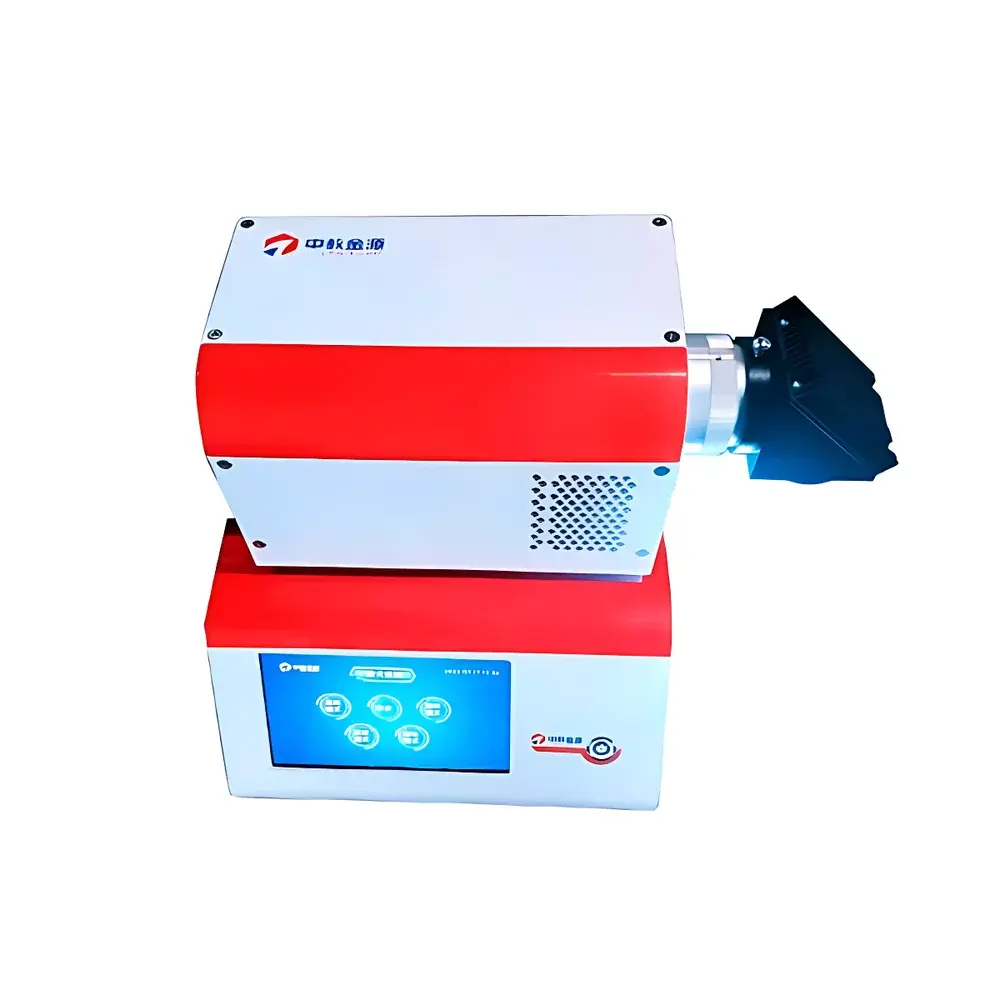
CEL-PE300-3A Uniform Illumination Xenon Light Source
| Brand | CEL (China Education Goldsource) |
|---|---|
| Origin | Beijing, China |
| Manufacturer Type | Direct Manufacturer |
| Product Category | Domestic |
| Model | CEL-PE300-3A |
| Light Source Type | Xenon Arc Lamp |
| Illumination Configuration | External Irradiation |
| Spectral Classification | ASTM E927-19 Class AAA (3A) Solar Simulator |
| Uniformity | <5% (measured with calibrated reference cell) |
| Output Irradiance Range | 0.1–5 Sun (10–500 mW/cm², AM1.5G) |
| Beam Shape | Hexagonal (optional square) |
| Beam Diameter | 30–80 mm (distance-dependent) |
| Optical System | Fly’s-eye homogenizer lens array |
| Standard Filter | AM1.5G (ISO 9022-12 / IEC 60904-9 compliant) |
| Control Interface | 7-inch capacitive touchscreen (800×480 dpi) |
| Feedback Integration | Compatible with NP2000 optical power meter (real-time irradiance monitoring & closed-loop stabilization) |
| Safety Compliance | Dual-grounded chassis, high-voltage interlock, thermal cutoff, emergency stop |
Overview
The CEL-PE300-3A Uniform Illumination Xenon Light Source is a Class AAA (3A) solar simulator engineered for high-fidelity photovoltaic characterization, photocatalytic reaction studies, and controlled photo-biological experiments. It employs a stabilized 300 W ceramic xenon arc lamp (PerkinElmer OEM), whose spectral output closely matches the ASTM E927-19 and IEC 60904-9 AM1.5G reference spectrum—enabling traceable, reproducible irradiance delivery across the 300–1100 nm range. Unlike conventional collimated or point-source configurations, the CEL-PE300-3A integrates a precision fly’s-eye homogenizer lens array to generate spatially uniform irradiance over defined target areas. This optical architecture ensures <5% non-uniformity when measured using a NIST-traceable silicon reference cell—meeting the stringent uniformity requirement of Class AAA solar simulators per ISO 9022-12. The system operates in external irradiation mode, allowing flexible integration into custom reactor chambers, gloveboxes, electrochemical cells, or multi-axis sample stages without optical path interference.
Key Features
- Class AAA (3A) spectral match: Full compliance with ASTM E927-19 and IEC 60904-9 AM1.5G spectral distribution requirements, validated via calibrated spectroradiometer measurement.
- Fly’s-eye homogenization optics: Hexagonal beam profile optimized for maximal spatial uniformity; optional square-beam configuration available for orthogonal detector alignment.
- Continuously adjustable irradiance: 0.1–5 Sun (10–500 mW/cm²) output, digitally regulated via closed-loop feedback using NP2000 optical power meter input.
- Intelligent control architecture: 7-inch industrial-grade touchscreen (800×480 dpi) supporting four operational modes—Basic (manual intensity setpoint), Irradiance (target irradiance hold), Feedback (real-time stabilization), and Smart (time-programmable irradiance profiles).
- Programmable temporal irradiance sequencing: Enables simulation of diurnal solar cycles, stepwise photoactivation protocols, or pulsed illumination schemes with user-defined start/stop times, ramp rates, and dwell durations.
- Modular filter compatibility: Accepts M52 and M62 threaded filters; optional 50 mm × 50 mm planar filter holder accommodates custom bandpass, longpass, or UV-blocking filters (e.g., KG5, UG11, Schott BG40).
- Multi-layer safety system: Includes grounded metal enclosure, high-voltage isolation interlocks, thermally actuated lamp shutdown, and front-panel emergency stop—designed to meet IEC 61010-1 safety standards for laboratory equipment.
Sample Compatibility & Compliance
The CEL-PE300-3A supports diverse sample geometries and experimental environments—including flat-panel PV devices, powder-coated photocatalyst reactors, liquid-phase quantum yield cells, and monolayer biological samples in Petri dishes or quartz cuvettes. Its external irradiation design permits operation inside inert-atmosphere gloveboxes (N₂/Ar), vacuum chambers (with viewport coupling), or temperature-controlled environmental enclosures. All optical components—including the AM1.5G filter—are certified to ISO 9022-12 stability specifications for spectral maintenance under continuous operation (>1000 h rated lamp life). The system complies with GLP-relevant documentation practices: irradiance logs include timestamped metadata, operator ID, and instrument serial number—supporting audit readiness under FDA 21 CFR Part 11 when paired with validated data acquisition software.
Software & Data Management
The embedded firmware enables local storage of up to 200 irradiance profiles, each containing up to 100 time-intensity waypoints. Real-time irradiance values from the NP2000 sensor are logged at 1 Hz resolution and exportable via USB-C as CSV files with ISO 8601 timestamps. Optional Ethernet or RS-485 interfaces support integration into LabVIEW, Python-based automation frameworks, or SCADA systems for synchronized control with potentiostats, gas chromatographs, or thermal imaging cameras. All firmware updates are delivered via signed binary packages with SHA-256 checksum verification to ensure integrity and version traceability.
Applications
- Photovoltaic device testing: J-V curve acquisition, IPCE/EQE mapping, and light-soaking stability assessment under standardized AM1.5G conditions.
- Heterogeneous photocatalysis: Quantitative evaluation of degradation kinetics (e.g., methylene blue, phenol) under controlled photon flux, enabling direct comparison across literature datasets.
- Photoelectrochemical (PEC) cell characterization: In-situ photocurrent response analysis under variable irradiance to extract charge transfer efficiency and recombination losses.
- Solar fuel synthesis: CO₂ reduction and water splitting studies requiring precise, repeatable photon input for Faradaic efficiency calculations.
- Photobiology and circadian rhythm research: Tunable spectral + temporal irradiance profiles mimicking natural daylight transitions for in vitro cell culture irradiation protocols.
FAQ
What does “3A” classification mean for this light source?
The “3A” designation indicates full compliance with ASTM E927-19 Class AAA requirements: spectral match (A), spatial uniformity (A), and temporal stability (A)—each independently verified per IEC 60904-9 Annex A.
Can the CEL-PE300-3A be used inside a nitrogen-filled glovebox?
Yes—the external irradiation configuration allows optical coupling through a quartz viewport; optional purge ports on the lamp housing prevent internal condensation during inert-gas operation.
Is the AM1.5G filter included by default?
Yes—the standard configuration includes a certified AM1.5G filter meeting ISO 9022-12 transmission tolerances; alternative filters (e.g., UV-cut, VIS-pass) are available as accessories.
How is irradiance calibrated and maintained over time?
Calibration is performed using a NIST-traceable reference cell and spectroradiometer prior to shipment; users may perform field recalibration using the NP2000 power meter and supplied calibration certificate.
Does the system support remote control via computer?
Yes—RS-485 and Ethernet interfaces enable command-line control (ASCII protocol) and integration with third-party automation platforms; Python SDK and LabVIEW VIs are available upon request.




