
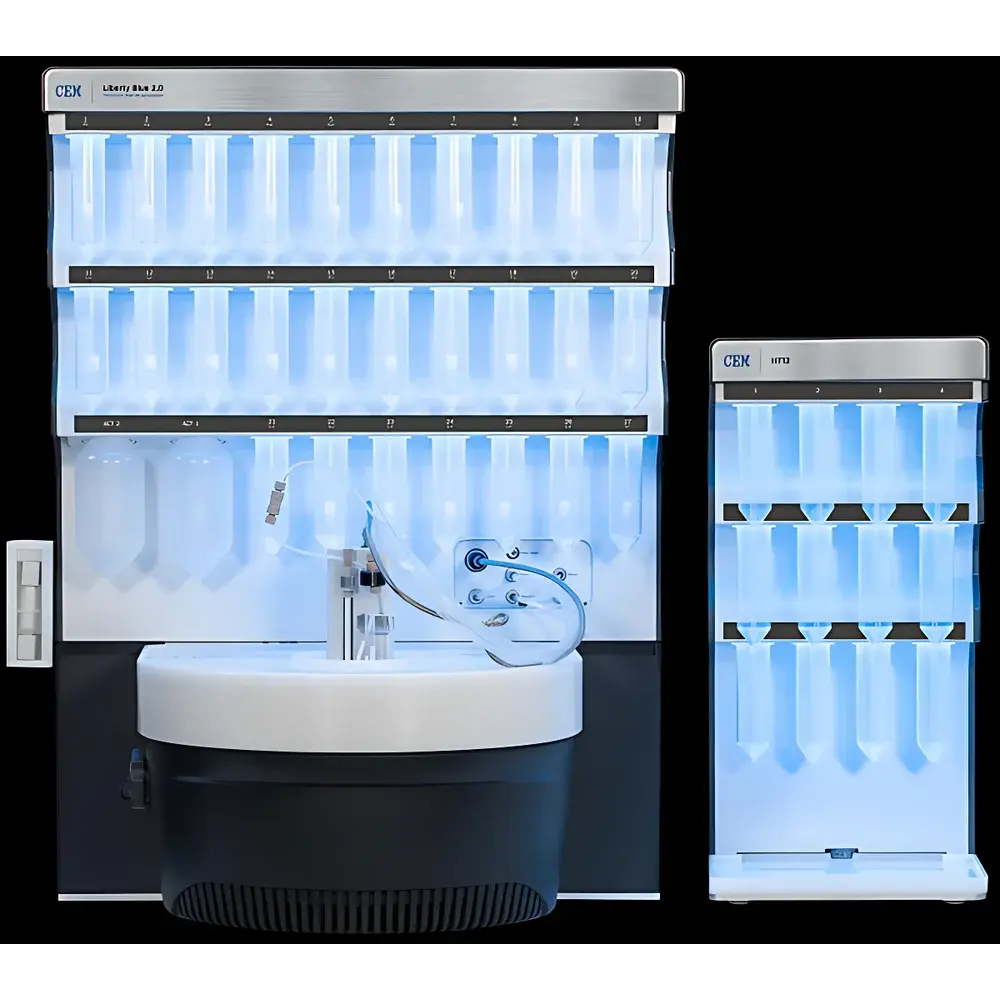
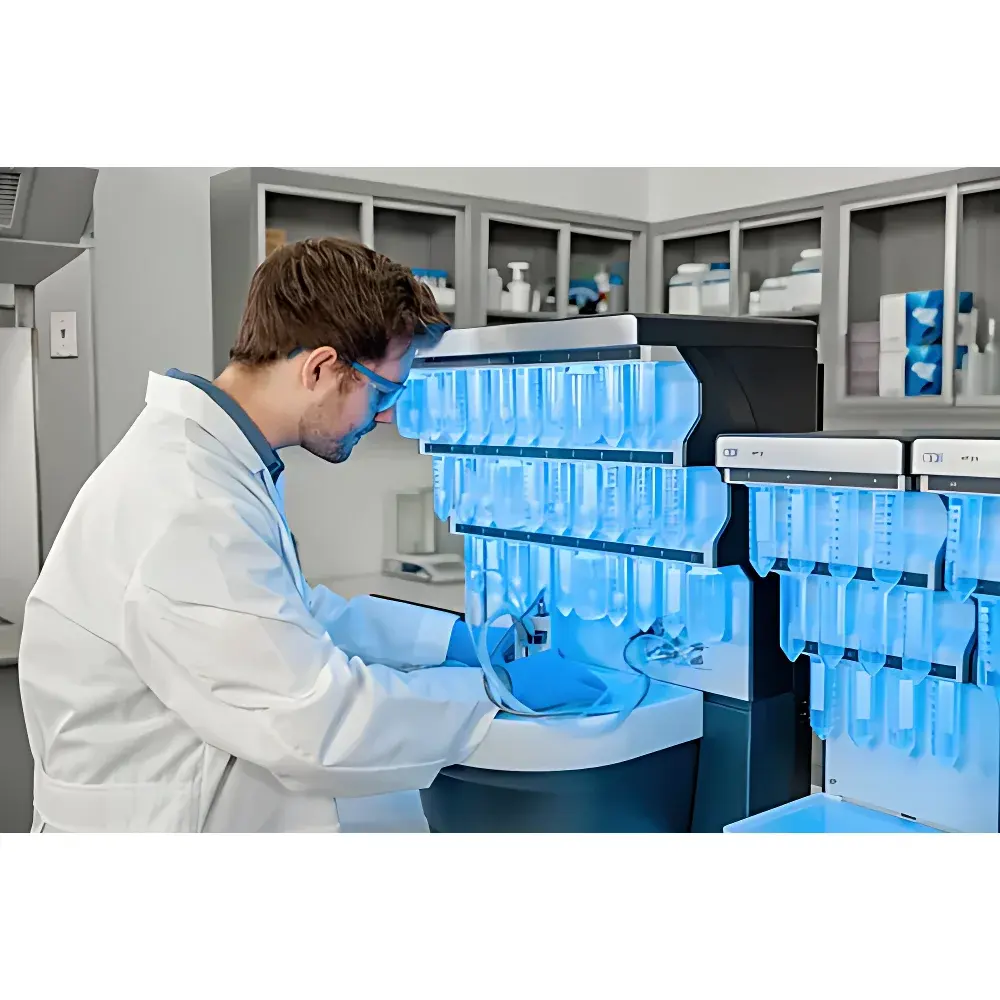
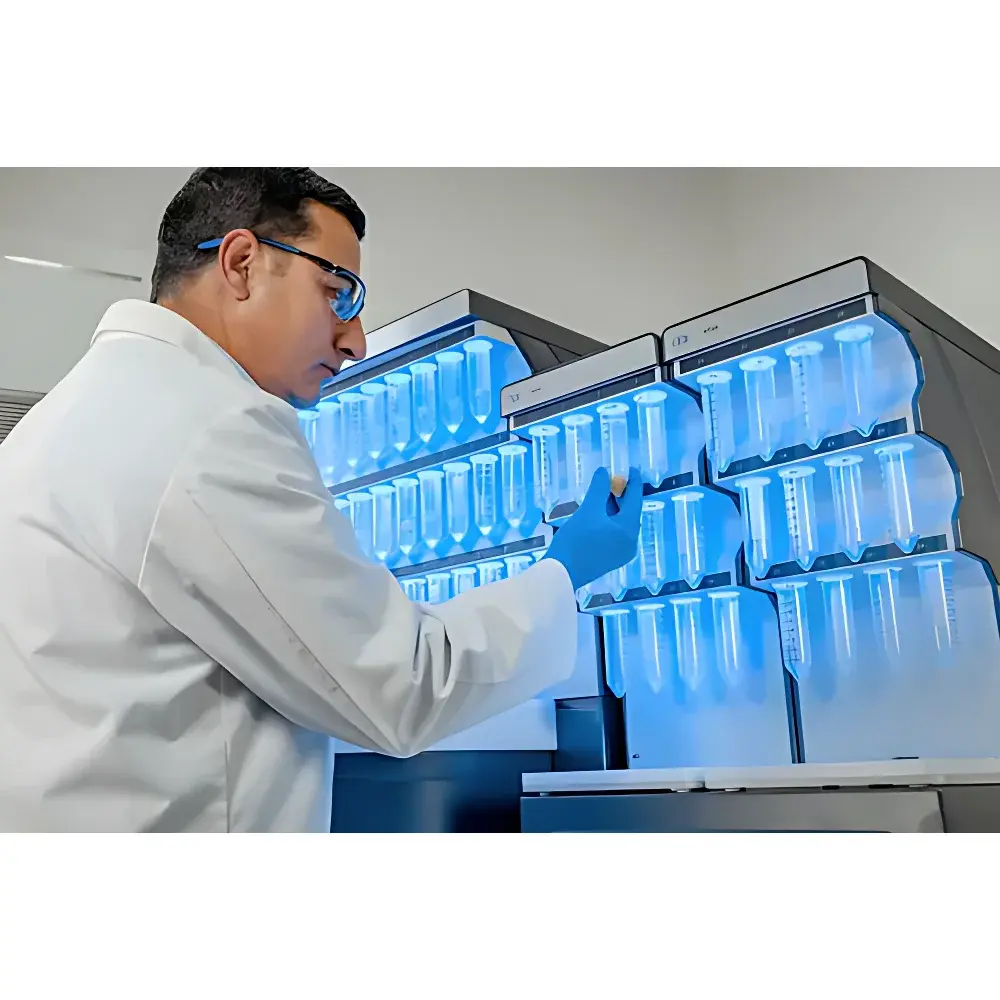
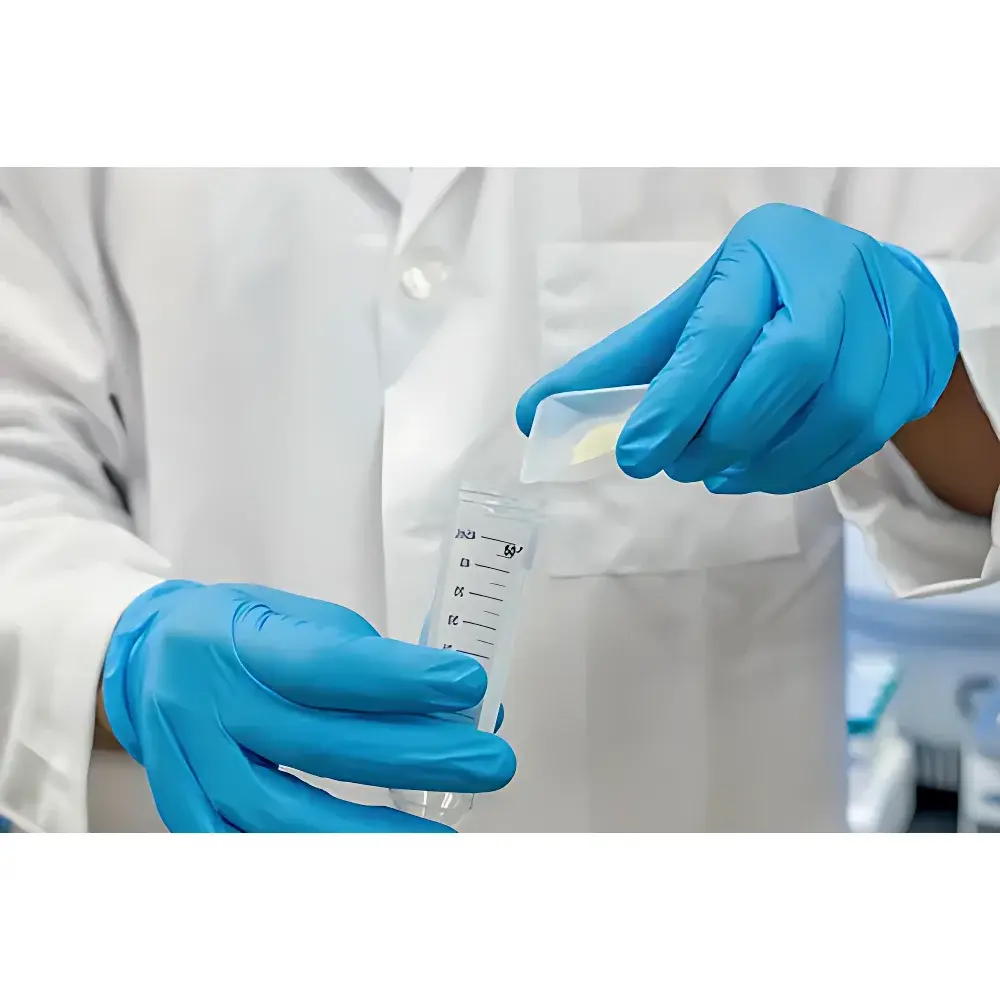
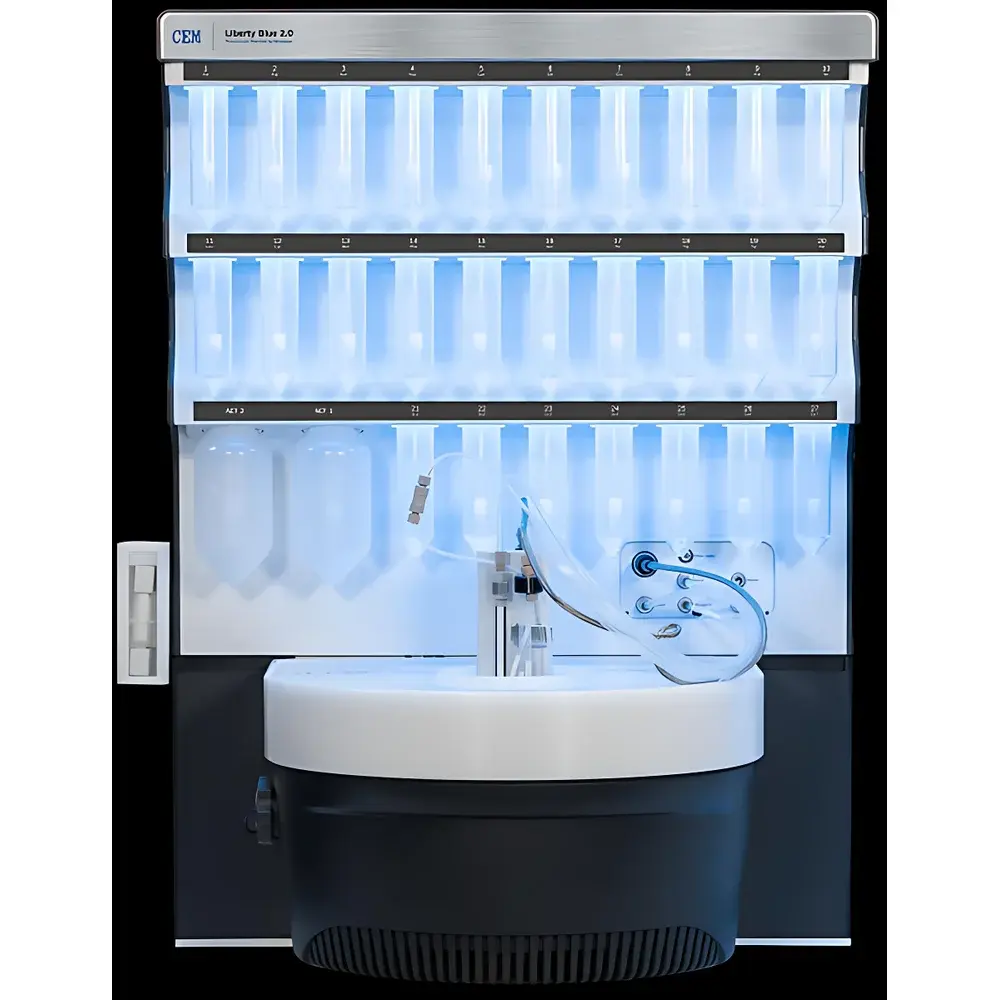
CEM LibertyBlue 2.0 Automated Microwave Peptide Synthesizer
| Brand | CEM |
|---|---|
| Origin | USA |
| Model | LibertyBlue 2.0 |
| Amino Acid Delivery | Automated |
| Reagent Delivery | Automated |
| User Authentication | Password + Facial Recognition |
| Audit Trail | Yes |
| Synthesis Scale | 0.005–5 mmol |
| Reactor Count | 4 |
| Reactor Volume Range | 10–125 mL |
Overview
The CEM LibertyBlue 2.0 Automated Microwave Peptide Synthesizer represents the third-generation evolution of microwave-assisted solid-phase peptide synthesis (SPPS) technology. Engineered for precision, reproducibility, and regulatory compliance, it implements a proprietary microwave-enhanced, wash-free synthesis paradigm known as Ultra-Efficient Solid-Phase Peptide Synthesis (UE-SPPS). Unlike conventional SPPS systems that rely on iterative solvent-intensive washing steps between coupling and deprotection cycles, the LibertyBlue 2.0 eliminates all resin-washing operations through in situ quenching of excess activated amino acids and controlled evaporation of deprotection base—enabling true reagent economy and minimal waste generation. All chemical transformations—including Fmoc deprotection and amide bond formation—are accelerated and homogenized via precisely controlled, fiber-optic monitored microwave irradiation. This architecture supports synthesis of challenging sequences (e.g., Aβ 1–42) with >68% crude purity in under four hours and accommodates peptides up to 100 residues in length, while maintaining compatibility with standard Fmoc chemistry protocols.
Key Features
- Ultra-fast cycle time: 4-minute coupling/deprotection cycles—consistent across sequence complexity and length
- Four independent reaction vessels with configurable volume options (10 mL, 30 mL, and 125 mL), each equipped with chemically resistant composite caps and inert gas purging
- In situ fiber-optic temperature monitoring ensures real-time, intraparticle thermal feedback for precise microwave energy modulation
- Flex-Add fluid handling system enables simultaneous, synchronized delivery of amino acids, activators, and deprotection bases—minimizing cross-contamination and dead volume
- Dual-factor user authentication (password + facial recognition) enforces secure access control and personnel accountability
- Comprehensive audit trail compliant with FDA 21 CFR Part 11 requirements, including timestamped event logging, method versioning, and electronic signature support
- Integrated 1 L waste reservoir with overflow detection and LED status indicators for operational transparency
Sample Compatibility & Compliance
The LibertyBlue 2.0 is validated for use with standard Fmoc-protected α-amino acids (20 canonical + up to 7 additional positions for non-natural or modified residues), compatible with common resins (e.g., Rink amide MBHA, Wang, 2-CTC) and standard coupling reagents (HBTU, HATU, DIC). Its closed-fluidic architecture and inert gas environment prevent oxidation and racemization during synthesis. The system meets GLP/GMP-aligned design principles and supports full traceability required for preclinical peptide manufacturing. It is CE-marked and conforms to IEC 61010-1 safety standards for laboratory equipment. Optional UV monitoring module enables real-time assessment of deprotection completeness via chromophore absorbance at 301 nm.
Software & Data Management
Controlled via Windows-based software running on an integrated or external laptop (wireless connectivity optional), the LibertyBlue 2.0 software suite provides intuitive method creation, step-by-step execution monitoring, and automated PDF report generation—including synthesis log, reagent consumption metrics, temperature profiles, and audit trail exports. All methods are digitally signed and version-controlled; historical data is stored with immutable timestamps. The system supports export of structured CSV/Excel logs for integration into LIMS environments and satisfies 21 CFR Part 11 requirements for electronic records and signatures—including role-based permissions, audit review tools, and system validation documentation packages.
Applications
- Rapid production of research-grade peptides for structural biology, epitope mapping, and antibody development
- Synthesis of aggregation-prone or hydrophobic sequences (e.g., amyloid-beta, tau fragments, membrane peptides) with improved solubility and reduced deletion sequences
- Parallel synthesis of peptide libraries for structure–activity relationship (SAR) studies
- Preparation of peptide antigens and conjugates for vaccine development
- Scale-up feasibility studies bridging from analytical-scale (0.005 mmol) to pilot-scale (5 mmol) synthesis without protocol re-optimization
- Support for Good Manufacturing Practice (GMP)-aligned workflows when paired with validated methods and change-controlled accessories (e.g., HT resin loader, cleavage module)
FAQ
Does the LibertyBlue 2.0 require manual resin washing between synthesis steps?
No—UE-SPPS eliminates all traditional washing steps via in situ quenching and base evaporation, reducing total solvent waste by ≥95% versus conventional SPPS.
What is the maximum peptide length achievable with this instrument?
Sequences up to 100 amino acid residues have been successfully synthesized with high crude purity and low deletion content, particularly when using optimized microwave pulse profiles.
Is the system compatible with non-Fmoc protecting group strategies?
The LibertyBlue 2.0 is designed and validated for Fmoc chemistry; Boc-based synthesis is not supported due to incompatibility with the deprotection mechanism and hardware configuration.
Can synthesis data be exported for regulatory submission?
Yes—audit logs, method files, and synthesis reports are exportable in PDF and CSV formats, fully traceable and compliant with FDA 21 CFR Part 11 for electronic records in regulated environments.
What maintenance is required for long-term operational reliability?
Routine maintenance includes quarterly calibration of fluid delivery volumes, annual verification of microwave power output and fiber-optic temperature sensor accuracy, and periodic replacement of O-rings and fluidic tubing per CEM’s Preventive Maintenance Schedule.





