
CEM Prodigy 2.0 High-Pressure Preparative Liquid Chromatography System
| Brand | CEM |
|---|---|
| Origin | USA |
| Manufacturer Status | Authorized Distributor |
| Origin Category | Imported |
| Model | Prodigy 2.0 |
| Application Level | Laboratory Grade |
| Instrument Type | High-Pressure Preparative Liquid Chromatograph |
| Flow Rate Range | 4–250 mL/min |
| Flow Accuracy | ±1% |
| Flow Precision (RSD) | ≤1% |
| Maximum Pressure | 300 bar |
| Wavelength Range | 190–500 nm |
| Wavelength Repeatability | ±3 nm |
| Data Acquisition Frequency | 50 Hz |
Overview
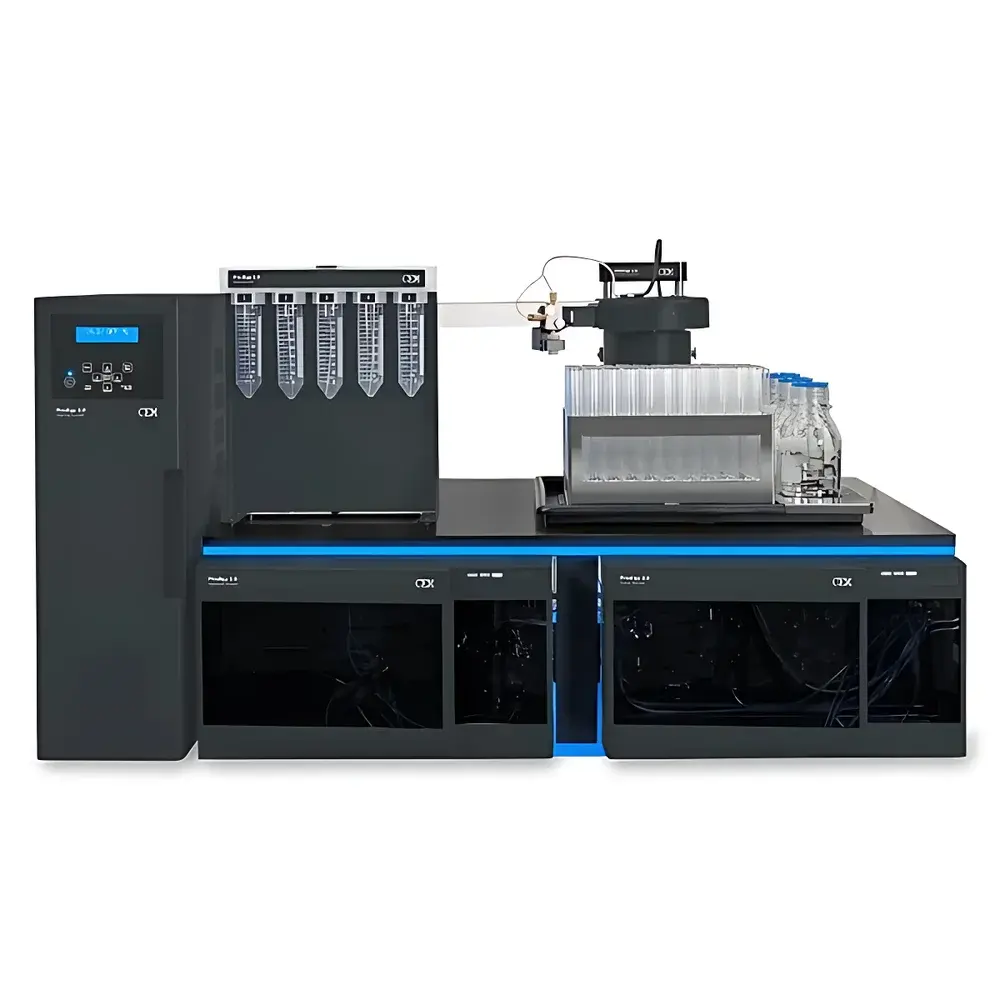
The CEM Prodigy 2.0 High-Pressure Preparative Liquid Chromatography System is an engineered solution for scalable, temperature-controlled purification of synthetic peptides and other thermally stable biomolecules. Built upon high-pressure liquid chromatography (HPLC) principles, the system employs dual-zone active heating—simultaneously regulating column and mobile phase temperatures—to enable robust operation with high-viscosity, environmentally compatible solvents such as ethanol. Unlike conventional preparative HPLC systems that heat only the column, the Prodigy 2.0 eliminates thermal mismatch between incoming solvent and stationary phase, thereby minimizing band broadening and preserving chromatographic efficiency at elevated temperatures (up to 80 °C). This architecture supports method translation from analytical to preparative scale without intermediate ambient-temperature scouting runs—a capability grounded in fundamental mass transfer kinetics and thermodynamic modulation of retention and selectivity.
Key Features
- Dual-zone integrated heating system: independently controlled column and mobile phase heating ensures thermal homogeneity across the flow path, critical for reproducible peak shape and resolution under high-temperature conditions
- Full acetonitrile elimination: validated compatibility with ethanol-based mobile phases reduces toxicity exposure, lowers disposal costs, and aligns with green chemistry initiatives (EPA Safer Choice criteria)
- High-flow, high-pressure performance: 300 bar maximum pressure rating and 4–250 mL/min flow range support rapid gradient elution and large-scale loading (up to 500 mg per injection)
- UV-Vis detection with 190–500 nm spectral coverage and ±3 nm wavelength repeatability, enabling reliable monitoring of peptide absorbance maxima (e.g., 214 nm for amide bond detection)
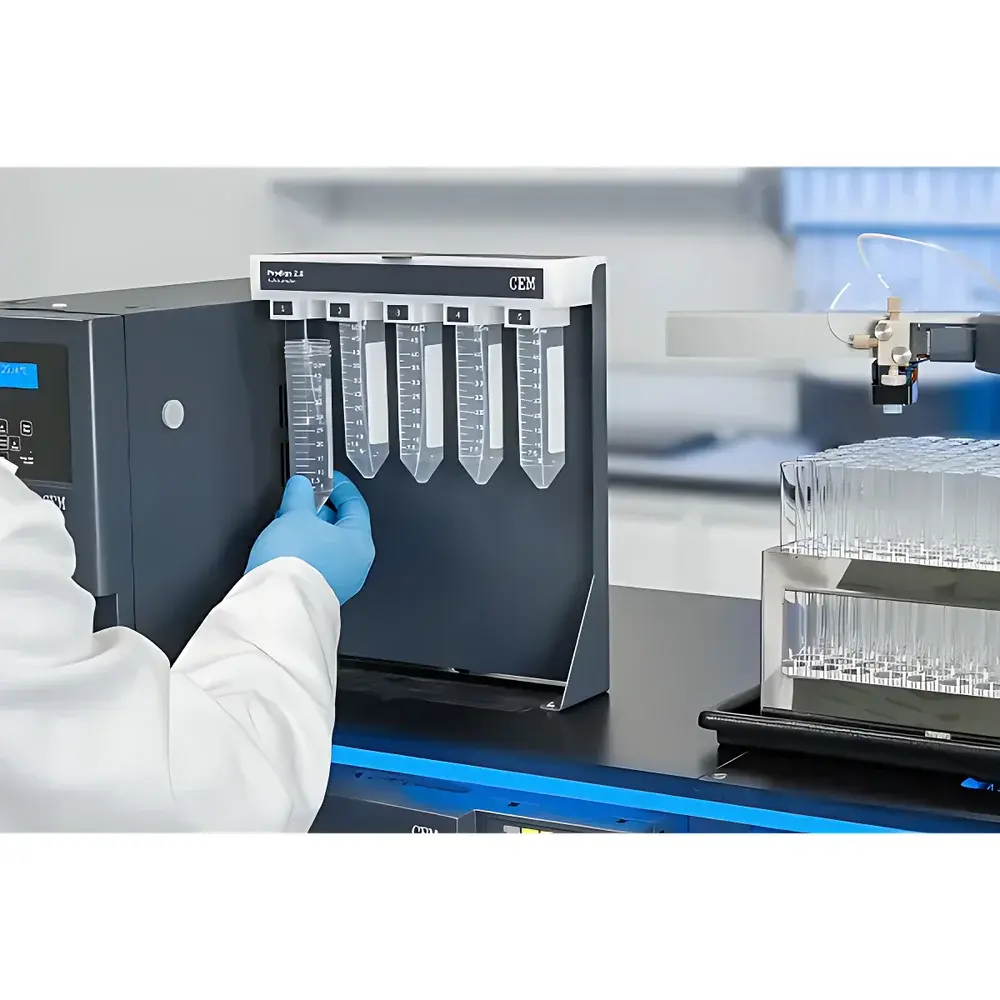
- 5-position autosampler with precision syringe-driven injection and low carryover design, optimized for repeated high-mass injections
- Touchscreen-native control software featuring guided workflow logic and embedded gradient optimization algorithms
Sample Compatibility & Compliance
The Prodigy 2.0 is routinely deployed for purification of linear and cyclic peptides (2–50 residues), including those with hydrophobic sequences prone to aggregation or poor solubility at ambient temperature. Its elevated operating temperature range (30–80 °C) enhances solute diffusion coefficients and reduces viscosity-induced backpressure—key factors governing resolution and throughput in reversed-phase purification. The system complies with core laboratory quality frameworks: data integrity safeguards include audit-trail-enabled method storage, user-access controls, and timestamped event logging aligned with FDA 21 CFR Part 11 requirements. All hardware components meet CE marking directives for electromagnetic compatibility (EMC) and low-voltage safety (LVD), and operational protocols support GLP-compliant documentation when integrated with validated electronic lab notebook (ELN) platforms.
Software & Data Management
The embedded touchscreen interface implements a three-step method deployment protocol: (1) entry of analytical-scale parameters (gradient time, %B, column dimensions, flow rate); (2) automatic scaling to preparative conditions via the Focus Gradient Calculator—an algorithmic module that recalculates dwell volume compensation, injection volume, and gradient compression while maintaining k′ and α values; and (3) execution with real-time UV trace overlay and fraction collection trigger logic. All methods are stored with version control, and raw detector data (absorbance vs. time) is exported in standard .csv and .dx formats for third-party processing (e.g., Chromeleon, Empower, or Python-based analysis pipelines). System diagnostics—including pump pressure history, lamp energy decay logs, and temperature stability reports—are archived automatically and exportable for internal QA review or regulatory submission.
Applications
- Purification of synthetic peptides for structural biology (NMR, X-ray crystallography) and therapeutic development (peptide APIs, conjugate vaccines)
- Removal of deletion sequences, truncated species, and diastereomeric impurities from solid-phase peptide synthesis (SPPS) crude mixtures
- Isolation of post-translationally modified peptides (e.g., phosphorylated, acetylated) where thermal stabilization improves peak symmetry
- Method development for continuous manufacturing workflows, leveraging temperature as an orthogonal selectivity parameter alongside organic modifier strength and pH
- Supporting ICH Q5A/Q5C assessments by delivering high-purity fractions suitable for forced degradation studies and stability-indicating assays
FAQ
Can the Prodigy 2.0 operate with 100% ethanol as the organic modifier?
Yes—its heated flow path and pressure-compensated pump design eliminate cavitation and ensure stable delivery of ethanol/water gradients across the full 4–250 mL/min range.
Is method transfer from analytical UHPLC to Prodigy 2.0 automated?
The Focus Gradient Calculator performs geometric scaling of gradient time, flow rate, and injection volume based on column volume ratios and maintains constant linear velocity, significantly reducing manual recalibration effort.
What column chemistries are validated for use with this system?
Waters CSH (Charged Surface Hybrid) columns are factory-qualified; their BEH-based particle technology delivers thermal resilience up to 90 °C and consistent performance in low-ionic-strength acidic mobile phases (e.g., 0.1% formic acid).
Does the system support fraction collection triggered by UV threshold or peak apex?
Yes—fraction collector triggering can be configured by absolute absorbance threshold, derivative-based peak detection, or time windows synchronized to gradient events.
How is system suitability verified prior to a purification run?
Built-in system suitability tests include pressure decay checks, flow accuracy verification at three setpoints (10/100/250 mL/min), and wavelength calibration using holmium oxide reference standards traceable to NIST SRM 2034.




