
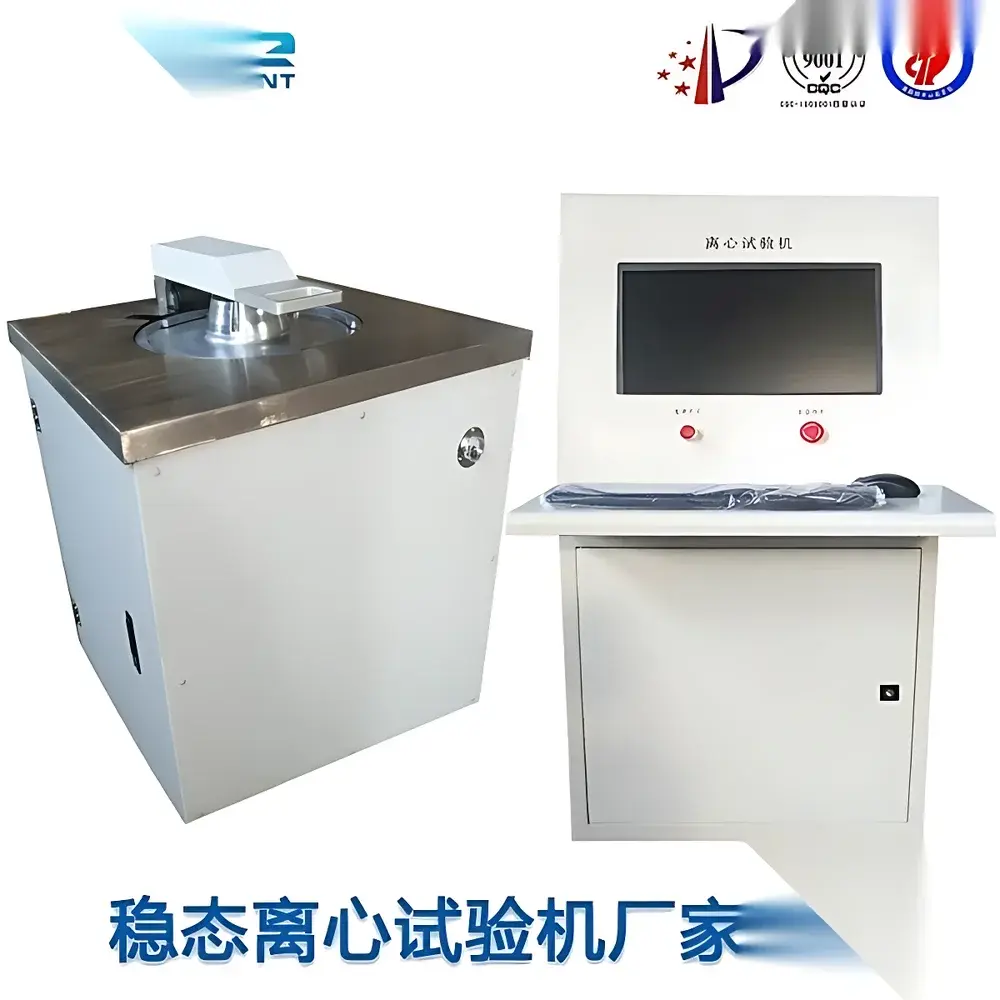
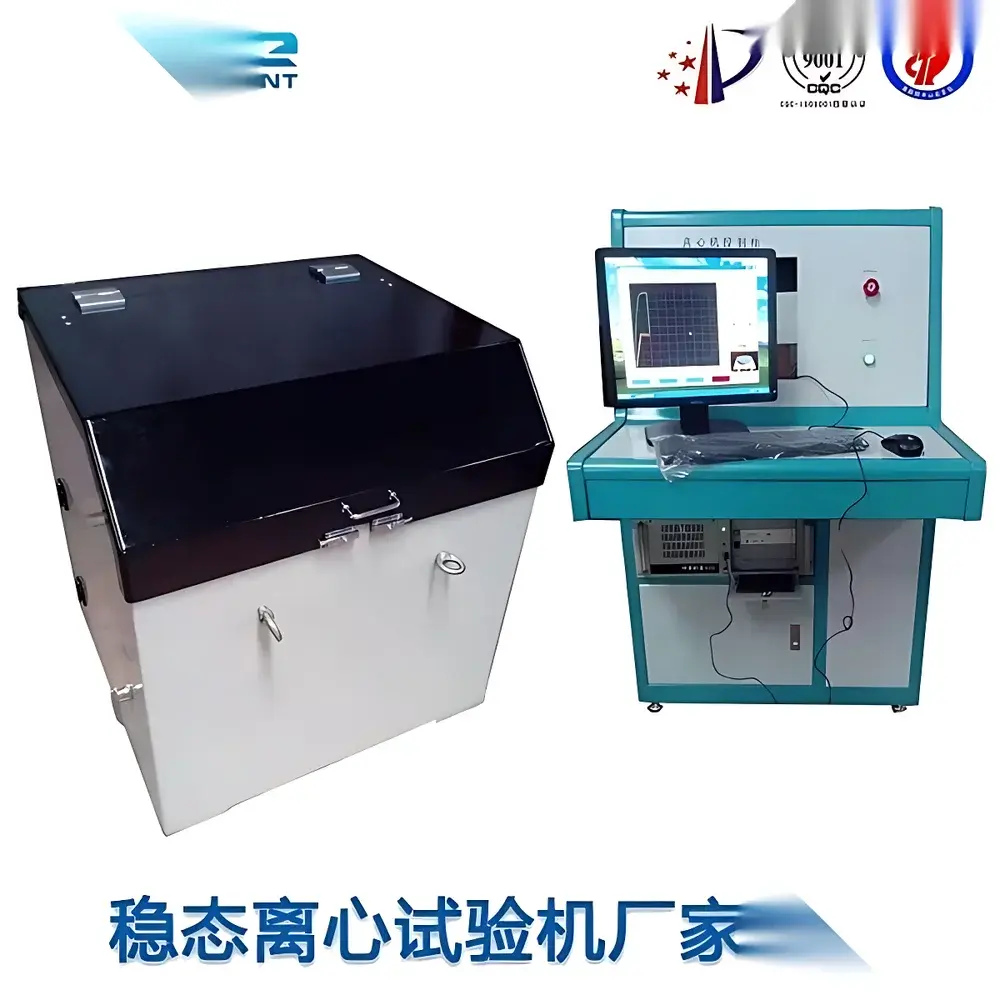
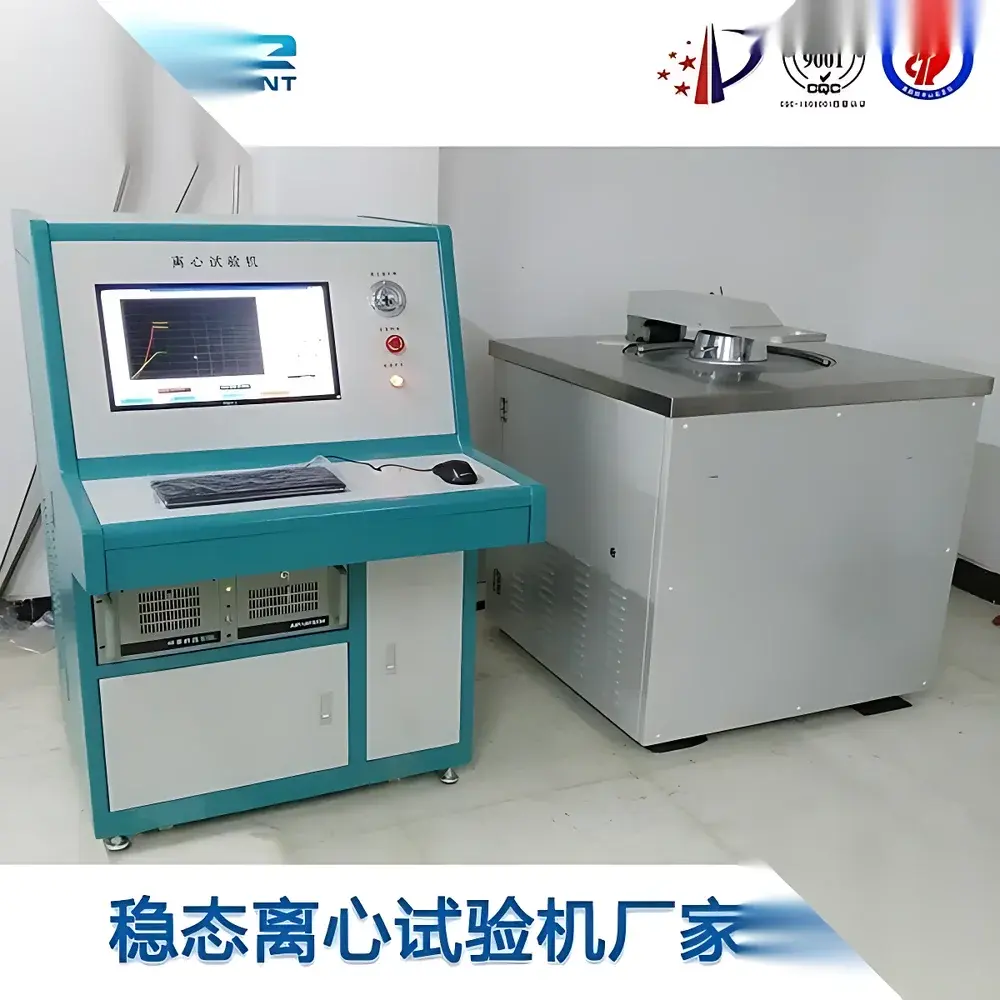
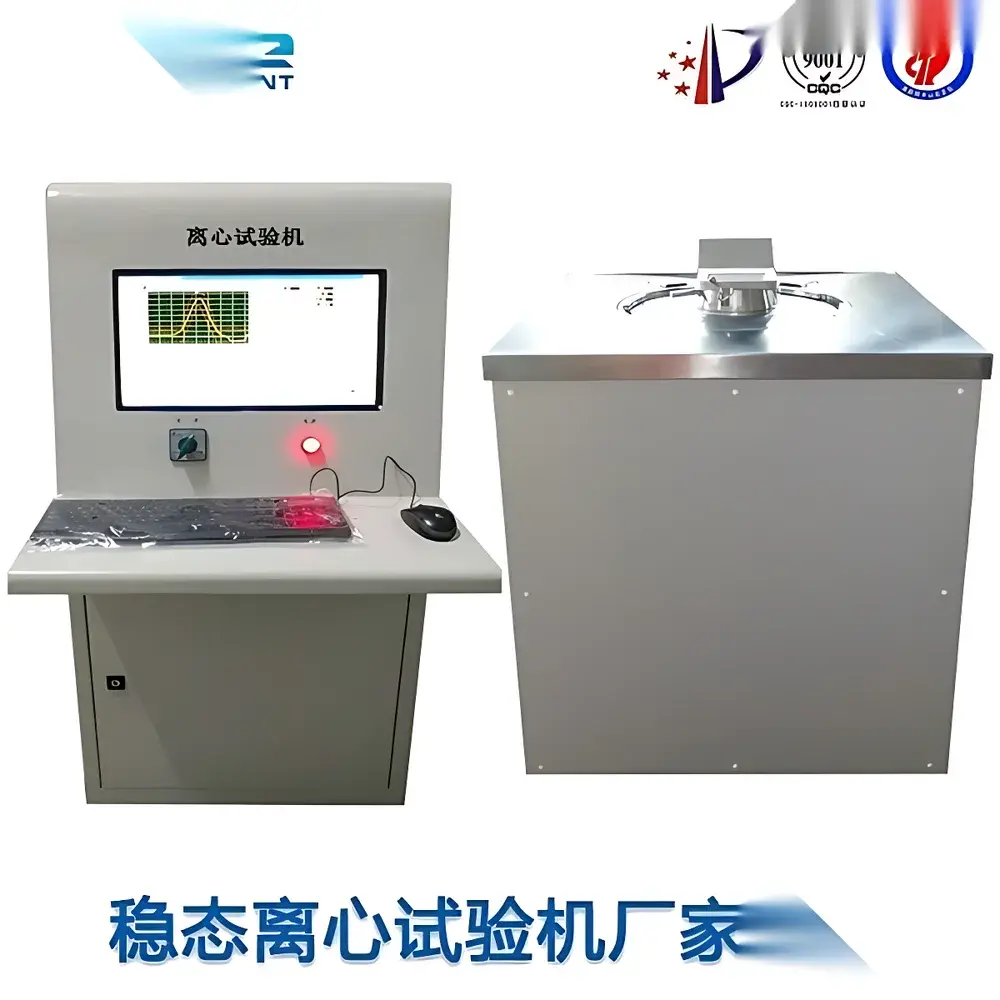
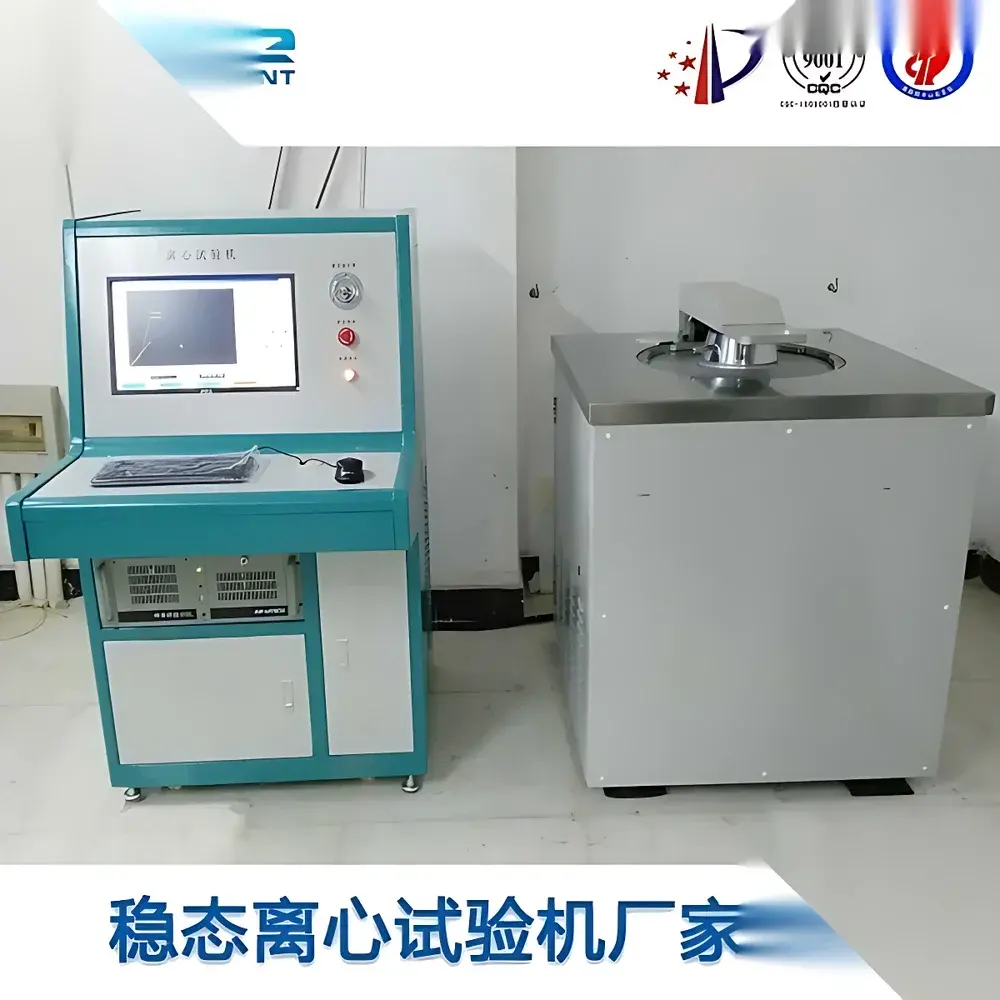
Centrifugal Acceleration Test System LXJ-Series
| Brand | Other Brands |
|---|---|
| Origin | Imported |
| Manufacturer Type | Authorized Distributor |
| Price | USD 28,000 (FOB) |
| Acceleration Range | 30–400,000 m/s² |
| Number of Test Stations | 4–64 |
| Max. Specimen Height | 200–300 mm |
| Specimen Mounting Radius | 200–1000 mm |
| Test Axes | X, Y, Z (sequential or independent orientation) |
| Startup Time | ≤3–5 min |
| Continuous Operation Duration | 30–60 min |
| Power Supply | AC 380 V, 1.5–6.5 kVA |
| Dimensions (L×W×H) | 924×910×1242 mm to 1953×470×993 mm |
| Weight | 1000–2300 kg |
| Slip Ring Configuration | 15-channel, 500 V / 5 A |
| Compliance | MIL-STD-202F, MIL-STD-810F, MIL-STD-883C, GJB 150, GJB 360, GB/T 2423, IEC 60068-2-27 |
Overview
The Centrifugal Acceleration Test System LXJ-Series is an electromechanical high-g test platform engineered for dynamic over-acceleration evaluation of electronic components, microelectromechanical systems (MEMS), avionics subassemblies, and miniature electro-optical devices. Operating on the principle of controlled rotational acceleration, the system subjects test specimens to precisely regulated centripetal forces—expressed in multiples of gravitational acceleration (g) or SI units (m/s²)—to simulate launch, separation, impact, or high-speed maneuver environments. Unlike static load testing, this system replicates transient inertial stress profiles where structural integrity, solder joint reliability, bond wire survivability, and internal resonance behavior are critically assessed. The LXJ-Series is not a generic centrifuge; it is a metrologically traceable, closed-loop acceleration test instrument designed for compliance-driven qualification per military, aerospace, and industrial standards.
Key Features
- Real-time industrial PC-based control with deterministic timing resolution (<10 ms loop cycle) and integrated safety interlock logic.
- Multi-stage acceleration profile generation: users define ramp-up, dwell, step-change, and deceleration segments with independent time/acceleration setpoints per stage.
- Simultaneous real-time visualization of actual acceleration vs. tolerance band (±1.5% full scale), elapsed test duration, and instantaneous rotational speed (RPM).
- Dual-mode operation: fully automated sequence execution or manual jog mode with incremental RPM/acceleration adjustment and emergency stop override.
- Comprehensive hardware protection: open-circuit detection, overspeed cutoff (hardware-triggered at 105% setpoint), and thermal overload shutdown for motor and power electronics.
- Modular slip ring assembly supporting up to 15 independent current channels (500 V / 5 A rating), enabling live signal monitoring (e.g., voltage, current, temperature, strain) during acceleration exposure.
- Configurable test station layout accommodating 4 to 64 independent mounting positions, each with calibrated center-of-gravity alignment verification tools.
Sample Compatibility & Compliance
The LXJ-Series accommodates specimens up to 300 mm in height and 10 kg mass (dependent on model configuration), with precise radial positioning capability (±0.2 mm repeatability) to ensure consistent g-force application across all test axes (X, Y, Z). Mounting fixtures include threaded inserts, vacuum chucks, and custom-machined adapters compatible with JEDEC trays, PCB carriers, and MIL-STD-1344 compliant test boards. All models are validated against MIL-STD-202F Method 213 (Acceleration), MIL-STD-883C Method 2001 (Centrifugal Acceleration), and IEC 60068-2-27 (Shock and Acceleration Testing). Calibration certificates conform to ISO/IEC 17025 requirements and include traceability to NIST or equivalent national metrology institutes. System documentation supports GLP/GMP audit readiness, including version-controlled firmware logs and calibration history tracking.
Software & Data Management
The embedded control software provides ISO 26262-aligned functional safety architecture and supports export of raw acceleration/time data in CSV and HDF5 formats. Each test run generates a timestamped report containing operator ID, environmental conditions (ambient temperature/humidity), calibration status, pass/fail determination per defined acceptance criteria (e.g., “no parameter deviation > ±2% during dwell phase”), and digital signature for 21 CFR Part 11 compliance. Audit trails record all user actions—including parameter edits, abort triggers, and calibration events—with immutable timestamps. Optional API integration enables direct ingestion into LabVantage LIMS or Siemens Teamcenter PLM platforms.
Applications
- Qualification testing of inertial sensors (gyroscopes, accelerometers) under sustained high-g fields.
- Evaluation of MEMS device stiction, anchor failure, and proof-mass detachment thresholds.
- Validation of conformal coating adhesion and underfill integrity in BGA packages subjected to launch-induced loads.
- Structural analysis of RF front-end modules experiencing vibration-acceleration coupling in UAV propulsion systems.
- Screening of hybrid microcircuits per MIL-PRF-19500 for mechanical robustness prior to burn-in.
- Development of g-tolerant optical alignment mechanisms used in spaceborne laser communication terminals.
FAQ
What acceleration accuracy can be expected across the full range?
System linearity is maintained within ±1.5% of reading from 30 m/s² to 95% of maximum rated acceleration; accuracy degrades marginally above 95% due to aerodynamic drag and bearing thermal drift—calibration correction factors are applied automatically.
Is remote operation supported for unattended testing?
Yes—Ethernet-connected operation allows secure remote monitoring and intervention via TLS-encrypted web interface; however, safety-critical functions (e.g., emergency stop) require local hardware activation per IEC 61508 SIL2 requirements.
Can the system perform combined environmental stress testing?
The LXJ-Series does not integrate temperature or humidity chambers; however, its modular mechanical interface permits third-party chamber integration using standardized flange mounts and synchronized trigger I/O signals.
How frequently must the system be recalibrated?
Annual calibration is recommended; however, calibration intervals may be extended to 18 months under documented usage conditions meeting ISO 10012 requirements and passing quarterly performance verification checks.
Does the system support custom waveform synthesis beyond step/dwell profiles?
Yes—advanced users may import user-defined acceleration vs. time waveforms (up to 65,536 points) via MATLAB or Python-generated ASCII files, subject to mechanical slew-rate limitations of the drive system.
Related Products



