
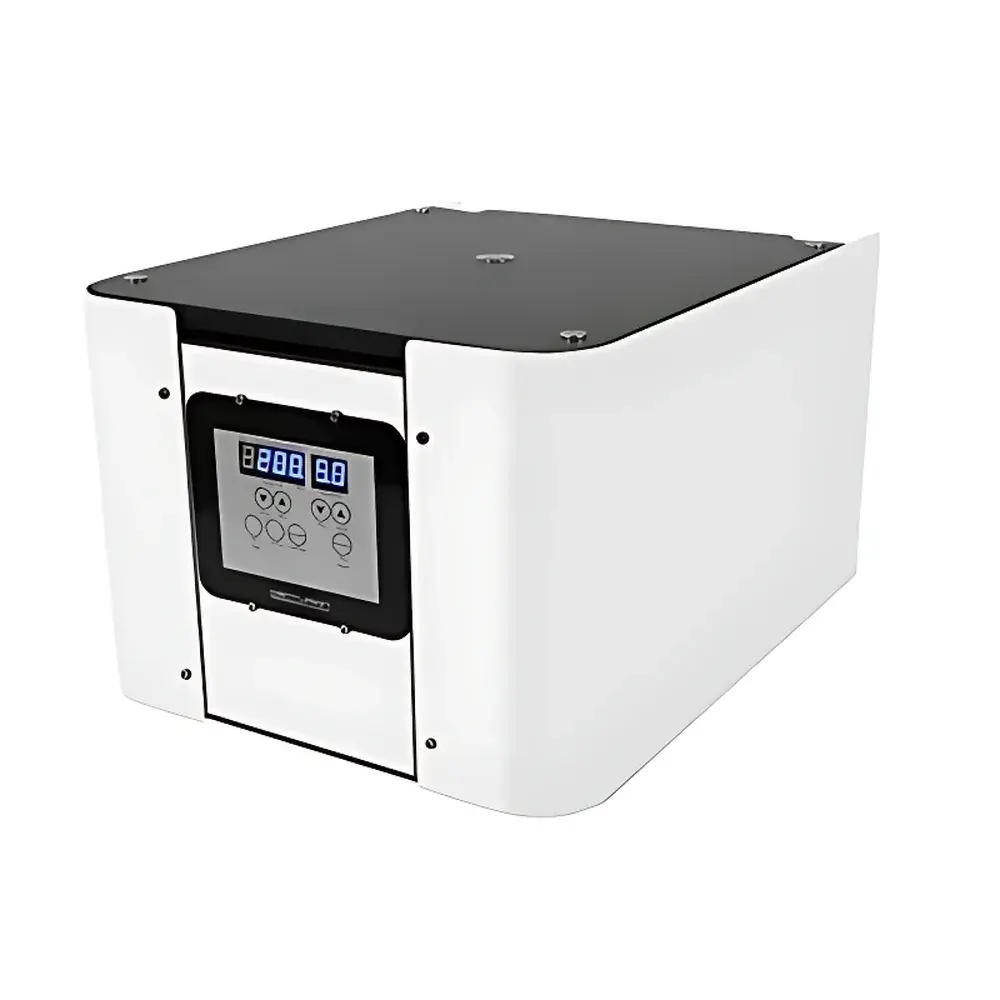
Centurion Scientific CR2000 Benchtop Multipurpose Centrifuge
| Brand | Centurion Scientific |
|---|---|
| Origin | United Kingdom |
| Model | CR2000 |
| Type | Benchtop Centrifuge |
| Speed Range | 500–15,000 rpm |
| Max RCF | 22,000 × g |
| Max Capacity | 4 × 100 mL |
| Acceleration/Deceleration | 10-step programmable |
| Timer Range | 0–99 min |
| Noise Level | <60 dB(A) |
| Dimensions | 27 × 32 × 47 cm |
| Weight (bare unit) | 21.8 kg |
| Power Consumption | 175 W |
| Motor | High-efficiency European brushless DC motor |
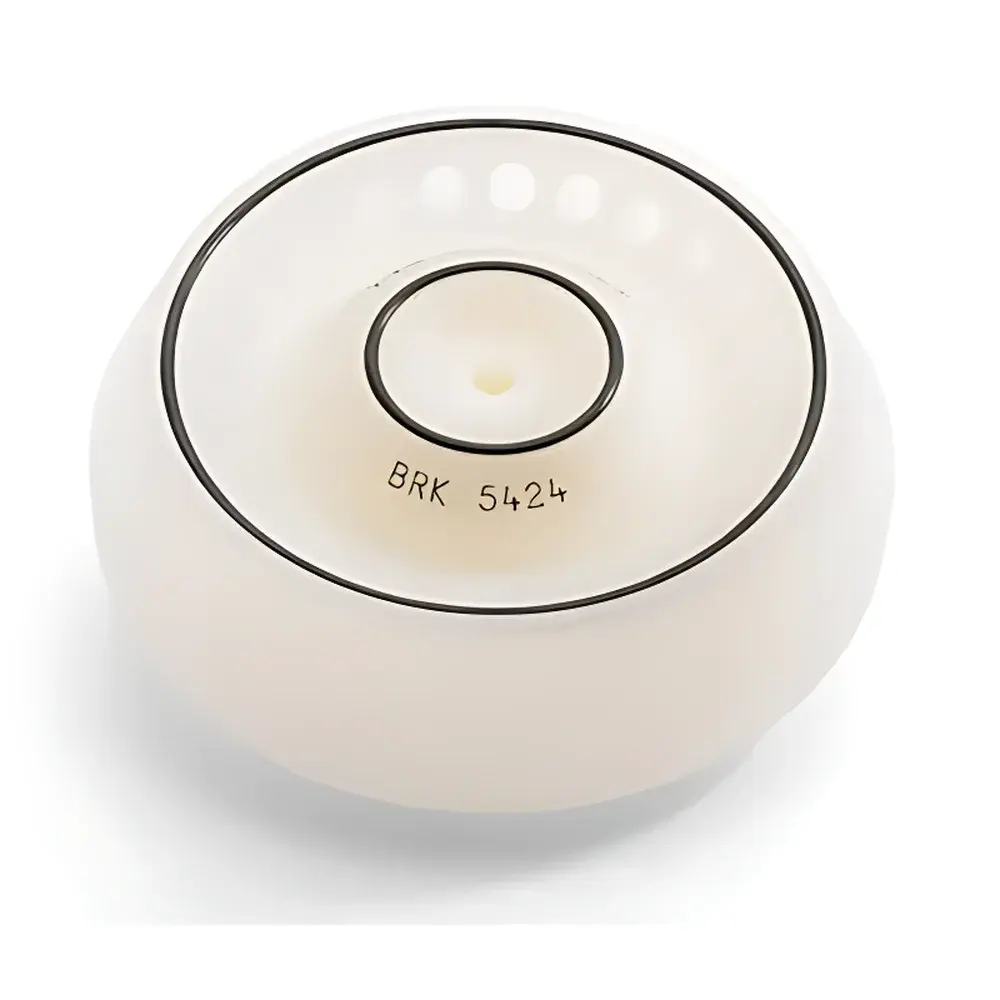
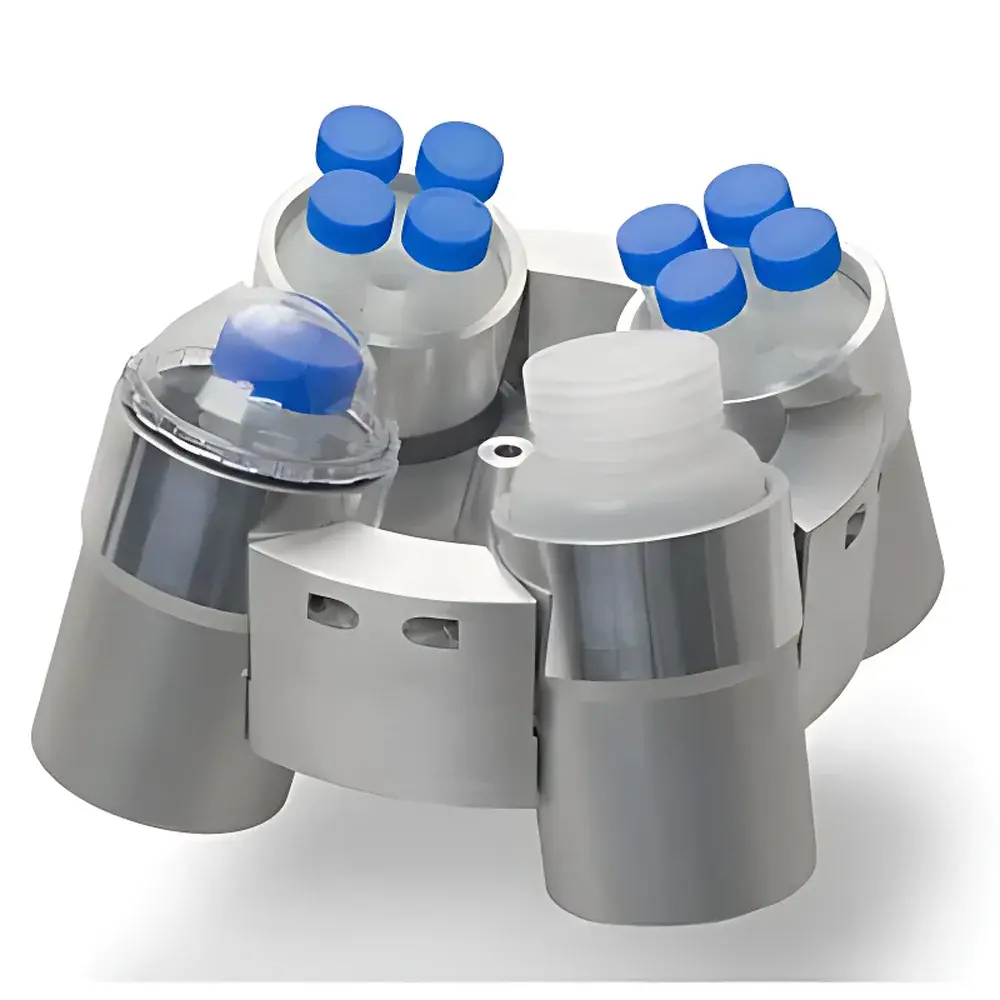
| Rotor Compatibility | Fixed-angle and swing-out rotors for microtubes, PCR strips, conical tubes, capillaries, and cytology applications |
| Safety Features | Four-point lid locking, lid interlock sensor, automatic imbalance detection with auto-reset, overspeed sensor, motor overheat protection |
| Display | Blue LED interface |
| Programmability | 10 user-defined protocols |
| Pulse Mode | 1–90 s adjustable |
Overview
The Centurion Scientific CR2000 is a high-performance benchtop multipurpose centrifuge engineered for precision, reproducibility, and operational safety in demanding laboratory environments. Utilizing a robust brushless DC motor and optimized aerodynamic rotor design, the CR2000 delivers consistent rotational dynamics across its full speed range of 500–15,000 rpm, generating up to 22,000 × g relative centrifugal force (RCF). Its mechanical architecture—featuring a steel-alloy chassis and stainless-steel centrifuge chamber—is designed for long-term stability under repeated thermal and mechanical load cycles. The instrument operates on fundamental sedimentation principles governed by Stokes’ law and the Svedberg equation, enabling reliable separation of biological macromolecules including nucleic acids, proteins, subcellular organelles, and viral particles. As a CE-marked device compliant with IEC 61010-2-020 (safety requirements for centrifuges), the CR2000 meets essential regulatory benchmarks for use in academic research, clinical diagnostics, and quality-controlled production workflows.
Key Features
- Blue LED display with intuitive dual-mode operation: selectable RPM or RCF readout for method standardization and cross-platform protocol transfer
- 10-step programmable acceleration and deceleration profiles, minimizing sample resuspension and pellet disruption during spin-down
- Pulse centrifugation mode (1–90 s) for rapid re-suspension or mixing of viscous or precipitated samples without full rotor engagement
- Four-point mechanical lid locking system with integrated interlock sensor—prevents operation unless fully secured and halts rotation immediately upon lid opening
- Real-time imbalance detection with automatic reset functionality; continuously monitors vibration signatures and adjusts rotor dynamics to maintain safe operation
- Overspeed sensor and motor overheat protection ensure adherence to ISO 13485-aligned operational limits during extended runs or high-load conditions
- Stainless-steel chamber construction resists corrosion from common decontaminants (e.g., 70% ethanol, 0.5% sodium hypochlorite) and facilitates GLP-compliant cleaning validation
Sample Compatibility & Compliance
The CR2000 supports a comprehensive suite of fixed-angle and swing-out rotors certified for use with standard laboratory consumables—including 0.2 mL PCR tubes, 1.5–2.2 mL microcentrifuge tubes, 15 mL and 50 mL conical tubes, 100 mL bottles, capillary hematocrit tubes, and cytology slide carriers. All rotors are balanced per ISO 15883-5 and validated for maximum rated speeds and RCF values. The system complies with EU Directive 2014/30/EU (EMC), 2014/35/EU (LVD), and carries CE marking under EN 61010-1 and EN 61010-2-020. It supports audit-ready documentation for GLP and GMP environments through traceable calibration logs and firmware version tracking.
Software & Data Management
While the CR2000 operates via embedded firmware without external PC dependency, its 10-program memory enables secure storage of validated methods—including speed, time, acceleration/deceleration ramping, and RCF/RPM selection. Each program retains independent settings for routine QC assays (e.g., serum separation at 2,200 × g for 10 min; plasmid prep at 16,000 × g for 15 min). Timestamped run history is retained in non-volatile memory for internal review. For laboratories requiring electronic records, optional RS-232 output (with compatible serial-to-USB adapter) permits integration into LIMS or ELN systems supporting ASTM E2500-15 data capture standards.
Applications
- Isolation of genomic DNA, RNA, and plasmids from bacterial, mammalian, and plant lysates
- Clarification of cell culture supernatants and purification of extracellular vesicles
- Preparation of platelet-poor plasma (PPP) and platelet-rich plasma (PRP) in clinical hematology
- Sedimentation of nanoparticles and colloidal suspensions for size-fractionated analysis
- Cytological processing using dedicated slide rotors for uniform monolayer preparation
- High-throughput sample concentration in proteomics and metabolomics workflows
FAQ
What safety certifications does the CR2000 hold?
The CR2000 is CE-marked and conforms to EN 61010-1 and EN 61010-2-020 for electrical and mechanical safety, as well as EN 61326-1 for electromagnetic compatibility.
Can the CR2000 be used for clinical diagnostic sample preparation?
Yes—it meets ISO 15189 pre-analytical requirements for centrifugation when operated within validated rotor/speed/time parameters and maintained per manufacturer-recommended service intervals.
Is firmware update capability available?
Firmware updates are performed locally via proprietary service port and require authorized Centurion Scientific field support; no remote update functionality is implemented to preserve system integrity.
Does the CR2000 support 21 CFR Part 11 compliance?
While the base unit lacks built-in electronic signature or audit trail features, its programmable memory and run history log may serve as foundational elements for Part 11-compliant workflows when integrated with validated third-party LIMS platforms.
What is the recommended maintenance interval?
Centurion Scientific recommends biannual inspection of rotor seats, lid latches, and drive coupling, with annual calibration of speed and timer accuracy using NIST-traceable tachometry equipment.



