
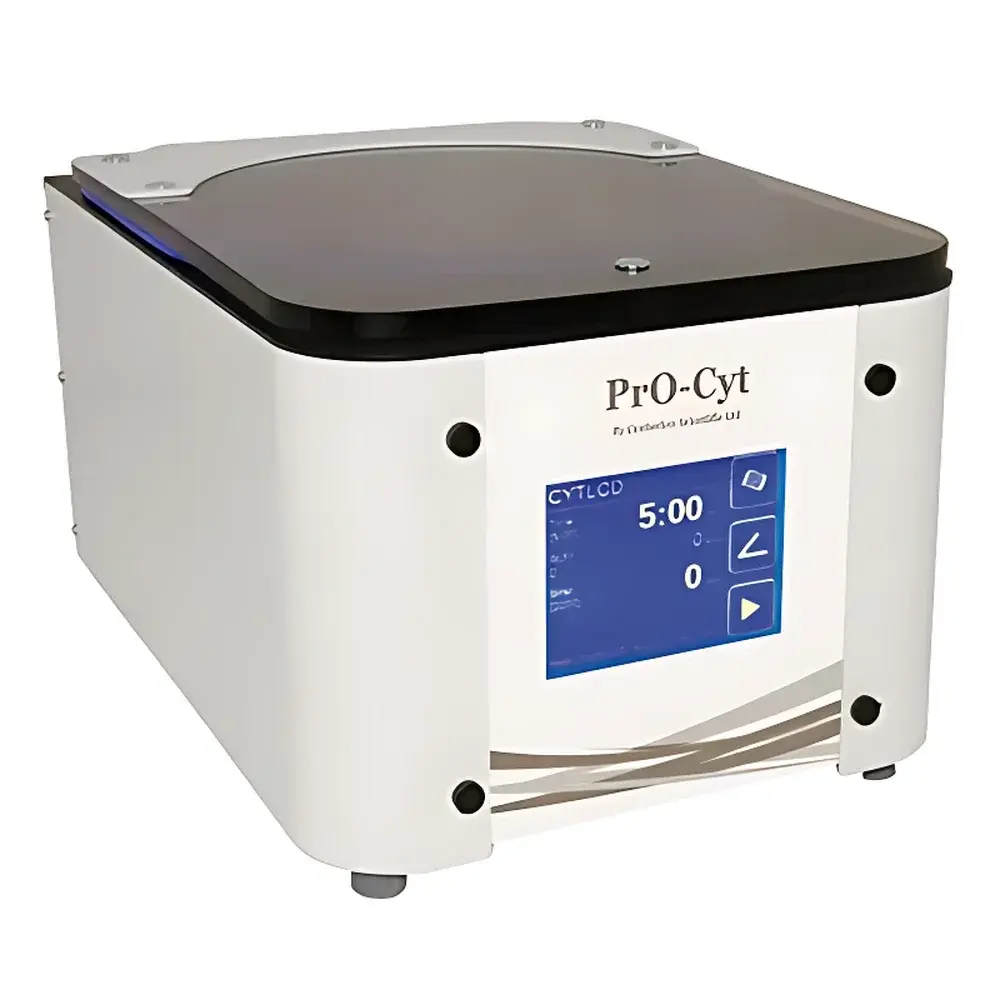
Centurion Scientific PrO Cyt LCD Cytocentrifuge
| Brand | Centurion Scientific |
|---|---|
| Origin | United Kingdom |
| Model | PrO Cyt LCD |
| Instrument Type | Benchtop Cytocentrifuge |
| Maximum Speed | 2000 rpm |
| Maximum RCF | 550 × g |
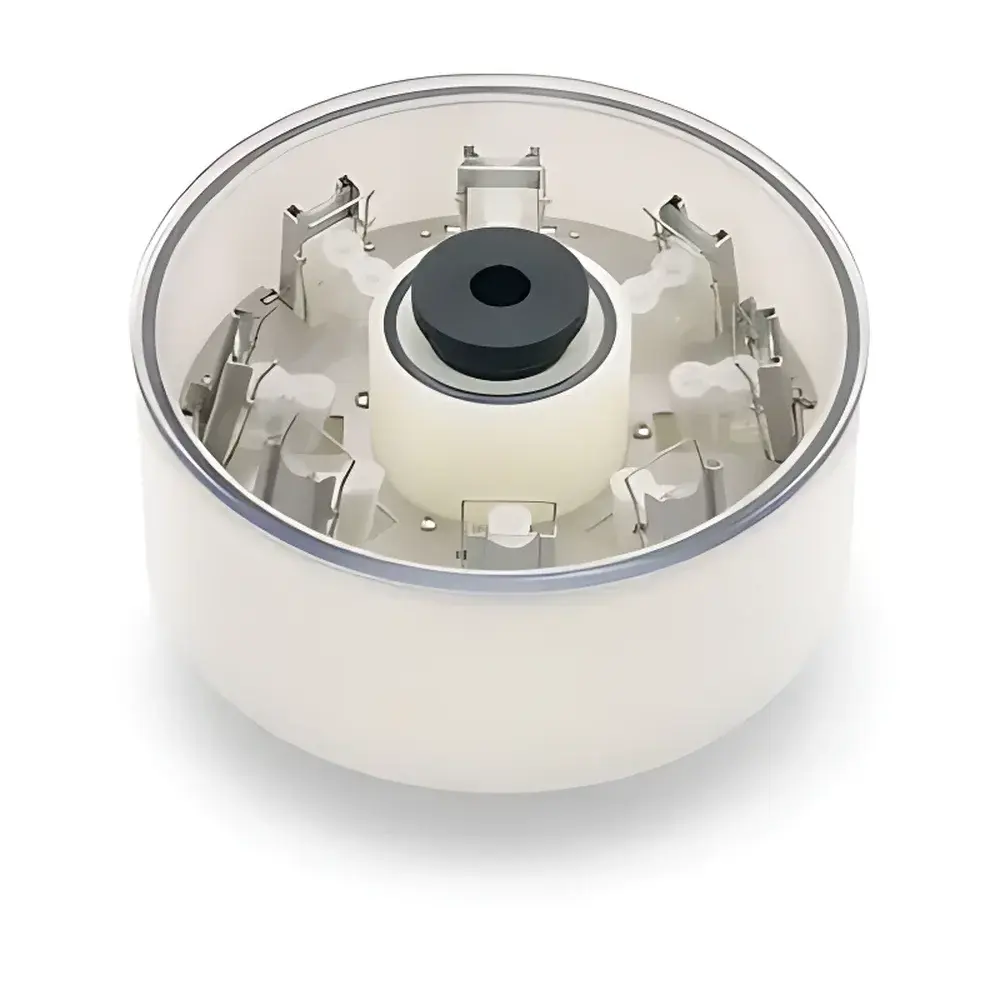
| Capacity | 12-slide cytology rotor |
| Dimensions | 27 × 32 × 47 cm |
| Weight | 22 kg (without rotor) |
| Power Consumption | 175 W |
| Acceleration/Deceleration | 10-step adjustable |
| Timer Range | 0–9999 min + continuous mode (1 s increment) |
| Display | LCD touch screen |
| Rotor Compatibility | 4-, 8-, and 12-position cytology slide rotors (models 4420, 4430, 4460) |
| Safety Features | Four-point lid lock, lid presence sensor, imbalance vibration detector with auto-reset, overspeed sensor, motor overheat sensor |
| Chamber Material | Stainless steel |
| Drive System | High-efficiency European brushless DC motor |
Overview
The Centurion Scientific PrO Cyt LCD is a precision-engineered benchtop cytocentrifuge designed for standardized, reproducible preparation of monolayer cellular specimens on glass slides. Unlike conventional centrifuges, the PrO Cyt LCD operates on the principle of controlled sedimentation under low-force centrifugal fields—specifically optimized for gentle cell deposition without morphological distortion or lysis. Its operational range (200–2000 rpm, up to 550 × g) ensures compatibility with fragile primary cells, suspension cultures, body fluids (e.g., pleural effusions, cerebrospinal fluid, bronchoalveolar lavage), and low-cellularity samples commonly encountered in diagnostic cytology and research histopathology. The instrument fulfills critical pre-analytical requirements for downstream staining (Papanicolaou, Giemsa, immunocytochemistry), digital pathology scanning, and molecular assays where cell integrity, spatial distribution, and uniform monolayer formation are essential for diagnostic accuracy.
Key Features
- LCD touchscreen interface with intuitive navigation, supporting both rpm and RCF operating modes
- 10-step programmable acceleration and deceleration profiles to minimize shear-induced cell damage during spin-up and spin-down
- 108 user-programmable methods stored onboard—enabling rapid recall of validated protocols across multiple sample types and staining workflows
- Stainless-steel centrifuge chamber with smooth, crevice-free interior geometry for effortless decontamination and compliance with CLSI H26-A3 and ISO 15189 cleaning validation requirements
- Robust steel-alloy chassis and vibration-damped base structure ensure stable operation on standard laboratory countertops, even during extended runs
- Four-point mechanical lid interlock system, integrated lid presence sensor, and automatic power cutoff prevent operation with open lid—meeting IEC 61010-2-020 safety standards for laboratory equipment
- Real-time imbalance detection with auto-reset functionality; overspeed monitoring via independent tachometric sensor; motor temperature sensing with thermal shutdown protection
Sample Compatibility & Compliance
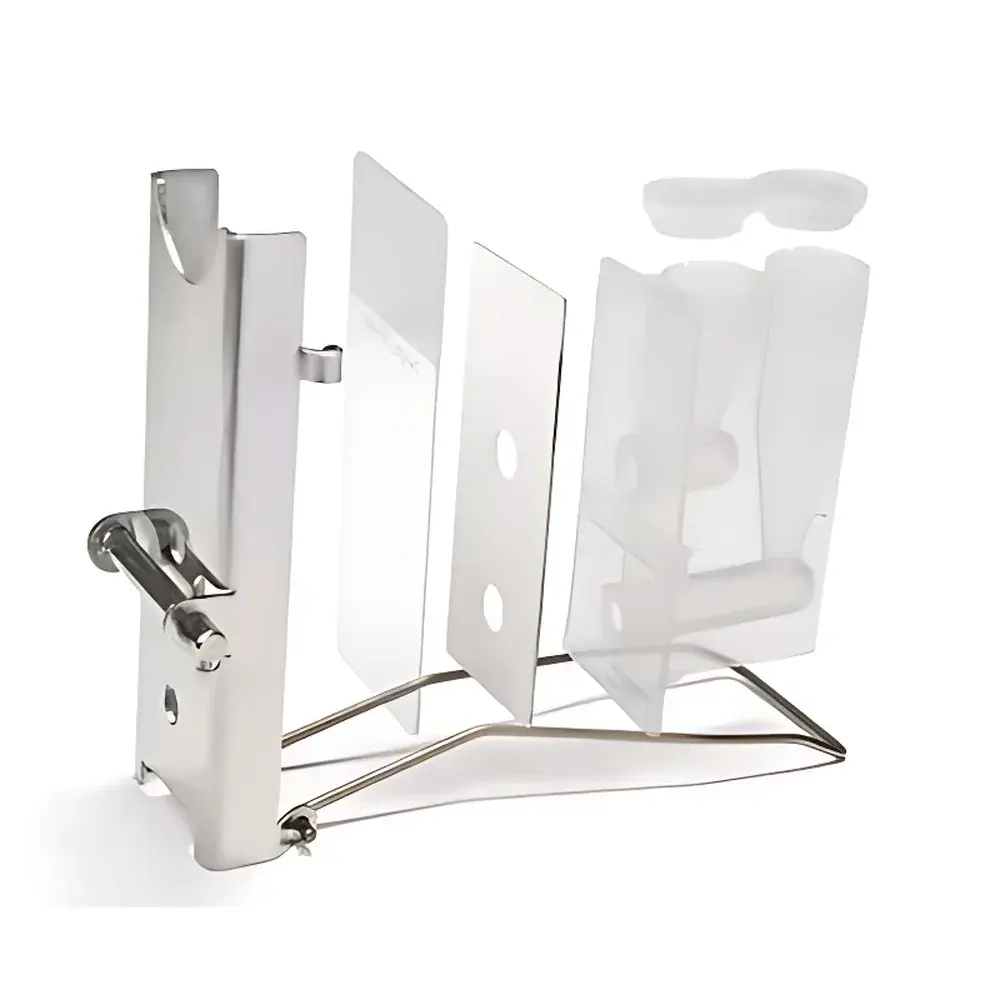
The PrO Cyt LCD accommodates a broad spectrum of clinical and research specimens—including but not limited to urine sediments, fine-needle aspiration (FNA) washings, ascitic fluid, synovial fluid, and peripheral blood smears. It supports all standard cytology slide formats (e.g., 25 × 75 mm, frosted-end, adhesive-coated, or silanized slides) and is compatible with commercially available cytospin-style collection chambers and filter cards. Each rotor variant (4420, 4430, 4460) is CE-marked and validated per EN 61010-1 for use in IVD and GLP environments. The system’s design facilitates traceability in regulated laboratories: method parameters, run timestamps, rotor ID, and operator log entries are retained in non-volatile memory—supporting audit readiness for CAP, CLIA, and UKAS-accredited facilities.
Software & Data Management
While the PrO Cyt LCD operates as a standalone instrument with embedded firmware, its programmable architecture enables integration into laboratory information systems (LIS) via optional RS-232 or USB-to-serial interfaces. All stored protocols include metadata fields for assay type, specimen source, and clinician ID—aligning with ISO/IEC 17025 documentation requirements. Audit trail functionality records date/time stamps for each method modification, rotor installation, and emergency stop event. Firmware updates are delivered via secure USB key, with version control logs maintained internally. No cloud connectivity or proprietary software installation is required, ensuring data sovereignty and minimizing IT infrastructure dependencies.
Applications
- Clinical cytology: Preparation of high-fidelity monolayers from low-yield specimens for cervical, respiratory, and urinary tract cytology screening
- Hematopathology: Isolation and concentration of rare hematopoietic cells from bone marrow aspirates and peripheral blood for flow cytometry or FISH analysis
- Infectious disease diagnostics: Concentration of bacteria, fungi, and viral particles from CSF or BAL fluid prior to Gram staining or PCR amplification
- Research oncology: Standardized cell deposition for single-cell RNA sequencing library prep and spatial transcriptomics workflows
- Immunocytochemistry: Optimized slide adhesion and antigen preservation for automated IHC platforms (e.g., Ventana Benchmark, Leica BOND)
FAQ
What is the maximum recommended sample volume per slide in the PrO Cyt LCD?
Standard protocols support 50–200 µL per chamber, depending on cell concentration and desired monolayer density. Volumes exceeding 250 µL may compromise uniformity and increase drying artifacts.
Can the PrO Cyt LCD be used with cytology filters or membrane-based collection devices?
Yes—rotor adapters for common 13-mm and 25-mm diameter filtration membranes are available as optional accessories (Part Nos. ADP-F13, ADP-F25), enabling compatibility with Millipore, Sartorius, and Whatman filter formats.
Is the instrument compliant with FDA 21 CFR Part 11 for electronic records?
The PrO Cyt LCD does not generate electronic signatures or enforce user authentication natively; however, its timestamped method logs and immutable run history meet foundational ALCOA+ principles when paired with validated LIS integration and procedural SOPs.
Does Centurion Scientific provide IQ/OQ documentation for this model?
Yes—factory-issued Installation Qualification (IQ) and Operational Qualification (OQ) templates, aligned with ASTM E2500 and EU Annex 15, are supplied with each unit upon request and can be customized for site-specific validation protocols.
What maintenance intervals are recommended for long-term reliability?
Annual calibration of speed and timer accuracy is advised; rotor inspection for microcracks or corrosion every 6 months; and routine cleaning of the chamber gasket and rotor seating surfaces after each use—per manufacturer’s Maintenance Log (Ref. MNT-PCYT-LCD-Rev.3).



