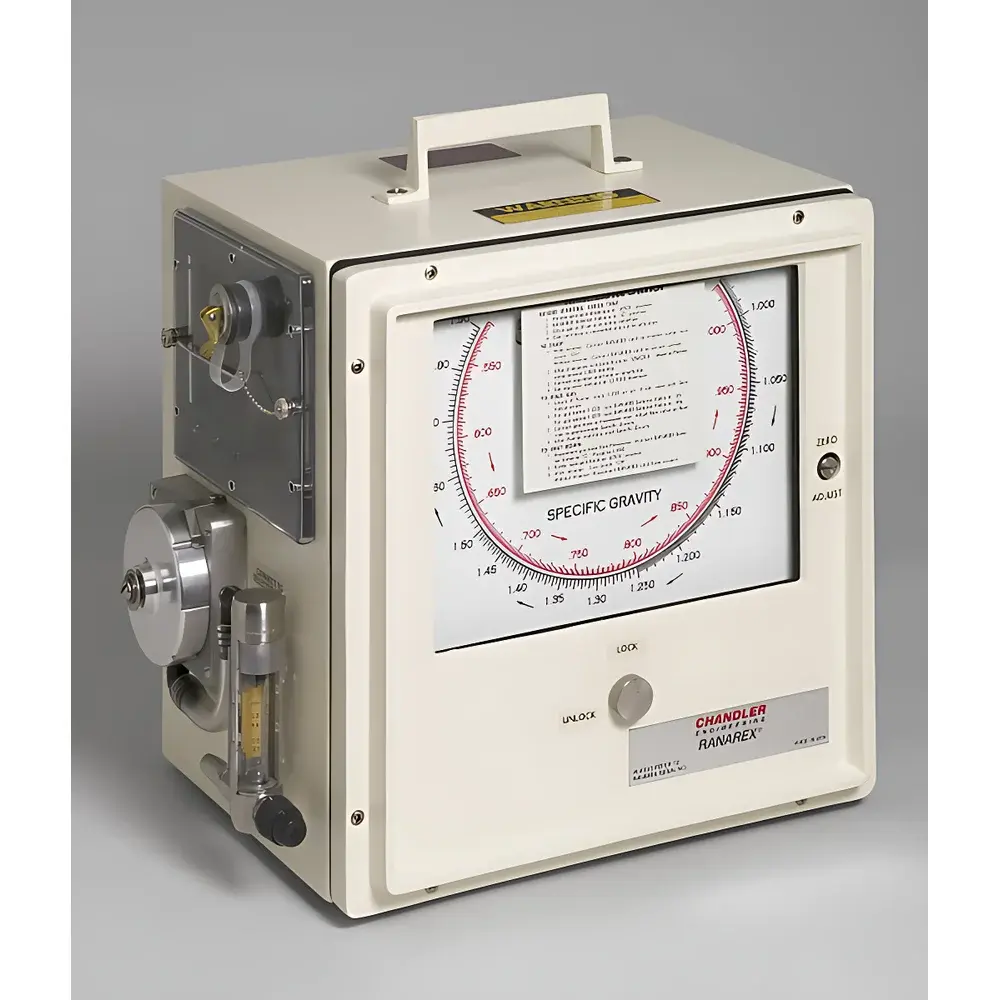
Chandler Ranarex Gas Gravitometer Model 388
| Brand | PROCESS INSTRUMENTS |
|---|---|
| Origin | USA |
| Manufacturer Type | Authorized Distributor |
| Origin Category | Imported Instrument |
| Model | 388 |
| Pricing | Available Upon Request |
Overview
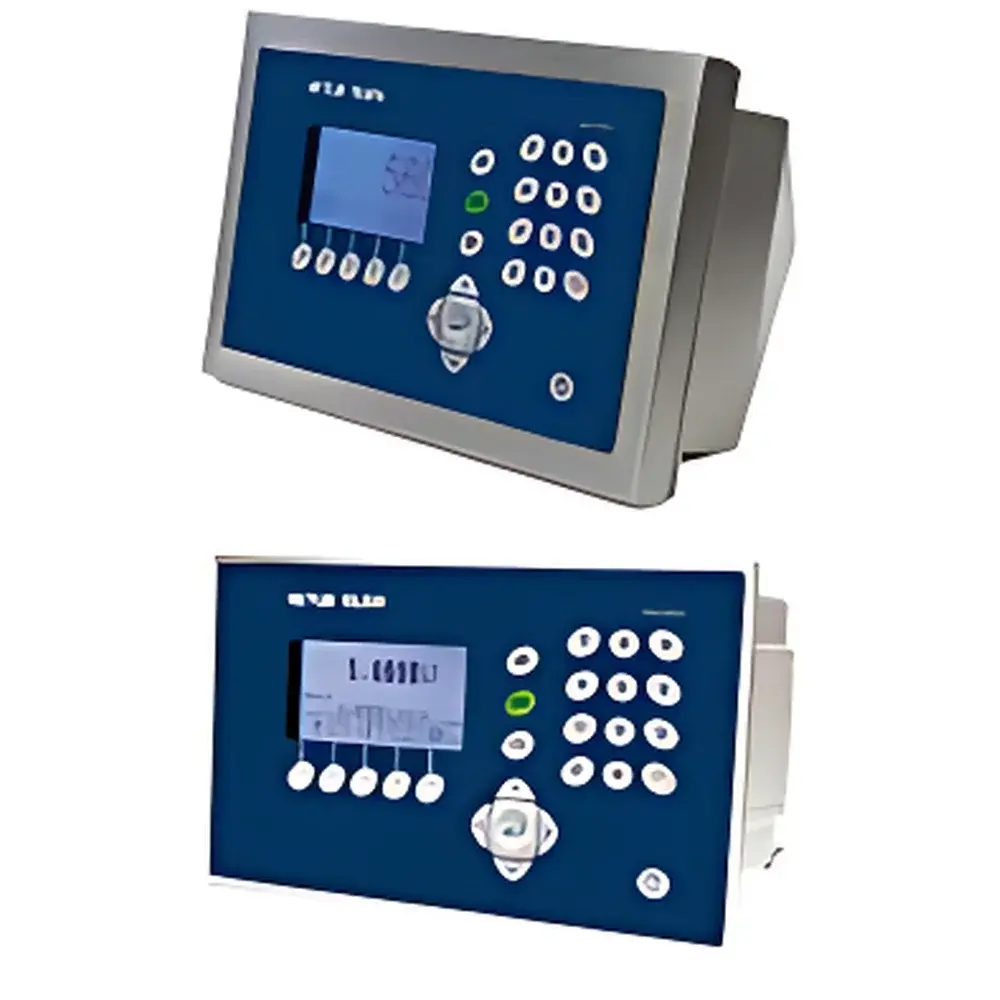
The Chandler Ranarex Gas Gravitometer Model 388 is a portable, precision-engineered instrument designed for the direct measurement of gas specific gravity (relative density) under field or laboratory conditions. Based on the principle of thermal conductivity differential and calibrated buoyancy displacement, the Model 388 provides rapid, operator-independent determination of gas density relative to air at standard reference conditions (15.6°C, 101.325 kPa). Its design adheres strictly to ASTM D1070 – Standard Test Methods for Relative Density (Specific Gravity) of Gaseous Fuels, ensuring methodological compliance for natural gas, propane-air mixtures, landfill gas, biogas, and other non-corrosive hydrocarbon or inert gas streams. Unlike digital mass flow-based alternatives, the Ranarex 388 employs a mechanically stable, temperature-compensated gravimetric cell with zero-drift calibration architecture—eliminating reliance on external pressure transducers or flow controllers.
Key Features
- Portable, battery-operated operation with integrated rechargeable lithium-ion power system (up to 8 hours continuous use)
- Thermally stabilized dual-chamber buoyancy sensor with automatic ambient temperature compensation (±0.1°C resolution)
- Direct readout of specific gravity (dimensionless) and derived methane content estimation for natural gas blends
- Calibration traceable to NIST-traceable reference gases (air and certified methane standards)
- Ruggedized aluminum housing rated IP65 for dust and water resistance—suitable for refinery perimeters, pipeline metering stations, and LNG terminal infield verification
- No consumables or replaceable sensors; maintenance limited to periodic zero-check with dry air and annual calibration verification
Sample Compatibility & Compliance
The Model 388 is validated for use with dry, non-condensing, non-corrosive gases within the dew point range of −40°C to +30°C and operating pressure range of 90–115 kPa (absolute). It is not intended for use with hydrogen sulfide (>10 ppm), chlorine, ammonia, or aerosol-laden streams. All measurements comply with ASTM D1070 Sections 5–8, including procedural requirements for sample conditioning, thermal equilibration time (≥3 minutes), and repeatability criteria (±0.002 SG units at 95% confidence). The instrument supports GLP-aligned documentation when paired with optional printed output via Bluetooth thermal printer (sold separately); raw data logs include timestamp, ambient T/P, and operator ID fields to satisfy internal audit requirements.
Software & Data Management
While the Model 388 operates as a standalone analog-digital hybrid instrument with front-panel LCD display, optional firmware upgrade (v2.3+) enables USB-C data export in CSV format. Exported files contain columnar fields: UTC timestamp, measured SG, ambient temperature (°C), barometric pressure (kPa), calibration status flag, and user-defined batch ID. Data integrity is preserved via embedded write-protected memory with 500-entry local storage buffer. For regulated environments, the device supports optional 21 CFR Part 11-compliant audit trail add-on module—providing electronic signatures, role-based access control, and immutable record retention for QA/QC departments managing ISO/IEC 17025-accredited gas testing workflows.
Applications
- Field verification of natural gas composition prior to custody transfer at city gate stations
- Routine quality assurance for LPG vapor phase sampling in bulk terminals
- Biogas upgrading plant monitoring—tracking methane enrichment efficiency across membrane separation stages
- Educational laboratory instruction in fuel science and thermodynamic property measurement
- Emergency response screening for gas leaks where compositional identification informs hazard classification (e.g., distinguishing propane from butane-rich mixtures)
- Regulatory compliance reporting for EPA Method 21 follow-up investigations requiring SG-derived molecular weight estimates
FAQ
Does the Model 388 require daily calibration before use?
No—zero calibration is required only after extended storage (>72 hours), significant ambient temperature shifts (>10°C), or mechanical shock. A quick dry-air zero check takes <60 seconds.
Can it measure wet gas streams?
No. Condensate must be removed upstream using a coalescing filter and refrigerated dryer; water vapor alters thermal conductivity response and invalidates ASTM D1070 conformance.
Is the instrument compatible with hazardous area classifications?
The base Model 388 is rated Class I, Division 2, Group D (non-incendive). A certified ATEX/IECEx version (Model 388-EX) is available upon request for Zone 2 installations.
What is the typical measurement uncertainty?
At 20°C and 101.3 kPa, expanded uncertainty (k=2) is ±0.0015 SG units for gases within 0.55–1.10 SG range, as verified per ISO/IEC 17025 accredited calibration reports.
How is traceability to national standards maintained?
Each unit ships with a certificate of calibration referencing NIST SRM 1670a (dry air) and NIST SRM 1671a (methane), with uncertainty budgets documented per ISO/IEC 17025 Clause 6.5.