
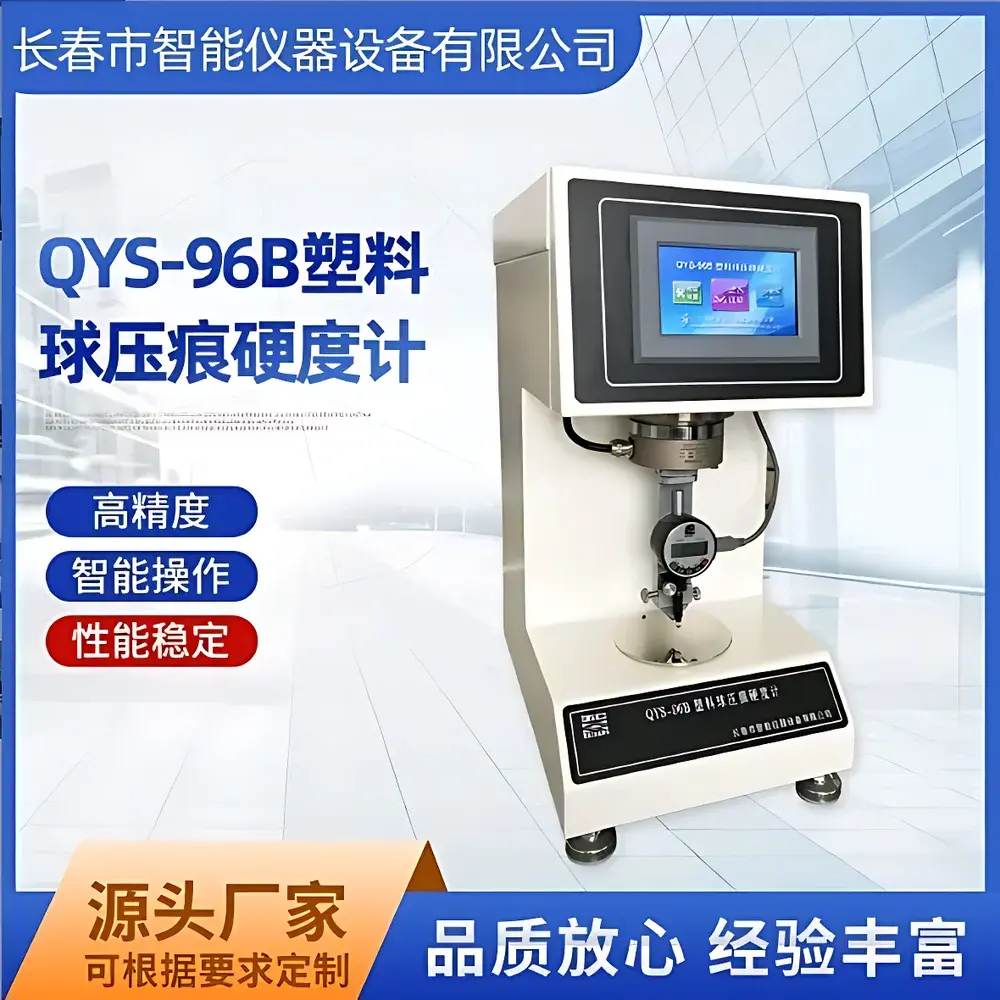
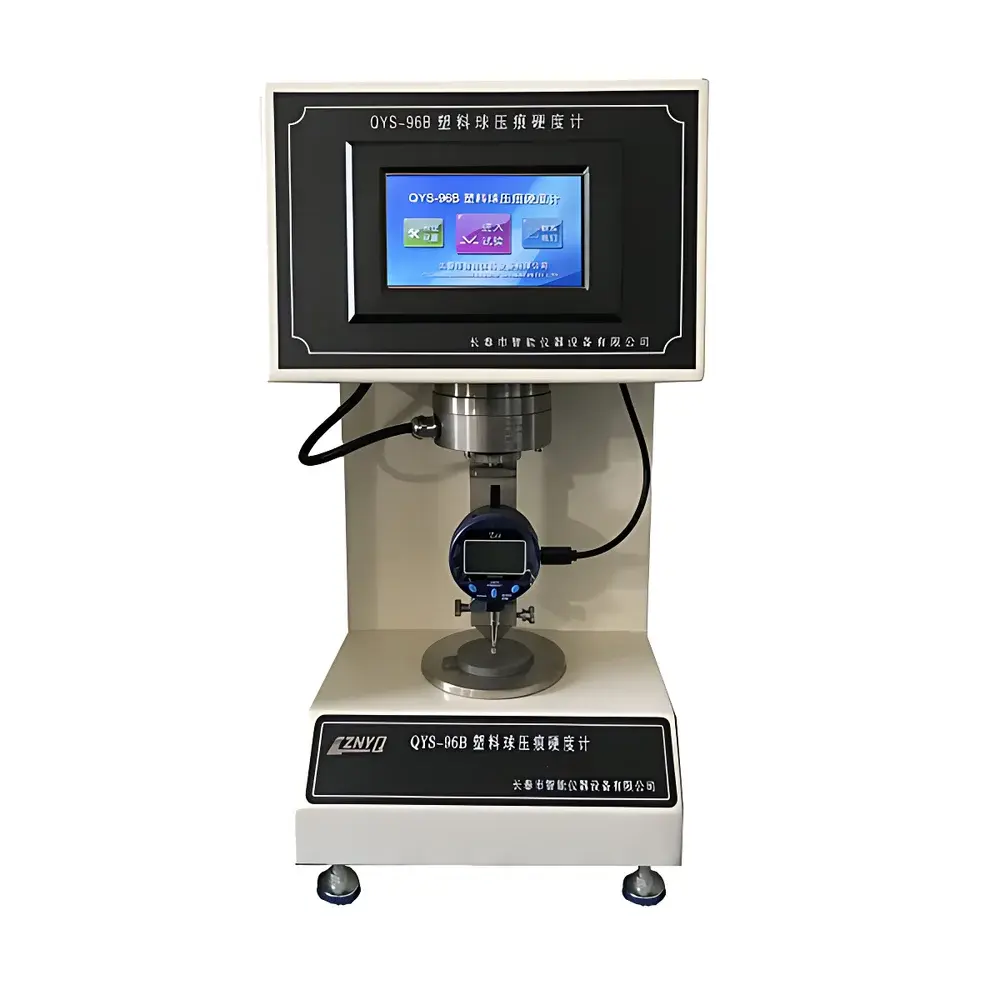
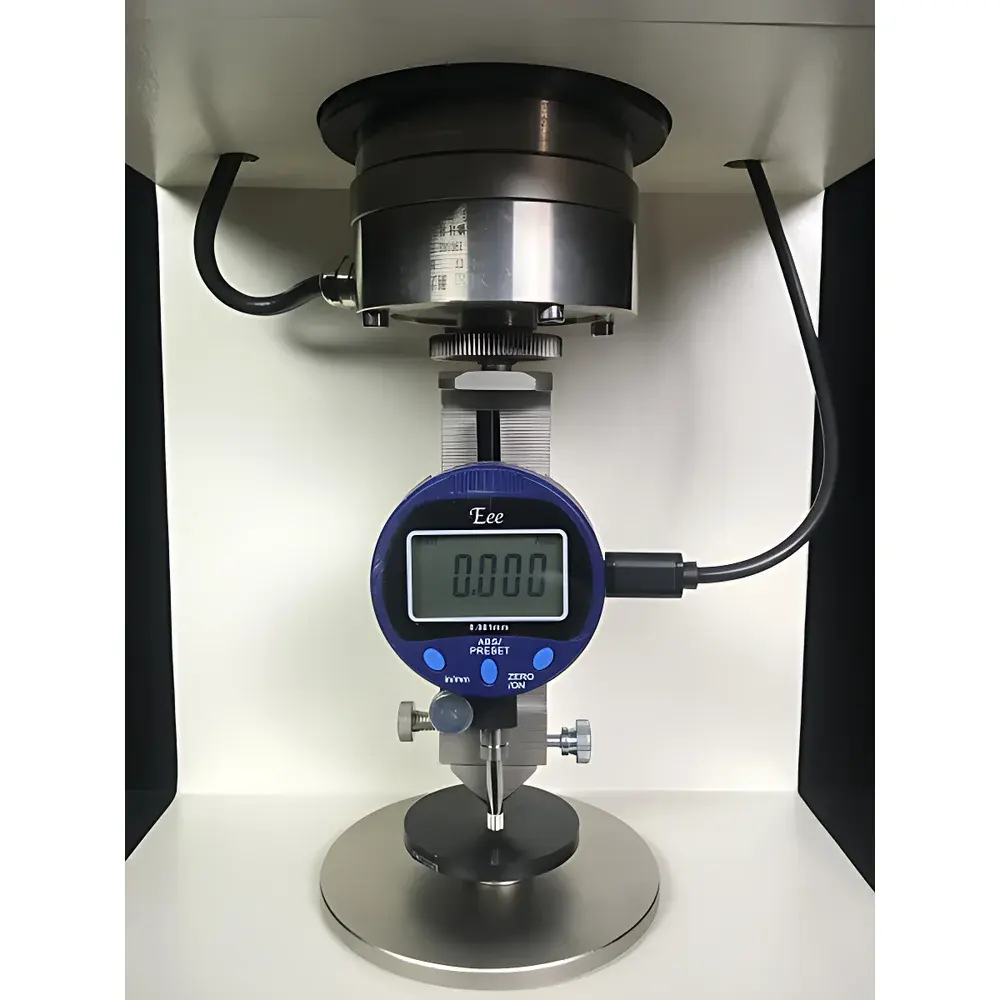
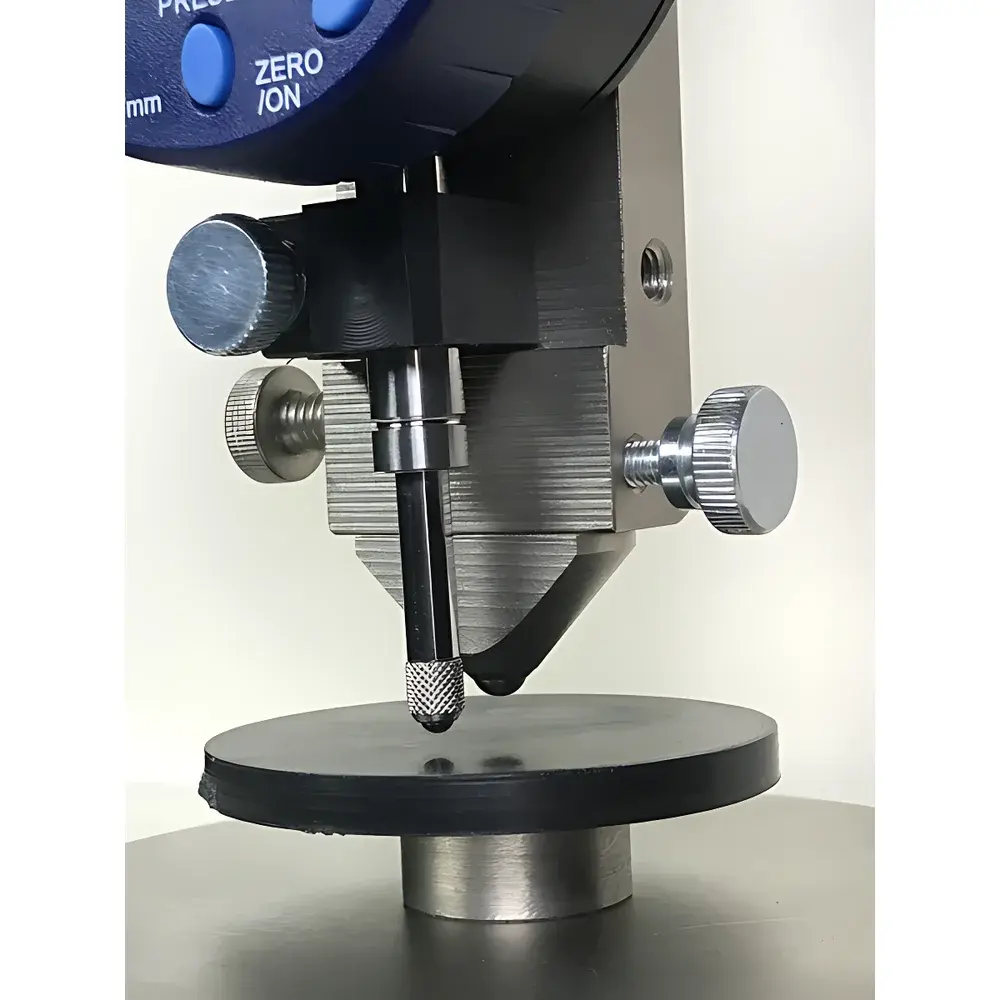
Changchun Intelligent QYS-96B Plastic Ball Indentation Hardness Tester
| Brand | Changchun Intelligent |
|---|---|
| Origin | Jilin, China |
| Manufacturer Type | Authorized Distributor |
| Country of Origin | China |
| Model | QYS-96B |
| Instrument Type | Ball Indentation Hardness Tester (not Rockwell) |
| Total Test Force | 961 N |
| Indentation Depth Range | 0.125–0.325 mm |
| Maximum Specimen Height | 30 mm |
| Steel Ball Indenter Diameters | Φ5 mm and Φ10 mm |
| Depth Resolution | 0.001 mm |
| Timing Range | 10–90 s (±0.5% accuracy) |
| Indication Accuracy | ±4% |
| Frame Deformation | ≤0.05 mm |
| Net Weight | 70 kg |
| Dimensions (W×D×H) | 420 × 240 × 640 mm |
Overview
The Changchun Intelligent QYS-96B Plastic Ball Indentation Hardness Tester is a precision mechanical instrument engineered for the standardized determination of ball indentation hardness in thermoplastics, thermosets, elastomers, and other polymeric materials. It operates on the principle defined in ISO 2039-1:2001 and GB/T 3398.1–2008: a hardened steel spherical indenter is applied under controlled static load to the surface of a conditioned polymer specimen; after a specified dwell time (10–90 s), the residual depth of the permanent indentation is measured with micrometric resolution (0.001 mm). Unlike Rockwell or Shore hardness testers, this system quantifies resistance to localized plastic deformation under spherical contact geometry—yielding results directly traceable to international standards for structural polymer evaluation in automotive, construction, and industrial component manufacturing.
Key Features
- Electromechanical servo-controlled loading system ensuring precise application and maintenance of test forces (9.8 N pre-load + six selectable main loads: 49 N, 132 N, 358 N, 612 N, and 961 N)
- Dual interchangeable steel ball indenters (Φ5 mm and Φ10 mm) compliant with ISO 2039-1 geometric specifications
- High-resolution digital displacement transducer with 0.001 mm resolution and ±4% indication accuracy per JB/T 7410–2010
- Programmable dwell time control (10–90 s) with ±0.5% timing accuracy, supporting both standard and custom test protocols
- Rigid cast-iron frame design minimizing elastic deflection (<0.05 mm under maximum load), critical for repeatable indentation depth measurement
- Integrated thermal-stable base plate and adjustable specimen support accommodating specimens up to 30 mm in height and ≥100 mm lateral clearance from indenter axis
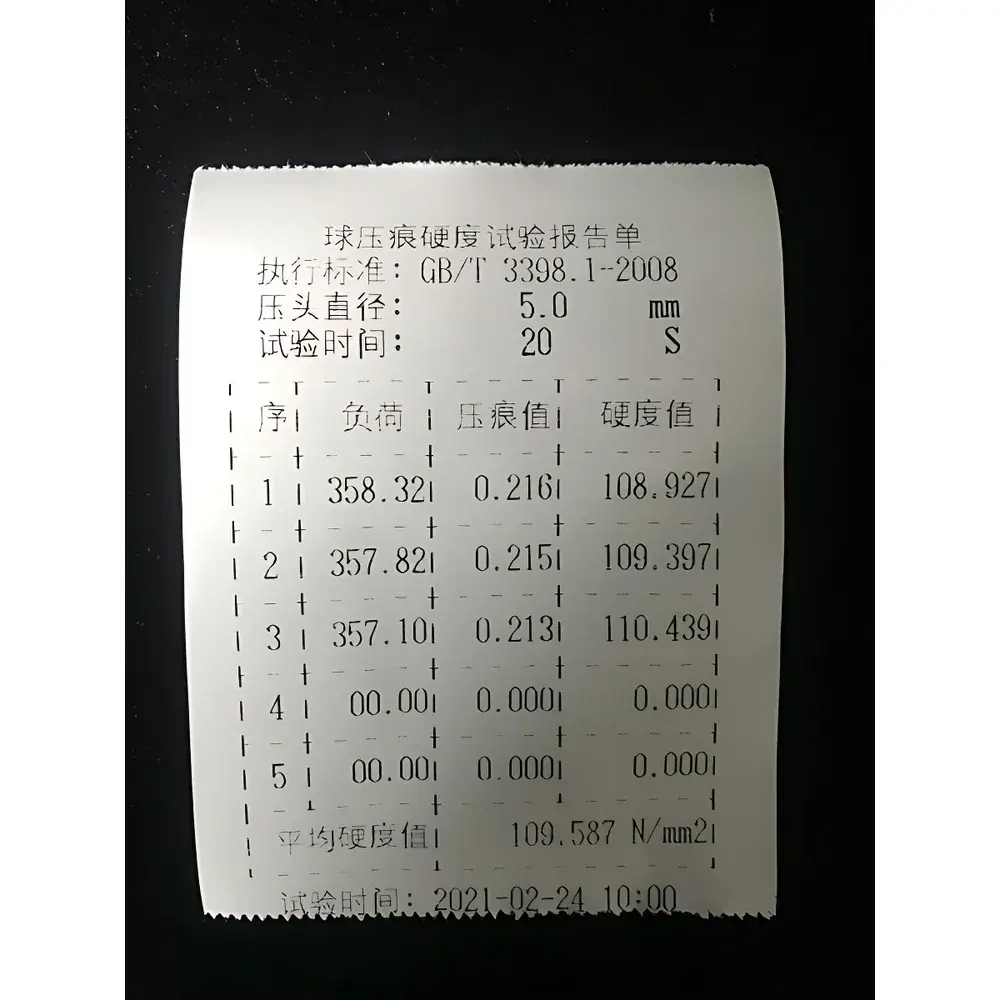
- Onboard micro-printer for immediate hard-copy output of test parameters, indentation depth, calculated hardness value (in N/mm²), and timestamp
Sample Compatibility & Compliance
The QYS-96B is validated for use with rigid and semi-rigid plastics including ABS, PC, PP, PVC, PA, POM, and fiber-reinforced composites—provided specimens meet dimensional requirements (minimum thickness ≥3× indentation depth; surface flatness ≤0.02 mm over 25 mm). All testing procedures align with ISO 2039-1:2001, GB/T 3398.1–2008, and ASTM D785 (for comparative correlation). The instrument complies with JB/T 7410–2010 technical specifications and JJG 369–1993 verification requirements for metrological traceability in Chinese national laboratories. While not inherently 21 CFR Part 11-compliant, its printed reports support GLP documentation when paired with laboratory SOPs governing instrument calibration, environmental conditioning (23 ±2 °C, 50 ±5% RH), and operator training records.
Software & Data Management
The QYS-96B includes dedicated Windows-compatible software for data acquisition, calculation, and export. The software automatically computes ball indentation hardness (H, in N/mm²) using the formula: H = F / (π·D·h), where F is applied force (N), D is indenter diameter (mm), and h is measured residual indentation depth (mm). Raw depth values, load profiles, dwell times, and environmental metadata are logged in CSV and PDF formats. Audit trails record user ID, test date/time, parameter changes, and calibration events—enabling retrospective review per internal QA protocols. Exported datasets integrate seamlessly with LIMS platforms via ODBC drivers and support batch statistical analysis (mean, SD, CV%, min/max) across material lots or processing conditions.
Applications
This tester supports quality assurance and R&D workflows in polymer compound development, injection molding validation, recycled plastic grading, and automotive interior trim qualification. Typical use cases include: comparative hardness screening of flame-retardant vs. standard-grade ABS housings; monitoring crosslink density shifts in vulcanized rubber post-cure; evaluating heat aging effects on PVC window profiles; verifying batch-to-batch consistency of glass-filled nylon structural brackets; and generating input data for finite element modeling of plastic component deformation under localized contact stress. Its reproducibility (CV <3.5% under controlled conditions) makes it suitable for specification conformance testing per OEM material release criteria.
FAQ
Is the QYS-96B certified to ISO/IEC 17025 requirements?
No—the instrument itself is not accredited, but it meets metrological requirements referenced in ISO/IEC 17025:2017 Clause 6.4 (equipment verification) when used within a laboratory holding accreditation for ISO 2039-1 testing.
Can the system perform automatic hardness unit conversion?
Yes—the software outputs hardness in N/mm² (equivalent to MPa) and provides optional conversion to kgf/mm² upon user selection.
What calibration standards are recommended?
Certified reference blocks with known indentation depths (traceable to NIM or NIST) should be used quarterly; force calibration requires certified deadweight sets or calibrated load cells per JJG 369–1993.
Does the instrument support multi-sample sequential testing?
Yes—operator-defined test sequences (up to 99 cycles) can be programmed with variable loads, dwell times, and indenter selections; each result is auto-numbered and timestamped.
Is environmental conditioning integrated into the system?
No—ambient temperature and humidity control must be maintained externally per ISO 291; the instrument does not include climate chamber integration.



