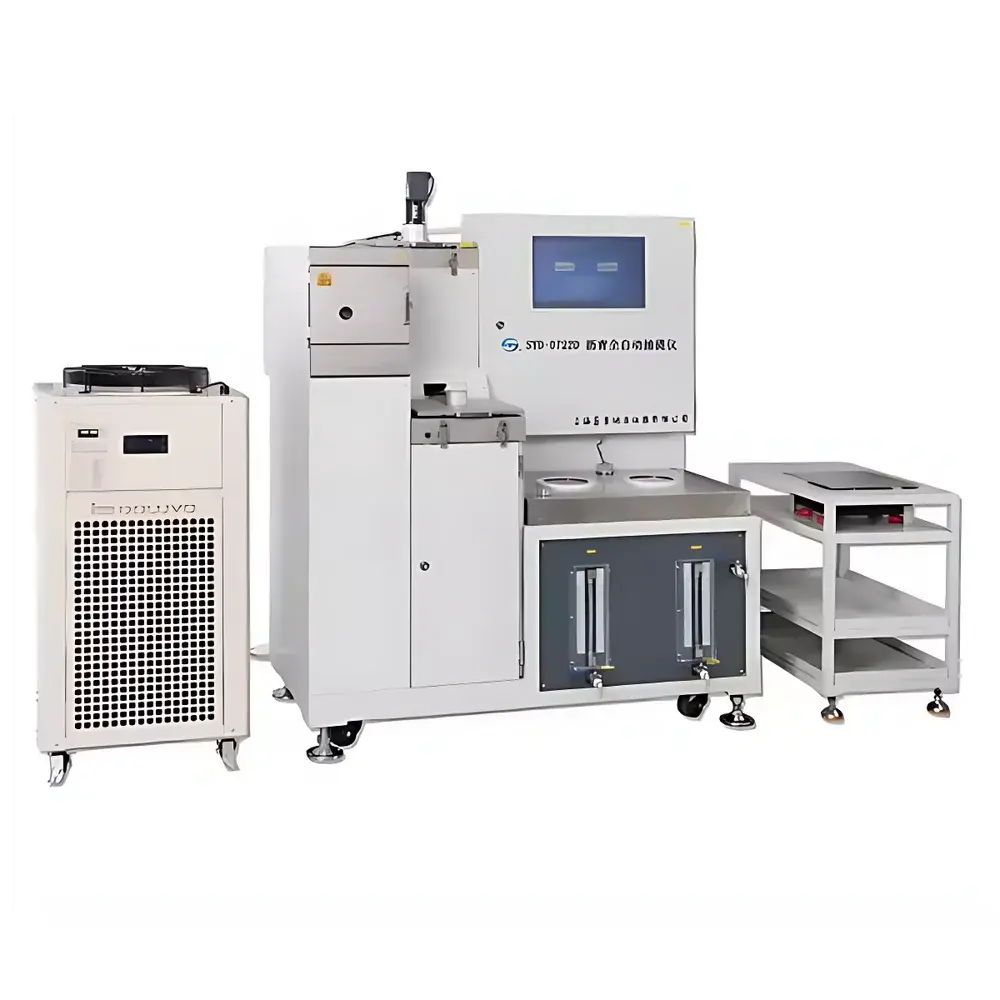
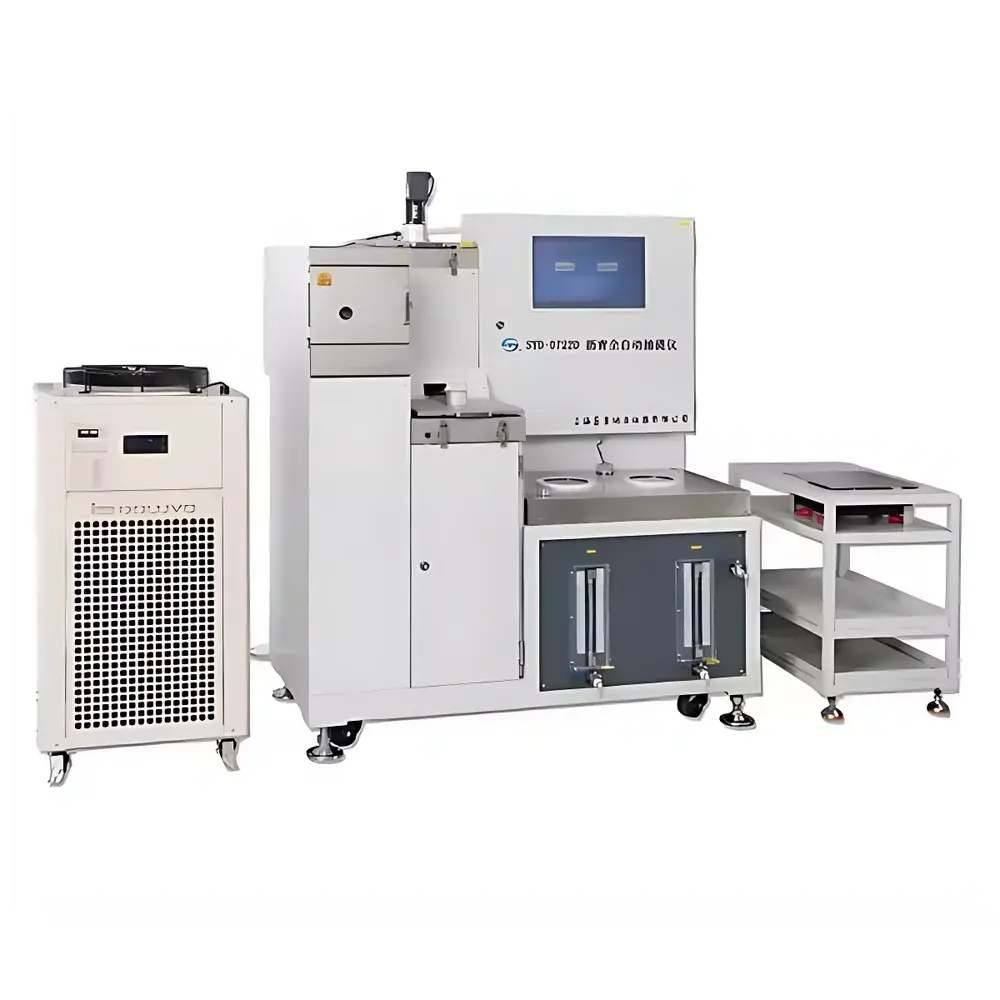
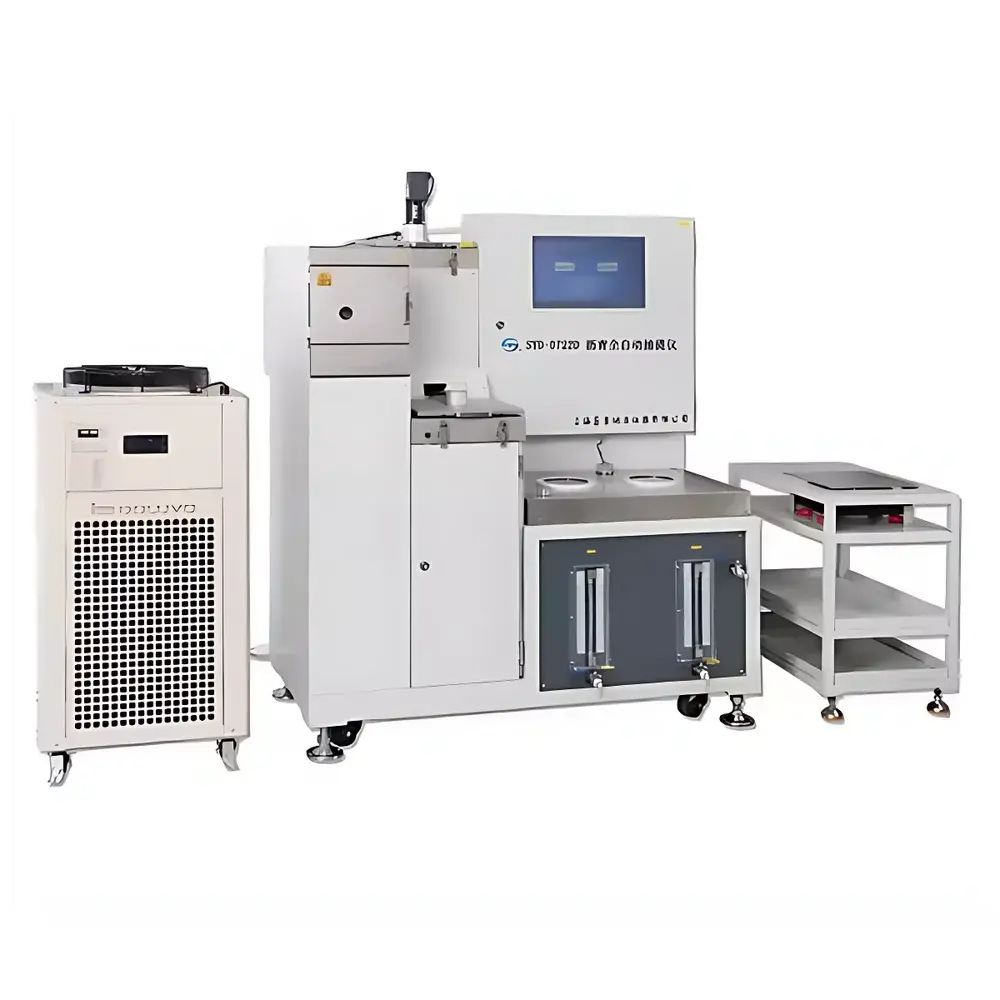
Changji Instruments SYD-0722D Fully Automated Asphalt Extractor
| Brand | Changji Instruments |
|---|---|
| Origin | Shanghai, China |
| Model | SYD-0722D |
| Control System | Computer-controlled with programmable soaking, washing, centrifugation, and drying cycles |
| Centrifuge Speed | ≥8,000 rpm |
| Extraction Environment | Fully enclosed, solvent-recovery-integrated system |
| Solvent Heating & Ultrasonic Assistance | Integrated in wash chamber |
| Drying Capability | Hot-air drying of aggregates and mineral filler |
| Sample Throughput | Complete asphalt extraction from standard 1,000–1,500 g asphalt mixture specimens within ≤60 minutes |
| Compliance Framework | Designed to support ASTM D2172, AASHTO T164, and GB/T 11893–2022 test protocols |
| Optional Accessories | Motorized lift rotary evaporator, custom glassware cleaning fixtures |
Overview
The Changji Instruments SYD-0722D Fully Automated Asphalt Extractor is an integrated, closed-loop laboratory system engineered for precise quantitative separation of bitumen binder from asphalt mixtures—whether conventional hot-mix asphalt (HMA), warm-mix asphalt (WMA), or rubber-modified asphalt containing crumb rubber particles. It operates on the principle of solvent-assisted dissolution followed by high-speed centrifugal phase separation, enabling gravimetric determination of asphalt content via mass difference before and after extraction. Unlike manual or semi-automated methods, the SYD-0722D eliminates operator exposure to hazardous solvents (e.g., trichloroethylene or toluene) through fully sealed fluid pathways, integrated condensation recovery, and automated solvent circulation. Its architecture conforms to core requirements of standardized asphalt binder recovery workflows defined in ASTM D2172 (Standard Test Method for Quantitative Extraction of Bitumen from Bituminous Paving Mixtures) and AASHTO T164, while supporting traceability needs aligned with GLP-compliant laboratory practices.
Key Features
- Fully computer-controlled operation with customizable soaking duration (3–30 min), ultrasonically enhanced solvent immersion, and temperature-regulated wash chamber (up to 60 °C) for accelerated bitumen dissolution.
- High-efficiency centrifugation at ≥8,000 rpm using a precision-balanced rotor assembly; real-time observation window on centrifuge drum enables visual monitoring of phase separation progress.
- Integrated drying module with forced hot-air circulation ensures complete moisture removal from recovered aggregates and mineral filler—critical for accurate mass-based asphalt content calculation per ASTM D2172 Section 8.2.
- Closed-system solvent management: solvent reservoir, extraction chamber, condenser-cooled vapor return path, and vacuum-assisted rotary evaporation interface (optional motorized lift unit) minimize fugitive emissions and support solvent reuse.
- Automated sequence execution—including pre-soak, agitation, centrifugation, solvent drainage, rinse, and drying—completed within 60 minutes for a standard 1,200 g specimen.
- Modular design accommodates optional accessories: programmable lift-type rotary evaporator for recovered bitumen concentration; custom-designed fixtures for cleaning asphalt testing glassware (e.g., extraction flasks, condensers).
Sample Compatibility & Compliance
The SYD-0722D handles diverse asphalt mixture types, including dense-graded, porous, SMA, and rubber-modified formulations containing crumb rubber particles up to 3 mm nominal size. It supports both petroleum-based and bio-modified binders, provided solvent compatibility is verified (e.g., toluene for polymer-modified binders, trichloroethylene for conventional bitumen). The system meets mechanical and procedural prerequisites of ASTM D2172, AASHTO T164, and Chinese national standard GB/T 11893–2022. Its sealed operation and solvent recovery capability align with OSHA 29 CFR 1910.1200 (Hazard Communication) and EPA solvent emission guidelines. Data logs—including time-stamped process parameters, temperature profiles, and cycle completion status—are retained locally for audit readiness under GLP or internal QA frameworks.
Software & Data Management
The embedded control software provides intuitive touchscreen interface with English-language menus, allowing users to define and store multiple extraction protocols. Each run generates a timestamped report containing soak time, centrifuge speed profile, drying temperature curve, and final mass readings (pre- and post-extraction). Export options include CSV files compatible with LIMS integration. While the base configuration does not include FDA 21 CFR Part 11-compliant electronic signatures or audit trail encryption, the system architecture supports third-party validation packages for regulated environments requiring full data integrity compliance.
Applications
- Quality assurance of incoming asphalt mixtures at paving contractors’ central plants and state DOT laboratories.
- Asphalt content verification during pavement rehabilitation projects involving reclaimed asphalt pavement (RAP) and recycled asphalt shingles (RAS).
- Recovery of aged bitumen for subsequent rheological (DSR, BBR), chemical (FTIR, GPC), or performance grading (PG) analysis.
- Method development and interlaboratory comparison studies under AASHTO R18 or ISO/IEC 17025 accreditation scopes.
- Educational use in civil engineering and materials science curricula for teaching asphalt binder–aggregate interaction principles and extraction metrology.
FAQ
What solvents are compatible with the SYD-0722D system?
Commonly used solvents include trichloroethylene (TCE), toluene, and chloroform—selection depends on binder type and local regulatory restrictions. Solvent compatibility must be confirmed prior to use.
Can the instrument recover bitumen suitable for rheological testing?
Yes—when operated per ASTM D2172 Annex A1 (low-temperature, low-vacuum solvent removal), recovered bitumen retains molecular integrity sufficient for DSR, BBR, and viscosity measurements.
Is calibration verification supported?
The system includes reference mass checks and centrifuge speed verification routines. External calibration of analytical balances and thermocouples remains the user’s responsibility per ISO/IEC 17025 Clause 6.5.
Does the SYD-0722D meet environmental safety standards for lab use?
Its fully enclosed solvent path, condenser recovery, and minimal vapor leakage (<0.5 ppm measured at hood face velocity ≥0.5 m/s) comply with typical institutional EH&S policies for volatile organic compound handling.
What maintenance intervals are recommended?
Centrifuge rotor balancing verification every 200 runs; ultrasonic transducer output check quarterly; solvent filter replacement after 50 extractions or visible particulate accumulation.
Related Products