
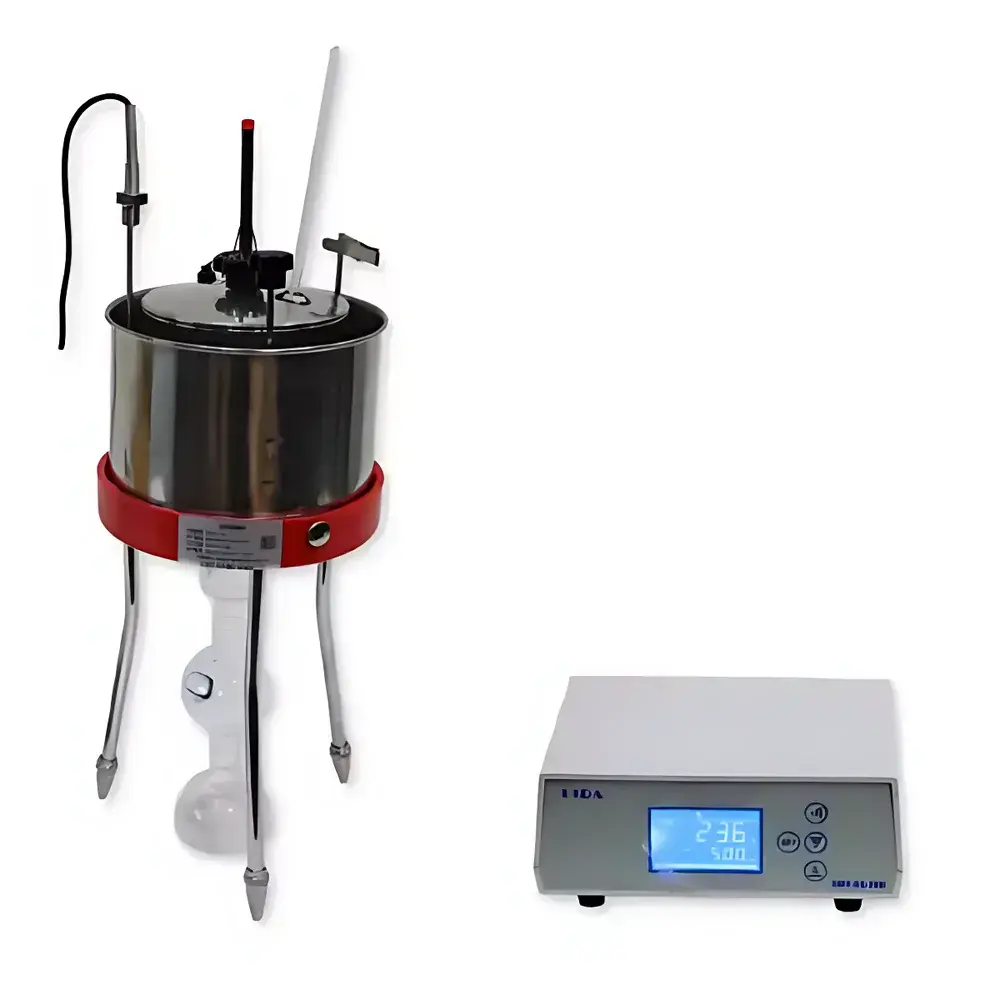
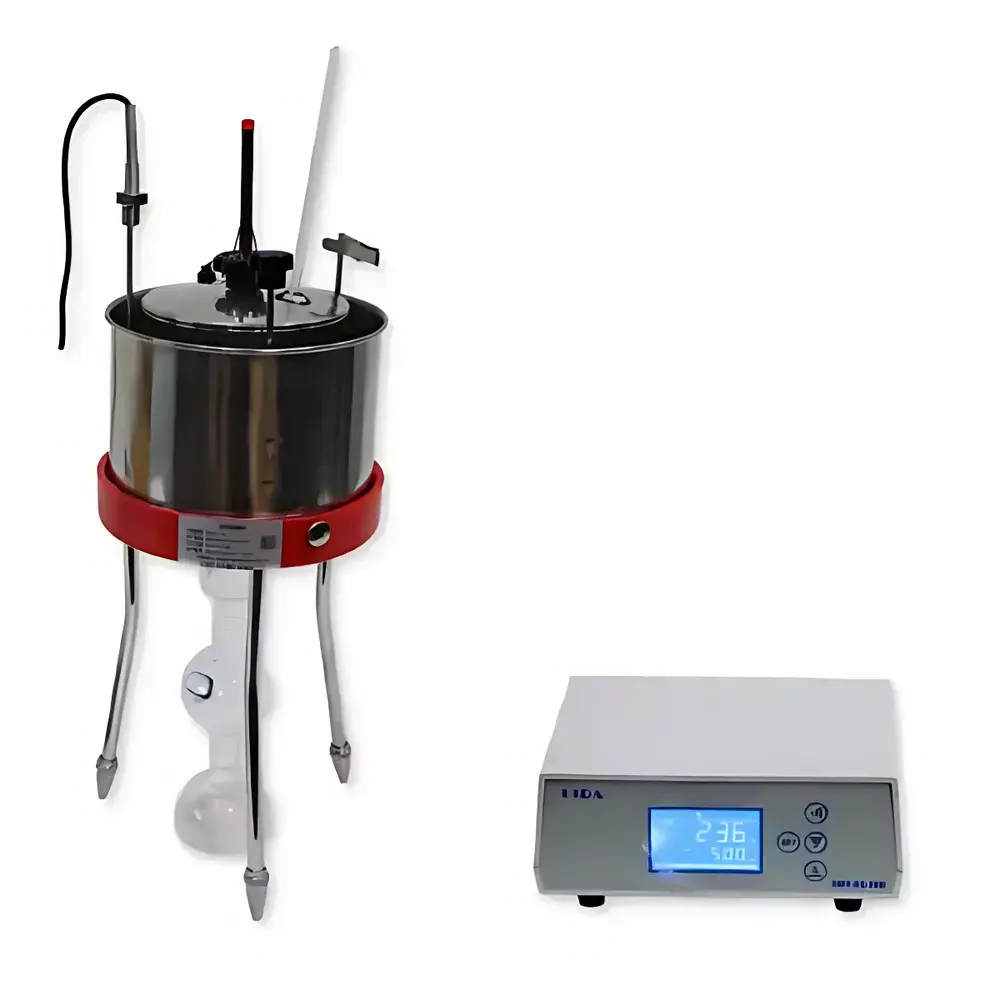
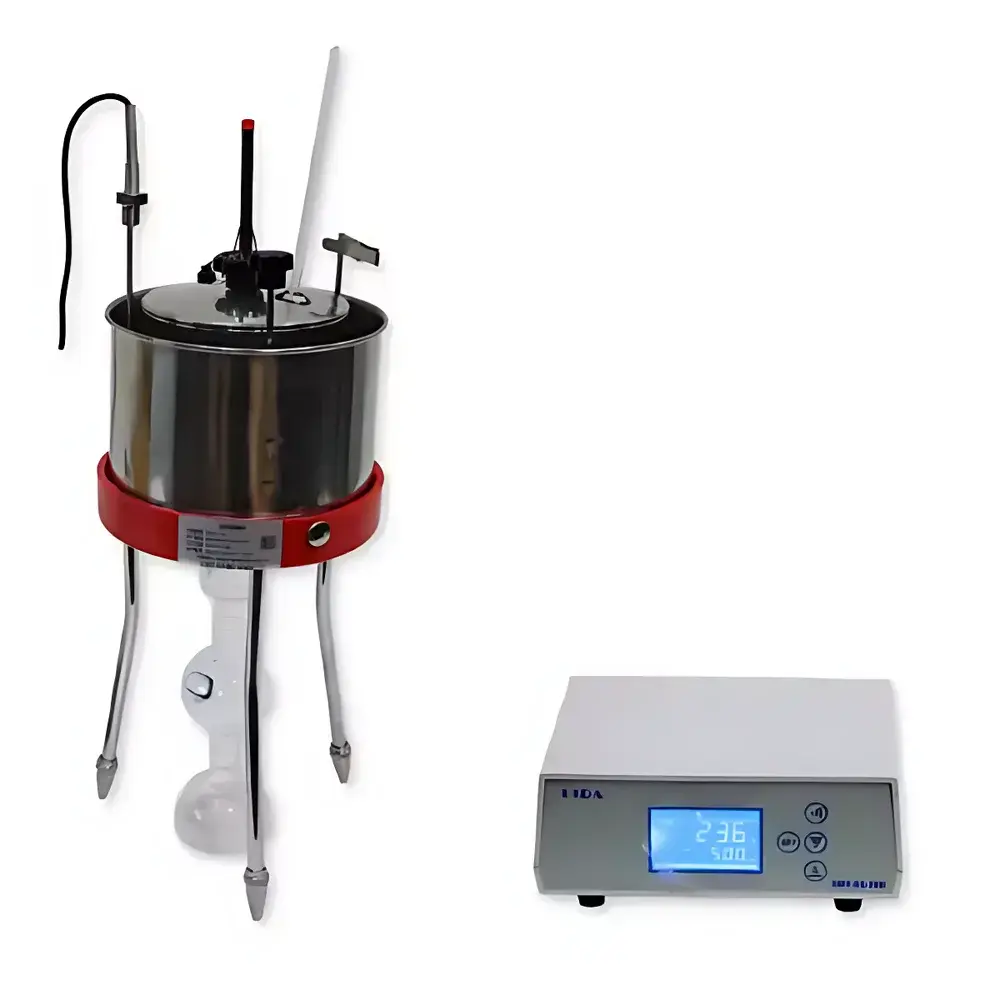
Changji WNE-1A Engler Viscometer (Digital Display Model)
| Brand | Changji Instruments |
|---|---|
| Origin | Shanghai, China |
| Model | WNE-1A |
| Temperature Range | 0–100 °C |
| Temperature Accuracy | ±0.2 °C |
| Standard Water Value | (51 ± 1) s |
| Effluent Volume | (200 ± 0.2) mL |
| Heating Power | 550 W (AC 220 V, 50 Hz) |
| Compliance | GB/T 266, GB/T 514, Q/YXYY11 |
Overview
The Changji WNE-1A Engler Viscometer (Digital Display Model) is a precision benchtop instrument engineered for the standardized determination of Engler viscosity — a conditional kinematic viscosity index widely used in petroleum refining, lubricant formulation, and bitumen quality control. Based on the principle of efflux time comparison, the WNE-1A measures the ratio of the outflow time of a test liquid at a specified temperature to that of distilled water at 20 °C, yielding a dimensionless value expressed in “Engler degrees” (°E). This method, codified in GB/T 266 and aligned with international practices reflected in ISO 3104 (for kinematic viscosity via capillary viscometers), provides a robust, reproducible, and operator-independent assessment of flow behavior under controlled thermal conditions. Unlike rotational or capillary viscometers, the Engler system relies on gravity-driven efflux through a calibrated orifice, making it especially suitable for moderately viscous, non-Newtonian, or particulate-containing fluids where shear-rate independence is advantageous for routine QC screening.
Key Features
- Benchtop modular architecture integrating a dual-wall stainless-steel test vessel (inner and outer bath) with electropolished internal surface finish — ensuring corrosion resistance, thermal uniformity, and compliance with surface roughness requirements per GB/T 266.
- Digital temperature controller with PID algorithm and intuitive parameter interface, enabling stable setpoint maintenance across the full 0–100 °C operating range with ±0.2 °C accuracy — verified traceably against certified reference thermometers.
- Calibrated 200 mL brass effluent flask (tolerance ±0.2 mL), manufactured to dimensional and volumetric specifications defined in Q/YXYY11 and validated per ISO/IEC 17025 calibration protocols.
- 550 W AC-heating element (220 V, 50 Hz) with overtemperature cut-off and thermal insulation layer — minimizing ambient heat loss and supporting rapid, repeatable ramp-to-setpoint performance.
- Digital display module with real-time efflux timing resolution of 0.1 s, automatic stopwatch trigger activation upon orifice release, and direct °E calculation based on user-input water value (51 ± 1 s at 20 °C).
Sample Compatibility & Compliance
The WNE-1A is validated for use with crude oils, fuel oils, residual fuels, bituminous emulsions, and industrial lubricants exhibiting kinematic viscosities ranging from approximately 2 to 1000 mm²/s at test temperatures. Its orifice-based design accommodates samples with low to moderate suspended solids content, provided no clogging occurs during standard 120-second efflux windows. The instrument conforms fully to GB/T 266 (Petroleum Products — Determination of Engler Viscosity), GB/T 514 (Liquid Thermometers for Petroleum Testing), and enterprise standard Q/YXYY11. While not inherently compliant with ASTM D1660 or ISO 2909 (which specify alternative Engler apparatus geometries), its measurement output is functionally equivalent and accepted in domestic refinery QA/QC workflows requiring regulatory alignment with Chinese national standards.
Software & Data Management
The WNE-1A operates as a standalone hardware platform without embedded firmware or PC connectivity. All measurements are recorded manually or transcribed into LIMS or Excel-based tracking systems. However, its digital timer output supports integration with optional RS-232 or USB data-loggers (sold separately) for automated timestamped capture of efflux duration, temperature setpoint, and calculated °E values. When deployed in GLP- or GMP-regulated environments, users may implement procedural controls — including daily water-value verification logs, temperature uniformity mapping (per ASTM E1137), and audit-trail documentation — to satisfy traceability requirements under CNAS-CL01 or ISO/IEC 17025 accreditation frameworks.
Applications
- Routine viscosity grading of fuel oil blends prior to bunkering or pipeline transfer.
- Quality conformance testing of asphalt cutbacks and emulsified binders in road construction material labs.
- Batch release verification for industrial gear oils and hydraulic fluids where Engler data correlate empirically with pumpability and film strength.
- Educational demonstration of conditional viscosity concepts in university-level petroleum engineering laboratories.
- Comparative stability monitoring of aged lubricants via longitudinal °E drift analysis at fixed 50 °C or 80 °C test points.
FAQ
What is the standard water value for the WNE-1A, and how often must it be verified?
The certified standard water value is (51 ± 1) seconds at 20 °C. Per GB/T 266, it must be verified before each testing session or at least once per shift in continuous operation.
Can the WNE-1A be used for samples below 0 °C or above 100 °C?
No. The instrument’s thermal design and safety interlocks restrict operation strictly to 0–100 °C. For sub-zero testing, external refrigerated baths with compatible adapters are required — though such configurations fall outside type-approval scope.
Is the 200 mL flask supplied with NIST-traceable calibration documentation?
The flask is manufactured to Q/YXYY11 tolerances (±0.2 mL), but factory calibration certificates are optional and must be requested at time of order. Third-party volumetric certification per ISO 1042 is available upon request.
Does the WNE-1A meet FDA 21 CFR Part 11 requirements for electronic records?
As a non-networked, non-auditable device with no electronic signature capability, the WNE-1A does not comply with Part 11. Data integrity depends entirely on manual SOP adherence and supplementary documentation practices.
How does the WNE-1A differ from the WNE-1B-1 dual-vessel model?
The WNE-1B-1 integrates two independent inner vessels and semiconductor cooling to maintain 25 °C without external chillers; the WNE-1A is single-vessel, heater-only, and optimized for higher-temperature applications up to 100 °C.



