
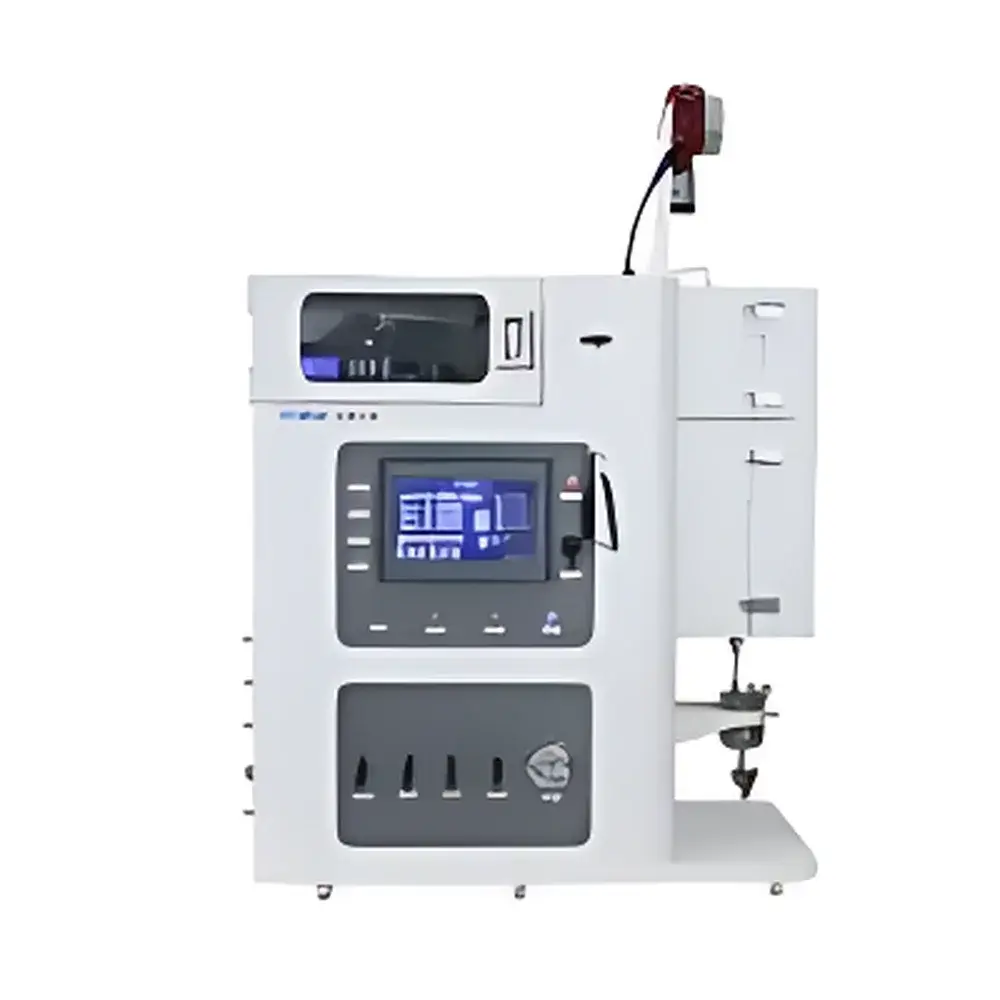
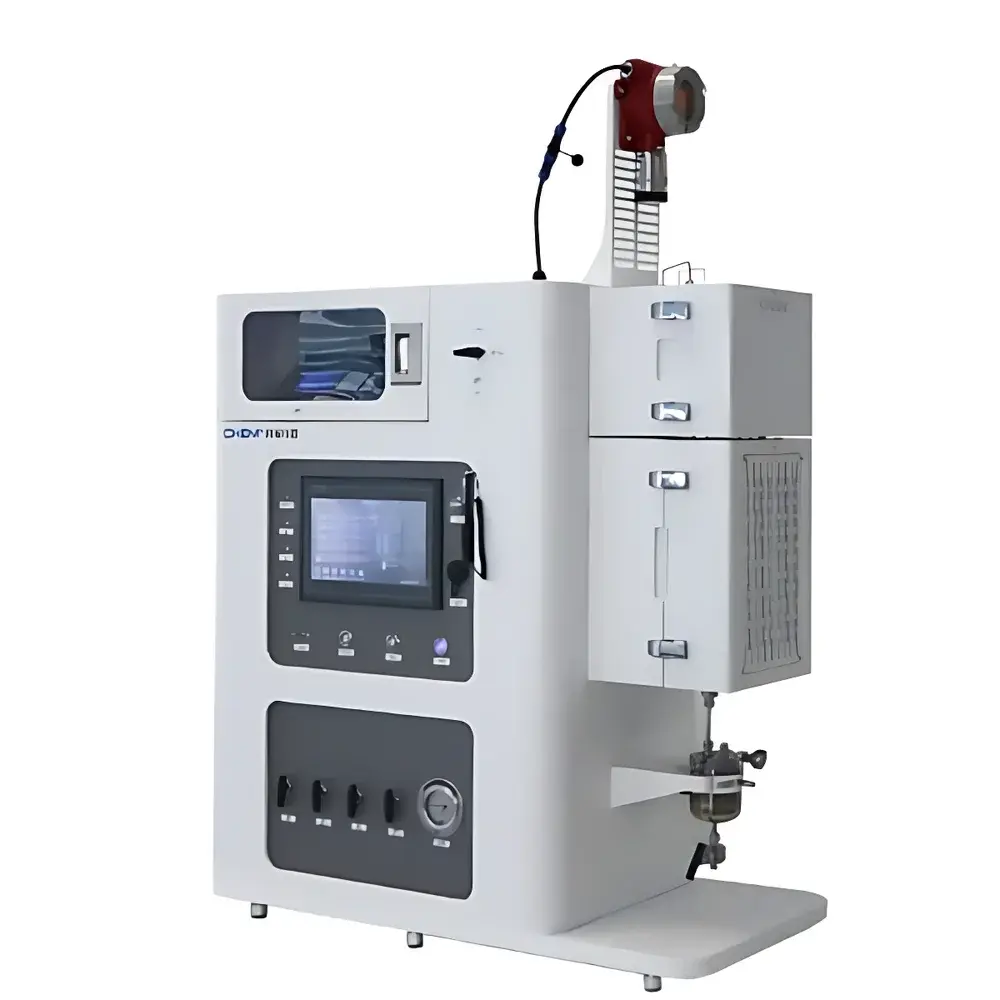
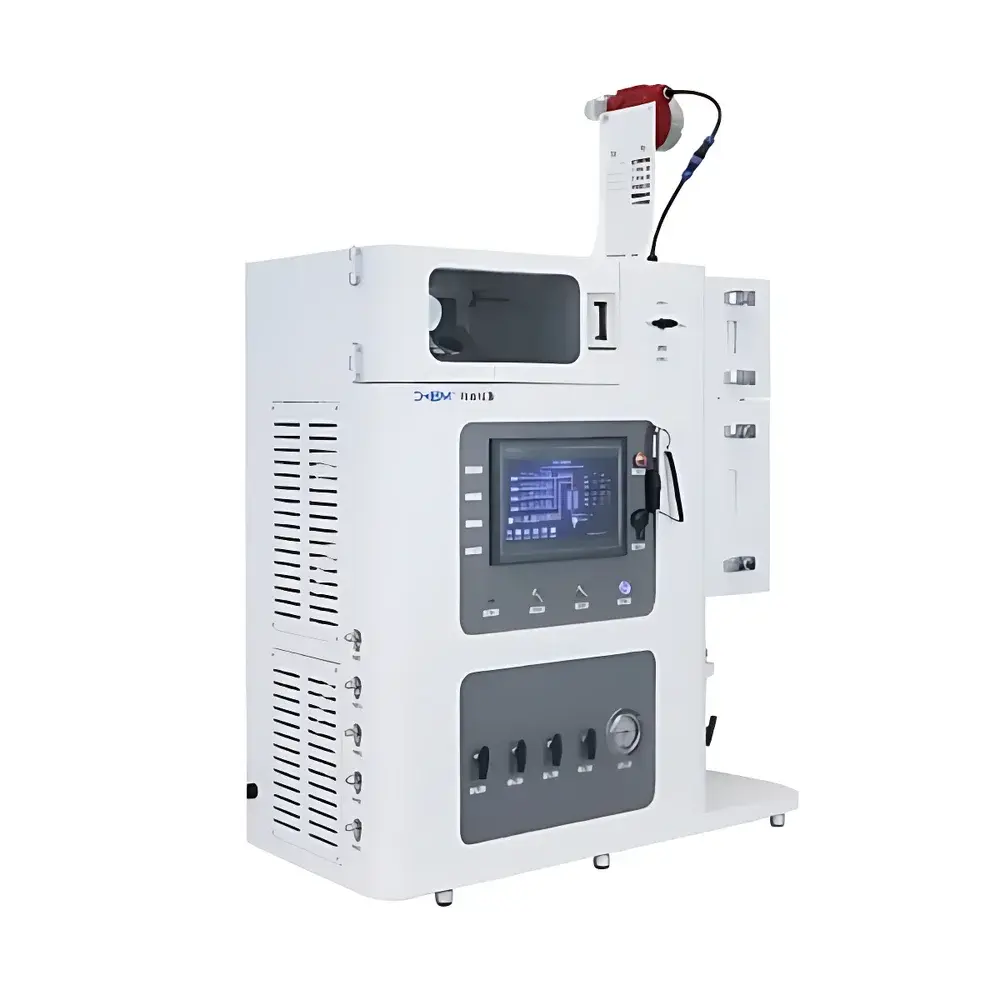
Chemn多功能桌面式橱窗连续流动反应器/固定床反应装置(可定制)
| Brand | Chemn |
|---|---|
| Origin | Anhui, China |
| Manufacturer Type | Authorized Distributor |
| Product Category | Domestic |
| Model | Chemn Multi-Functional Benchtop Continuous Flow Reactor / Fixed-Bed Reactor (Window-Type, Customizable) |
| Price Range | USD 11,200 – 28,000 (based on configuration) |
| Catalyst Bed Volume | 0.5–5 mL |
| Max Design Temperature | 800 °C |
| Max Design Pressure | 100 bar |
| Gas/Liquid Feed Channels | 1–4 (configurable) |
| Gas MFC Accuracy | ±1.5% FS, Repeatability: ±0.2% FS |
| High-Pressure Liquid Pump Range | 0–10 mL/min, Max Outlet Pressure: 42 MPa, Control Precision: ±1% |
| System Dimensions (W×D×H) | ~650×1000×900 mm |
| Weight | ~180 kg |
| Control System | Siemens S7-1200 PLC + 10.2″ MCGS HMI |
| Power Supply | 200–240 V AC, 50–60 Hz |
| Reactor Materials | 316L SS, Hastelloy C-276, Inconel 600 (customer-specified) |
Overview
The Chemn Multi-Functional Benchtop Continuous Flow Reactor / Fixed-Bed Reactor (Window-Type, Customizable) is an engineered platform for catalytic reaction engineering under precisely controlled continuous-flow conditions. Designed for laboratory-scale kinetic studies, catalyst screening, process parameter optimization, and membrane performance evaluation, the system operates on the fundamental principle of steady-state heterogeneous catalysis—where reactant streams pass through a thermally and hydraulically stabilized catalyst bed while enabling real-time monitoring and high-fidelity data acquisition. Its low system dead volume (<1.2 mL typical), distributed control architecture, and modular physical layout ensure exceptional experimental reproducibility (RSD <1.8% for repeat runs under identical setpoints) and analytical sensitivity—critical for structure–activity relationship studies and early-stage process development. The reactor features a transparent observation window integrated into the fixed-bed housing, permitting direct visual inspection of catalyst bed integrity, fluidization behavior (for supported particulates), and thermal gradient distribution during operation.
Key Features
- Modular Process Architecture: Fully configurable subsystems—including gas/liquid feed trains, temperature zones, pressure regulation, corrosion-resistant wetted materials (e.g., Hastelloy C-276 for H₂S/Cl⁻ environments), and analytical interfaces—allow adaptation to diverse chemistries (e.g., Fischer–Tropsch, hydrodesulfurization, CO₂ hydrogenation, or asymmetric hydrogenation).
- Integrated DCS-Level Control: Siemens S7-1200 PLC backbone with custom-developed MCGS HMI firmware delivers deterministic I/O response (<50 ms loop cycle), synchronized multi-parameter ramping (T, P, flow), and full audit trail logging compliant with GLP and FDA 21 CFR Part 11 requirements when configured with electronic signature modules.
- Dual-Mode Operation: Seamless transition between manual override and fully automated sequences—including programmed temperature ramps, pressure hold steps, and multi-step feed ratio modulation—without hardware reconfiguration.
- Multi-Layer Safety Framework: Hardware interlocks (pressure relief valves rated to 100 bar), software-enforced operational envelopes (user-definable min/max limits per parameter), automatic shutdown triggers (exceedance of T/P thresholds), and real-time alarm notification via HMI and optional email/SMS gateway.
- Thermal & Hydraulic Optimization: Uniform axial heating zone (adjustable length per user specification), precision PID-controlled furnace with ±0.5 °C stability, and minimized radial temperature gradients (<±3 °C across 10 mm catalyst bed diameter) ensure representative kinetic measurements per ISO 10437 and ASTM D7213 protocols.
Sample Compatibility & Compliance
The reactor accommodates solid catalysts in pellet, extrudate, or monolithic forms (0.5–5 mL bed volume), as well as structured membranes for permeation studies. Wetted components are selected per NACE MR0175/ISO 15156 standards for sour service applications. All electrical enclosures meet IP54 ingress protection; pressure vessels conform to ASME BPVC Section VIII Div. 1 (when supplied with third-party certification). The system supports integration with external analytical tools—including GC-TCD/FID, MS, FTIR, and conductivity analyzers—enabling compliance with ASTM E2912 (catalyst testing), ISO 11446 (gas analysis), and USP (chromatographic method validation) workflows.
Software & Data Management
The embedded DCS interface provides live P&ID visualization, multi-channel trend logging (sample rate: 1 Hz), and export-ready CSV/Excel datasets with timestamped metadata (operator ID, batch tag, calibration IDs). Historical data storage supports ≥12 months of continuous operation at default sampling intervals. Optional add-ons include OPC UA server for MES/SCADA integration, automated report generation (PDF/HTML), and cloud-based remote monitoring (TLS 1.3 encrypted). Audit trails record all parameter changes, login events, and system state transitions—fully traceable for GMP audits.
Applications
- Catalyst deactivation kinetics and lifetime assessment under industrially relevant conditions
- Structure–performance correlation studies for novel metal–support interactions
- Reaction mechanism elucidation via isotopic labeling (e.g., D₂, ¹³CO) coupled with online MS detection
- Process intensification evaluation: residence time distribution (RTD) analysis, heat/mass transfer coefficient determination
- Membrane reactor feasibility testing for equilibrium-shift reactions (e.g., esterification, ammonia synthesis)
- Method development for ASTM D7213-compliant catalyst activity ranking
FAQ
Can the reactor be validated for GMP-regulated environments?
Yes—when equipped with electronic signatures, 21 CFR Part 11-compliant audit trail modules, and IQ/OQ documentation packages (available upon request).
What level of customization is supported for corrosion resistance?
Full material-of-construction selection: 316L SS standard; Hastelloy C-276, Inconel 600, or titanium Grade 2 available for aggressive feeds (HF, Cl₂, molten salts).
Is remote troubleshooting supported?
Yes—the PLC supports secure VPN-based remote access for diagnostics and firmware updates, subject to customer network policy approval.
How is catalyst loading and unloading performed?
Via top-access flanged port with quick-release clamp; optional quartz liner kits available for high-temp oxidation studies.
Does the system support transient kinetic analysis (TKA)?
Yes—sub-second flow switching (using solenoid manifolds) and synchronized data capture enable step-change, pulse-response, and modulation excitation experiments.



