
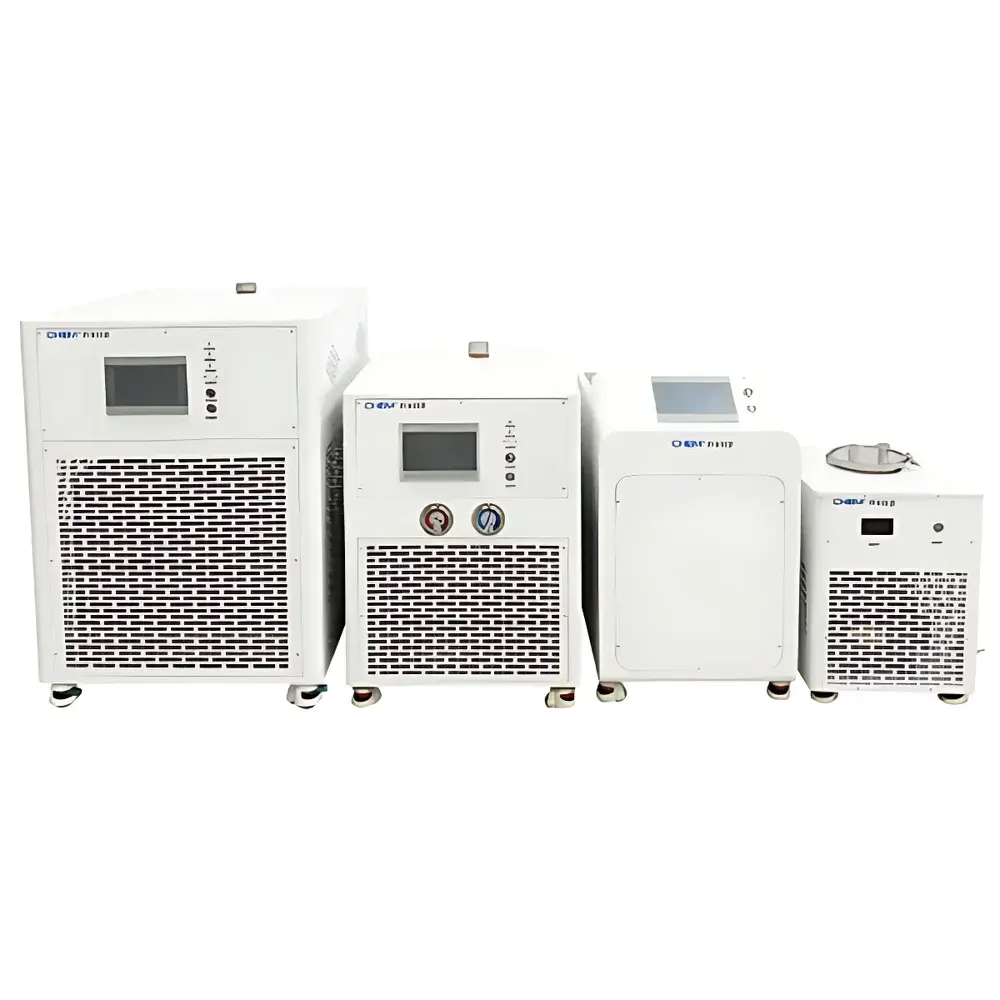
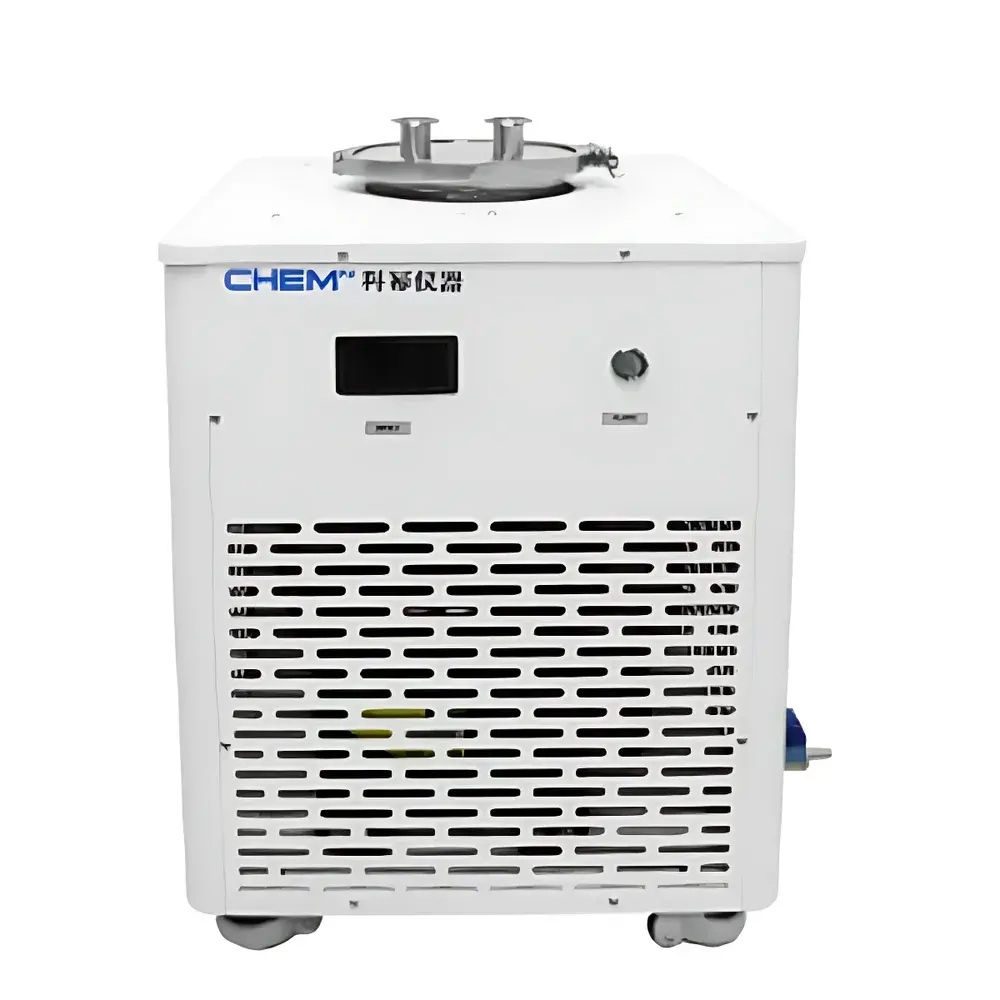
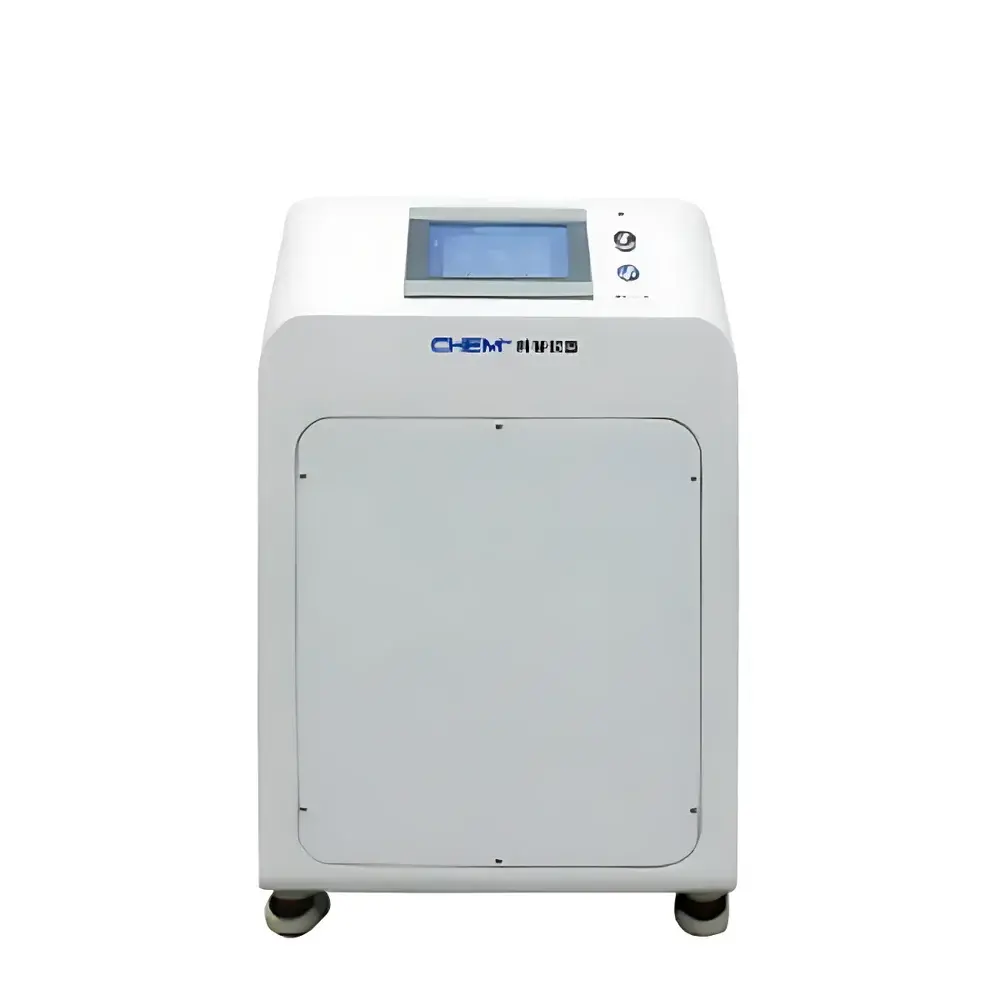
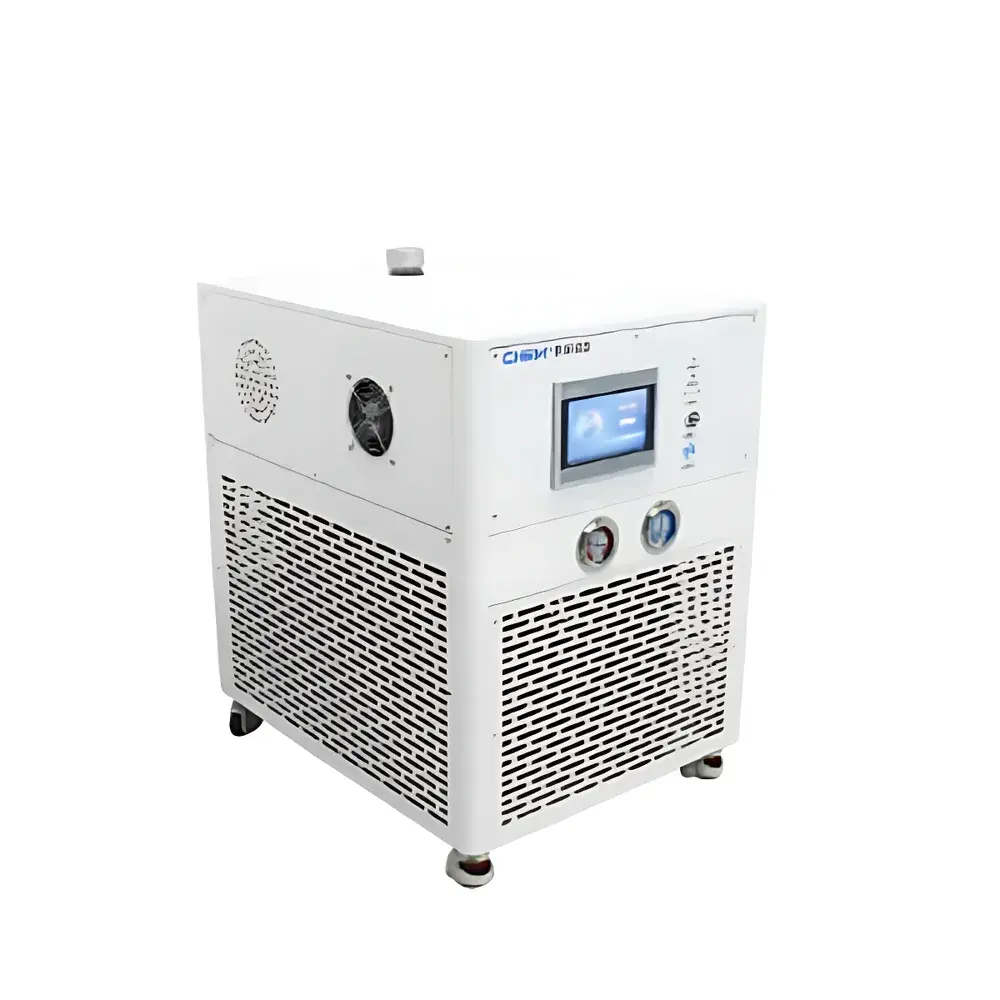
Chemn Precision Temperature Control Series – Integrated Hot & Cold Circulator, Closed-Loop High-Temperature Circulator, Vacuum Cold Trap
| Key | Brand: Chemn Instruments |
|---|---|
| Origin | Anhui, China |
| Manufacturer Type | Authorized Distributor |
| Product Origin | Domestic (PRC) |
| Models | KGD1-6 / KGD2-6 / KGD3-9 |
| Price Range | USD 1,400 – 7,200 (FOB) |
| Temperature Range | −25 °C to +350 °C |
| Cooling Capacity | 3–6 kW |
| Heating Power | 6–9 kW |
| Pump Flow Rate | 15–42 L/min |
| Max Head | 28 m |
| Expansion Volume | 8–15 L |
| Control Accuracy | ±0.1 °C |
| Interface | RS-485, USB |
| Display | 7-inch TFT color touchscreen |
| Protection | Overtemperature (bath & reactor), overcurrent, high-pressure refrigerant, startup delay |
Overview
The Chemn Precision Temperature Control Series comprises three functionally distinct but architecturally unified platforms: the Integrated Hot & Cold Circulator (KGD series), the Closed-Loop High-Temperature Circulator, and the Vacuum Cold Trap. Engineered for laboratory-scale chemical synthesis, catalysis research, and process development, these systems deliver precise, stable, and dynamically responsive thermal management across extreme operating envelopes—from cryogenic condensation at −25 °C to sustained high-temperature operation up to +350 °C. The Integrated Circulators utilize a dual-mode thermodynamic architecture: a high-efficiency vapor-compression refrigeration circuit coupled with a robust resistive heating system, both integrated into a sealed, stainless-steel oil circulation loop. This design enables simultaneous or independent control of bath temperature (oil loop) and reaction medium temperature (via internal sensor feedback), ensuring fidelity in exothermic quenching, low-temperature lithiation, or endothermic polymerization protocols. All units implement Chemn’s proprietary adaptive PID algorithm with real-time load compensation—calibrated to maintain ±0.1 °C stability under dynamic thermal loads typical of glass-jacketed reactors, microchannel flow reactors, and tubular fixed-bed systems.
Key Features
- Dual-sensor temperature control: Independent monitoring and regulation of both thermal fluid (oil) temperature and process medium (e.g., reactor contents) temperature, configurable via touchscreen interface
- Multi-mode operation: Fixed-setpoint mode for steady-state conditions; programmable ramp-soak profiles supporting up to 30 segments per program, compliant with ASTM E2022 thermal protocol standards
- High-fidelity thermal regulation: Adaptive PID algorithm with auto-tuning, optimized for varying heat capacities and thermal inertia across reactor scales (50 mL to 50 L)
- Wide operational envelope: Continuous operation from −25 °C to +350 °C; optional high-temp oil compatibility certified per ISO 6743-12 (HTF classification)
- 7-inch capacitive TFT display: Real-time graphical plotting of temperature vs. time, alarm history logging, and system status diagnostics
- Comprehensive safety architecture: Dual overtemperature cutoffs (oil loop and reactor probe), refrigerant high-pressure lockout, motor overload protection, and 60-second compressor restart delay to prevent liquid slug damage
- Corrosion-resistant closed-loop circuit: Electropolished 316L stainless steel tubing, leak-tested to 1.5× working pressure, compatible with silicone and aromatic heat transfer fluids
- Digital connectivity: Standard RS-485 Modbus RTU and USB 2.0 interfaces support integration into LabVantage, DeltaV, or custom SCADA environments; data export in CSV format with timestamped metadata
- Mobile deployment ready: Locking casters rated for 150 kg static load, integrated leveling feet, and rear cable management channel
Sample Compatibility & Compliance
The KGD series is validated for direct thermal coupling with jacketed glass reactors (≤50 L), microchannel reactors (≤200 mL active volume), and tubular reactors (≤2 L internal volume). Fluid compatibility includes Dowtherm A, Therminol VP-1, and standard silicone oils meeting DIN 51524 Part 2 specifications. System design adheres to IEC 61000-6-2 (immunity) and IEC 61000-6-4 (emissions); electrical safety complies with UL 61010-1 and GB 4793.1. Vacuum Cold Trap models meet ISO 21360-1 requirements for foreline gas condensation efficiency (>92% H2O removal at 5 Pa inlet pressure) and are qualified for use upstream of rotary vane and diaphragm vacuum pumps per ASTM D2879. All firmware supports audit trail generation and electronic signature per FDA 21 CFR Part 11 when operated with validated third-party LIMS software.
Software & Data Management
Embedded firmware provides local control without external PC dependency. Temperature profiles, alarm events, and sensor readings are stored internally (≥10,000 records) with automatic overwrite policy. USB export generates time-synchronized CSV files containing: timestamp (ISO 8601), setpoint, oil temp, reactor temp, pump speed (%), compressor status, and error codes. RS-485 communication enables remote parameter read/write using standard Modbus function codes (03h/06h/10h), allowing integration into centralized lab automation frameworks. Optional ChemnLink™ PC software (Windows 10/11) adds trend analysis, multi-unit synchronization, and GLP-compliant PDF report generation with digital signature fields.
Applications
- Catalytic hydrogenation requiring precise −10 °C to +80 °C control with rapid exotherm suppression
- Grignard and organolithium reactions demanding sub-zero initiation followed by controlled warm-up
- Continuous-flow photochemistry in microreactors with tight ΔT tolerance (<±0.3 °C) across 24-hr runs
- High-temperature esterification or transesterification (up to 220 °C) using thermostable heat transfer fluids
- Vacuum distillation setups where cold trap operation prevents solvent backstreaming and extends pump oil service life by ≥3×
- Accelerated stability testing per ICH Q1A(R3), maintaining chamber wall temperature uniformity per ISO 16775
FAQ
What temperature accuracy can be expected during dynamic heating/cooling cycles?
Under nominal load conditions (e.g., 10 L glass reactor with 5 L solvent), the system maintains ±0.15 °C deviation from setpoint during ramp rates up to 5 °C/min, verified per ASTM E742 calibration methodology.
Is external chiller integration supported for extended low-temperature operation?
Yes—the KGD3-9 model features a secondary chilled-water input port (G1/2″ BSP) enabling cascade cooling to −40 °C when paired with an industrial chiller (required ΔT ≤ 5 K at 15 L/min flow).
How is calibration traceability maintained?
Each unit ships with a NIST-traceable certificate for PT100 sensor inputs (as-found/as-left data), valid for 12 months; field recalibration kits and procedures comply with ISO/IEC 17025 requirements.
Can the vacuum cold trap operate independently of the circulator?
Yes—all Cold Trap models include standalone power input, independent compressor control, and dedicated vacuum gauge interface (KF16 or ISO-KF25 flange).
What maintenance intervals are recommended for the refrigeration circuit?
Compressor oil inspection every 2,000 operating hours; full refrigerant circuit integrity test (pressure hold + leak detection) annually per ASHRAE 15 guidelines.



