
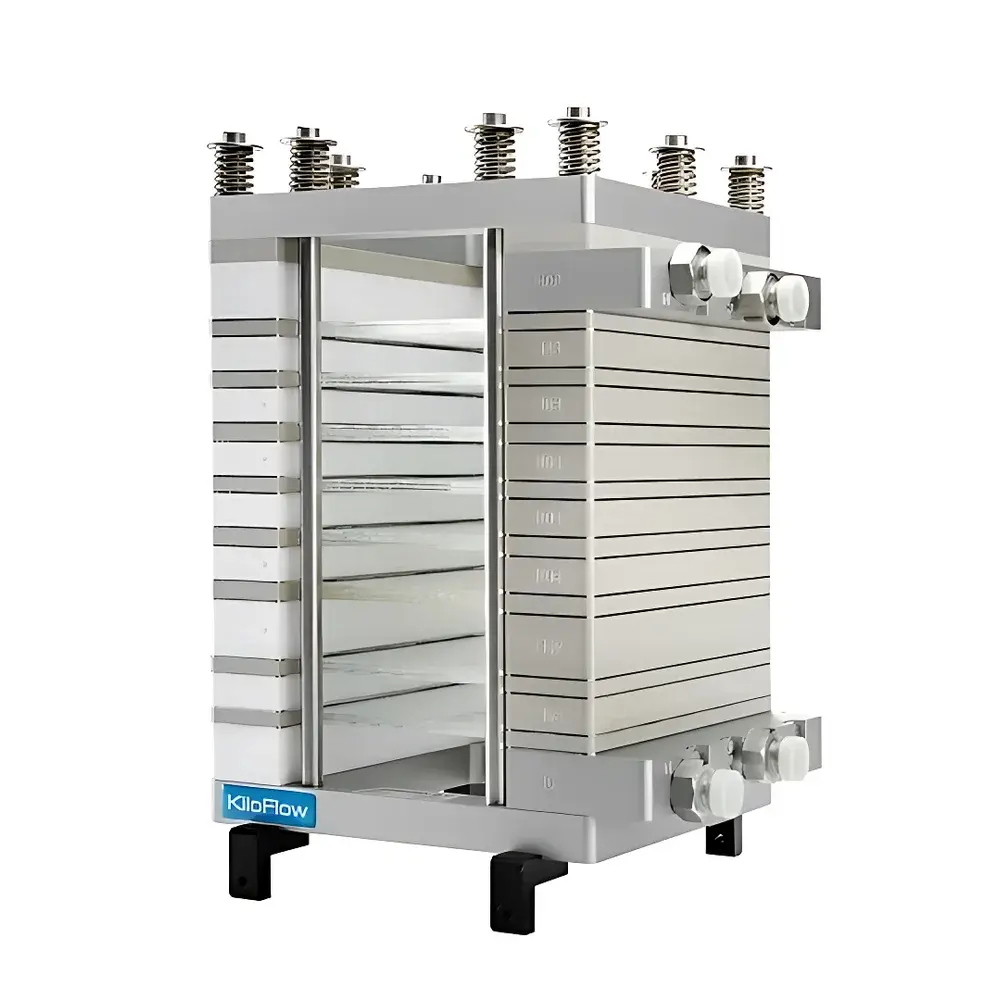
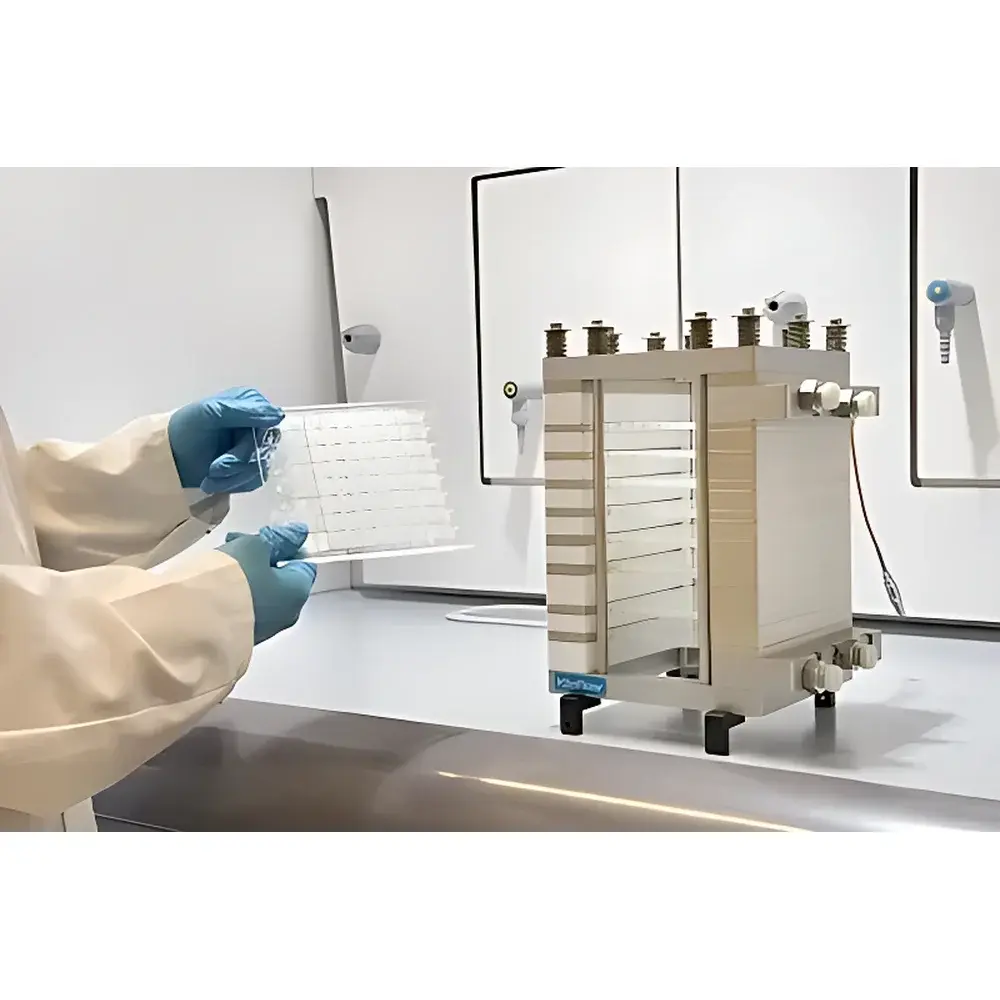
Chemtrix KiloFlow® Microchannel Flow Reactor
| Brand | Chemtrix |
|---|---|
| Origin | Netherlands |
| Model | KiloFlow® |
| Material | Schott D263 glass, PTFE, FFKM |
| Operating Pressure | up to 20 bar |
| Temperature Range | −20 °C to 150 °C |
| Flow Rate | 0.2–100 mL/min (equivalent to ~6 kg/h) |
| Reaction Volume | 0.8–18 mL |
| Footprint (without frame) | 260×300×350 mm (W×D×H) |
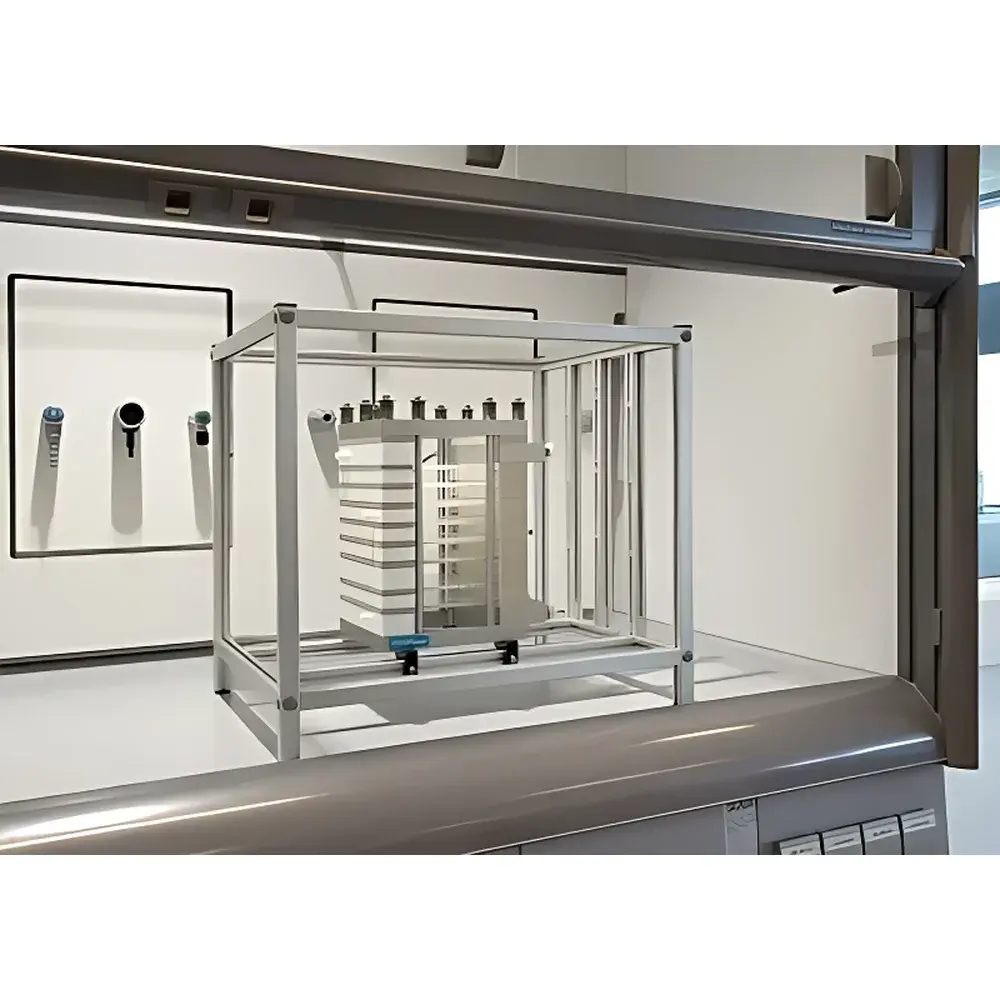
| Footprint (with frame) | 500×400×470 mm (W×D×H) |
| Compliance | FDA-compliant wetted materials (USP Class VI), GLP/GMP-ready architecture |
Overview
The Chemtrix KiloFlow® Microchannel Flow Reactor is a precision-engineered, glass-based continuous flow system designed for laboratory-scale process development, kilogram-scale feasibility studies, and early-stage commercial production of high-value fine chemicals. Built on microstructured fluidic principles, the KiloFlow® leverages laminar flow dynamics and high surface-area-to-volume ratios inherent to sub-millimeter glass channels to achieve exceptional heat transfer coefficients (>10,000 W/m²·K) and mass transfer rates—orders of magnitude superior to conventional batch reactors. This enables precise thermal control during highly exothermic or cryogenic reactions (e.g., nitration, oxidation, lithiation), minimizes hot-spot formation, suppresses side reactions, and improves selectivity and reproducibility. The reactor core is fabricated from Schott D263 borosilicate glass—a material certified to USP Class VI and compliant with FDA requirements for pharmaceutical contact surfaces—ensuring chemical inertness across broad pH and solvent ranges (including concentrated acids, strong bases, and halogenated organics). Its modular architecture supports seamless integration with auxiliary modules (e.g., inline IR/UV monitoring, back-pressure regulators, automated reagent dosing, and quench units), making it suitable for both exploratory reaction screening and robust, audit-ready process validation under GLP or GMP-aligned workflows.
Key Features
- Glass microchannel reactor core manufactured from Schott D263 glass—optically transparent, chemically resistant, and thermally stable up to 150 °C
- Fully modular design: interchangeable reaction cartridges (0.8–18 mL volume), scalable via parallelization or serial staging
- Integrated temperature control via Peltier- or oil-circulation–based jacketed manifolds, supporting operation from −20 °C to +150 °C with ±0.5 °C stability
- Maximum operating pressure of 20 bar, enabling safe handling of volatile reagents, gaseous substrates (e.g., O₂, H₂, Cl₂), and supercritical conditions
- Wetted materials limited to USP Class VI-certified PTFE, FFKM (Kalrez®), and borosilicate glass—fully compatible with ICH Q5A/Q5B biopharmaceutical synthesis environments
- Compact footprint fits standard laboratory fume hoods (500×400×470 mm with frame); no external cooling water required for most applications
- Plug-and-play compatibility with third-party syringe pumps, HPLC-grade metering pumps, and industrial PLC-based control systems
Sample Compatibility & Compliance
The KiloFlow® accommodates a wide spectrum of chemistries relevant to API intermediate synthesis, agrochemical active ingredient production, and specialty polymer precursors. Validated reaction classes include electrophilic aromatic nitration, catalytic hydrogenation, ozonolysis, diazotization, Suzuki–Miyaura coupling, Curtius rearrangement, and acid chloride–amine condensation. All wetted components meet FDA 21 CFR Part 11 data integrity prerequisites when paired with compliant SCADA software; full electronic audit trails, user access controls, and change management logs are supported. The system adheres to ISO 14001 environmental performance benchmarks through reduced solvent consumption (typically 30–70% less than batch equivalents) and near-zero vented emissions due to closed-loop operation. It satisfies ASTM E2500-13 guidelines for equipment qualification in regulated environments and is routinely deployed in facilities undergoing MHRA, EMA, and PMDA inspections.
Software & Data Management
While the KiloFlow® operates as a hardware platform independent of proprietary software, it is engineered for interoperability with industry-standard automation ecosystems. Analog and digital I/O ports support real-time integration with LabVIEW, DeltaV, or Siemens Desigo CC systems for closed-loop temperature/pressure feedback control. Optional Chemtrix Control Suite (v3.2+) provides validated instrument method templates, SOP-driven run sequencing, and CSV/PDF export of time-stamped process parameters (flow rate, Tin/Tout, ΔP, residence time distribution). All data files comply with ALCOA+ principles (Attributable, Legible, Contemporaneous, Original, Accurate, Complete, Consistent, Enduring, Available) and may be archived in secure, 21 CFR Part 11–compliant LIMS or ELN platforms such as LabWare LIMS or Benchling.
Applications
- Process feasibility assessment of hazardous or thermally sensitive transformations prior to pilot-plant investment
- Rapid optimization of residence time, stoichiometry, and mixing intensity for multi-step cascade reactions
- Kilogram-per-day synthesis of oncology APIs, peptide conjugates, and radiochemical precursors under cGMP-aligned conditions
- Safe scale-up of chlorine- or fluorine-mediated electrophilic substitutions without runaway risk
- Development of continuous crystallization-integrated reaction trains via downstream in-line antisolvent addition
- Teaching platform for chemical engineering curricula covering residence time distribution analysis, heat transfer modeling, and process intensification metrics
FAQ
Is the KiloFlow® suitable for reactions requiring strict anhydrous or oxygen-free conditions?
Yes—the system supports vacuum purging and inert gas sparging via integrated gas inlet ports; optional glovebox-compatible feed modules are available.
Can residence time be precisely controlled and varied during a single run?
Yes—residence time is dynamically adjustable via programmable pump flow rates and cartridge selection; real-time modulation is enabled through analog PID inputs.
What validation documentation is provided for regulated use?
Chemtrix supplies IQ/OQ protocols, material traceability certificates (EN 10204 3.1), and USP Class VI biocompatibility reports; PQ support is delivered in collaboration with qualified third-party validation partners.
How is cleaning and cross-contamination prevention addressed?
The glass reactor core allows visual inspection and CIP-compatible solvent flushing; dedicated cartridge sets can be assigned per product family to eliminate carryover.
Does the system support reaction calorimetry or real-time analytics?
Yes—standardized optical ports enable integration with inline FTIR (ReactIR™), UV-Vis, or Raman probes; optional microcalorimetry modules quantify heat release profiles with ±5% accuracy.



