
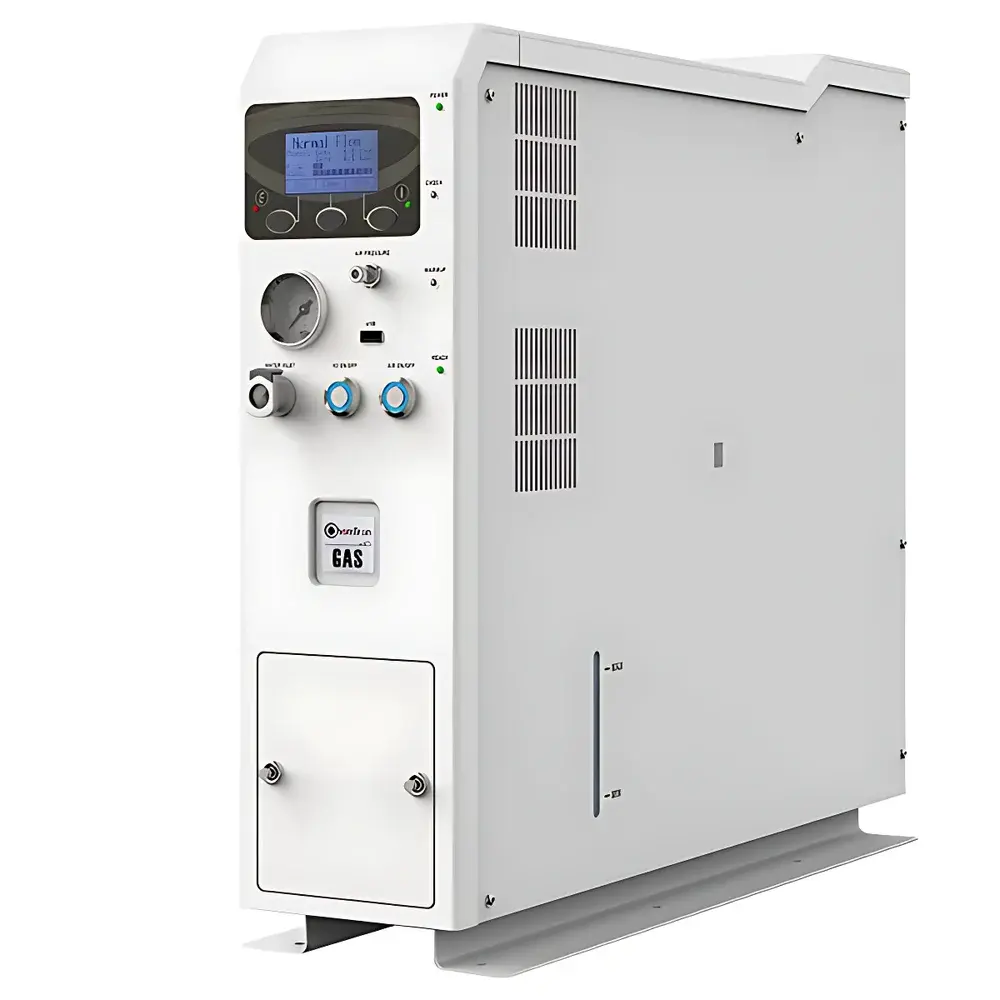
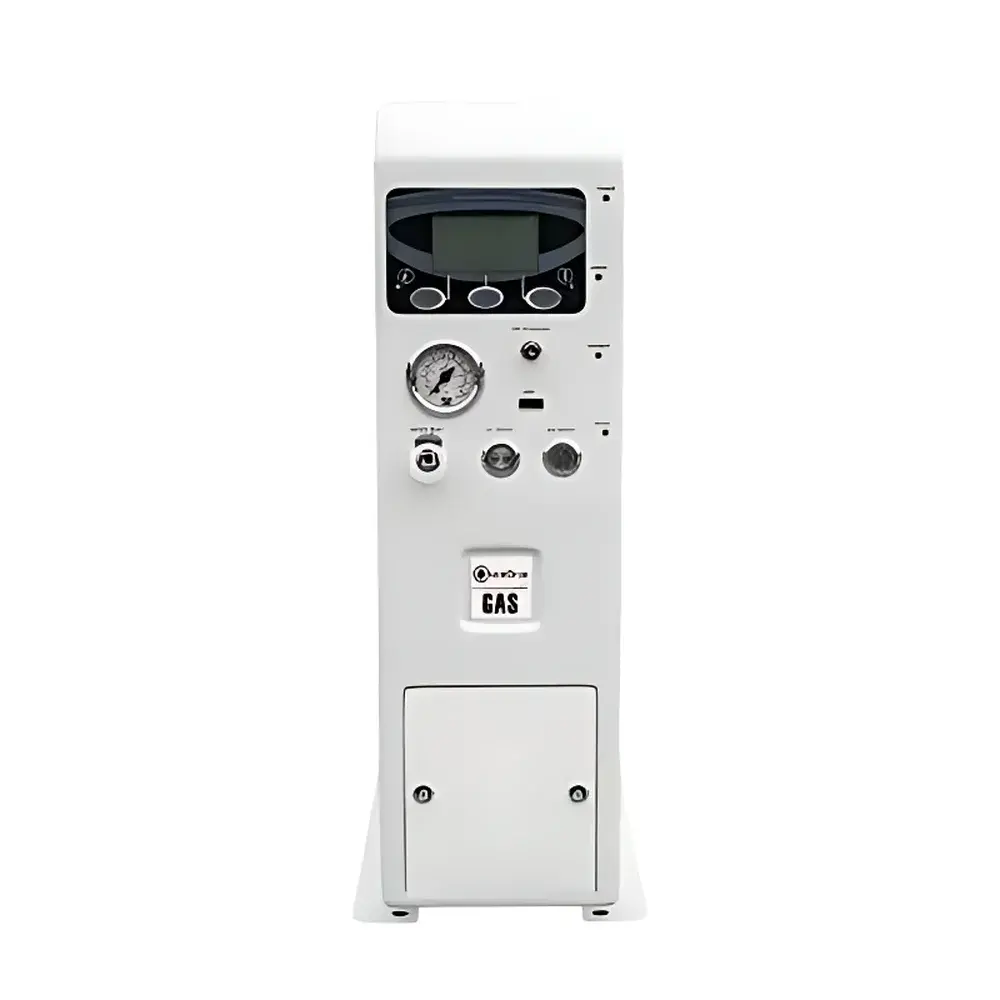
ChemTron FID TOWER PG Series Hydrogen-Air Integrated Generator (Tower Expert Model)
| Brand | ChemTron |
|---|---|
| Origin | Germany |
| Model | FID TOWER PG |
| Hydrogen Purity | 99.9996% |
| Max H₂ Flow | 100–600 mL/min |
| Max H₂ Pressure | 11 bar |
| Water Reservoir | 5 L |
| Dimensions | 140 × 580 × 490 mm |
| Weight | 25–35 kg |
| Certifications | CE, CSA, FCC |
| Air Module Options | 1800 mL/min or 5000 mL/min zero-air output (<0.1 ppm HC & CO) |
| Dryer Technology | Static membrane + dual cold-regenerative purifiers |
| Electrolysis | CPEM proton exchange membrane + titanium CCEEL electrolyzer |
| Safety | Internal gas volume <50 mL, multi-point leak/pressure/temperature/conductivity monitoring |
Overview
The ChemTron FID TOWER PG Series Hydrogen-Air Integrated Generator (Tower Expert Model) is a laboratory-grade, dual-output gas generation system engineered for continuous, high-purity hydrogen and zero-grade air supply in analytical and process applications. It employs membrane-based water electrolysis—specifically, a platinum- and platinum-alloy-coated CPEM (Composite Proton Exchange Membrane) coupled with a pure-titanium CCEEL (Controlled Current Electrolytic Electrolyzer) cell—to produce hydrogen at ≥99.9996% purity without alkaline electrolytes, caustic solutions, or consumable desiccants. Unlike traditional gas cylinders, the FID TOWER PG operates at a maximum internal pressure of 11 bar (160 psig), with total stored hydrogen volume strictly limited to <50 mL—well below the 4% lower explosive limit (LEL) threshold—ensuring intrinsic safety in regulated lab environments. The integrated zero-air module (available in 1800 mL/min or 5000 mL/min configurations) delivers hydrocarbon- and carbon monoxide-free air (<0.1 ppm each) compliant with ASTM D6216 and ISO 8573-1 Class 1 for flame ionization detection (FID), electron capture detection (ECD), and other GC detector requirements.
Key Features
- Patented CPEM/CCEEL electrolysis architecture: Titanium electrolyzer housing eliminates metal-catalyzed side reactions; precision current control ensures >95% electrolytic efficiency with negligible heat generation and zero deionized water waste.
- Three-stage hydrogen purification: (1) CPEM membrane separation, (2) static hydrophobic membrane drying (no regenerant or replacement required), and (3) dual cold-regenerative purifiers for residual moisture, oxygen, and trace organics—validated by third-party gas analysis per ISO 8573-1:2010.
- Comprehensive real-time safety monitoring: Dual-pressure sensing (internal leak / external delivery failure), water conductivity monitoring (auto-shutoff if >1 µS/cm), electrolyzer voltage/temperature tracking, seismic/vibration detection, and overpressure relief at outlet.
- Ultra-compact footprint: 140 mm width enables benchtop placement adjacent to GC, ICP-MS, or fuel cell test stations—eliminating cylinder storage, transport logistics, and associated regulatory compliance overhead.
- Modular scalability: Optional cascade control firmware enables synchronized operation of up to six FID TOWER PG units; automatic flow redistribution maintains uninterrupted supply during single-unit maintenance or failure.
Sample Compatibility & Compliance
The FID TOWER PG is validated for use with gas chromatography systems (including fast-GC and GC×GC), GC-MS, ICP-MS, hydrogen fuel cell testing rigs, catalytic hydrogenation reactors, and flame-based detectors requiring ultra-high-purity H₂ carrier/burn gas. Its hydrogen output meets ASTM D6216 Type I specifications for GC carrier gas and USP requirements for residual solvent analysis. The zero-air module satisfies EPA Method 18 and EN 14181 for ambient air quality monitoring instrumentation. Full compliance with EU Machinery Directive 2006/42/EC, Electromagnetic Compatibility Directive 2014/30/EU, and RoHS 2011/65/EU is certified via CE marking; CSA C22.2 No. 61010-1 and FCC Part 15 Subpart B approvals confirm suitability for North American laboratories operating under GLP, GMP, or ISO/IEC 17025 frameworks.
Software & Data Management
The onboard 128×64-pixel LCD touchscreen—with tactile physical buttons—displays real-time parameters including outlet pressure (±0.1 bar accuracy), water conductivity, electrolyzer temperature/voltage, alarm status, and runtime hours. Optional PC software (Windows/macOS compatible) provides remote configuration, historical trend logging (≥30 days buffered), event-triggered CSV export, and audit-trail-enabled user access control—fully compliant with FDA 21 CFR Part 11 for electronic records and signatures. Cascade control functionality supports automated load-balancing across multiple generators, with configurable failover thresholds and email/SNMP alerts for critical events. Firmware updates are delivered free-of-charge and installed via USB or Ethernet, ensuring long-term compatibility with evolving instrument control ecosystems.
Applications
- Gas Chromatography: Primary H₂ carrier gas for capillary columns and FID/ECD detectors; eliminates baseline drift and detector contamination associated with cylinder-derived impurities.
- ICP-MS Interface Gas: High-purity hydrogen for collision/reaction cell operation, reducing polyatomic interferences (e.g., ArO⁺, ArN⁺) without introducing memory effects.
- Hydrogen Fuel Cell R&D: Stable, low-particulate H₂ supply for PEMFC and SOFC performance mapping under controlled stoichiometry and humidity conditions.
- Lab-Scale Catalytic Hydrogenation: On-demand, metered H₂ delivery for batch and flow reactors—enabling precise reaction stoichiometry and eliminating cylinder changeover downtime.
- Calibration Gas Blending: Certified zero-air and ultra-pure H₂ serve as primary standards for dynamic dilution systems used in environmental and pharmaceutical QC labs.
FAQ
Does the FID TOWER PG require KOH or NaOH electrolyte?**
No. It uses solid polymer electrolyte (CPEM) technology—no liquid electrolytes, no pH adjustment, and no hazardous chemical handling.
Can it operate continuously for 24/7 applications?**
Yes. Rated for unattended operation at ambient temperatures of 15–40°C and relative humidity up to 80% non-condensing, with automatic shutdown on low water or high conductivity events.
What maintenance is required beyond refilling deionized water?**
None for the core electrolyzer or dryer. Annual preventive maintenance by ChemTron-certified engineers includes sensor calibration, membrane integrity check, and firmware verification—covered under the lifetime service program.
Is the zero-air module integrated or externally mounted?**
It is fully integrated into the same chassis as the hydrogen generator, sharing power, control logic, and safety interlocks—no separate footprint or utility connections required.
How does the cascade control handle a sudden generator failure?**
Upon detection of loss-of-pressure or communication timeout, the master controller dynamically recalculates available flow from remaining units and redistributes demand across active generators within <2 seconds—maintaining constant total flow to all connected instruments.



