
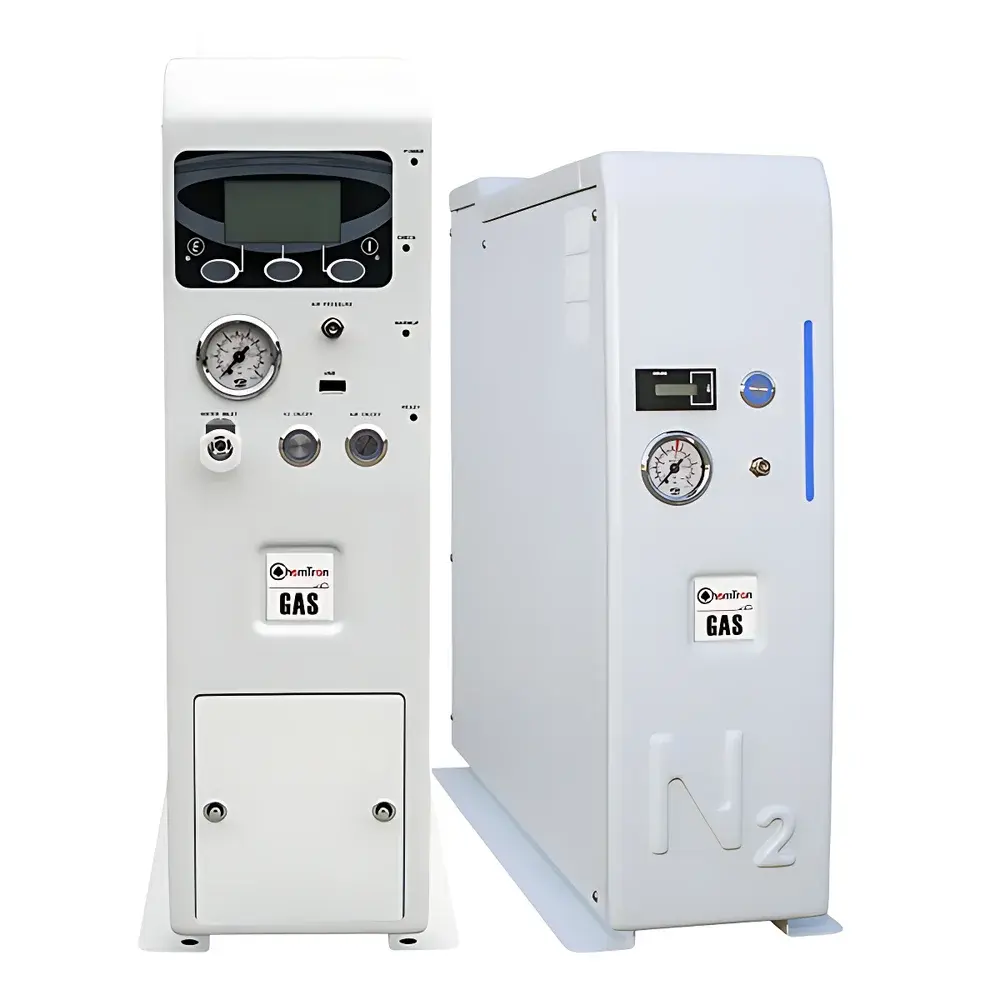
ChemTron GC MATE Nitrogen-Hydrogen-Air Integrated Gas Generator
| Brand | ChemTron |
|---|---|
| Origin | Germany |
| Model | GC MATE |
| Gas Purity | 99.9996% (H₂), 99.999% (N₂), >99.999% (Air after purification) |
| Output Flow | N₂: 4000 mL/min, H₂: 600 mL/min, Air: 5000 mL/min |
| Output Pressure | 11 bar (H₂), 5 bar (N₂), 7–10 bar (Air input required) |
| Design | Modular Split-System |
| Control Interface | Physical Keypad + LCD Display (128×64 pixels) |
| Certifications | CE, CSA, FCC |
| Compliance | Designed for GLP/GMP environments |
Overview
The ChemTron GC MATE is an engineered modular gas generation system designed to replace high-pressure gas cylinders in analytical laboratories performing gas chromatography (GC), GC-MS, FID detection, ICP-MS, and other precision gas-dependent instrumentation. Unlike conventional cylinder-based supply, the GC MATE integrates three independent yet synchronized gas generation modules — nitrogen (PSA-CMS technology), hydrogen (CPEM/CCEEL membrane electrolysis), and zero-grade air (catalytic purification) — into a single coordinated platform. Each module operates on distinct physical principles: nitrogen is generated via pressure-swing adsorption using carbon molecular sieves; hydrogen is produced through platinum-coated proton exchange membrane (PEM) electrolysis of ultrapure water; and air undergoes dual-stage catalytic oxidation and desiccant-free static membrane drying to remove hydrocarbons, CO, moisture, and particulates. The system delivers consistent, on-demand gases at stable pressures and certified purity levels compliant with ASTM D6352 (hydrocarbon analysis), ISO 8573-1 Class 1 (compressed air quality), and USP (pharmaceutical carrier gas specifications).
Key Features
- Triple-gas integration with independent flow and pressure regulation per gas stream
- CPEM/CCEEL hydrogen generation: titanium electrolyzer housing, platinum-alloy PEM, no KOH or liquid electrolytes, zero maintenance dry gas output
- Static membrane drying technology eliminates need for regenerative desiccants or consumable filters
- PSA-based nitrogen module with CMS media optimized for GC carrier gas applications; optional oven-integrated models achieve 99.9998% purity for ultra-high-resolution GC-MS
- Zero-air module featuring high-efficiency catalytic converter (HC & CO < 0.1 ppm), thermal stability up to 40°C inlet temperature, and pressure decay < 1 bar over 45 min
- Real-time monitoring via 128×64 LCD display showing pressure, water conductivity, electrolyzer voltage/temperature, fluid level, and fault diagnostics
- Comprehensive safety architecture: internal H₂ volume < 50 mL, dual-pressure leak detection (internal/external), overpressure cutoff, low-water and high-conductivity alarms
- Split-system design allows flexible placement: generator head (140 × 580 × 490 mm) fits under lab benches; air compressor and dryer housed remotely
Sample Compatibility & Compliance
The GC MATE is validated for use with all major GC platforms including Agilent, Thermo Fisher, Shimadzu, and PerkinElmer systems requiring carrier, fuel, and combustion gases. Its nitrogen output meets ISO 8573-1:2010 Class 1.2.1 requirements for particle, water, and oil content — critical for ECD and TCD detectors. Hydrogen purity (99.9996%) satisfies ASTM D3612 Annex A1 for trace hydrocarbon analysis and prevents FID baseline drift or detector poisoning. Zero-air output complies with ASTM D1946 for flame ionization applications. The system’s firmware and hardware architecture support audit-trail-capable operation when connected to LIMS or chromatography data systems (CDS) meeting FDA 21 CFR Part 11 requirements. All electrical components carry CE, CSA, and FCC certifications; mechanical design conforms to PED 2014/68/EU for non-pressurized equipment.
Software & Data Management
While the GC MATE operates via standalone keypad control, its embedded microcontroller provides RS-232 and optional Ethernet interfaces for integration into laboratory network infrastructures. Logged operational parameters — including runtime hours, alarm history, pressure transients, and water conductivity trends — are exportable as CSV files for GLP documentation. Optional cascade control firmware enables synchronization of multiple GC MATE units across a lab floor: if one unit enters maintenance mode, others auto-compensate by adjusting flow setpoints to maintain total gas delivery continuity. Firmware updates are provided free-of-charge throughout product lifecycle and include enhanced diagnostic algorithms and expanded protocol compatibility with third-party CDS vendors.
Applications
- Gas chromatography: N₂ as carrier gas (with oven option), H₂ as fuel for FID, air as oxidant
- GC-MS: High-purity N₂ for collision gas in triple-quadrupole instruments
- ICP-MS: Ultra-dry N₂ for interface cooling and reaction cell gas
- HPLC-ELSD: Nitrogen nebulizing gas for evaporative light scattering detection
- TGA/DSC: Inert purge gas for thermal stability studies
- Hydrogenation reactors and fuel cell testing: Continuous, low-oil H₂ supply without cylinder handling
- Flavor & fragrance labs: Resistant to volatile organic interference due to robust catalytic air purification
FAQ
Does the GC MATE require external compressed air?
Yes — the air module requires a clean, oil-free, and dried compressed air feed at 7–10 bar. We recommend pairing it with a refrigerated dryer-equipped air generator.
Can the nitrogen module be used without the oven upgrade?
Yes — standard models deliver 99.999% N₂ suitable for most GC applications; the oven-integrated version is required only for GC-MS carrier gas demanding sub-ppb oxygen content.
What maintenance intervals are recommended?
Annual preventive maintenance by ChemTron-certified engineers is included for life; water refills every 3–6 months depending on H₂ usage; no filter replacements or electrolyte additions required.
Is remote monitoring supported?
Basic telemetry (pressure, status, alarms) is available via RS-232; full SNMP or OPC UA integration requires optional gateway hardware and configuration.
How does the system handle power interruptions?
All modules feature automatic restart with safety interlocks; hydrogen generation resumes only after full self-diagnostic sequence confirms safe operating conditions.



