
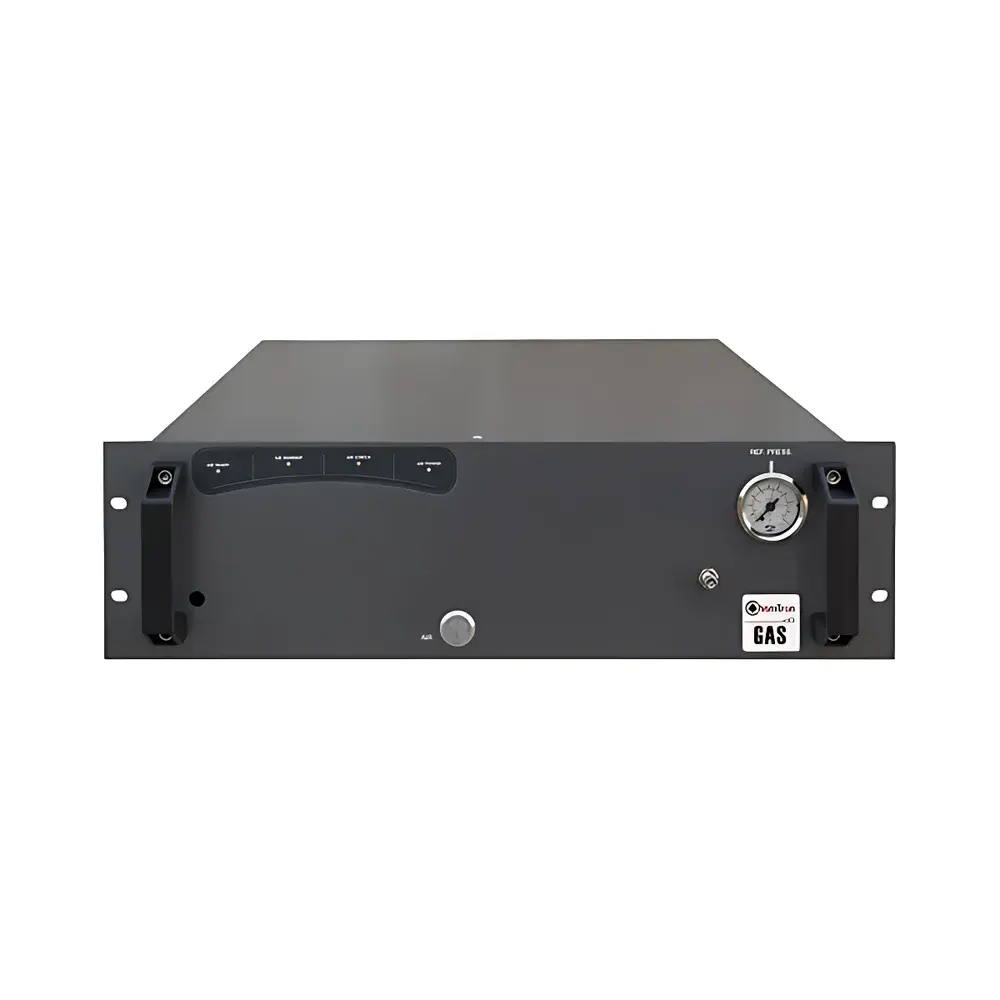
ChemTron RACK GC Zero-Air Generator
| Brand | ChemTron |
|---|---|
| Origin | Germany |
| Model | RACK GC |
| Output Flow Rate | 1.8–15.0 L/min |
| Hydrocarbon & CO Content | < 0.1 ppm |
| Inlet Pressure Range | 4.5–10 bar |
| Power Supply | 110–120 V / 60 Hz or 220–240 V / 50 Hz |
| Certifications | CE, CSA, FCC |
| Dimensions | 19-inch rack-mount (483 × 450 × 133 mm) |
| Weight | 15 kg |
| Max. Inlet CO | 50 ppm |
| Max. Inlet HC | 100 ppm |
| Max. Inlet Temperature | 40 °C |
| Outlet Temperature | Ambient + 15 °C |
| Pressure Drop | < 1 bar |
| Inlet Port | 1/4" NPT |
| Outlet Port | 1/8" NPT |
| Power Consumption | 200 W (GC 1800) / 550 W (GC 5000, GC 10000, GC 15000) |
Overview
The ChemTron RACK GC Zero-Air Generator is an engineered solution for laboratories requiring continuous, high-purity zero-air as a combustion and makeup gas source for gas chromatography (GC) systems—particularly flame ionization detectors (FID), nitrogen-phosphorus detectors (NPD), and flame photometric detectors (FPD). Unlike compressed air cylinders, which introduce variability in purity, pressure decay, and logistical risk, this generator delivers stable, on-demand zero-air via a validated three-stage purification architecture grounded in catalytic oxidation and particulate filtration principles. Its core function is to convert standard laboratory-grade compressed air—within defined inlet specifications—into ultra-low-hydrocarbon (< 0.1 ppm total HC) and ultra-low-CO (< 0.1 ppm) air, meeting ASTM D6216 and ISO 8573-1 Class 1:2:1 requirements for instrumental gas purity. Designed for integration into analytical instrument racks, it operates continuously under 24/7 duty cycles without performance degradation, supporting high-throughput QC/QA environments and regulated research labs.
Key Features
- Three-stage purification system: pre-filtration (coalescing moisture and particulates > 5 µm), high-temperature catalytic oxidation (oxidizing hydrocarbons and CO at > 350 °C), and post-filtration (removing ≥ 99.99% of particles > 0.5 µm)
- Rack-mount 19-inch form factor (483 × 450 × 133 mm) with standardized mounting holes—designed for seamless integration into analytical instrument cabinets or central utility racks
- Real-time internal diagnostics: automatic inlet pressure regulation, dual thermal monitoring of the catalytic oxidizer (low- and high-temperature alarms), and self-diagnostic fault reporting via front-panel LED indicators
- Low-risk operational design: non-pressurized internal architecture (max. working pressure < 2 bar), eliminating explosion hazards associated with high-pressure gas cylinders and enabling safe placement inside lab enclosures
- Energy-efficient operation: models GC 1800 (200 W) and GC 5000/10000/15000 (550 W) comply with IEC 62304 software safety standards and feature thermal management to sustain catalyst longevity
- Flexible air supply compatibility: accepts filtered lab air or optional oil-free compressors; optional secondary inlet filter available for marginal inlet air quality (not required when paired with ChemTron-certified compressors)
Sample Compatibility & Compliance
The RACK GC series is compatible with all major GC platforms requiring zero-air at flow rates from 1.8 to 15.0 L/min—including Agilent, Thermo Fisher Scientific, Shimadzu, and PerkinElmer systems. It meets the inlet air quality thresholds specified in USP , EP 2.2.43, and ASTM D6216 for FID carrier and support gas applications. All units are CE-marked per EU Machinery Directive 2006/42/EC and Electromagnetic Compatibility Directive 2014/30/EU, certified to CSA C22.2 No. 61010-1 and FCC Part 15 Subpart B for electromagnetic emissions. The catalytic oxidizer’s service interval is tracked via built-in hour-meter logging—supporting GLP/GMP audit trails when integrated with laboratory information management systems (LIMS).
Software & Data Management
While the RACK GC operates as a standalone hardware unit without embedded firmware-based control software, its diagnostic outputs (pressure, temperature, alarm status) are accessible via dry-contact relay signals (optional) for integration into building management systems (BMS) or centralized lab monitoring platforms. All models support 21 CFR Part 11-compliant data integrity workflows when paired with external SCADA or LIMS interfaces that log timestamped event records—including catalytic oxidizer runtime, pressure deviations, and maintenance alerts. User-accessible service logs (stored in non-volatile memory) retain the last 100 operational events with timestamps, aiding root-cause analysis during instrument qualification (IQ/OQ/PQ).
Applications
- Flame ionization detection (FID) in environmental analysis (EPA Method 8260, 8270), petrochemical testing (ASTM D3606, D5186), and pharmaceutical residual solvent quantification (ICH Q2(R2))
- Nitrogen-phosphorus detector (NPD) operation in pesticide residue screening and forensic toxicology
- Makeup gas for electron capture detectors (ECD) where trace oxygen and hydrocarbon interference must be minimized
- Carrier gas humidification systems requiring ultra-clean air as a diluent or purge medium
- Calibration gas blending systems where background contamination compromises accuracy of ppb-level standards
FAQ
What inlet air quality is required for optimal performance?
Inlet air must contain ≤ 50 ppm CO, ≤ 100 ppm total hydrocarbons, and ≤ 40 °C dew point temperature. Oil-free, desiccated compressed air meeting ISO 8573-1 Class 2:2:2 is recommended.
Can the RACK GC replace high-pressure zero-air cylinders entirely?
Yes—provided inlet air specifications are consistently met and the selected model’s flow capacity matches the GC detector’s peak demand (including simultaneous multi-detector configurations).
Is routine maintenance required for the catalytic oxidizer?
The high-temperature catalyst has a typical service life of 12–18 months under continuous operation; replacement is guided by the built-in runtime counter and thermal stability monitoring.
Does the unit require external cooling or ventilation?
No active cooling is needed; however, ambient airflow around the rear exhaust vent (≥ 5 cm clearance) is required to dissipate heat from the oxidizer module.
How is compliance with regulatory audits supported?
All models generate time-stamped diagnostic logs and support third-party validation protocols (e.g., IQ/OQ templates per ASTM E2500); full documentation packages—including CE DoC, test reports, and material declarations—are provided upon request.



