
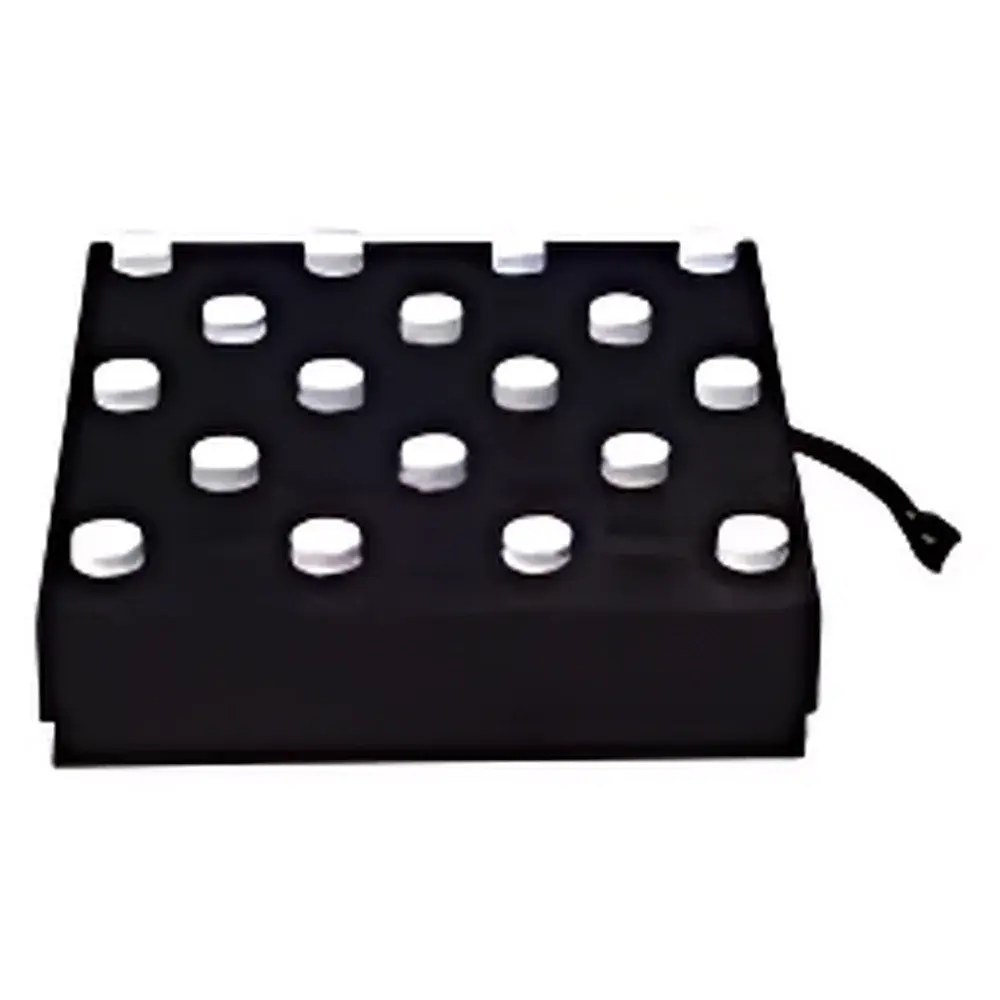
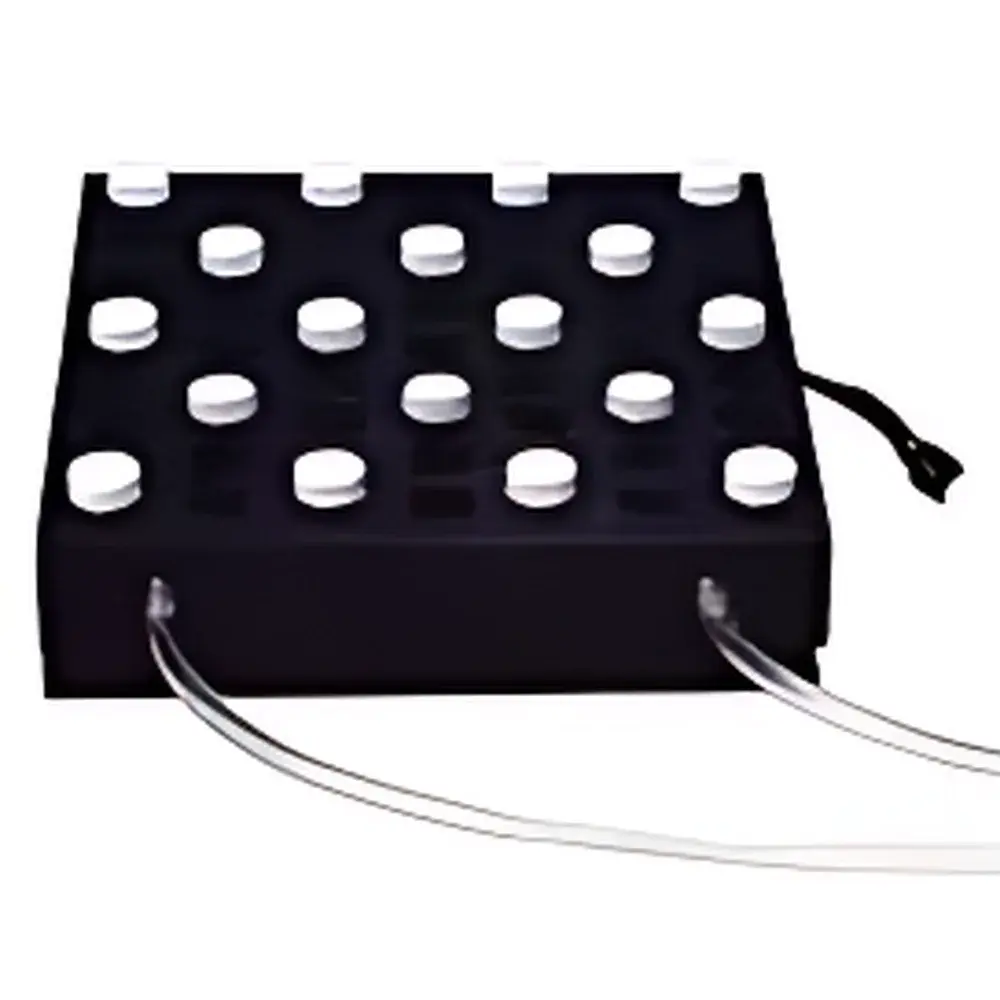
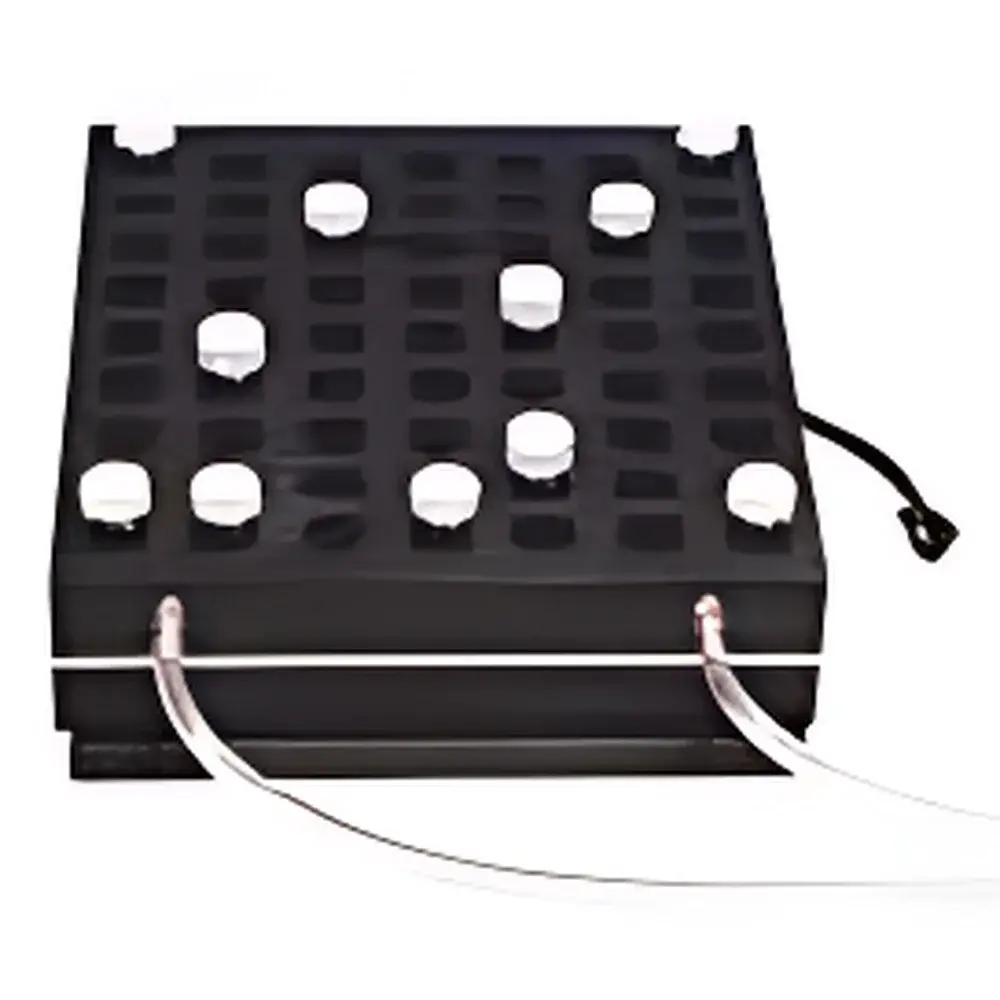
ChemTron RB-2 High-Low Temperature Modular Block Thermostat
| Brand | ChemTron |
|---|---|
| Origin | Germany |
| Model | RB-2 |
| Temperature Range | −80 °C to +130 °C |
| Temperature Uniformity | ±1 °C |
| Maximum Sample Positions | >60 |
| Module Types | Heating-only, Heating-Cooling, Reflux |
Overview
The ChemTron RB-2 High-Low Temperature Modular Block Thermostat is an engineered thermal management platform designed for precise, reproducible, and scalable sample conditioning in analytical, pharmaceutical, and quality control laboratories. Unlike conventional single-zone hot plates or water baths, the RB-2 employs solid-block conduction-based temperature control—where thermal energy is transferred directly from embedded heating elements or integrated coolant channels into machined aluminum blocks. This architecture ensures rapid thermal response (heating to 100 °C in <12 min; cooling to −40 °C in <25 min with a compatible chiller), minimal thermal lag, and high spatial uniformity across all sample positions. The system operates within a certified range of −80 °C to +130 °C, supporting applications requiring cryogenic stabilization, enzymatic reaction quenching, accelerated stability testing, and solvent reflux—all without liquid media or vapor-phase hazards. Its modular design enables seamless integration into automated workflows, including robotic liquid handlers and autosamplers, while maintaining compliance with ISO/IEC 17025 environmental monitoring requirements.
Key Features
- Three configurable thermal architectures: Heating-only (RB-xx), Heating-Cooling (RBC-xx), and Reflux-capable (RBR-xx) modules—each optimized for distinct process demands.
- High-density sample capacity: Up to 96 positions (8 × 12 array) for 2–8 mL vials or 63 positions (7 × 9 array) for 20 mL vessels—engineered for parallel processing under identical thermal conditions.
- ±1 °C temperature uniformity across full block surface at steady state, verified per ASTM E2202-21 (Standard Practice for Thermal Uniformity Testing of Laboratory Equipment).
- Reflux configuration includes dual-zone thermal separation: a bottom heating zone, middle insulating layer, and top condensation zone with independent coolant routing—enabling closed-loop solvent recovery during heated extractions or derivatizations.
- Direct N2 evaporation interface (RBV series kits) allows simultaneous inert gas purging and orbital agitation, supporting quantitative analyte concentration per USP and ICH Q5C guidelines.
- Block geometry precision-machined to DIN 12920 tolerances; vial wells feature tapered chamfers for consistent seating depth and thermal contact repeatability.
Sample Compatibility & Compliance
The RB-2 accommodates standard screw-thread and crimp-top vials (12 × 32 mm, 15 × 45 mm, 17 × 60 mm, 28 × 61/95 mm), with optional custom well configurations available upon request. All aluminum blocks undergo anodization per MIL-A-8625 Type II to resist corrosion from organic solvents, acids, and bases. When paired with a validated ChemTron temperature controller (e.g., TC-3000 series) and configured with audit-trail-enabled firmware, the system supports 21 CFR Part 11 compliance for electronic records and signatures. Routine calibration follows EURACHEM/CITAC Guide CG4, with traceability to PTB (Physikalisch-Technische Bundesanstalt) reference standards. The unit meets CE marking requirements under Directive 2014/30/EU (EMC) and 2014/35/EU (LVD), and its low-power thermal cycling profile aligns with ISO 50001 energy management frameworks.
Software & Data Management
Operation is coordinated via ChemTron’s ThermaLink™ Control Suite—a Windows-based application enabling multi-segment ramp/soak programming, real-time block and ambient temperature logging, and CSV export of time-stamped thermal profiles. When integrated with LIMS platforms via OPC UA or Modbus TCP, the system transmits metadata including setpoint deviation history, chiller status, and shaker RPM synchronization. All controllers include built-in GLP-compliant features: user access levels (admin/operator), electronic signature prompts, and immutable audit trails with SHA-256 hashing. Data integrity is preserved through redundant non-volatile memory storage and automatic backup to network drives—fully aligned with FDA expectations for data reliability in regulated environments.
Applications
- Pharmaceutical QC: Dissolution sample conditioning per USP , residual solvent analysis prep (ICH Q3C), and forced degradation studies at controlled thermal stress points.
- Clinical diagnostics: Plasma/serum thawing with kinetic control to prevent protein denaturation; DNA/RNA extraction incubation at 56 °C with simultaneous agitation.
- Environmental testing: EPA Method 502.2 and 8082A sample derivatization requiring precise 70–90 °C reflux with solvent recovery.
- Materials science: Polymer melt indexing, catalyst activation protocols, and thermal gravimetric pre-conditioning prior to TGA/DSC analysis.
- Food safety: AOAC 999.10 pesticide residue cleanup steps involving temperature-controlled dispersive SPE with nitrogen-assisted elution.
FAQ
What external equipment is required for cooling or reflux operation?
A certified external circulating chiller (e.g., JULABO F25 HL or ChemTron CRYO-200) must be connected via quick-coupling fittings to supply coolant at −80 °C minimum outlet temperature. Chiller flow rate and pressure specifications are provided in the RB-2 Installation Manual.
Can the RB-2 operate without a dedicated controller?
No. Independent operation is not supported. Temperature regulation, safety interlocks, and communication protocols require either a ChemTron TC-3000 series or JULABO FP50 controller—both offering PID tuning, overtemperature cutoff, and RS485/Ethernet connectivity.
Is validation documentation available for GMP environments?
Yes. ChemTron provides IQ/OQ templates compliant with Annex 15 (EU GMP) and ASTM E2500-22. Factory-issued calibration certificates (with uncertainty budgets) and material traceability reports are supplied with each shipment.
How is temperature uniformity verified across the block?
Uniformity is measured using nine calibrated Pt100 sensors placed at defined grid points (per ISO 17025 Clause 5.10.4). Results are documented in the Certificate of Conformance included with every unit.
Are custom well geometries supported for non-standard vials?
Yes. ChemTron offers bespoke machining services for OEM integration or proprietary container formats, subject to minimum order quantity and lead time confirmation.



