
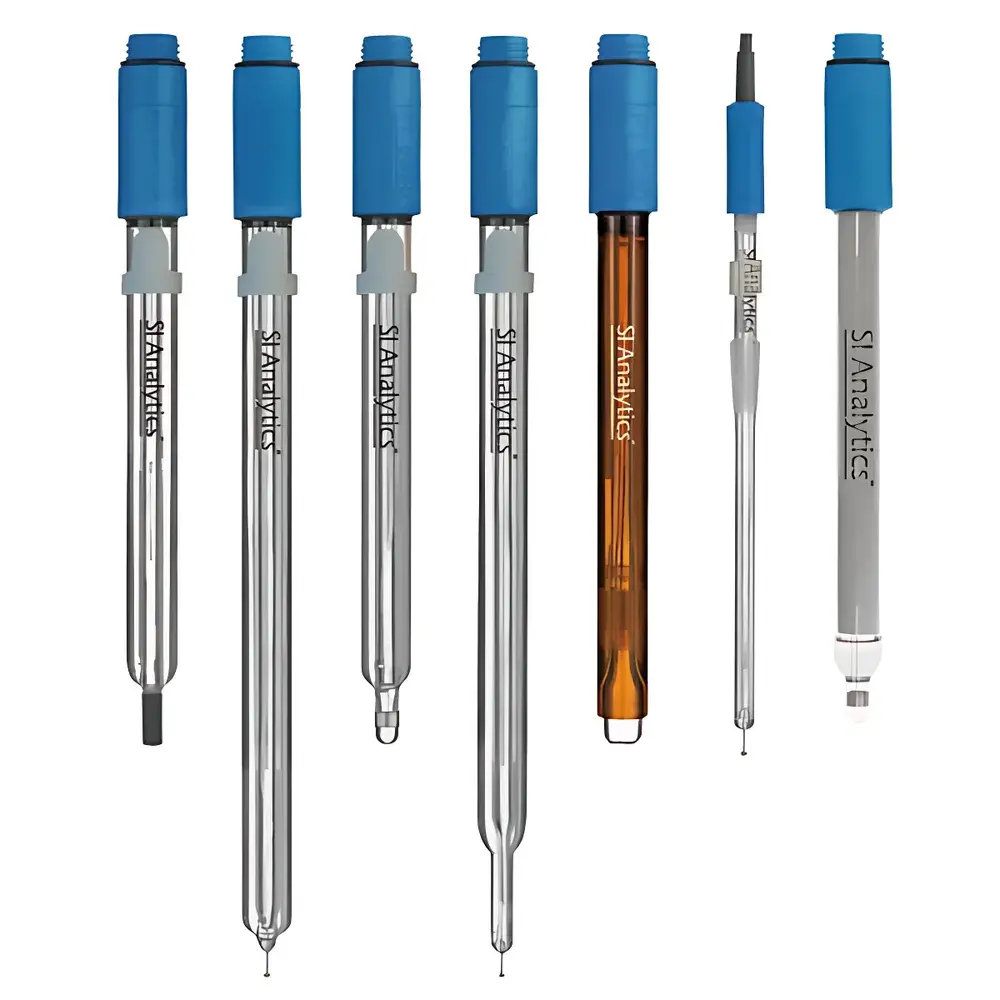
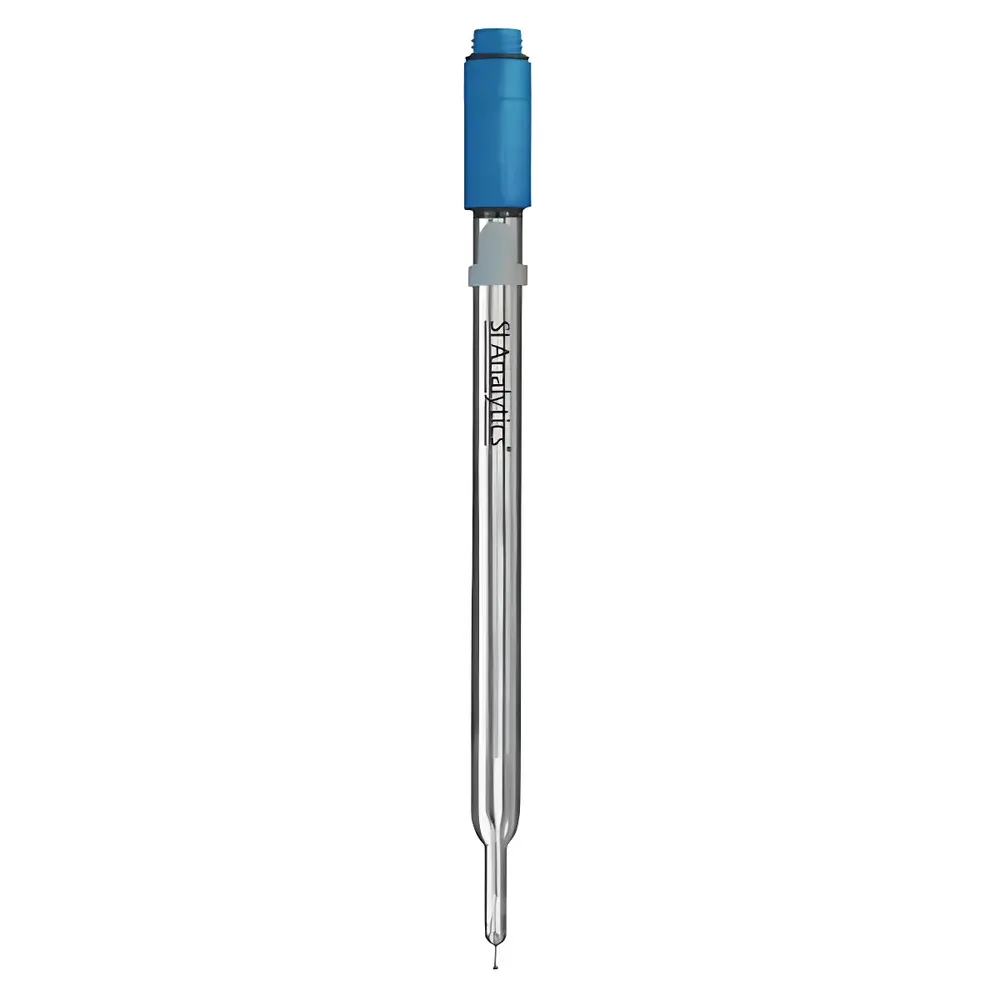
ChemTron ScienceLine Ag/AgCl and Pt Electrodes Series
| Brand | ChemTron |
|---|---|
| Origin | Germany |
| Model | ScienceLine Ag 42 A |
| Electrode Type | Reference and Working Electrodes for Electrochemical Analysis |
| Temperature Range | −5 to +100 °C (Pt 6140: +10 to +40 °C) |
| Reference System | Silamid® Ag/AgCl |
| Electrode Body Material | Glass |
| Electrolyte | KCl 3 mol/L |
| Junction Type | Ceramic Frit |
| Sensor Geometry | Cap-type (Ag), Rod-type (Pt), Ring-type (Pt), or Disc-type (Au/Pt) |
| Diameter Options | 5 mm (Ag), 1–6 mm (Pt/Au), 12 mm (body) |
| Length Options | 103–170 mm |
| Connector Options | DIN, BNC, or Standard Threaded (M8×0.75 or L1A) |
Overview
The ChemTron ScienceLine Ag/AgCl and Pt Electrodes Series comprises a comprehensive portfolio of high-precision reference and working electrodes engineered for reproducible electrochemical measurements in laboratory and process environments. Designed according to ISO 8655 and IUPAC recommendations for electrode standardization, these electrodes operate on the fundamental principle of reversible redox couples—Ag/AgCl in saturated or defined KCl electrolyte for stable potential reference, and pure platinum (or gold) surfaces for controlled electron transfer in voltammetry, amperometry, and potentiometric titration. Each electrode integrates a robust glass body with chemically inert ceramic junctions ensuring low resistance, minimal liquid junction potential drift, and resistance to clogging under continuous flow or viscous sample conditions. The ScienceLine series is calibrated against NIST-traceable standards and validated for long-term stability across pH 0–14 and temperatures from −5 °C to +100 °C—except model Pt 6140, which is optimized for narrow-range physiological or pharmaceutical applications (+10 to +40 °C).
Key Features
- Electrochemically stable Ag/AgCl reference system with Silamid® technology for consistent potential output (E° = +0.197 V vs. SHE at 25 °C, ±1 mV reproducibility)
- High-purity platinum (99.99%) and gold (99.99%) sensor elements—available as cap, rod, ring, disc, or specially treated (e.g., sulfided AgS, chlorinated AgCl) configurations
- Ceramic frit junctions with defined porosity (1–5 µm pore size) enabling controlled electrolyte outflow and minimizing contamination risk
- Modular connector compatibility: DIN 43535 (Type A), BNC, or standardized M8×0.75 threaded interface (L1A)—ensuring seamless integration with Metrohm, Thermo Fisher, Gamry, and Autolab potentiostats
- Glass body construction with borosilicate 3.3 (Duran®) for thermal shock resistance, chemical inertness toward strong acids/bases, and compliance with ASTM E2028 for electrode housing integrity
- Pre-filled, factory-sealed KCl 3 mol/L electrolyte (Catalog No. L 2114) with optional refillable design (e.g., Pt 6280, Ag 6280) supporting GLP-compliant documentation and traceability
Sample Compatibility & Compliance
ScienceLine electrodes are validated for use in aqueous, non-aqueous (acetonitrile, DMF), and mixed-solvent systems—including those containing proteins, surfactants, or particulates. Their ceramic junction resists fouling in wastewater, fermentation broths, and food matrices. All models comply with ISO/IEC 17025 requirements for calibration traceability and meet essential safety provisions of IEC 61010-1 for laboratory electrical equipment. For regulated industries, the series supports audit-ready operation under FDA 21 CFR Part 11 (when used with compliant data acquisition software), EU GMP Annex 11, and USP /. Electrolyte formulations adhere to CLSI EP25-A guidelines for reference electrode stability in clinical chemistry applications.
Software & Data Management
While ScienceLine electrodes are hardware components, their performance is fully leveraged within electrochemical software ecosystems such as NOVA (Metrohm), Framework (Gamry), or EC-Lab (BioLogic). All models support automatic electrode recognition via standardized pinout definitions (DIN/BNC), enabling instrument firmware to apply correct calibration parameters and junction compensation algorithms. When paired with systems featuring audit trail functionality, electrode installation date, lot number (engraved on body), and recalibration history can be logged in accordance with ALCOA+ principles. Optional QR-coded labeling facilitates digital asset tracking in LIMS-integrated labs.
Applications
- Standard addition and direct potentiometric ion measurement (e.g., Cl⁻, Br⁻, CN⁻, S²⁻) using Ag-based sensors
- Cyclic voltammetry, linear sweep voltammetry, and chronoamperometry for catalyst evaluation and battery material characterization
- pH and redox (ORP) monitoring in bioreactors, environmental water analysis, and electroplating baths
- Amperometric detection in HPLC-EC and flow injection analysis (FIA-EC) systems
- Reference electrode pairing in three-electrode cells for corrosion studies per ASTM G5/G59/G102 protocols
- Stability testing of novel electrolytes in Li-ion and solid-state battery R&D
FAQ
What is the shelf life of a sealed ScienceLine electrode?
Unopened electrodes retain full specification for 24 months when stored at 15–25 °C in original packaging. After activation, recommended service life is 6–12 months depending on usage frequency and sample matrix.
Can I refill the KCl electrolyte in my Ag 42 A electrode?
No—the Ag 42 A is a sealed, maintenance-free unit with a fixed-volume L 2114 electrolyte reservoir. Refillable variants include Ag 6280 and Pt 6280, identifiable by their removable top cap and visible fill port.
Which connector type is required for compatibility with a Metrohm 910 Compact IC?
The Metrohm 910 Compact IC requires DIN 43535 Type A connectors; therefore, models Ag 42 A and Pt 42 A are directly compatible without adapters.
Is the Pt 6140 suitable for high-temperature sterilization?
No—Pt 6140 is rated only for +10 to +40 °C and must not be autoclaved. For steam-sterilizable applications, consider the Pt 6880 variant with PEEK-insulated body and autoclavable ceramic junction (validated per ISO 17664).
How do I verify electrode potential stability before critical measurements?
Immerse the electrode in fresh KCl 3 mol/L solution and monitor open-circuit potential for 15 minutes; deviation exceeding ±2 mV indicates junction blockage or electrolyte depletion and warrants cleaning or replacement.
Related Products





