
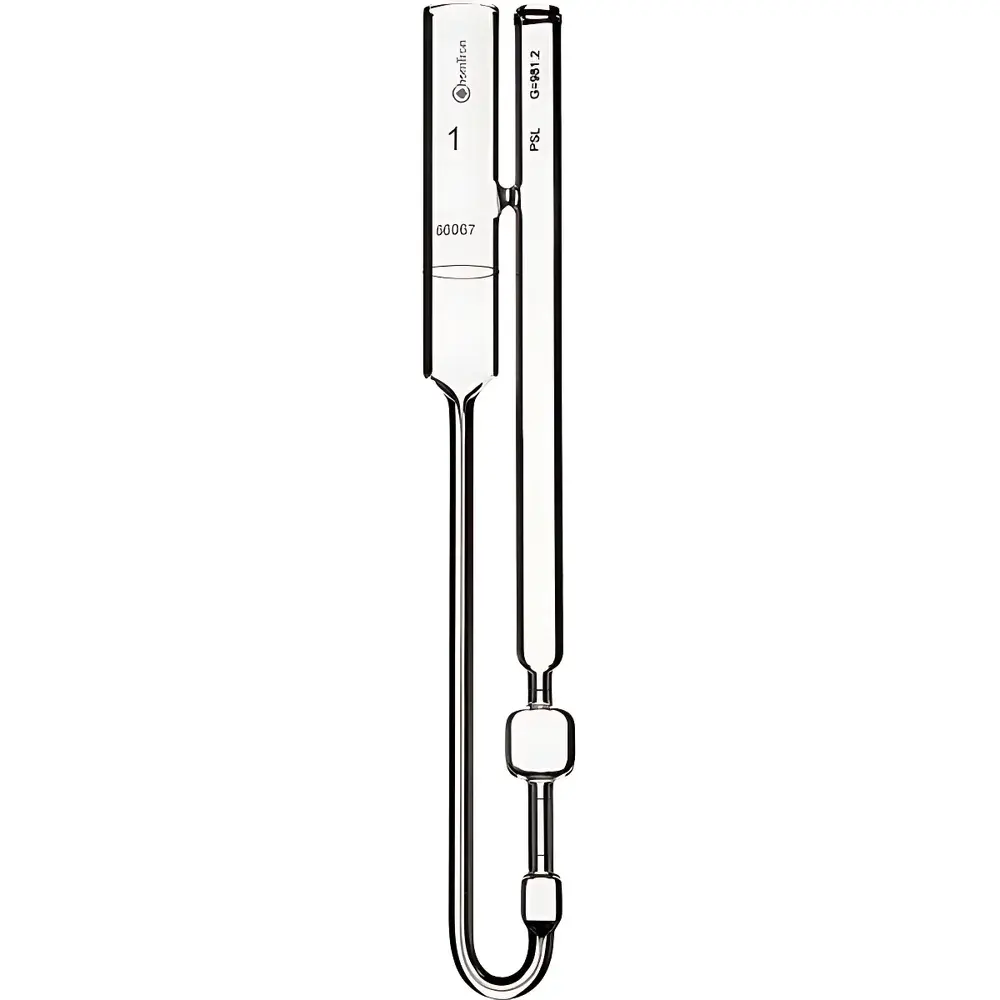
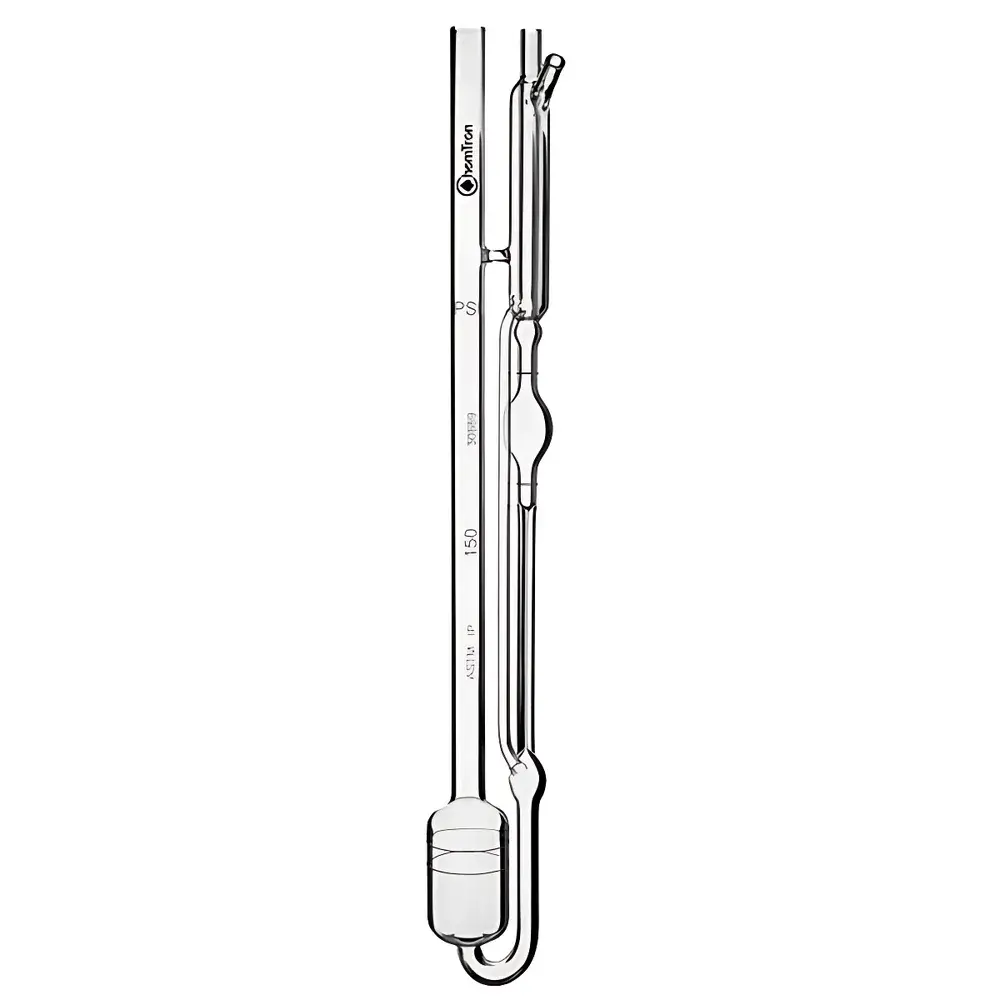
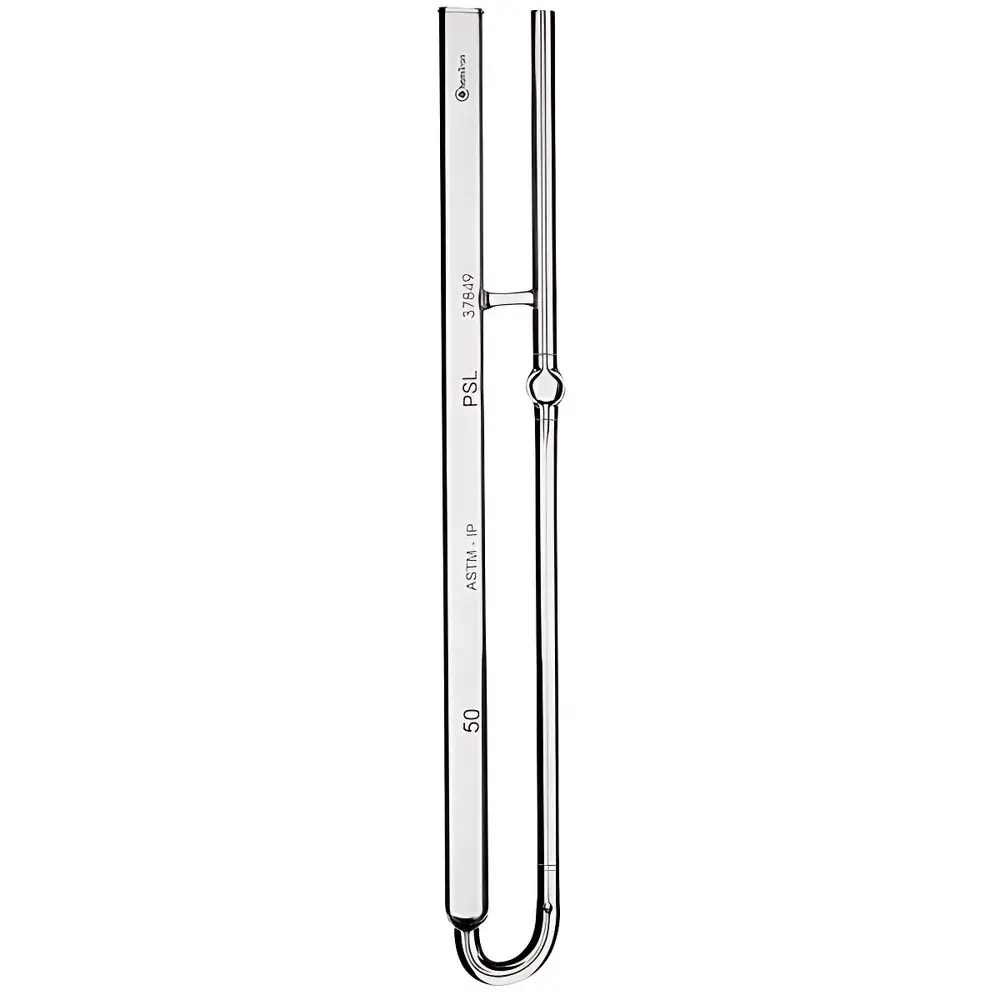
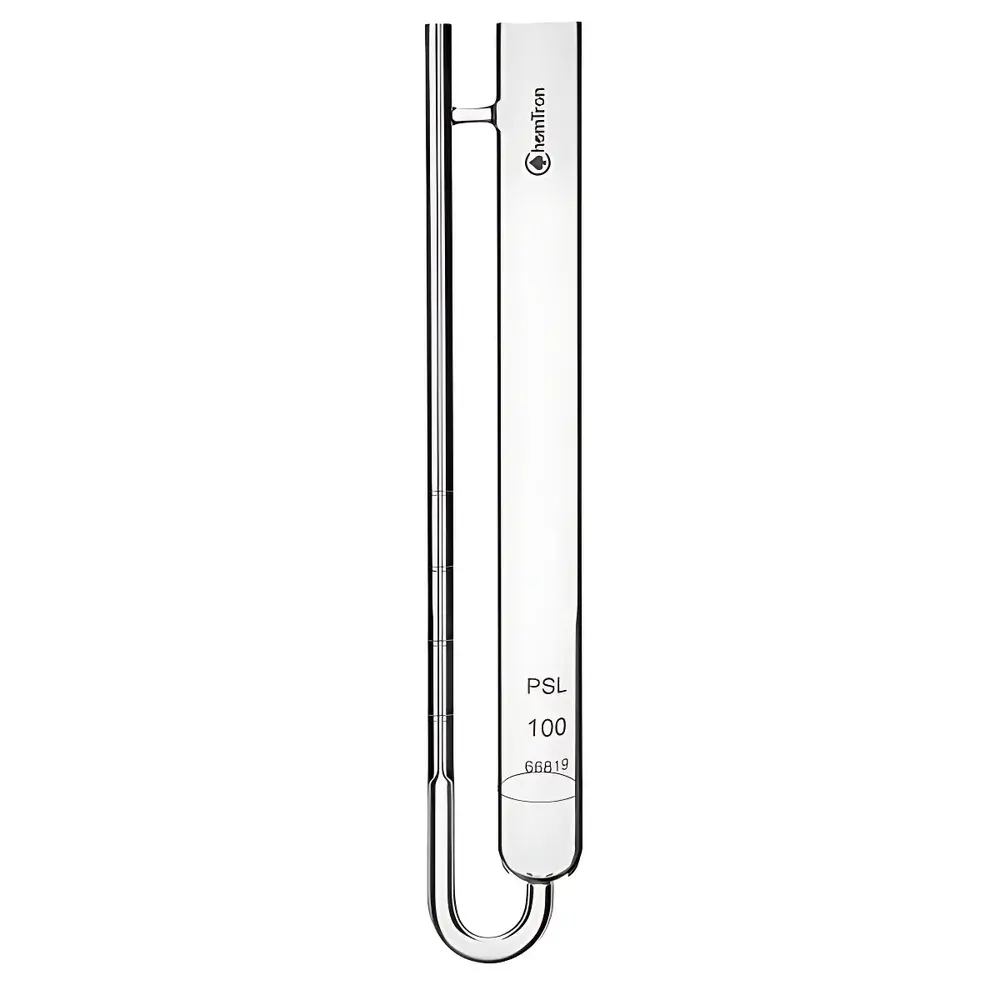
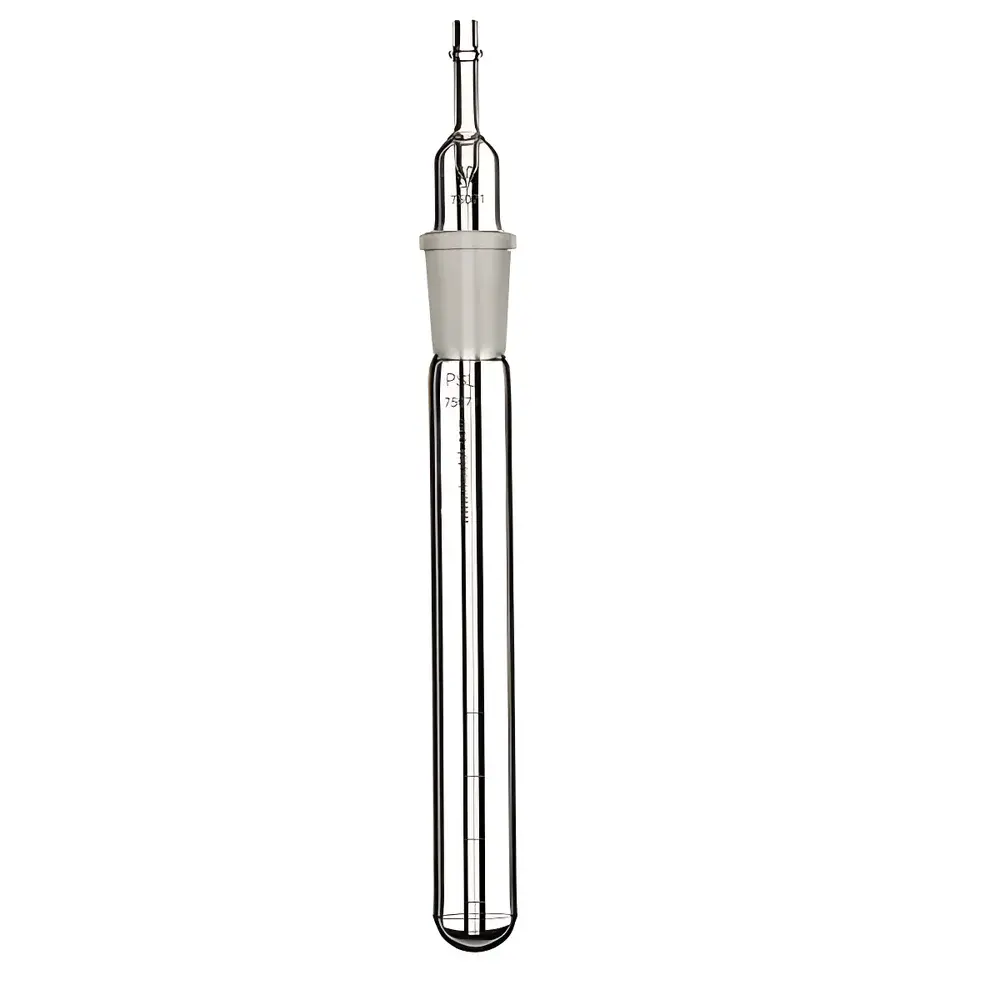
ChemTron Shell Pattern Reverse Flow, Cannon-Ubbelohde, Cannon-Manning Semi-Micro, Asphalt Institute & Modified Koppers Vacuum Capillary Viscometers
| Brand | ChemTron |
|---|---|
| Origin | Germany |
| Product Type | Capillary Viscometer |
| Instrument Category | Kinematic & Dynamic Viscosity Measurement |
| Compliance | UKAS-accredited calibration, ISO/IEC 17025, ASTM D446, ASTM D2171, ISO 3105, IP 71 Part 2, BS 188, EN 12596 |
| Models | 1638 (Shell Reverse Flow), 1647 (Cannon-Ubbelohde), 1659 (Cannon-Manning Semi-Micro), 1677 (Asphalt Institute Vacuum), 1678 (Modified Koppers Vacuum), 1676 (Cannon-Manning Vacuum) |
| Kinematic Viscosity Range | 0.0036–300,000 mm²/s |
| Dynamic Viscosity Range | 4.2–580,000 Pa·s |
| Operating Environment | Ambient temperature (20–25 °C), laboratory benchtop use |
| Calibration | Individually UKAS-certified with traceable K-value (mm²/s)²/s and documented uncertainty budgets |
Overview
ChemTron’s portfolio of precision capillary viscometers comprises six distinct, metrologically validated instrument families—each engineered for specific rheological measurement regimes within standardized petroleum, polymer, asphalt, and chemical quality control laboratories. These instruments operate on the fundamental principle of capillary flow viscometry: kinematic viscosity (ν, mm²/s) is determined by measuring the efflux time (t, s) of a fixed volume of liquid under gravity or controlled vacuum through a calibrated glass capillary, where ν = K × t (K = instrument constant in mm²/s²). For high-viscosity bituminous binders, dynamic viscosity (η, Pa·s) is derived via η = ν × ρ (ρ = fluid density at measurement temperature), requiring simultaneous density input per ASTM D2171 and EN 12596 protocols. All models are manufactured to DIN/ISO dimensional tolerances, with fused-silica or borosilicate glass capillaries, and undergo full UKAS-accredited calibration against NIST-traceable reference oils—ensuring compliance with ISO/IEC 17025:2017 requirements for testing laboratories.
Key Features
- UKAS-accredited calibration certificates supplied with each unit, including expanded uncertainty (k=2), traceability to national standards, and K-value validation across the full operational range
- Three capillary geometry families optimized for distinct applications: Shell Pattern Reverse Flow (1638 series) for low-viscosity transparent liquids; Cannon-Ubbelohde (1647) and Cannon-Manning Semi-Micro (1659) for routine kinematic viscosity of fuels, solvents, and lubricants; Asphalt Institute (1677), Modified Koppers (1678), and Cannon-Manning Vacuum (1676) for high-viscosity bitumen and polymer melts under vacuum
- Standardized dimensions per ASTM D446 (Cannon types), ASTM D2171 (vacuum types), and ISO 3105 (reverse flow), enabling direct cross-laboratory data comparability
- Low-volume variants (e.g., 1659 semi-micro: 1 mL fill volume, 275 mm total length) reduce sample consumption and solvent waste without compromising measurement reproducibility
- Vacuum-compatible designs (1676, 1677, 1678) integrate seamlessly with ChemTron Bitumen Vacuum Systems (20700/01 & 20700/02), maintaining ±0.1 kPa pressure stability during efflux for ASTM D2171-compliant dynamic viscosity determination
- Each unit engraved with permanent model number, K-value identifier, and UKAS certificate reference for audit-ready documentation
Sample Compatibility & Compliance
These viscometers are validated exclusively for Newtonian, transparent, particle-free liquids. The 1638, 1647, and 1659 series require samples with optical clarity sufficient for meniscus detection during manual timing—commonly used for mineral oils, jet fuels (Jet A-1), hydraulic fluids, and organic solvents. The vacuum-capillary variants (1676, 1677, 1678) are specified for bituminous binders (penetration grade, polymer-modified, oxidized), heavy fuel oils, and thermoplastic elastomer melts—provided samples are fully degassed prior to loading. All models meet the dimensional, thermal expansion, and surface finish criteria defined in ISO 3105 (for reverse flow), ASTM D446 (for Ubbelohde/Cannon), and EN 12596 (for asphalt vacuum methods). Their calibration documentation satisfies GLP audit requirements and supports FDA 21 CFR Part 11–aligned electronic record retention when paired with ChemTron’s compliant stopwatch logging templates.
Software & Data Management
While these are manually operated instruments, ChemTron provides structured digital support for data integrity and regulatory alignment. Downloadable Excel-based calculation templates (validated per GAMP5 principles) automate kinematic viscosity derivation from timed efflux data, propagate K-value uncertainty, and generate ASTM D446-compliant reports—including temperature correction (ASTM D341), repeatability assessment (ASTM D6045), and outlier detection per ISO 5725-2. For laboratories implementing LIMS integration, ChemTron supplies CSV export schemas compatible with major platforms (e.g., LabWare, Thermo Fisher SampleManager), mapping raw time inputs, ambient bath temperature, density values, and final viscosity outputs to configurable fields. All calibration certificates are issued as PDF/A-1b files with embedded digital signatures, supporting long-term archival per ISO 14721 (OAIS).
Applications
- Petroleum refining QC: Kinematic viscosity of distillate fuels (ASTM D445), base oils (ASTM D2161), and residual fuels (ASTM D1298)
- Asphalt pavement engineering: Dynamic viscosity of bitumen at 60 °C and 135 °C per AASHTO T201 and EN 13302, critical for mix design and rutting resistance modeling
- Pharmaceutical excipient characterization: Viscosity grading of purified water, glycerin, and polyethylene glycols per USP
- Academic rheology education: Teaching fundamental capillary flow theory, Hagen–Poiseuille law verification, and calibration traceability concepts
- Paint & coating R&D: Low-shear viscosity screening of resin solutions and monomer blends prior to rotational rheometry
FAQ
Are these viscometers suitable for non-Newtonian fluids?
No. Capillary viscometers assume laminar, steady-state Newtonian flow. Non-Newtonian behavior (shear-thinning/thickening, yield stress) invalidates the Hagen–Poiseuille relationship and introduces systematic error. Rotational rheometers are required for such materials.
What bath temperature stability is required for ASTM D446 compliance?
±0.02 °C over the duration of efflux measurement. ChemTron recommends certified thermostatic baths meeting ASTM E1048 Class A specifications.
Can I use the same viscometer for both kinematic and dynamic viscosity?
Yes—provided the fluid density is known at the test temperature. Kinematic viscosity (mm²/s) is converted to dynamic viscosity (Pa·s) using η = ν × ρ, where ρ must be measured per ASTM D1298 or ISO 3675.
Is recalibration required after mechanical shock or thermal cycling?
Yes. Capillary geometry is permanently altered by impact or rapid thermal gradients. Users must return units to an ISO/IEC 17025-accredited lab for revalidation before further use.
Do you supply certified reference oils for in-house verification?
Yes. ChemTron offers NIST-traceable SRMs (e.g., Standard Reference Material 2789) with certified kinematic viscosity values at 25 °C, 40 °C, and 100 °C, aligned to ASTM D445 repeatability limits.



