
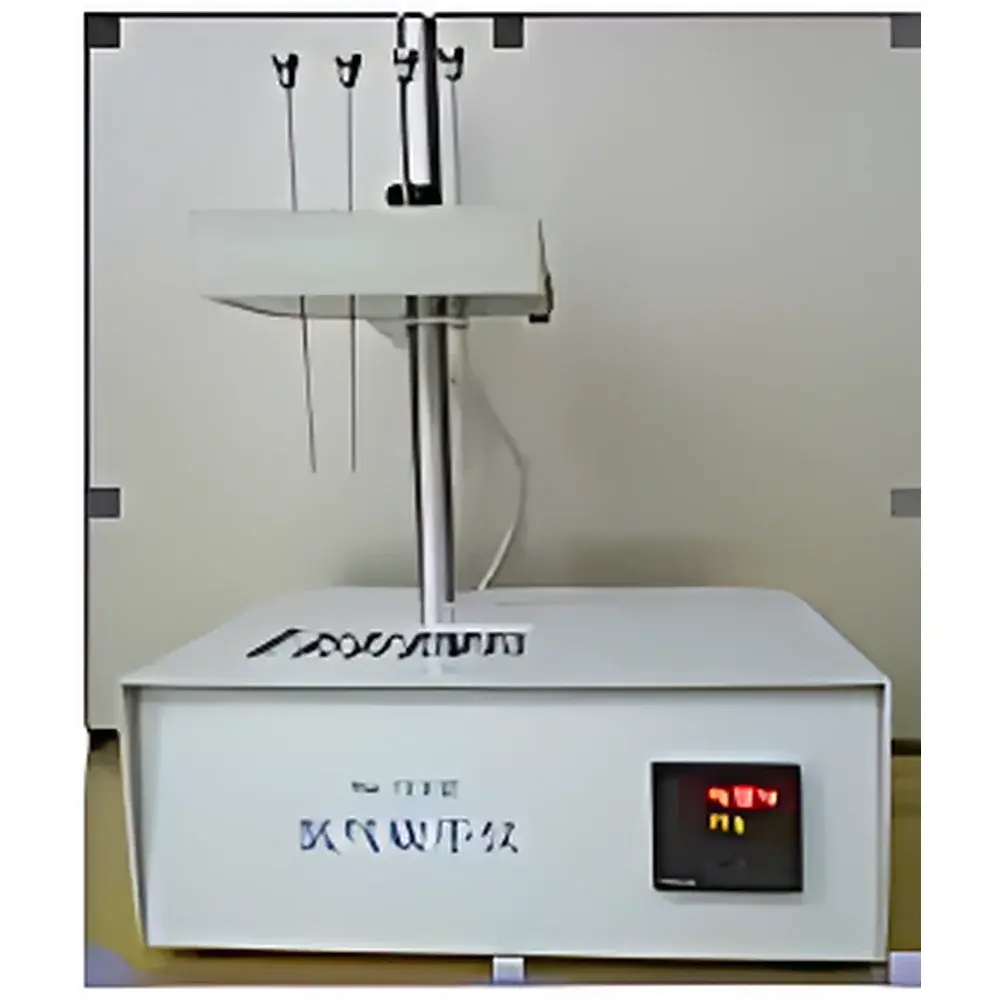
Chu Ding Technology DN-12A 12-Position Dry-Block Nitrogen Evaporator
| Brand | Chu Ding Technology |
|---|---|
| Origin | Shanghai, China |
| Model | DN-12A |
| Dimensions (L×W×H) | 310 × 220 × 420 mm |
| Power Supply | 220 ± 10 V, 50 Hz |
| Heating Range | Ambient to 180 °C |
| Temperature Accuracy | ±0.2 °C |
| Max. Power | 600 W |
| Gas Inlet Pressure | < 0.6 MPa |
| Compatible Tube Diameter | Ø16 mm |
| Weight | ~5 kg |
| Relative Humidity Limit | < 85 % RH |
| Heating Block Configuration | Standard 12-position aluminum block |
| Sample Vessel Compatibility | Test tubes, centrifuge tubes, vials |
Overview
The Chu Ding Technology DN-12A is a precision-engineered, 12-position dry-block nitrogen evaporator designed for reliable, oxygen-free sample concentration in analytical laboratories. Unlike water bath systems, this instrument employs a thermally optimized aluminum heating block to deliver rapid, uniform thermal transfer directly to sample vessels—enabling precise temperature control across all positions without liquid medium variability. It operates on the principle of gentle nitrogen gas stream impingement onto the surface of liquid samples, accelerating solvent evaporation while minimizing analyte degradation, oxidation, or splashing. The system is widely deployed in preparatory workflows for HPLC, GC, GC-MS, LC-MS/MS, and environmental residue analysis where reproducible, low-background concentration is critical. Its compact footprint (310 × 220 × 420 mm), lightweight construction (~5 kg), and energy-efficient 600 W heating module make it suitable for benchtop integration in QC labs, forensic units, pharmaceutical R&D, and environmental testing facilities.
Key Features
- High-thermal-conductivity aluminum heating block ensures rapid heat-up and exceptional temperature uniformity (±0.2 °C) across all 12 positions—validated by integrated PT100 sensor feedback.
- Independent, height-adjustable nitrogen delivery needles prevent cross-contamination between samples; each channel features individual flow regulation via precision needle valves.
- Digital PID temperature controller with real-time display enables stable setpoint maintenance from ambient to 180 °C—optimized for volatile solvents (e.g., hexane, acetone, ethyl acetate) and thermolabile compounds.
- Robust mechanical design supports continuous operation at elevated temperatures; internal airflow management mitigates thermal drift during extended runs (>8 h).
- Compact dry-block architecture eliminates water bath maintenance, contamination risk, and evaporation-induced level fluctuations—enhancing method robustness and reducing downtime.
- Compliant with general laboratory safety standards: over-temperature cutoff, grounded chassis, and CE-marked electrical components (IEC 61010-1).
Sample Compatibility & Compliance
The DN-12A accommodates standard 16 mm outer-diameter tubes—including conical-bottom centrifuge tubes (15 mL), culture tubes, and autosampler vials—without adapter requirements. Its dry-block geometry supports consistent thermal contact regardless of tube fill volume (0.5–15 mL). While not certified to ISO/IEC 17025 or GLP as a standalone instrument, the system is routinely validated in user laboratories per internal SOPs aligned with USP , ASTM D5845 (for pesticide residue prep), and EPA Method 525.3 (for drinking water analysis). It meets general electrical safety requirements under IEC 61010-1 and EMC Directive 2014/30/EU. For regulated environments, users may implement audit trails via external logging software or integrate the unit into validated workflows requiring documented temperature calibration (e.g., annual NIST-traceable probe verification).
Software & Data Management
The DN-12A operates as a stand-alone analog/digital hybrid instrument with no embedded firmware or network interface. Temperature setpoint, real-time reading, and status indicators are managed via a front-panel LED display and tactile keypad. For traceability in GxP environments, users commonly pair the unit with external data loggers (e.g., Omega OM-DAQPRO-5300) connected to calibrated Type K thermocouples placed within representative sample wells. Raw temperature and time data can be exported to CSV for inclusion in electronic lab notebooks (ELN) or LIMS. Though lacking native 21 CFR Part 11 compliance, the system supports ALCOA+ principles when operated under controlled procedures—particularly when combined with procedural controls for needle positioning, gas pressure monitoring (<0.6 MPa), and routine performance qualification (PQ) checks.
Applications
- Routine concentration of extracts prior to HPLC or GC injection in environmental testing (e.g., PAHs, PCBs, organochlorine pesticides per EPA Methods 8270/8082).
- Preparative cleanup in forensic toxicology—evaporation of methanol/acetonitrile extracts from blood or urine matrices prior to derivatization and GC-MS analysis.
- Pharmaceutical impurity profiling: removal of residual solvents from synthetic intermediates under inert atmosphere to prevent oxidation.
- Food safety labs: concentration of QuEChERS extracts for multi-residue pesticide screening (EN 15662).
- Academic research settings requiring parallel processing of small-molecule metabolites, lipids, or nucleotide derivatives with minimal thermal stress.
FAQ
What is the maximum recommended operating temperature for long-term stability?
The DN-12A is rated for continuous use up to 150 °C; operation at 180 °C is permissible for short-duration protocols (<30 min) but requires validation of sample integrity and block longevity.
Can the heating block accommodate tubes larger than Ø16 mm?
No—the standard block is machined specifically for Ø16 mm tubes. Custom blocks for Ø18 mm or Ø20 mm tubes are not offered by the manufacturer and would compromise thermal contact and accuracy.
Is nitrogen gas purity specified for optimal performance?
Instrument performance assumes ≥99.998 % pure nitrogen (Grade 5.0); lower-purity sources may introduce moisture or oxygen, risking analyte oxidation or condensation in delivery lines.
Does the unit include a nitrogen gas regulator or flowmeter?
No—users must supply an external pressure-regulated nitrogen source with adjustable flow control; typical flow rates range from 0.5–2.0 L/min per needle depending on solvent volatility and volume.
How often should temperature calibration be performed?
Per ISO/IEC 17025 guidance, calibration using a NIST-traceable reference thermometer is recommended before each analytical campaign or at least daily when used in regulated workflows.



