
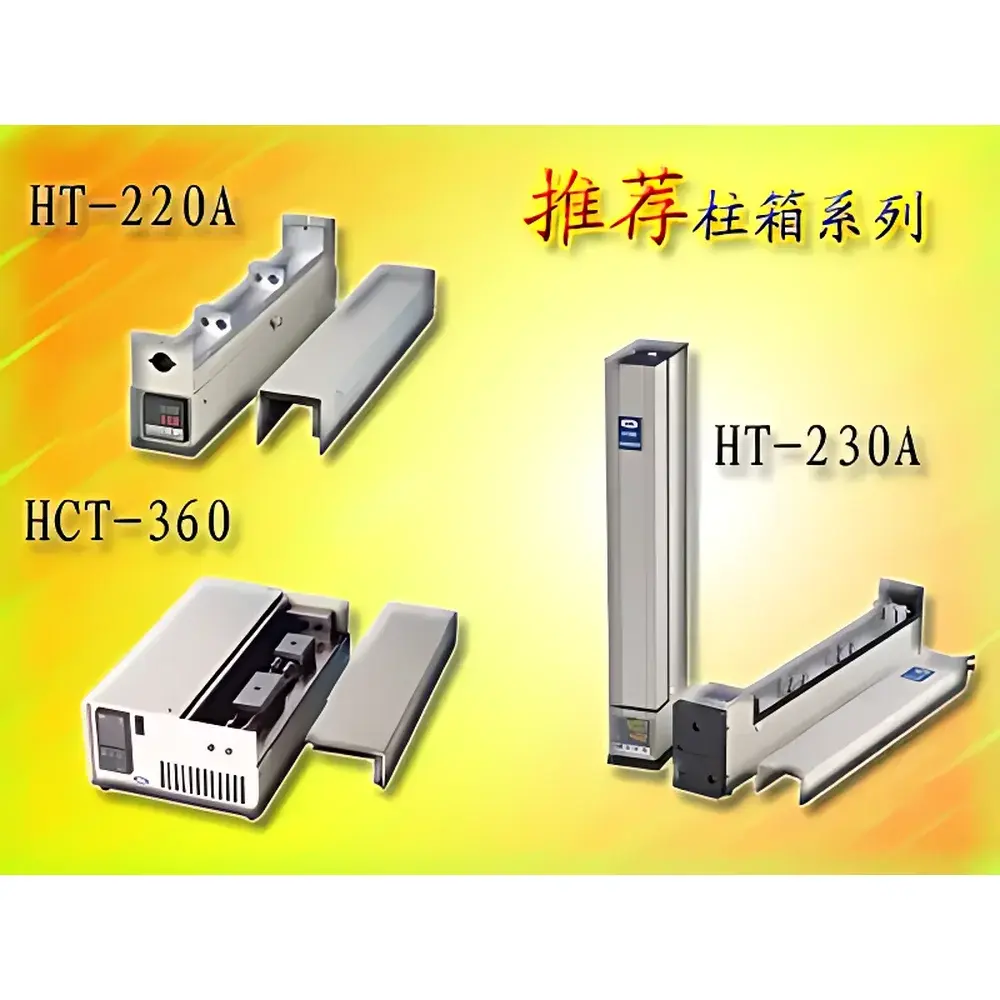
Chu Ding Technology HT-340A Integrated Horizontal HPLC Column Oven
| Brand | Chu Ding Technology |
|---|---|
| Origin | Shanghai, China |
| Model | HT-340A |
| Heating Power | 200 W |
| Chamber Capacity | 3 × 300 mm columns |
| External Dimensions (mm) | 260 × 450 × 80 |
| Weight | 5.5 kg |
| Temperature Control Method | PID with imported temperature controller and high-stability RTD sensor |
| Heating Technology | TPC film heater |
| Safety Features | Over-temperature alarm, open-circuit protection |
| Structural Type | Integrated horizontal design |
Overview
The Chu Ding Technology HT-340A Integrated Horizontal HPLC Column Oven is an engineered thermal management solution designed specifically for high-performance liquid chromatography (HPLC) and gel permeation chromatography (GPC) systems. It maintains precise, uniform, and stable column temperatures—critical parameters that directly influence retention time reproducibility, peak resolution, and method robustness. Operating on the principle of conductive and convective heat transfer within a thermally insulated horizontal chamber, the HT-340A employs a high-efficiency TPC (thin-film polymer composite) heating element coupled with a precision PID control algorithm and an imported platinum resistance temperature detector (RTD). This architecture ensures rapid thermal equilibration, minimal temperature gradient across the column bed (< ±0.3 °C), and long-term stability (±0.1 °C over 24 h), meeting the thermal consistency requirements defined in ASTM D5296, ISO 11927, and USP for chromatographic method validation.
Key Features
- Integrated horizontal chassis optimized for benchtop integration with HPLC modules—no external mounting brackets or alignment adjustments required.
- Three-column capacity (up to 300 mm length each), accommodating standard 4.6 mm ID analytical columns as well as wider-bore GPC columns (7.8 mm ID) used in polymer characterization.
- TPC film heating technology delivers uniform surface heat distribution, eliminating hot spots and extending heater service life by ≥3× compared to conventional wire-wound elements.
- Dual-stage safety architecture: independent over-temperature cutoff (adjustable limit up to 80 °C) and real-time open-circuit detection prevent thermal runaway during unattended operation.
- Front-access chamber with low-profile height (80 mm) enables compatibility with post-column derivatization reactors and flow-through detectors without spatial interference.
- Calibration-ready design: sensor output conforms to IEC 60751 Class B tolerance; supports traceable calibration using NIST-traceable dry-block or fluid-bath references.
Sample Compatibility & Compliance
The HT-340A is compatible with stainless steel, PEEK, and fused-silica capillary columns used in reversed-phase, size-exclusion, ion-exchange, and hydrophilic interaction chromatography. Its chamber geometry accommodates both standard 1/16″ OD tubing routing and integrated valve manifolds. The unit complies with IEC 61010-1:2010 for laboratory electrical equipment safety and meets electromagnetic compatibility (EMC) requirements per EN 61326-1:2013. While not certified for Class I Div 1 hazardous locations, its solid-state thermal control and absence of moving parts make it suitable for ISO 17025-accredited QC laboratories operating under GLP conditions. Temperature logs generated via optional RS-232 interface support 21 CFR Part 11-compliant audit trails when paired with validated data acquisition software.
Software & Data Management
The HT-340A operates as a standalone analog-controlled oven; no embedded firmware or touchscreen interface is included. Temperature setpoint is adjusted manually via front-panel potentiometer with 0.1 °C resolution and visual LED indicator. For digital integration, optional analog voltage output (0–5 V = 0–80 °C) and RS-232 serial port enable connection to third-party SCADA systems (e.g., LabVIEW, DeltaV) or LIMS platforms. Raw temperature readings from the internal RTD can be logged at 1 Hz sampling rate, supporting statistical process control (SPC) charting per ISO 7870-2. All calibration and maintenance records—including sensor drift verification and heater resistance checks—are documented in accordance with ISO/IEC 17025 Clause 6.4.10.
Applications
- Routine QC analysis of pharmaceutical actives where column temperature variation >±0.5 °C causes unacceptable retention time drift (e.g., USP monographs for β-lactam antibiotics).
- Gel permeation chromatography (GPC) of synthetic polymers, where precise thermal control minimizes shear-induced degradation and improves molar mass distribution accuracy.
- Post-column derivatization workflows requiring stable pre- and post-reactor column temperatures to ensure consistent reaction kinetics and fluorescence yield.
- Method development labs validating temperature-dependent selectivity shifts in chiral separations (e.g., polysaccharide-based columns operating at 35–45 °C).
- Environmental testing labs performing EPA Method 8082A (PCBs) and 8270D (SVOCs), where column oven stability directly affects surrogate recovery and calibration linearity.
FAQ
What is the maximum operating temperature of the HT-340A?
The unit is rated for continuous operation up to 80 °C, with factory-set default upper limit at 75 °C to optimize heater longevity.
Can the HT-340A accommodate columns with integrated fittings or unions?
Yes—the 260 mm width and 450 mm depth provide clearance for standard Swagelok® and Valco™ column end fittings without disassembly.
Is the temperature sensor user-replaceable?
The PT100 RTD is field-serviceable using M4 mounting thread; replacement sensors must meet IEC 60751 Class B tolerance (±0.3 °C at 0 °C).
Does the HT-340A support cooling functionality?
No—this is a heating-only model. For active cooling, refer to the HCT-360 series, which integrates thermoelectric (Peltier) modules.
How is thermal uniformity verified during installation qualification (IQ)?
Use three calibrated micro-probe thermometers (±0.05 °C) placed at column inlet, midpoint, and outlet positions; deviation must remain ≤0.5 °C across all points at setpoint.



