
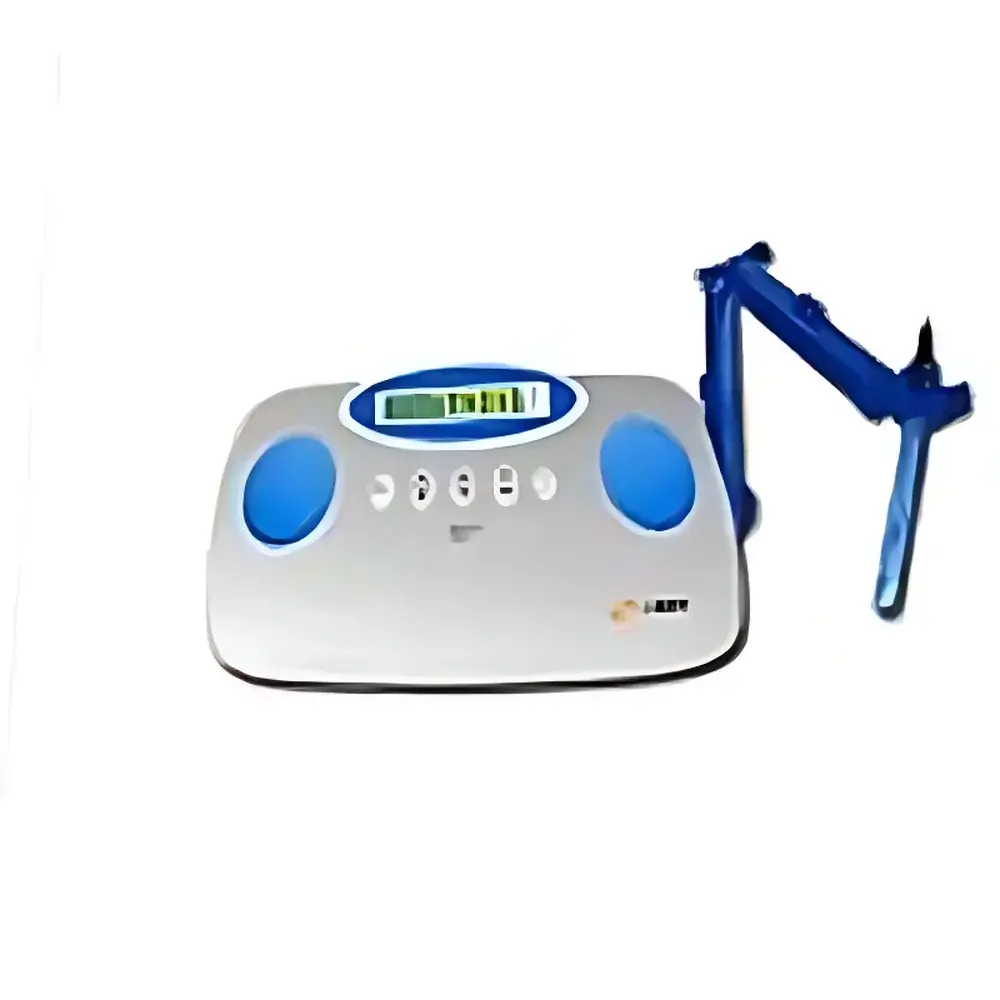
Chu Ding Technology PHS-3C Digital pH Meter
| Brand | Chu Ding Technology |
|---|---|
| Origin | Shanghai, China |
| Manufacturer Type | Authorized Distributor |
| Country of Origin | China |
| Model | PHS-3C |
| Price | USD 310 (FOB Shanghai) |
| Accuracy Class | 0.01 |
| pH Range | 0.00–14.00 pH |
| mV Range | ±1800 mV |
| pH Resolution | 0.01 pH |
| mV Resolution | 1 mV |
| pH Accuracy | ±0.01 pH ±1 digit |
| mV Accuracy | ±1 mV ±1 digit |
| Input Impedance | ≥1×10¹² Ω |
| Drift | ±0.01 pH ±1 digit / 3 h |
| Manual Temperature Compensation Range | 0–60 °C |
| Sample Solution Temperature Range | 5–60 °C |
| Display | 3½-digit LED |
| Calibration | One-point or two-point |
| Compatible Electrode | E-201-C pH Combination Electrode |
Overview
The Chu Ding Technology PHS-3C Digital pH Meter is a microprocessor-controlled electrochemical instrument engineered for precision measurement of hydrogen ion activity in aqueous solutions. Based on the potentiometric principle—measuring the potential difference between a pH-sensitive glass electrode and a stable reference electrode—the PHS-3C delivers reliable, repeatable pH readings across the full physicochemical range of 0.00 to 14.00 pH. It simultaneously supports direct millivolt (mV) measurements for redox potential assessment and relative ion activity evaluation using compatible ion-selective electrodes. Designed for routine laboratory use, the instrument meets the performance requirements of ISO 7888 (water quality — determination of pH), ASTM D1293 (standard test method for pH of water), and general GLP-compliant workflows where traceable, documented calibration and stable signal acquisition are essential.
Key Features
- 3½-digit LED display with high-contrast numeric readout for unambiguous interpretation under varied lighting conditions
- Manual temperature compensation (0–60 °C) enabling correction of pH values to standard reference temperature (typically 25 °C), critical for inter-laboratory comparability
- Flexible calibration architecture supporting both one-point (single-buffer) and two-point (dual-buffer) calibration protocols per IUPAC and USP guidelines
- Dedicated electrode status diagnostic function—monitors input impedance and junction potential stability to flag degraded or contaminated electrodes prior to measurement error accumulation
- High-input-impedance amplifier circuitry (≥1×10¹² Ω) minimizing loading effects on high-resistance pH electrodes and ensuring fidelity in low-conductivity samples (e.g., deionized water, ethanol-water mixtures)
- Stability specification of ±0.01 pH ±1 digit over 3 hours—validated under controlled ambient conditions—supporting extended batch analysis without recalibration
Sample Compatibility & Compliance
The PHS-3C is optimized for aqueous and mildly buffered solutions within 5–60 °C operating temperature range. It is routinely deployed in quality control laboratories handling pharmaceutical excipients, food-grade acids/buffers, wastewater effluents, and educational teaching solutions. The instrument complies with CE marking requirements for electrical safety (EN 61010-1) and electromagnetic compatibility (EN 61326-1). While not certified for hazardous area use, its robust enclosure and isolation design meet general-purpose lab safety standards. When operated with traceable NIST-traceable pH buffers and calibrated per SOPs aligned with ISO/IEC 17025 clause 6.4.4, measurement uncertainty can be estimated at ≤±0.02 pH (k=2) for routine applications.
Software & Data Management
As a standalone benchtop meter, the PHS-3C does not incorporate onboard data logging or USB connectivity. However, its analog mV output (available via optional interface module) enables integration with external DAQ systems, LIMS platforms, or programmable logic controllers for automated reporting. For regulated environments requiring audit trails, users may implement manual calibration logs following FDA 21 CFR Part 11 principles—recording date/time, operator ID, buffer lot numbers, slope/mV offset values, and acceptance criteria met. Documentation templates compliant with GMP Annex 11 and EU GMP Chapter 4 are available upon request from Chu Ding Technology’s technical support team.
Applications
- QC testing of buffer solutions in biopharmaceutical manufacturing (e.g., cell culture media, purification eluents)
- pH monitoring during fermentation process development and validation
- Environmental compliance testing per EPA Method 9040C (pH measurement in surface waters and wastewater)
- Food safety verification—including acidity control in canned goods, dairy products, and fruit juices per Codex Alimentarius standards
- Academic instruction in analytical chemistry and environmental science laboratories
- Electrochemical characterization of electrode materials during R&D prototyping
FAQ
What electrode is recommended for use with the PHS-3C?
The E-201-C combination pH electrode is factory-specified and fully compatible; it features a Ag/AgCl reference system, low-resistance ceramic junction, and integrated temperature sensor for manual compensation.
Does the PHS-3C support automatic temperature compensation (ATC)?
No—it provides manual temperature compensation only. Users must enter the measured sample temperature via front-panel keys before reading.
Can the PHS-3C measure non-aqueous samples such as ethanol or glycerol solutions?
Yes, with appropriate electrode selection and calibration in matching solvent matrices—but note that pH scale validity is strictly defined for aqueous systems per IUPAC recommendations.
Is the instrument suitable for ISO/IEC 17025-accredited testing?
Yes—when used with documented procedures, traceable standards, and periodic verification against certified reference materials, it satisfies Clause 6.4.4 (Equipment) and Clause 7.7 (Uncertainty of Measurement).
What is the typical service life of the E-201-C electrode when used with the PHS-3C?
Under proper storage (in 3 M KCl solution), regular cleaning, and avoidance of protein/sulfide fouling, the electrode typically maintains specification-grade performance for 6–12 months in moderate-use environments.




