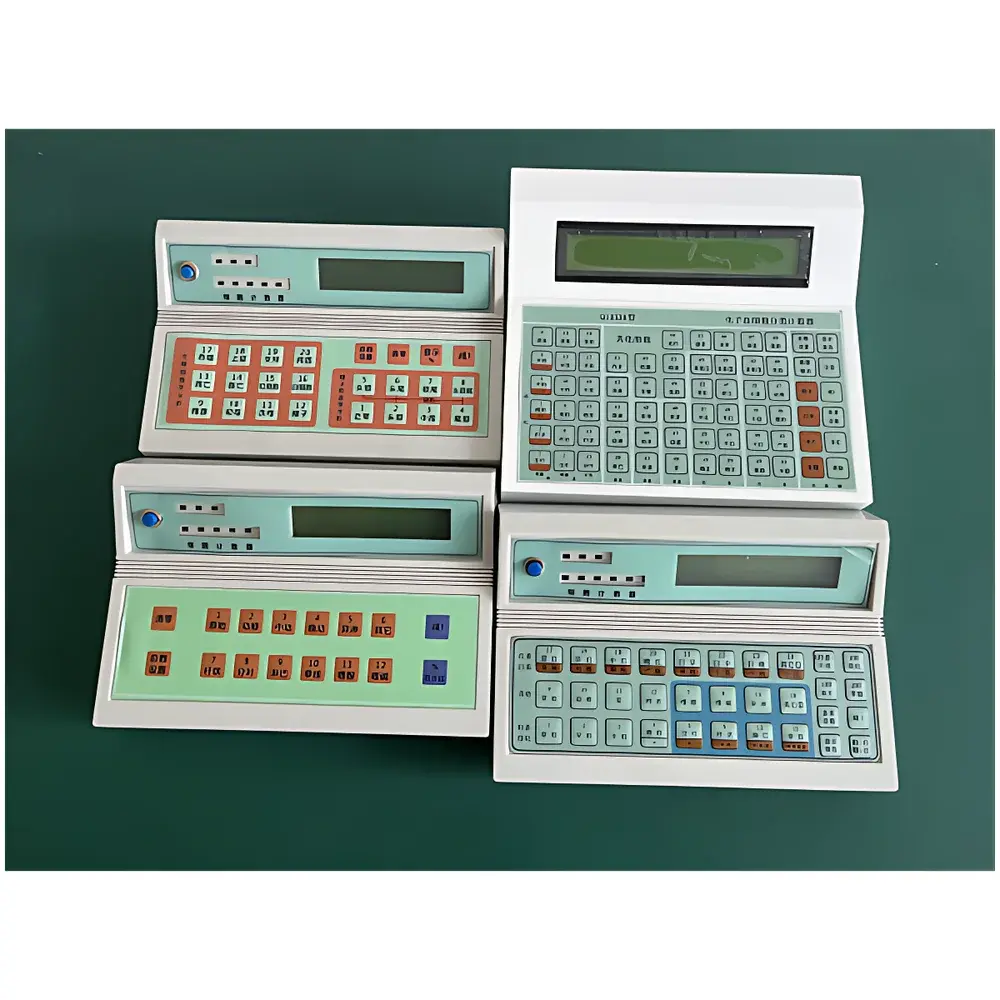
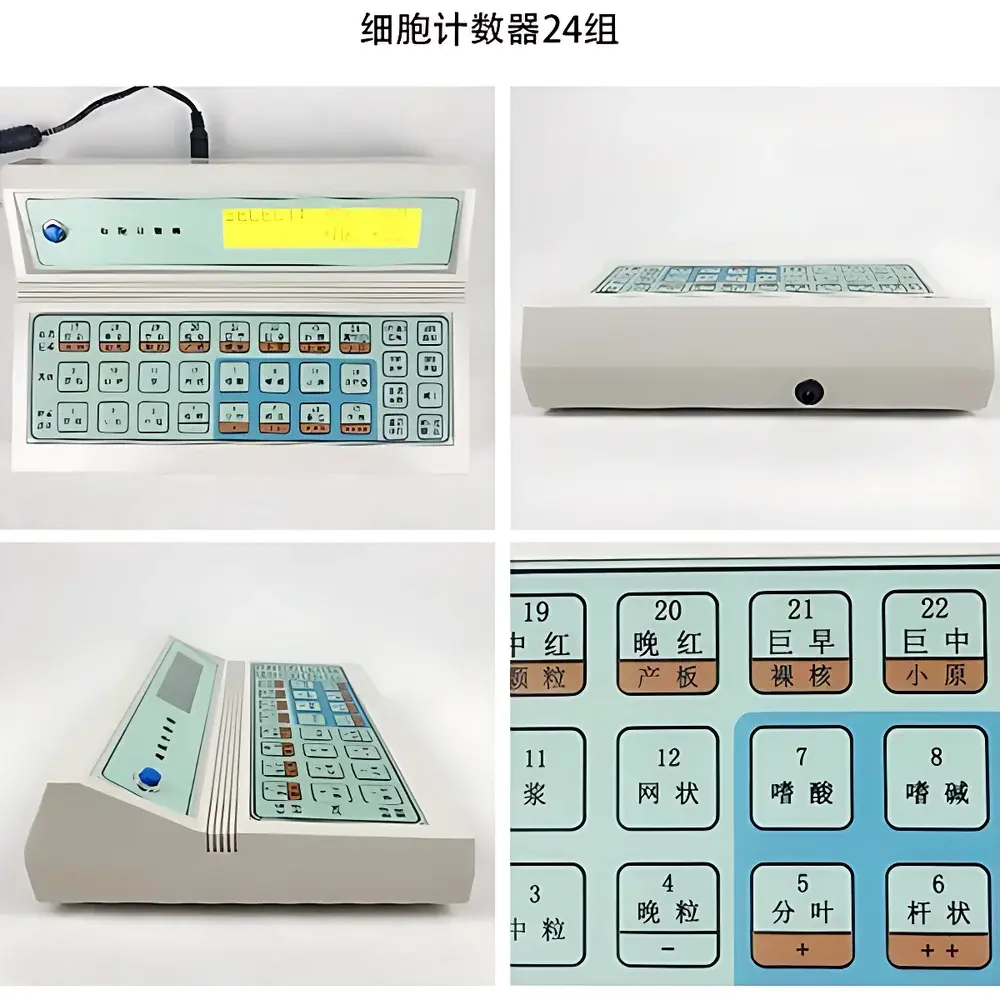
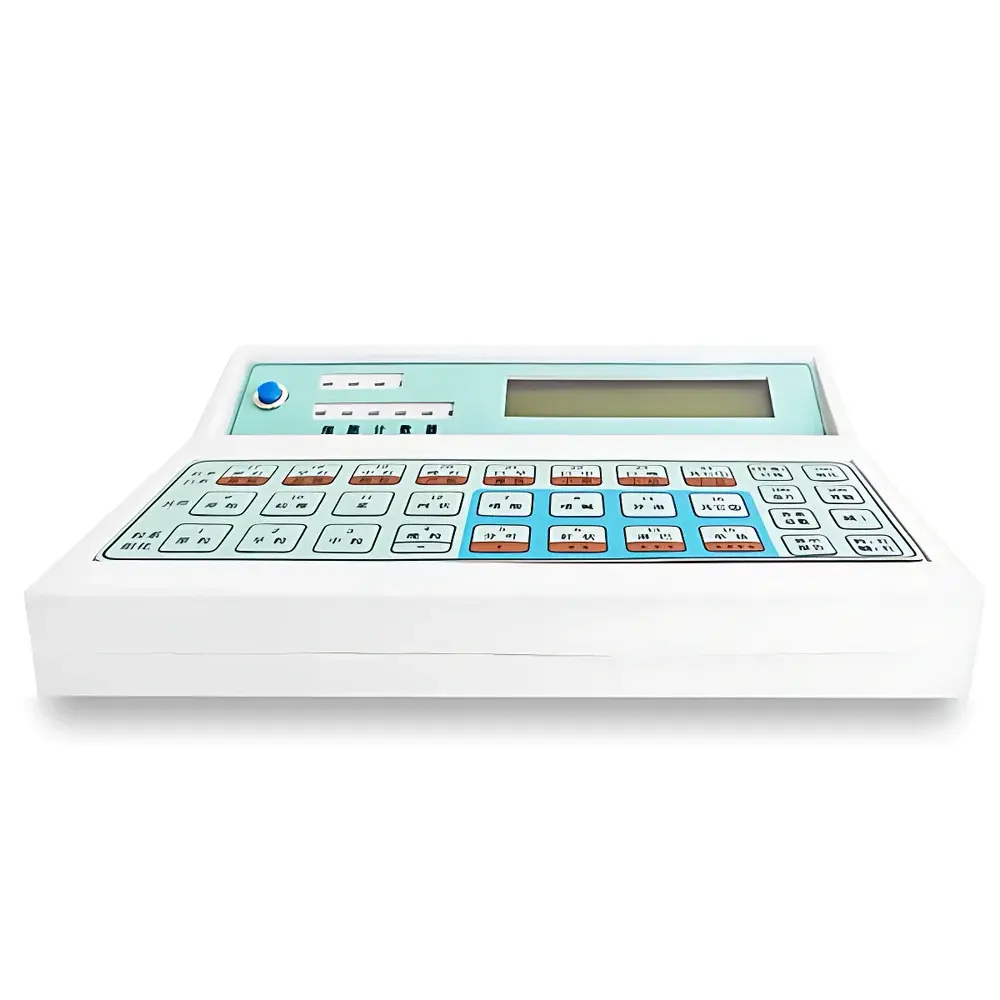
Chuanyuyiqi Qi3537 32-Cell Differential Hemocytometer
| Brand | Chuanyuyiqi |
|---|---|
| Origin | Shanghai, China |
| Model | Qi3537 |
| Power Supply | 12 V DC (with AC adapter) |
| Display | 16×2 character LCD |
| Counting Modes | Peripheral Blood Smear, Bone Marrow Aspirate, Megakaryocyte, Histochemical Staining |
| Cell Categories | 32 defined morphological types across granulocytic, erythroid, megakaryocytic, lymphoid, monocytic, and undifferentiated lineages |
| Counting Volume per Chamber | 9 × 10⁻³ mL |
| Chamber Dimensions | 9 large squares (each 0.1 mm³ / 1.0 × 10⁻⁴ mL) |
| Interface | RS232 serial port for data export |
| Software Features | PC-based analysis with patient ID, lab name, date/time stamp, annotation fields, pre-/post-treatment comparison, audit-ready session logging |
| Predefined Protocols | LEUC (14 leukocyte subtypes), MYEL (14 bone marrow cell types), RETI (reticulocyte + RBC dual-count), and HISTO (4-grade histochemical intensity scoring) |
Overview
The Chuanyuyiqi Qi3537 32-Cell Differential Hemocytometer is a manually operated, clinical-grade hematological counting instrument engineered for standardized morphological differential analysis of peripheral blood smears, bone marrow aspirates, megakaryocyte preparations, and histochemical-stained specimens. It operates on the principle of manual visual identification and tallying—aligned with internationally recognized microscopic hematology protocols—where trained technologists classify cells according to WHO and ICSH morphological criteria before entering counts via tactile keypad input. Unlike automated hematology analyzers, the Qi3537 supports direct, observer-controlled classification without algorithmic interpretation, ensuring full traceability of morphological decisions and compliance with GLP and ISO 15189–referenced manual review workflows. Its design reflects decades of clinical feedback from hematology laboratories, particularly in settings requiring rigorous documentation of blast morphology, dysplastic features, or rare cell populations not reliably resolved by impedance or flow cytometry.
Key Features
- Four validated counting modes: Peripheral Blood Smear (LEUC), Bone Marrow Aspirate (MYEL), Megakaryocyte Enumeration (MEGA), and Histochemical Reaction Grading (HISTO)
- Structured 32-cell taxonomy aligned with FAB and WHO classifications—including granulocytic (myeloblast, promyelocyte, myelocyte, metamyelocyte, band, segmented neutrophil, eosinophil, basophil), erythroid (proerythroblast, basophilic/ polychromatophilic/orthochromatic normoblast, megaloblast, other erythroblasts), megakaryocytic (megakaryoblast, promegakaryocyte, granular/mature/ naked-nucleus megakaryocyte, small megakaryocyte), lymphoid (lymphocyte, atypical lymphocyte), monocytic (monoblast, promonocyte, monocyte), plasma cell, reticular cell, and undifferentiated precursors
- Dual-chamber Neubauer-style counting platform with calibrated 0.1 mm³ large square volume (1.0 × 10⁻⁴ mL), conforming to ISO 22870 and CLSI H20-A3 specifications for manual cell enumeration
- 16×2 alphanumeric LCD display supporting real-time cumulative totals, percentage distribution, myeloid:erythroid (M:E) ratio, lineage-specific subtotals, and user-defined annotations
- RS232 interface enabling secure, timestamped data transfer to laboratory information systems (LIS) or dedicated PC software with audit trail functionality compliant with FDA 21 CFR Part 11 requirements for electronic records
- Four programmable protocols with configurable count limits (100–1000 for LEUC/MYEL; fixed 1000 for RETI), pulse-tone feedback per keypress, and automatic memory retention of final session data
Sample Compatibility & Compliance
The Qi3537 is compatible with standard glass microscope slides and coverslips used in clinical hematology laboratories. It supports Giemsa-, Wright-, May–Grünwald–Giemsa–, and Prussian blue–stained preparations, as well as histochemical stains including myeloperoxidase (MPO), esterase, periodic acid–Schiff (PAS), and iron staining. All counting procedures follow CLSI EP12-A2 guidelines for manual differential leukocyte counts and adhere to ISO 15189:2022 clause 5.7.2 regarding personnel competency, method validation, and result verification. The device itself requires no regulatory certification under FDA 510(k) or CE-IVDR, as it functions solely as a mechanical tallying aid—not an in vitro diagnostic (IVD) analyzer—thereby exempt from performance evaluation mandates while remaining fully deployable within GCP, GLP, and CAP-accredited environments.
Software & Data Management
The bundled Windows-compatible software enables structured capture of analytical metadata—including laboratory identifier, operator ID, specimen accession number, date/time stamp, clinical notes, and comparative analysis between baseline and follow-up differentials. Each exported dataset includes raw counts, calculated percentages, M:E ratio, and lineage proportions in CSV and PDF formats. Audit logs record all user actions, session start/end timestamps, and software version identifiers—satisfying traceability requirements under ISO/IEC 17025 and EU Annex 11 for computerized system validation. No cloud connectivity or remote access capabilities are implemented, preserving data sovereignty and minimizing cybersecurity exposure in regulated healthcare networks.
Applications
- Manual differential white blood cell counts in low-volume or resource-constrained laboratories where automation is unavailable or inappropriate
- Bone marrow morphology assessment for acute leukemia classification (e.g., AML vs. ALL blast quantification), myelodysplastic syndrome (MDS) scoring, and erythroid/megakaryocytic dysplasia evaluation
- Megakaryocyte enumeration in thrombocytopenia workups and myeloproliferative neoplasm (MPN) diagnostics
- Reticulocyte enumeration alongside mature RBC counts for reticulocyte index calculation and bone marrow response assessment
- Histochemical reaction intensity scoring (− to ++++) for enzyme activity profiling in hematologic malignancies
- Training and competency assessment of medical laboratory scientists in morphologic hematology
FAQ
Is the Qi3537 classified as an IVD device under regulatory frameworks?
No. It is a non-instrumental, manual tallying aid and does not perform analytical measurements or generate diagnostic conclusions.
Does the device support multi-language operation beyond English, Spanish, and French?
No. Only English, Spanish, and French language menus are embedded in firmware.
Can the counting chambers be autoclaved or chemically sterilized?
The Neubauer-imprinted glass chamber is borosilicate and compatible with ethanol wipe disinfection but not autoclaving due to thermal expansion mismatch with metal housing.
What is the calibration procedure for the Qi3537?
No field calibration is required; accuracy depends entirely on user adherence to standardized microscopy technique and proper coverslip application per CLSI H20-A3.
Is technical support available outside mainland China?
Yes—via authorized international distributors with documented service-level agreements covering firmware updates, spare parts, and remote troubleshooting.