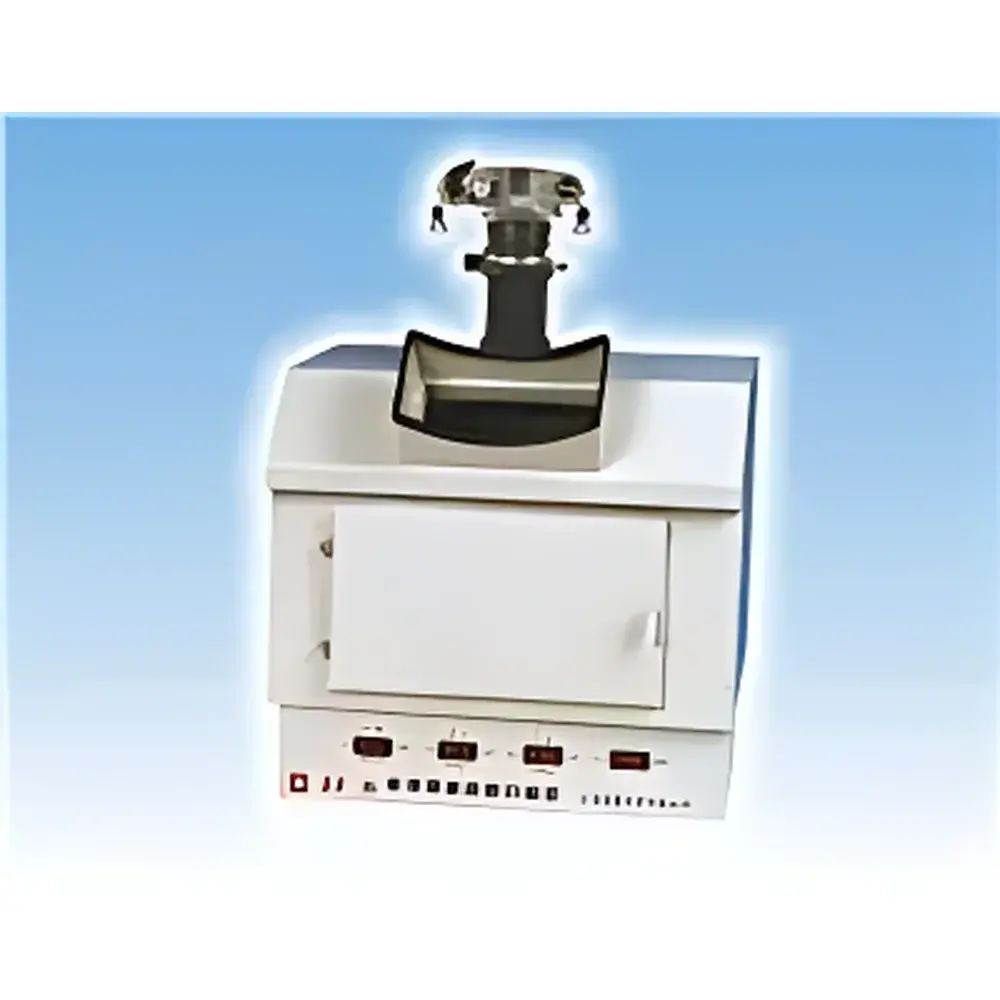
Chuding ZF-1 / ZF-6 UV Transilluminator and Reflector System – Benchtop Triple-Mode UV Analysis Station
| Key | Brand: Chuding Technology |
|---|---|
| Origin | Shanghai, China |
| Model | ZF-1 / ZF-6 |
| UV Wavelength | 302 nm |
| Transillumination Area | 200 × 150 mm |
| Input Power | AC 220 V ±10%, 50 Hz |
| Transillumination Power | 48 W / 64 W |
| White Illumination Power | 40 W |
| Dimensions (L×W×H) | 350 × 260 × 360 mm |
| UV Filter Material | High-transmission, UV-blocking safety glass (blocks >95% of stray UV) |
| Compliance | Designed for GLP-compliant documentation workflows |
Overview
The Chuding ZF-1 / ZF-6 UV Transilluminator and Reflector System is a benchtop triple-mode ultraviolet analysis station engineered for routine nucleic acid visualization, protein detection, thin-layer chromatography (TLC), and fluorescence-based analytical workflows in molecular biology, pharmaceutical quality control, and academic research laboratories. Operating at a fixed 302 nm UV wavelength—optimized to balance fluorophore excitation efficiency with minimized DNA/RNA photodamage—the instrument supports transillumination, reflected UV illumination, and white-light documentation within a single modular platform. Unlike enclosed darkroom-dependent systems, the ZF-6 integrates an integrated UV-shielded observation chamber with optical-grade safety glass that attenuates >95% of incidental UV radiation, enabling safe real-time sample assessment without dedicated darkroom infrastructure. Its open-lamp architecture and adjustable reflector arm allow precise spatial control over incident UV flux, supporting consistent fluorescence intensity across variable gel thicknesses and substrate types.
Key Features
- Triple operational mode: transillumination (for ethidium bromide–stained gels), reflected UV (for non-transparent substrates such as TLC plates or nitrocellulose membranes), and white-light illumination (for post-UV documentation and annotation)
- Stainless-steel housing with 302 nm UV-emitting lamps and precision-matched interference filters ensuring spectral fidelity and long-term irradiance stability
- Dedicated camera mounting interface compatible with standard DSLR/mirrorless bodies and macro lens configurations; includes threaded port for PCR-specific band-pass filter integration
- Adjustable UV reflector arm with calibrated height and angular positioning to optimize signal-to-noise ratio during reflection-mode analysis
- Integrated safety interlock system: automatic lamp cutoff upon chamber lid opening, compliant with IEC 61010-1 electrical safety standards for laboratory equipment
- Modular design permits field replacement of UV tubes and filter assemblies without recalibration or service technician intervention
Sample Compatibility & Compliance
The ZF-1/ZF-6 accommodates standard electrophoretic formats including agarose and polyacrylamide gels (up to 15 cm × 20 cm), silica gel TLC plates (e.g., Merck Silica Gel 60 F254), cellulose acetate membranes, and paper chromatography sheets. It supports common fluorescent dyes including ethidium bromide (EtBr), SYBR Safe, GelRed, and UV-active compounds such as tryptophan-containing proteins or riboflavin derivatives. While not certified to ISO/IEC 17025, the system is routinely deployed in laboratories maintaining GLP and GMP documentation practices. When paired with validated digital imaging hardware and audit-trail-capable software (e.g., ImageLab, AlphaView SA), it supports traceable data acquisition meeting FDA 21 CFR Part 11 requirements for electronic records and signatures.
Software & Data Management
The ZF-1/ZF-6 functions as a hardware platform—not a standalone imager—and requires external digital capture devices. It provides mechanical and optical interfaces optimized for integration with commercial gel documentation systems. Camera trigger synchronization is achieved via manual shutter release or external intervalometer input. All image metadata—including exposure duration, lamp mode, and filter configuration—must be manually logged or embedded via EXIF-compatible firmware in the host camera. For regulated environments, laboratories are advised to implement standardized operating procedures (SOPs) governing exposure time validation, UV intensity monitoring (using NIST-traceable radiometers), and periodic lamp output verification per ASTM E259-22 guidelines.
Applications
- DNA/RNA band localization and semi-quantitative estimation in agarose and PAGE gels
- Fluorescence-based detection of enzymatic activity (e.g., isozyme profiling via native PAGE)
- Pharmaceutical QC screening of UV-active small molecules (e.g., corticosteroids, alkaloids, vitamin B2)
- TLC plate development monitoring and Rf value determination under controlled UV exposure
- Pre-PCR product verification and amplicon sizing prior to downstream sequencing or cloning
- Educational demonstrations of nucleic acid staining principles and photophysical quenching effects
FAQ
What UV wavelength does the ZF-1/ZF-6 operate at, and why is 302 nm selected?
The system uses 302 nm UV-C light, which provides optimal excitation of common nucleic acid stains (e.g., EtBr, SYBR dyes) while reducing direct strand break induction compared to shorter wavelengths (e.g., 254 nm). This improves reproducibility in downstream applications such as cloning or sequencing.
Can the ZF-6 be used without the dark chamber?
Yes—but only in fully light-controlled environments. The chamber is not mandatory for operation, though its UV-blocking glass and enclosed geometry significantly improve contrast and operator safety during prolonged use.
Is the transilluminator compatible with SYBR Gold or other next-generation dyes?
Yes, provided excitation maxima align with 302 nm output. Users should verify quantum yield and photostability under extended exposure per manufacturer datasheets; recommended exposure times may differ from those established for EtBr.
How often should UV lamps be replaced?
Lamp output degrades gradually; annual replacement is recommended for routine QC labs. Radiometric verification using a calibrated UV sensor is advised every 6 months if quantitative intensity consistency is required.
Does the system include regulatory documentation for ISO 13485 or GMP audits?
No. As a Class I general-purpose lab instrument, it carries no formal regulatory certification. However, its mechanical design, labeling, and electrical safety compliance (IEC 61010-1) support inclusion in audited workflows when supported by lab-specific validation protocols.