
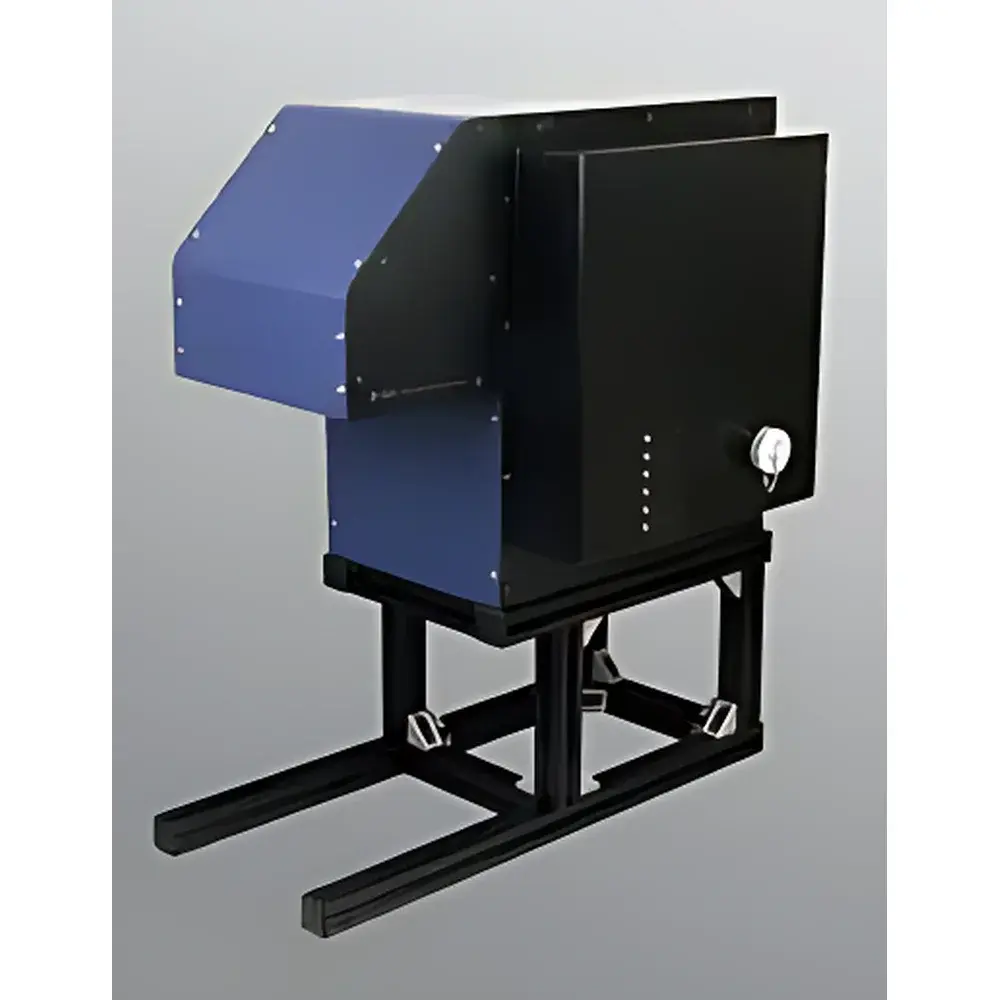
CNI Solar Simulator Model SS-50A for Photovoltaic Device Testing
| Brand | CNI |
|---|---|
| Origin | Beijing, China |
| Manufacturer Type | Direct Manufacturer |
| Product Origin | Domestic (China) |
| Model | SS-50A |
| Price Range | USD 14,000–42,000 |
| Operating Mode | Steady-State |
| Spectral Match (AM 1.5G) | 0.75–1.25 |
| Irradiance | 1200 W/m² |
| Beam Area | 50 mm × 50 mm |
| Spatial Uniformity | <5% |
| Intensity Stability (RMS) | <0.5% |
| Beam Collimation | ±4° (half-angle) |
| Classification | IEC 60904-9:2020 Class AAB |
| JIS C 8912 | 2013 Class AAB |
Overview
The CNI SS-50A Solar Simulator is a laboratory-grade steady-state illumination source engineered to replicate the spectral distribution, spatial uniformity, and temporal stability of terrestrial sunlight under standard AM 1.5G conditions (1000 W/m², 25 °C cell temperature). It operates on the principle of broadband xenon arc lamp emission, coupled with precision optical filtering and collimating optics, to deliver spectrally matched irradiance compliant with international photovoltaic calibration standards. Designed for reproducible, traceable performance in R&D and quality control environments, the SS-50A enables quantitative characterization of photovoltaic (PV) devices—including crystalline silicon (c-Si), multicrystalline silicon (mc-Si), thin-film (a-Si, CIGS, CdTe), dye-sensitized solar cells (DSSCs), organic photovoltaics (OPVs), and III–V multijunction cells—without dependence on outdoor insolation or weather variability.
Key Features
- Class AAB spectral match per IEC 60904-9:2020, ASTM E927-22, and JIS C 8912:2013—ensuring fidelity across UV, visible, and near-IR bands (300–1200 nm)
- Steady-state output with intensity stability better than 0.5% RMS over 30 minutes, validated via calibrated reference cell and NIST-traceable pyranometer
- Optimized collimation system delivering beam divergence ≤±4° (half-angle), minimizing angular dependence errors during IV curve measurement
- Uniform 50 mm × 50 mm irradiation field with <5% spatial non-uniformity (measured per ISO 9050 grid method)
- Integrated electronic shutter with TTL trigger compatibility for synchronized data acquisition in pulsed or gated measurement protocols
- Digital timer logging cumulative lamp operating hours, enabling predictive maintenance and compliance with lamp lifetime specifications (typically 1,000–1,500 h for spectral integrity)
- Front-panel interface and RS-232/USB connectivity for remote control and integration into automated test stations
Sample Compatibility & Compliance
The SS-50A accommodates standard PV device formats up to 50 mm × 50 mm active area, including mini-modules, single-junction cells, and tandem subcells mounted on probe stations or environmental chambers. Its optical design minimizes thermal load on samples through optimized IR rejection filters, reducing localized heating that could skew efficiency measurements. All performance claims are verified under controlled ambient conditions (22 ±2 °C, <60% RH) and conform to GLP-aligned documentation practices. The system supports audit-ready operation in ISO/IEC 17025-accredited laboratories and meets prerequisite lighting requirements for ASTM E1036 (electrical performance testing) and IEC 61215 (qualification testing of terrestrial PV modules).
Software & Data Management
While the SS-50A operates as a standalone hardware platform, its digital interface enables seamless integration with third-party IV curve tracers, quantum efficiency systems, and LIV (light-current-voltage) test software. Firmware supports SCPI command syntax for scripting-based automation, facilitating repeatable test sequences across multiple samples. Data logs—including irradiance drift, shutter actuation timestamps, and runtime metrics—are exportable in CSV format for traceability. When deployed in regulated environments, the simulator’s deterministic behavior and absence of proprietary closed-loop control align with FDA 21 CFR Part 11 principles for electronic records, provided external data acquisition systems implement appropriate audit trails and user access controls.
Applications
- Calibration of reference cells and secondary standards against primary radiometric references
- Current–voltage (I–V) characterization of novel absorber materials under standardized illumination
- Long-term light soaking studies to assess photo-stability and degradation kinetics of perovskite and organic semiconductors
- Quantum efficiency (QE) and external quantum efficiency (EQE) mapping with monochromator-coupled setups
- Validation of anti-reflective coating performance and spectral response shifts under realistic illumination spectra
- Training and proficiency testing in PV metrology laboratories adhering to national and international interlaboratory comparison protocols
FAQ
What calibration certificates are supplied with the SS-50A?
A factory-issued spectral irradiance report (covering 300–1200 nm at 5 nm resolution) and spatial uniformity map are included. NIST-traceable calibration of the integrated reference photodiode can be arranged separately upon order.
Is the SS-50A compatible with environmental chambers?
Yes—the unit features a front-access optical port with Ø50 mm clear aperture and optional water-cooled housing for integration into temperature- and humidity-controlled enclosures.
How often must the xenon lamp be replaced to maintain Class AAB compliance?
Lamp replacement is recommended every 1,000–1,200 operational hours; spectral drift beyond ±5% deviation from initial AM 1.5G reference is the primary indicator for replacement.
Can the irradiance level be adjusted below 1000 W/m²?
Yes—continuous analog dimming (20–100% of nominal output) is supported via external 0–10 V control signal, preserving spectral match within Class AAB limits down to 200 W/m².
Does the system meet requirements for ISO/IEC 17025 accreditation?
The SS-50A provides the metrological foundation required by Clause 6.4.10 (Equipment Verification) when used with documented procedures, periodic verification using transfer standards, and uncertainty budgets covering spectral mismatch, non-uniformity, and temporal instability.







