
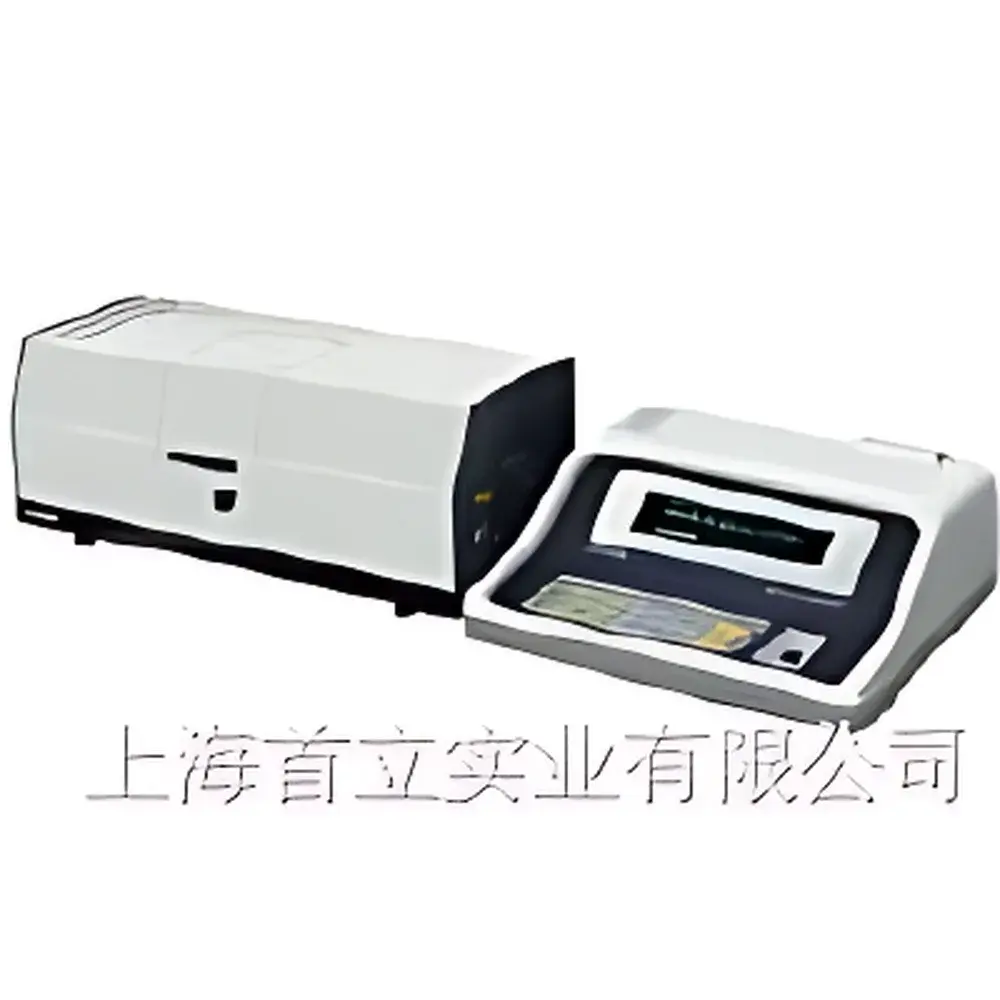
COH-300A Color, Oil, and Turbidity Measurement System
| Origin | Japan |
|---|---|
| Manufacturer Type | Authorized Distributor |
| Origin Category | Imported |
| Model | COH-300A |
| Pricing | Upon Request |
Overview
The COH-300A Color, Oil, and Turbidity Measurement System is a benchtop optical analyzer engineered for high-reproducibility quantitative assessment of colorimetric, petroleum-based, and turbidimetric properties in liquid and semi-transparent samples. It operates on dual optical principles: (1) spectrophotometric color measurement using CIE-standard illuminants and observer functions (2° and 10°), and (2) nephelometric turbidity detection based on 90° scattered light intensity relative to a formazin calibration standard. The system integrates a stabilized 12 V / 4 A halogen lamp as its broadband visible-light source (380–780 nm), coupled with precision apertures (12 mm beam diameter, 25 mm incident port) to ensure consistent illumination geometry across all measurement modes. Designed specifically for compliance-driven laboratories in petrochemical, pharmaceutical, paint & coating, and quality control environments, the COH-300A delivers traceable, standardized results aligned with major international test methods.
Key Features
- Multi-parameter optical analysis platform supporting 21 distinct color and turbidity metrics including Saybolt Color, ASTM Color, Hazen (APHA), Pt-Co, Gardner, YXYZ, CIELAB (L*a*b*), ΔE*ab, ΔL*ab, Δa*ab, Δb*ab, CIELCH (L*C*H*), Yxy, YI (ASTM D1925), Whiteness (W, WB), and turbidity units (NTU, FNU, FAU)
- Optical repeatability of ΔE*ab ≤ 0.1 when measured against certified white reference tile under controlled ambient conditions
- Dual-unit modular architecture: separate optical unit (740 × 220 × 195 mm, 13 kg) and measurement unit (350 × 360 × 110 mm, 6 kg) for flexible installation and thermal isolation
- Integrated RS-232C serial interface compliant with EIA/TIA-232-F standards for bidirectional communication with LIMS or custom data acquisition software
- Optional built-in low-noise thermal printer enabling direct hardcopy output of measurement reports with timestamp, sample ID, and operator code
- VFD (Vacuum Fluorescent Display) user interface offering high-contrast, wide-view-angle readouts under variable laboratory lighting conditions
Sample Compatibility & Compliance
The COH-300A accommodates transparent to semi-opaque liquids in standard 10 mm, 20 mm, or 50 mm pathlength cuvettes (quartz or borosilicate), as well as cylindrical sample cells for petroleum products per ASTM D1500 and JIS K 2580. Its optical design supports both transmission (total, parallel, and diffuse transmittance) and scatter-based measurements without mechanical reconfiguration. Regulatory alignment includes full support for JIS K 0101 (turbidity), JIS K 6714/6717/6718/6745/7105 (polymer and resin clarity), JIS Z 8722 (colorimetry), ASTM D 156 (Saybolt color), ASTM D 1500 (ASTM color), ASTM D 6045 (automated color), and ISO 7027 (nephelometric turbidity). Instrument validation documentation conforms to GLP and GMP requirements, and raw data logs include audit-trail-capable metadata (date/time, operator ID, calibration status, environmental temperature).
Software & Data Management
While the COH-300A operates autonomously via front-panel controls, its RS-232C interface enables integration with third-party laboratory software platforms. Standard ASCII-formatted output includes measurement values, units, method identifiers, and instrument configuration flags—structured for seamless ingestion into Excel, LabArchives, or validated chromatography/data systems. All stored calibration curves (e.g., formazin NTU reference, white tile reflectance) are protected by password-locked EEPROM memory. Firmware updates are performed via serial upload using manufacturer-provided utilities compliant with IEC 62304 Class B software safety requirements. No proprietary PC software is bundled; the system adheres to open-protocol interoperability principles.
Applications
- Petrochemical QC: Routine monitoring of diesel, lubricating oils, and solvents per ASTM D1500 and JIS K 2580
- Pharmaceutical excipient testing: Clarity and color evaluation of injectables and oral solutions per USP and EP 2.2.17
- Coatings & inks: Batch-to-batch consistency verification of pigment dispersion stability and hue deviation
- Food & beverage R&D: Quantitative assessment of juice cloudiness (turbidity), syrup browning (YI), and packaging material yellowness
- Water treatment labs: Verification of filtration efficiency through low-range NTU measurements in polished effluents
- Plastics & polymers: Haze and luminous transmittance validation per ASTM D1003 and JIS K 7105
FAQ
Does the COH-300A comply with FDA 21 CFR Part 11 requirements?
The instrument itself does not embed electronic signature or audit-trail functionality; however, its RS-232C data export format and time-stamped reporting support integration into Part 11-compliant LIMS or ELN systems when deployed within a validated infrastructure.
What calibration standards are required for routine operation?
Primary calibration requires NIST-traceable formazin suspensions (for turbidity), certified white reflectance tiles (for color), and ASTM liquid color standards (e.g., cobalt chloride/potassium dichromate solutions). Annual recalibration by an ISO/IEC 17025-accredited service provider is recommended.
Can the COH-300A measure opaque or highly viscous samples?
No—it is optimized for transparent to translucent liquids with optical path lengths up to 50 mm. Opaque or non-homogeneous suspensions require prior centrifugation, filtration, or dilution to meet measurement validity criteria defined in JIS K 0101 and ISO 7027.
Is USB or Ethernet connectivity available as an option?
No—only RS-232C is supported per original equipment specification. USB-to-serial adapters may be used, but are not validated or warranted by the manufacturer.
What is the typical warm-up time before stable photometric readings?
Minimum 30 minutes is required for halogen lamp spectral stabilization and thermal equilibrium of optical components, as specified in the operator manual’s pre-measurement protocol section.





