
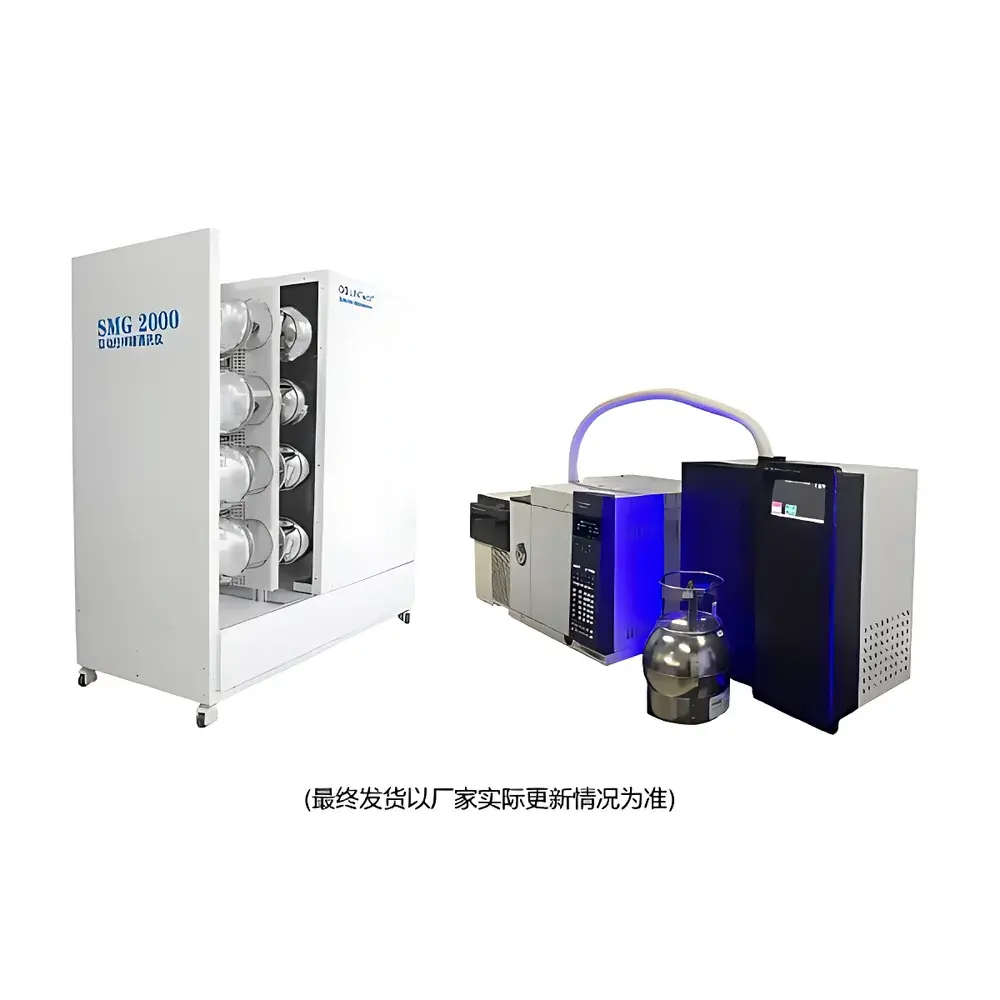
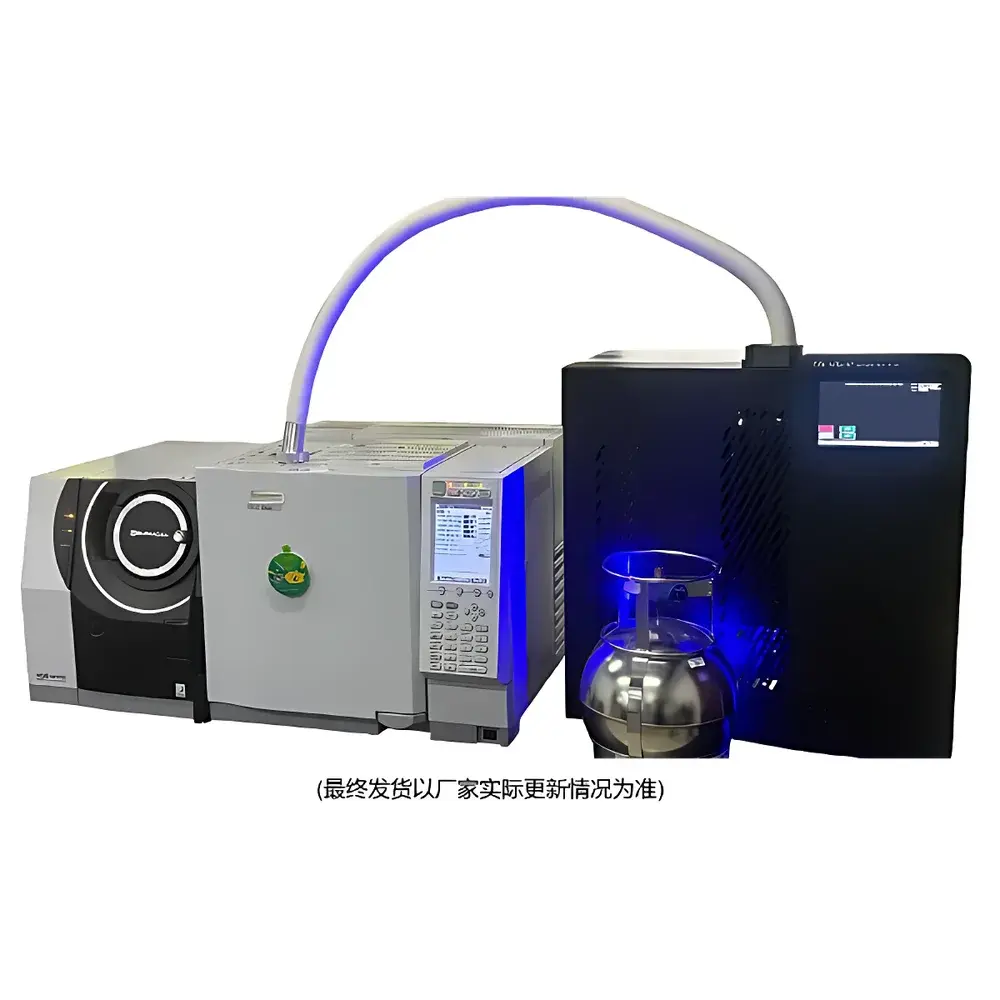
Colintech AutoTD OLS PLUS Atmospheric Pre-concentrator
| Brand | Colintech |
|---|---|
| Origin | Sichuan, China |
| Manufacturer Type | Original Equipment Manufacturer (OEM) |
| Product Category | Domestic |
| Model | AutoTD OLS PLUS |
| Pricing | Available Upon Request |
Overview
The Colintech AutoTD OLS PLUS Atmospheric Pre-concentrator is a fully automated, cryogen-free thermal desorption system engineered for high-fidelity pre-concentration of volatile organic compounds (VOCs) and semi-volatile organic compounds (SVOCs) from ambient air, canister (SUMMA), or Tedlar bag samples. It operates on proprietary solid-state thermoelectric cooling technology—eliminating the need for liquid nitrogen or mechanical refrigeration—and achieves a minimum cold trap temperature of −60 °C, enabling efficient trapping of low-boiling-point analytes including C2 hydrocarbons (e.g., ethane, ethylene), methyl mercaptan, formaldehyde, and other highly volatile sulfur- and oxygen-containing species. The instrument implements multi-stage cryofocusing with selective condensation and differential desorption to achieve simultaneous removal of major inorganic interferences—H2O, CO2, N2, and O2—while preserving quantitative recovery of both polar (e.g., aldehydes, ketones, carboxylic acids) and non-polar (e.g., BTEX, PAHs), low- and high-boiling analytes. Designed for compliance with regulatory atmospheric monitoring workflows, it supports unattended operation in fixed-site laboratories and mobile environmental monitoring platforms.
Key Features
- Solid-state thermoelectric cooling: No liquid nitrogen or external chillers required; cold trap temperature range: −60 °C to 400 °C (AutoTD OLS PLUS); stable at ±0.5 °C over full range
- Patented multi-stage water and inert gas removal (CN ZL 201811482661.7): Selective cryo-trapping architecture minimizes co-condensation losses and ensures >95% average recovery across VOC/SVOC polarity and volatility spectra
- Precision mass flow control: Integrated digital mass flow controller (MFC) enables accurate, repeatable sample draw volumes (±1% full scale), critical for EPA-compliant quantitation
- Universal GC/GC–MS compatibility: Standardized 1/8″ and 1/4″ Swagelok® interfaces; programmable transfer line temperature up to 400 °C with active insulation
- Intuitive 7-inch capacitive touchscreen HMI: Supports dual-language UI (English/Chinese), user-level password protection, and storage of up to 10 validated methods with sequence scheduling
- Remote operation capability: Optional Ethernet/Wi-Fi module enables browser-based monitoring and method execution via LAN or secure cloud interface (requires external network configuration)
- Embedded diagnostics: Automated leak test (pressure decay verification), real-time sensor health monitoring, and fault-triggered audible/visual alerts with event logging
- Modular expansion readiness: Designed for seamless integration with dynamic dilution modules, heart-cutting cryo-traps, SUMMA canister autosamplers (up to 120-position), and canister cleaning stations
Sample Compatibility & Compliance
The AutoTD OLS PLUS is validated for direct analysis of whole-air samples collected in electropolished stainless-steel SUMMA canisters, SilcoCan® vessels, and fluorinated ethylene propylene (FEP) bags. It meets the instrumental performance criteria specified in China’s national and industry standards including HJ 759–2023 (“Determination of Volatile Organic Compounds in Ambient Air — Thermal Desorption/Gas Chromatography–Mass Spectrometry Method”), HJ 1078–2019 (“Determination of Volatile Organic Compounds in Ambient Air — Adsorption–Thermal Desorption/Gas Chromatography–Mass Spectrometry Method”), and GB/T 14678–1993 (“Air Quality — Determination of Sulfur Compounds — Gas Chromatography”). Its analytical robustness supports GLP-aligned laboratory practices, with audit-trail-capable method logging and timestamped operational records suitable for internal QA/QC review and regulatory inspection preparation.
Software & Data Management
Instrument control and method development are performed through embedded firmware with ISO/IEC 17025-aligned data integrity safeguards. All method parameters—including trap temperatures, desorption ramp rates, carrier gas flows, and bake-out profiles—are stored with user ID, date/time stamp, and version metadata. Sequence logs include start/stop times, pressure transients, temperature stability windows, and diagnostic flags. Raw method files are exportable in CSV and XML formats for LIMS integration. Optional software upgrade provides 21 CFR Part 11-compliant electronic signatures, role-based access control, and electronic audit trail generation for regulated environments.
Applications
- Ambient and indoor air quality monitoring per national emission inventories and urban smog studies
- Plant emission profiling: biogenic VOCs (isoprene, monoterpenes), agricultural odorants (methanethiol, dimethyl sulfide), and fermentation volatiles
- Food and fragrance research: headspace analysis of roasted coffee, fermented dairy, essential oils, and processed meats
- Industrial hygiene assessments: workplace exposure evaluation for solvents, adhesives, and coating formulations
- Method development for emerging contaminants: halogenated VOCs, oxygenated VOCs (OVOCs), and nitroaromatics in source apportionment studies
FAQ
Does the AutoTD OLS PLUS require liquid nitrogen or external refrigeration?
No—it uses solid-state thermoelectric cooling exclusively, reducing operational complexity and eliminating cryogen handling hazards.
What is the typical recovery rate for polar compounds such as acetaldehyde or formic acid?
Recovery exceeds 92% under optimized trapping conditions (−60 °C, 10 min dwell), verified using certified standard gas mixtures traceable to NIM (National Institute of Metrology, China).
Can the system be integrated into an existing GC–MS workflow without hardware modification?
Yes—standardized pneumatic and electrical interfaces ensure plug-and-play compatibility with Agilent, Thermo Fisher, Shimadzu, and PerkinElmer GC and GC–MS platforms.
Is method validation support available for regulatory submissions?
Colintech provides application notes, system suitability test protocols, and IQ/OQ documentation templates aligned with CNAS-CL01 and ISO/IEC 17025 requirements.
What maintenance intervals are recommended for long-term reliability?
Cold trap cleaning every 200 runs; MFC calibration annually or after 500 h of cumulative operation; full system performance verification semiannually.



