
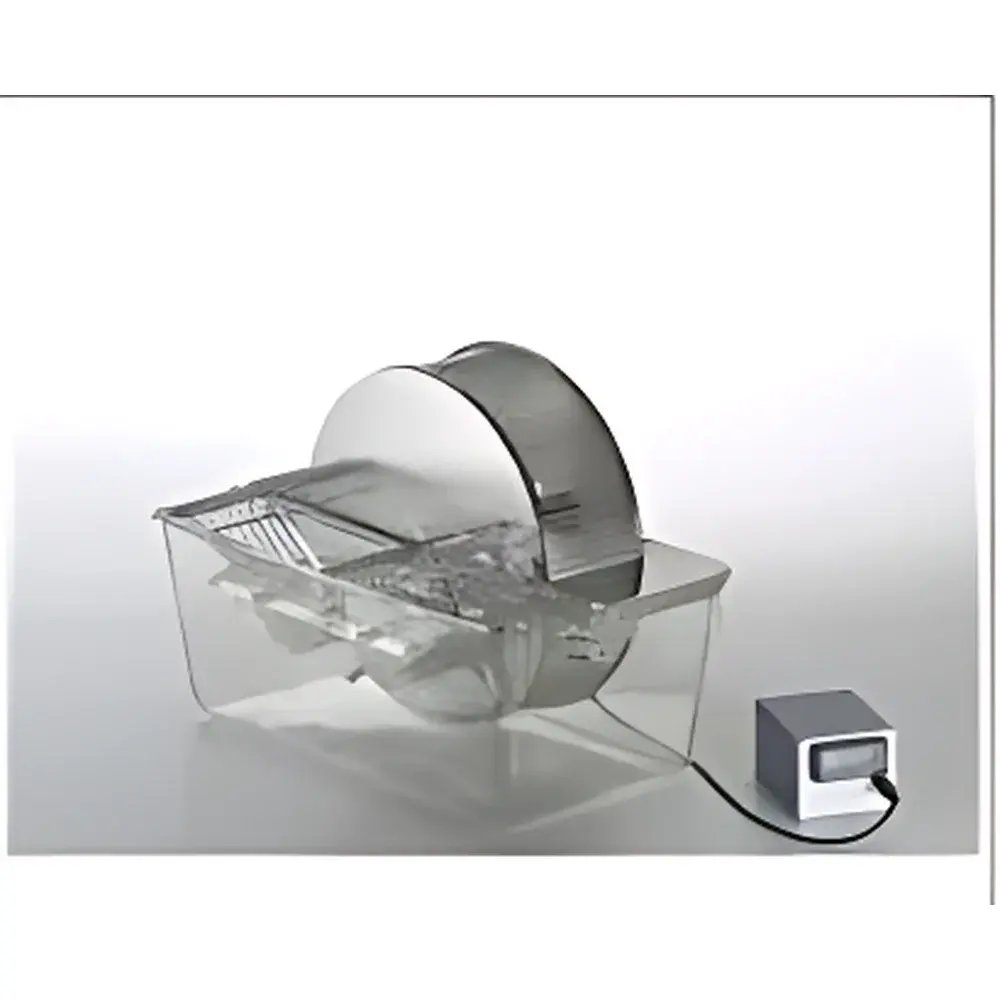
Columbus Instruments Rotating Wheel System for Rodent Fatigue and Exercise Physiology Studies
| Origin | USA |
|---|---|
| Supplier Type | Authorized Distributor |
| Import Status | Imported |
| Model | Rotating Wheel System |
| Pricing | Available Upon Request |
Overview
The Columbus Instruments Rotating Wheel System is a purpose-built, non-invasive behavioral assay platform engineered for quantitative assessment of voluntary and forced locomotor endurance, fatigue onset, and exercise-induced physiological adaptation in rodents—primarily mice and rats. Unlike traditional rotarod or treadmill-based paradigms, this system leverages the innate climbing motivation of murine subjects to drive sustained wheel rotation under controlled mechanical resistance and programmable acceleration profiles. It operates on a validated paradigm of progressive load-bearing wheel running, enabling precise modulation of workload via adjustable rotational inertia, braking torque, and real-time speed feedback. The system is widely deployed in preclinical pharmacology, neurobehavioral toxicology, skeletal muscle physiology, and metabolic disease research where reproducible, graded physical challenge is required without confounding stressors such as water immersion (swim test) or forced aversive stimuli (e.g., electric grid on treadmills). Its design conforms to NIH guidelines for humane rodent exercise protocols and supports compliance with institutional animal care and use committee (IACUC) requirements for minimally stressful functional testing.
Key Features
- Modular rotating wheel chamber with optically isolated infrared beam detection for accurate step-counting and rotation tracking at 10-ms temporal resolution
- Programmable acceleration ramping (0–40 rpm in 0.1-rpm increments) and constant-speed modes, with user-defined duration, rest intervals, and recovery phases
- Integrated torque sensor and motor feedback loop enabling real-time workload calibration (0–250 g·cm resistance range) to model submaximal to exhaustive exercise intensities
- Individual subject identification via RFID-enabled wheel access control, supporting longitudinal cohort studies with automated session logging
- IP65-rated enclosure with HEPA-filtered ventilation, temperature- and humidity-stabilized environment (22 ± 1°C, 50 ± 5% RH), and noise-dampened operation (<45 dB(A))
- CE-marked electrical architecture compliant with IEC 61000-6-3 (EMC) and IEC 61000-6-2 (immunity) standards
Sample Compatibility & Compliance
The system accommodates standard C57BL/6, BALB/c, CD-1, and Sprague-Dawley strains (body weight range: 18–35 g for mice; 200–450 g for rats). Wheel diameter (30 cm), track width (8 cm), and surface texture are optimized per NIH-recommended ergonomic parameters for murine gait biomechanics. All hardware and firmware comply with ISO 14155:2020 (clinical investigation of medical devices) principles adapted for preclinical instrumentation, and data acquisition workflows support ALF (Animal Laboratory Framework) metadata tagging for FAIR (Findable, Accessible, Interoperable, Reusable) data practices. The system meets GLP-aligned documentation requirements—including audit trails, electronic signatures, and version-controlled protocol storage—for regulatory submissions under FDA Guidance for Industry (2022) on Nonclinical Study Standards.
Software & Data Management
Control and analysis are executed via Columbus Instruments’ proprietary WheelTrack™ v4.2 software, validated per GAMP5 Category 3 criteria. The application provides real-time visualization of revolutions per minute (RPM), cumulative distance (m), peak torque (g·cm), latency to fatigue (defined as ≥3 consecutive 5-s intervals with <10% baseline RPM), and inter-session performance trends. Raw time-series data export is supported in CSV, HDF5, and NWB 2.6 formats for integration with MATLAB, Python (SciPy/Neo), and commercial platforms including EthoVision XT and Spike2. Audit logs record all parameter changes, user logins, and calibration events in accordance with 21 CFR Part 11-compliant electronic record retention protocols.
Applications
- Evaluation of anti-fatigue compounds (e.g., AMPK modulators, mitochondrial uncouplers) via endurance time extension and post-exercise lactate clearance kinetics
- Neuromuscular toxicity screening of chemotherapeutics and CNS-active agents using fatigue threshold shifts and gait symmetry metrics
- Mechanistic studies of sarcopenia, Duchenne muscular dystrophy (mdx mice), and type 2 diabetes models under chronic exercise regimens
- Functional validation of gene-editing outcomes (e.g., CRISPR-Cas9 knock-ins) in exercise-responsive signaling pathways (PGC-1α, FNDC5/irisin)
- Pharmacodynamic profiling of myostatin inhibitors and β2-adrenergic agonists across dose-response curves
FAQ
Is the Rotating Wheel System compatible with simultaneous physiological telemetry (e.g., ECG, core temperature)?
Yes—integrated TTL synchronization ports enable hardware-triggered acquisition from third-party telemetry systems (e.g., Data Sciences International DSI, EMKA Technologies).
Can multiple wheels be networked and controlled from a single workstation?
Up to 16 independent wheel units may be daisy-chained via Ethernet (TCP/IP) with centralized scheduling and cross-unit statistical comparison in WheelTrack™.
Does the system support automated food/water restriction protocols during acclimation?
No—food/water access must be managed externally per IACUC-approved husbandry protocols; however, the software includes configurable “acclimation mode” with low-torque, no-time-limit sessions.
What maintenance is required for long-term operational stability?
Biannual calibration of torque sensors and optical encoders is recommended; all mechanical components are rated for >10,000 hours MTBF under continuous operation.
Is training provided for protocol development and data interpretation?
Columbus Instruments offers on-site and virtual SOP workshops, including sample datasets for benchmarking against published literature values (e.g., J Appl Physiol 2021;130:1205–1216).
Related Products




