
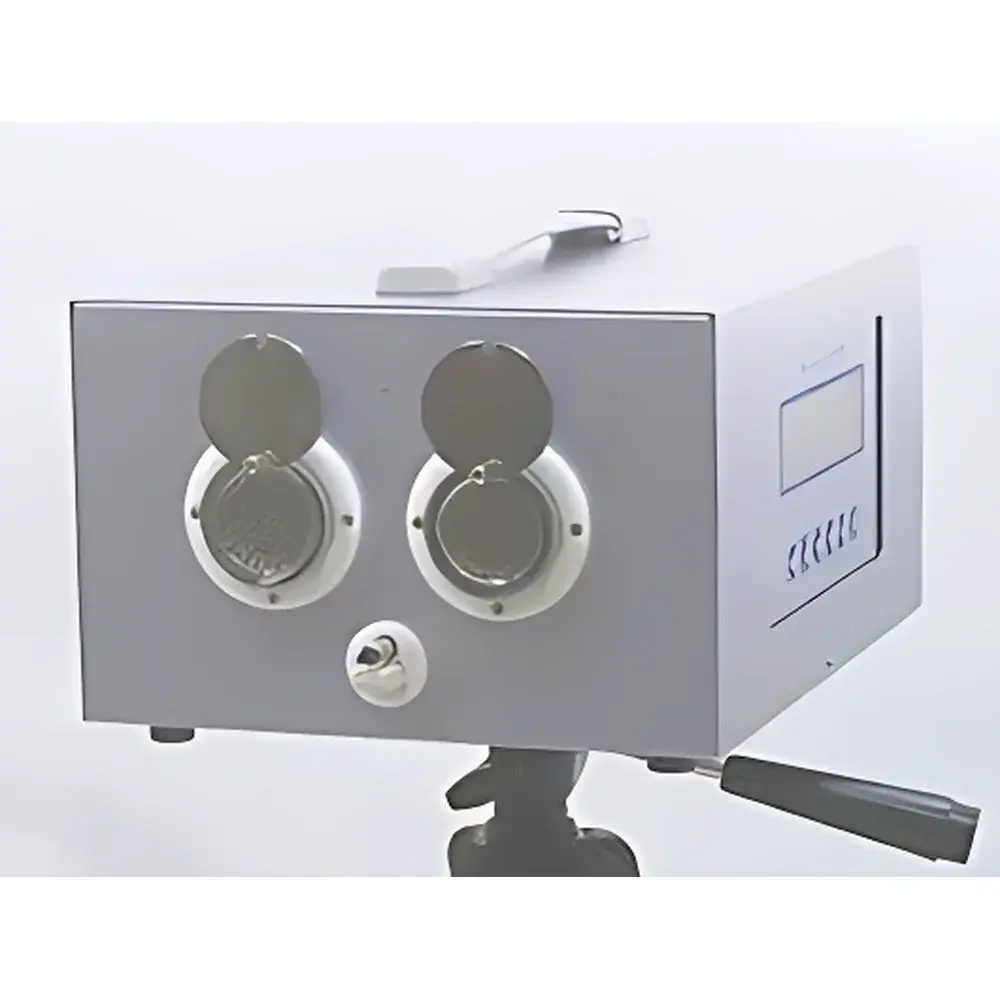

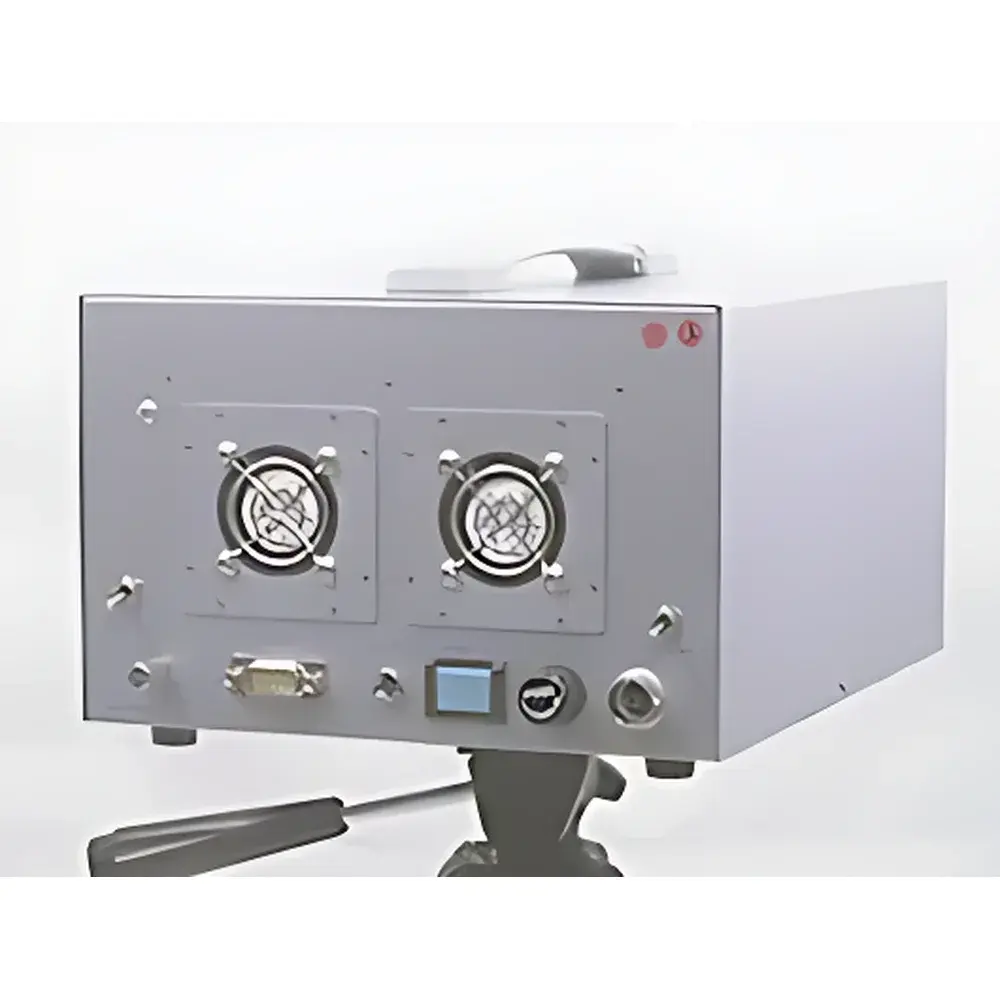
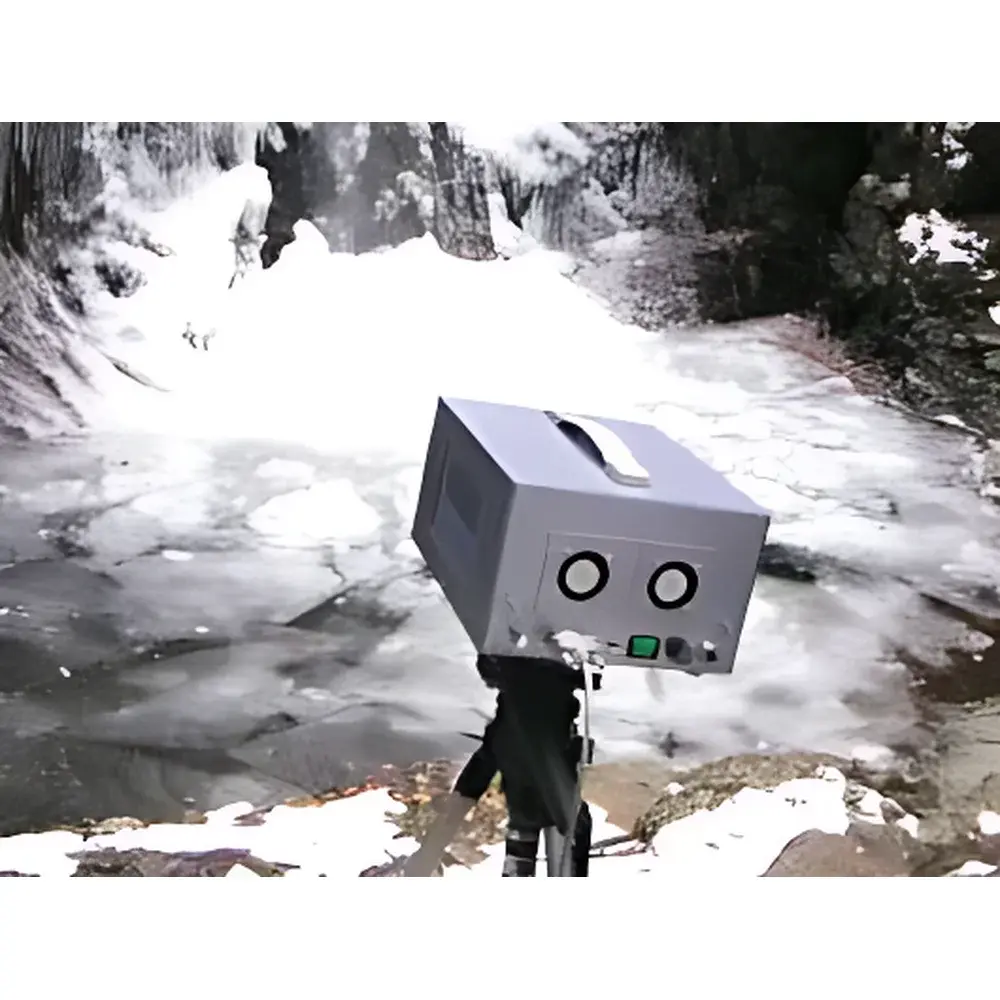
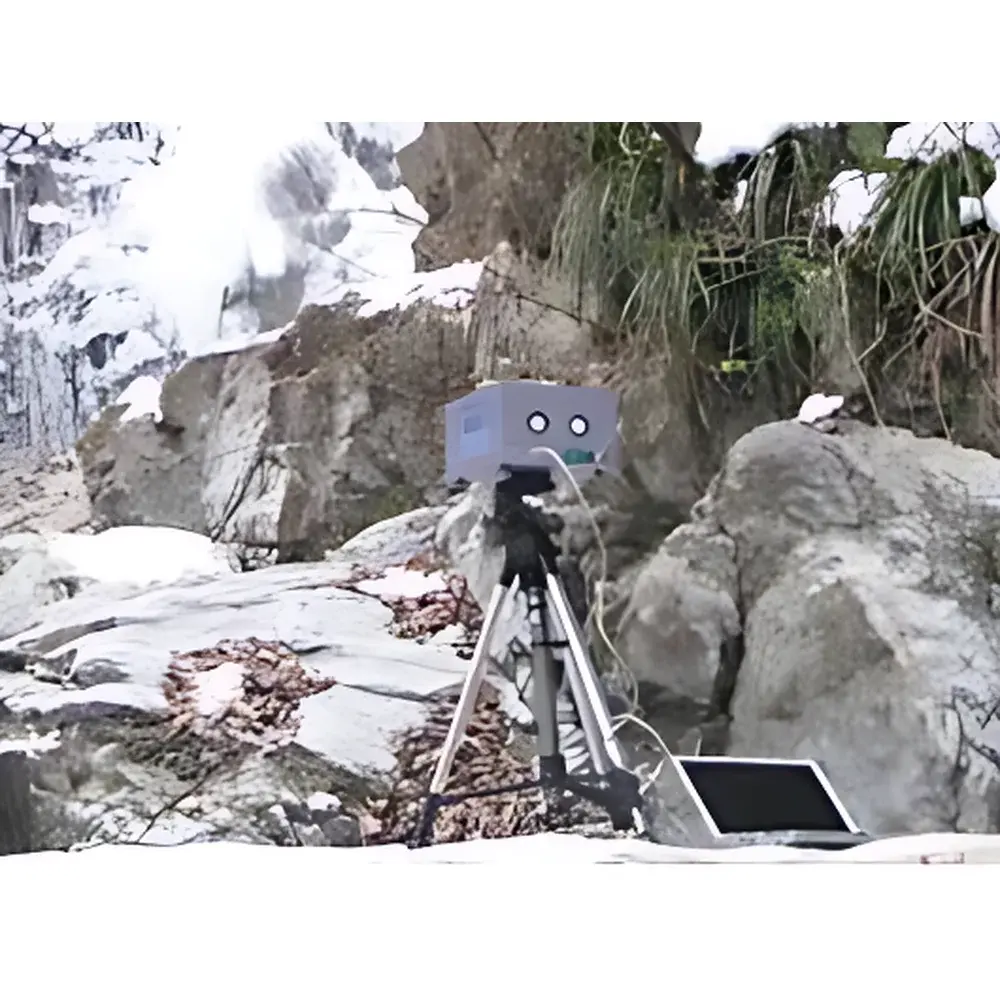
COM3800 Atmospheric Positive & Negative Air Ion Analyzer
| Origin | Japan |
|---|---|
| Manufacturer Type | Authorized Distributor |
| Origin Category | Imported |
| Model | COM3800 |
| Pricing | Upon Request |
Overview
The COM3800 Atmospheric Positive & Negative Air Ion Analyzer is a precision-grade, dual-channel ion measurement instrument engineered for high-fidelity quantification of airborne small air ions (both positive and negative) in environmental, occupational health, and research settings. It operates on the Gerdien cylindrical capacitor principle — a method standardized under JIS B 9929 (Japanese Industrial Standard for Measurement of Air Ion Density) and widely recognized for its superior spatial uniformity, wind resistance, and minimal field distortion compared to planar electrode configurations. The instrument features a coaxial double-cylinder electrode assembly fabricated to exacting tolerances, ensuring electrostatic field homogeneity across the sampling volume. This design enables stable, reproducible measurements even under non-laminar airflow conditions — a critical requirement for outdoor field deployment, cleanroom monitoring, and indoor environmental quality assessments. Unlike single-polarity or intermittent-sampling instruments, the COM3800 performs simultaneous, real-time acquisition of both cationic and anionic concentrations, delivering independent, time-synchronized data streams for comprehensive ion balance analysis.
Key Features
- Dual-electrode coaxial cylindrical sensor architecture compliant with JIS B 9929 and certified by the Functional Ion Association of Japan for trace-level ion detection accuracy.
- Four selectable measurement ranges (R1–R4): 0–8,000; 0–50,000; 0–500,000; and 0–5,000,000 ions/cm³ — enabling high-dynamic-range operation from natural background levels to industrial ion generator outputs.
- Integrated temperature and humidity sensors (0–50.0°C ±1.0°C; 5–95% RH ±5%) for concurrent environmental parameter logging and optional correction algorithms.
- Onboard STN LCD display (16×2 characters) with backlight, real-time clock (year/month/day/hour/minute/second), and ON/OFF control — optimized for field readability and battery conservation.
- Rechargeable internal Li-ion battery supporting >5 hours of continuous operation — making it suitable for unattended outdoor surveys, forest ecology studies, and mobile indoor air quality audits.
- RS-232C serial interface for bidirectional communication with host PCs, enabling remote configuration, real-time data streaming, and firmware updates.
Sample Compatibility & Compliance
The COM3800 is designed for direct sampling of ambient air without filtration, pre-concentration, or chemical reagents. Its robust electrode geometry minimizes particle interference and maintains calibration stability across variable aerosol loadings typical of urban, rural, and controlled environments (e.g., ISO Class 5–8 cleanrooms, hospital isolation rooms, and HVAC ducts). The instrument meets functional performance criteria defined by the Japanese Functional Ion Association for standard deviation reporting — the only commercially available device capable of recording and exporting statistical dispersion metrics (e.g., SD, CV%) alongside mean ion concentration per measurement interval. While not intrinsically certified to ISO/IEC 17025, its metrological traceability aligns with GLP-aligned environmental monitoring protocols and supports compliance documentation for ISO 14644-1 (cleanroom classification), WHO TRS 961 Annex 2 (pharmaceutical environments), and national indoor air quality guidelines.
Software & Data Management
The bundled Windows-compatible software provides full data acquisition, visualization, and export functionality. Users may configure sampling intervals (1, 5, 10, 15, 20, 30, or 60 seconds), define custom averaging windows, and generate time-series plots with dual-Y axes for comparative polarity analysis. All raw datasets include timestamped metadata (ion counts, range setting, temperature, humidity, battery level), stored in CSV and proprietary binary formats. The software supports audit-trail-enabled session logging, user-defined project tagging, and batch export for integration into LIMS or statistical analysis platforms (e.g., R, Python pandas, MATLAB). Optional USB and wired/wireless LAN modules extend connectivity for networked deployments and centralized data aggregation in multi-instrument monitoring networks.
Applications
- Environmental science: Forest-atmosphere ion exchange studies, coastal negative ion flux mapping, and urban air ion depletion assessment.
- Indoor air quality (IAQ) evaluation: Validation of ionizer efficacy in offices, schools, and healthcare facilities per ASHRAE Standard 62.1.
- Product development & QA: Performance testing of commercial ion generators, HVAC-integrated ionization systems, and antimicrobial surface coatings.
- Occupational hygiene: Monitoring ion imbalance in semiconductor cleanrooms, printing facilities, and static-sensitive manufacturing zones.
- Biomedical research: Correlation studies between ambient ion profiles and physiological markers (e.g., HRV, cortisol) under controlled exposure protocols.
FAQ
What measurement principle does the COM3800 use, and why is it preferred over planar electrodes?
It employs the Gerdien cylindrical capacitor method per JIS B 9929, which ensures uniform electric field distribution and eliminates edge effects inherent in flat-plate designs — resulting in higher accuracy, lower drift, and immunity to cross-wind perturbation.
Can the COM3800 measure ions in moving air, such as near ventilation outlets or outdoors?
Yes — its coaxial electrode geometry and aerodynamic housing are specifically validated for reliable operation under turbulent and low-velocity airflow conditions up to 2 m/s.
Does the instrument support regulatory-compliant data integrity requirements?
While not FDA 21 CFR Part 11-certified out-of-the-box, its timestamped, immutable binary logging and software audit trail features support implementation of ALCOA+ principles in GLP/GMP-aligned workflows.
Is printer output available, and what format does it use?
An optional DPU-245 thermal printer (sold separately) provides hardcopy reports with ion counts, timestamps, and environmental parameters in plain-text numeric format.
How is calibration maintained during long-term field use?
The COM3800 requires no routine field calibration; its electrode geometry and high-voltage stability ensure <±3% deviation over 12 months under normal operating conditions — verification is performed via factory-recommended reference ion source checks.







