
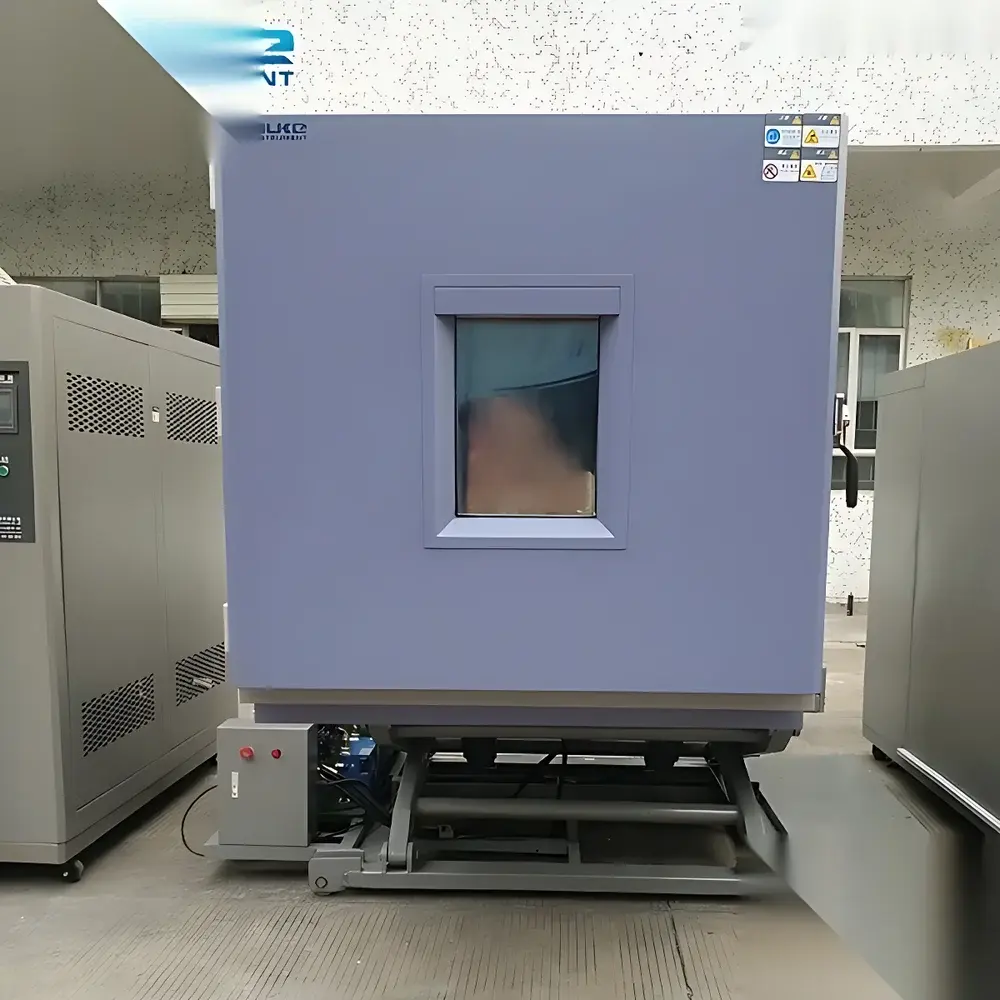
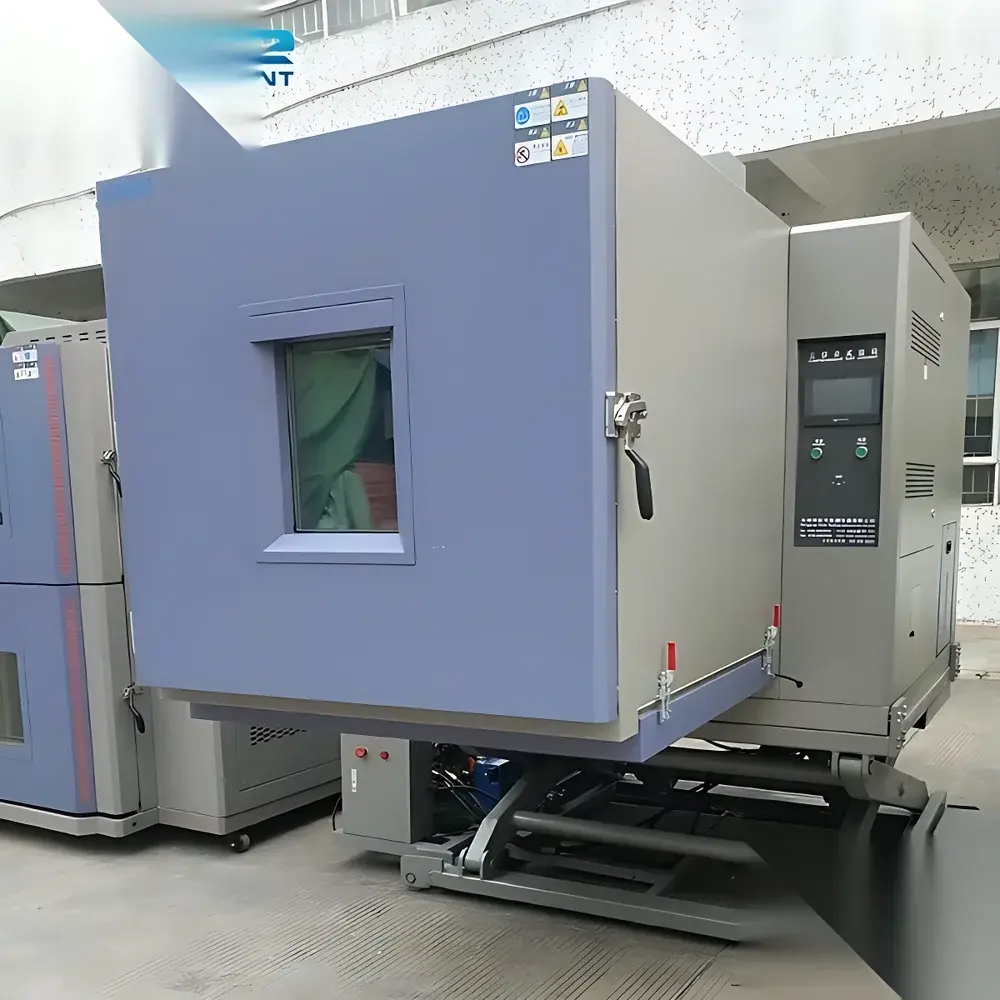
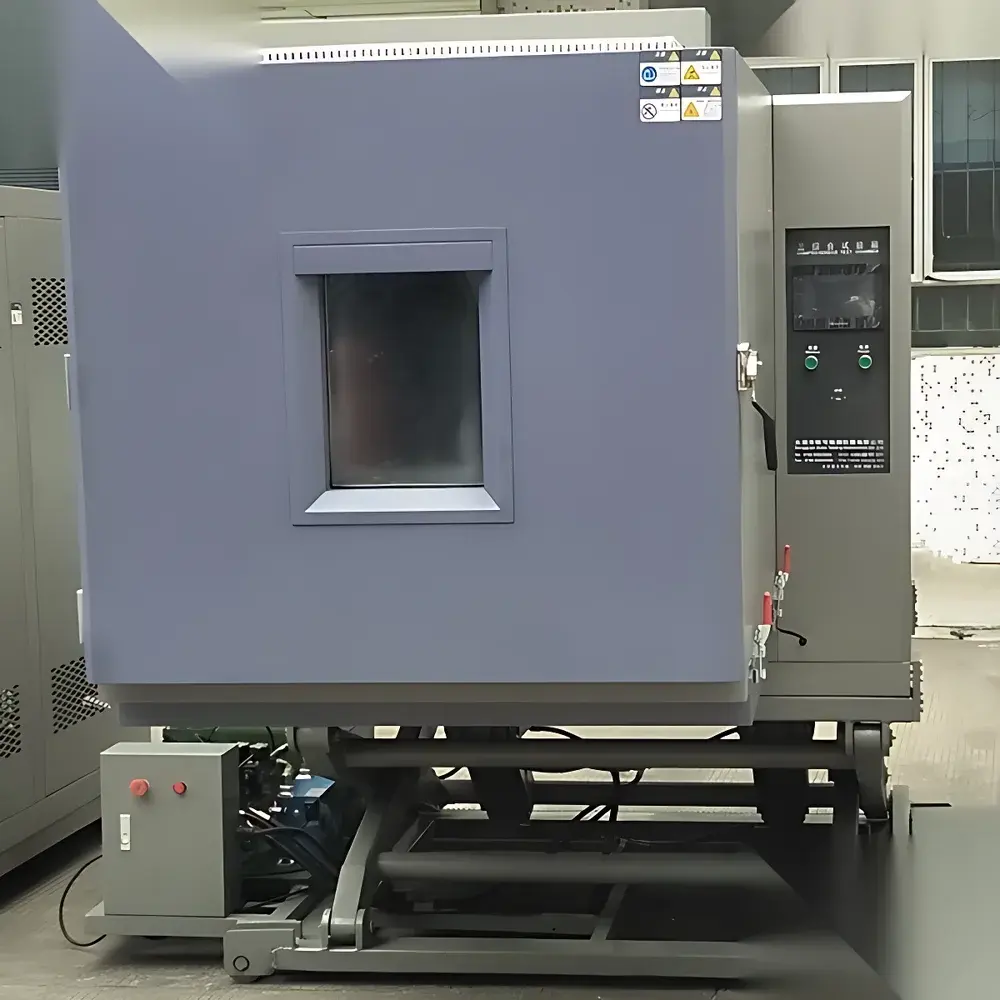
Combined Environmental Test Chamber for Temperature, Humidity, and Vibration
| Brand | Other Brands |
|---|---|
| Origin | Imported |
| Manufacturer Type | General Distributor |
| Price | USD 21,000 (approx.) |
Overview
The Combined Environmental Test Chamber for Temperature, Humidity, and Vibration is an integrated reliability validation platform engineered for simultaneous multi-stress environmental simulation. It operates on the principle of synergistic stress application—precisely controlling thermal gradients (−70 °C to +180 °C), relative humidity (10–98% RH), and broadband random or swept-sine vibration (5–2000 Hz, up to 60 g peak acceleration) within a single test volume. This capability enables accelerated life testing, HALT (Highly Accelerated Life Testing), and design verification per IEC 60068-2-64, MIL-STD-810H Method 514.7, and ISO 16750-4. Unlike sequential or single-stress chambers, this system replicates real-world operational extremes—such as aerospace avionics exposed to rapid cabin pressure shifts, automotive ECUs subjected to road-induced vibration under condensing humidity, or medical electronics undergoing thermal cycling in sterile humidified environments—thereby revealing latent design weaknesses, material delamination, solder joint fatigue, and seal integrity failures that remain undetected under isolated stress conditions.
Key Features
- Triple-stress synchronization: Real-time coordinated control of temperature, humidity, and vibration via a unified PLC-based master controller with sub-millisecond timing resolution.
- PWM-based refrigeration modulation: Utilizes Sporlan’s pulse-width modulated expansion valve technology to dynamically regulate refrigerant mass flow across cold, hot, and bypass circuits—eliminating energy-wasting heater-compensation cycles and reducing power consumption by up to 40% during sustained low-temperature operation (≤−40 °C).
- Condensation prevention logic: Adaptive dew-point monitoring and chamber wall temperature profiling prevent moisture condensation on DUT surfaces during rapid thermal transients, critical for testing hygroscopic PCBs or optoelectronic assemblies.
- Modular expandability: Optional LN2V liquid nitrogen injection module for ultra-rapid cooling rates (≥10 °C/min from +25 °C to −70 °C); LHC low-humidity sensor and regenerative desiccant dryer for extended sub-10% RH operation.
- Dual communication architecture: RS-232 serial interface for legacy SCADA integration and USB host port for direct data logging, firmware updates, and test profile import/export without PC dependency.
- Redundant safety monitoring: 12-channel independent alarm sensing (chamber over-temp, humidity sensor fault, vibration actuator overload, refrigerant pressure anomaly, door interlock breach, etc.) with configurable relay outputs and optional GSM/WiFi remote alerting.
Sample Compatibility & Compliance
The chamber accommodates test specimens up to 600 mm × 600 mm × 600 mm (W×D×H) with internal vibration table clearance of 400 mm × 400 mm and 100 kg payload capacity. It supports standard test fixtures (e.g., ISO 10816-3 compliant mounting interfaces) and accommodates cabling through multiple hermetic feedthrough ports (2× Ø25 mm, 1× Ø50 mm). The system complies with CE marking requirements (2014/30/EU EMC Directive, 2014/35/EU LVD Directive), meets Class III environmental classification per IEC 60721-3-3, and provides audit-ready calibration traceability to NIST standards. All software-generated test reports include timestamps, operator ID, environmental setpoints, actual chamber readings, vibration PSD spectra, and deviation alerts—fully supporting GLP/GMP documentation workflows and FDA 21 CFR Part 11 electronic record requirements when paired with validated user management and electronic signature modules.
Software & Data Management
Embedded control firmware (v4.2+) features a touchscreen HMI with intuitive drag-and-drop test sequencing, real-time overlay graphs (temperature/humidity/vibration RMS vs. time), and automatic failure mode tagging. Data is logged at ≥1 Hz resolution to internal flash memory (32 GB) and simultaneously mirrored to USB storage. Export formats include CSV (for MATLAB/Python post-processing), PDF test certificates (with digital signature fields), and XML-compliant ATML (IEEE 1671) files for enterprise test management systems (e.g., Siemens Polarion, National Instruments TestStand). Remote access is enabled via secure HTTPS web interface with role-based permissions (Admin, Operator, Viewer), enabling off-site monitoring and emergency intervention without VPN dependencies.
Applications
- Aerospace: Validation of satellite payload electronics under combined thermal vacuum-vibration profiles (simulated via dry-air purge mode).
- Automotive: ISO 16750-4 compliance testing of ADAS sensors, battery management systems (BMS), and infotainment units under road-spectrum vibration + cyclic humidity.
- Medical Devices: IEC 60601-1 clause 11.1 environmental stress screening of implantable pulse generators and diagnostic imaging subsystems.
- Consumer Electronics: Reliability assessment of foldable display hinges, MEMS microphones, and wireless charging coils under humidity-induced swelling + mechanical resonance.
- Industrial IoT: Long-duration burn-in of edge AI gateways deployed in uncontrolled warehouse or outdoor telecom enclosures.
FAQ
Does the chamber support real-time vibration spectrum editing during a running temperature-humidity profile?
Yes—the embedded controller allows live adjustment of vibration PSD breakpoints, grms levels, and frequency sweep rates without interrupting thermal or humidity setpoints.
What is the typical calibration interval for humidity sensors under continuous 85% RH operation?
NIST-traceable capacitive RH sensors require biannual verification; the system logs all calibration events and triggers maintenance alerts at 18-month intervals.
Can the LN2V module be retrofitted to existing units?
Yes—retrofit kits include reinforced cryo-rated insulation, LN2-compatible solenoid valves, and firmware upgrade to v4.5+, available under service contract SLA-CHM-LN2-RF.
Is vibration isolation required for floor-mounted installation?
No—the base frame incorporates active pneumatic isolators tuned to suppress transmission of >5 Hz structural vibrations into adjacent lab equipment.
How is data integrity ensured during unexpected power loss?
All active test data is written to non-volatile FRAM memory every 100 ms; upon restart, the system resumes from last valid checkpoint with full audit trail continuity.



