



COMECAUSE IN-DMJ Rice Milling Precision Analyzer
| Brand | COMECAUSE |
|---|---|
| Origin | Shandong, China |
| Manufacturer Type | Direct Manufacturer |
| Country of Origin | China |
| Model | IN-DMJ |
| Price | USD 2,600 (approx.) |
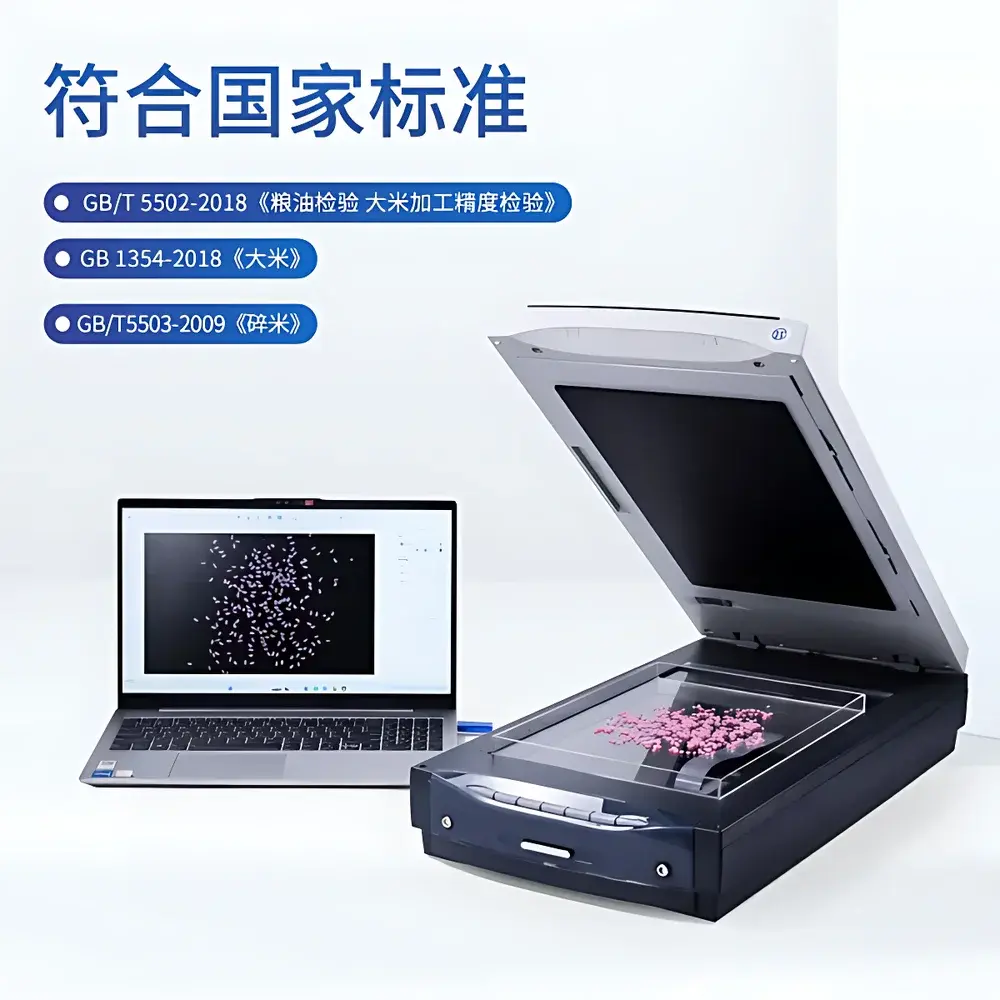
| Compliance | GB/T 5502-2018, GB 1354-2018, GB/T 5503-2009 |
| Optical Resolution | 4800 × 9600 dpi |
| Pixel Size | ≥0.005 mm × 0.0026 mm |
| Scan Area (Reflective) | 355.6 mm × 215.9 mm |
| Sample Capacity | 1–2000 grains (≤18 g) |
| Analysis Time | ≤90 s per batch |
| Detection Principle | Dual-wavelength chromogenic staining + high-resolution digital image segmentation & morphometric analysis |
| Software Platform | Windows-based proprietary analysis suite with audit trail, Excel export, cloud synchronization, and barcode integration |
| Environmental Operating Range | 10–30 °C, RH ≤85%, stable horizontal surface, no strong ambient light or EMI |
| Power Supply | 220 V ±10%, 50 Hz |
Overview
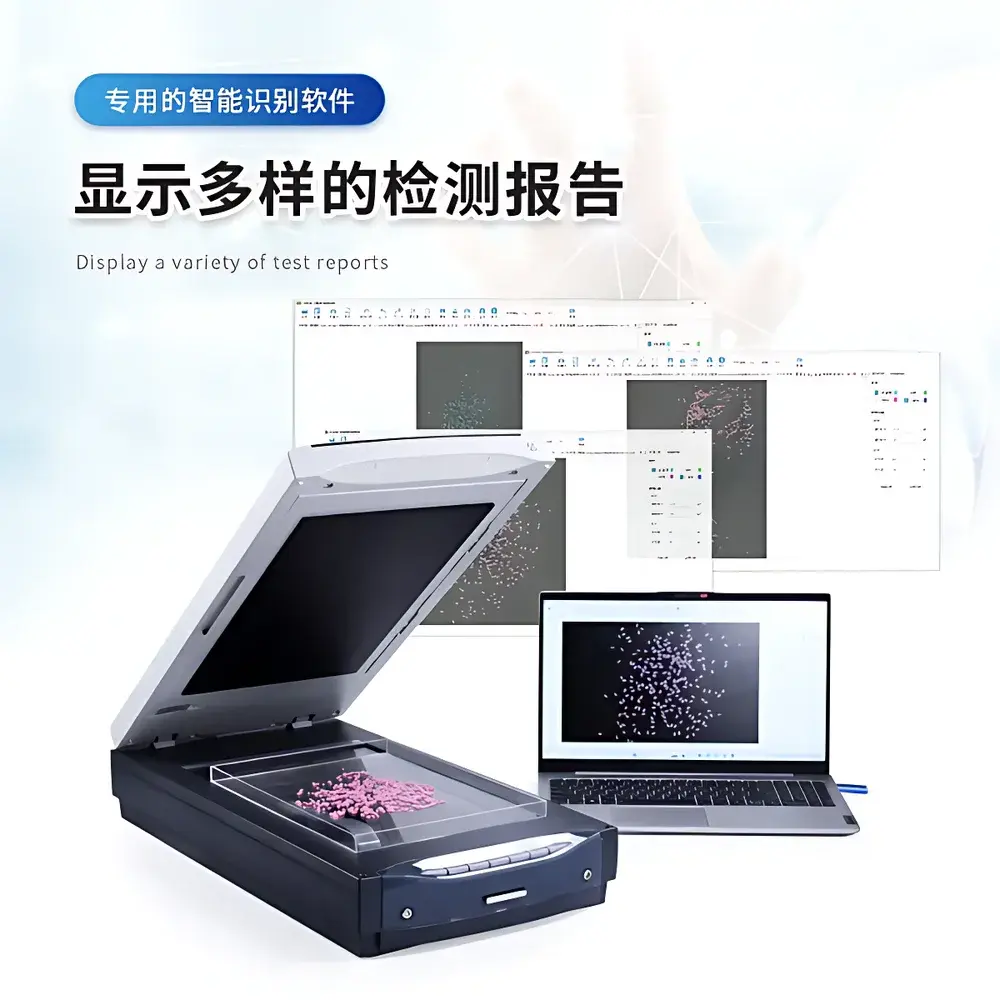
The COMECAUSE IN-DMJ Rice Milling Precision Analyzer is an ISO-aligned, standards-compliant digital metrology system engineered for objective, quantitative assessment of rice milling degree—the critical quality parameter defining commercial grade, nutritional retention, and market value in paddy-to-rice processing. Unlike subjective visual grading under standardized lighting, the IN-DMJ implements a validated chromogenic imaging methodology grounded in GB/T 5502-2018. It applies a selective dual-dye reagent (Eosin Y + Methylene Blue) that differentially stains residual bran layers (blue-green) and germ tissue versus the starch-rich endosperm (purple-red). Coupled with an A4+ dual-illumination flatbed scanner (4800 × 9600 dpi optical resolution), the system captures sub-5 µm pixel-level microstructural contrast. Proprietary image segmentation algorithms then compute per-grain bran coverage ratio—defined as the percentage of non-endosperm surface area—and aggregate statistical metrics across sample populations. This transforms “milling precision” from a categorical descriptor (“Type I”, “Type II”) into traceable, decimal-precision numerical output—enabling GLP-compliant documentation, inter-laboratory reproducibility, and process correlation modeling.
Key Features
- High-fidelity optical acquisition: 6-line alternating microlens CCD sensor with 48-bit color depth, white CCFL illumination, and calibrated reflective scanning over 355.6 mm × 215.9 mm active area
- Automated grain segmentation: No manual alignment required; robust contour detection handles overlapping, tilted, or fragmented kernels within 1–2000-grain batches (≤18 g)
- Multi-parameter morphometric output: Bran coverage ratio (%), whole-milled kernel rate, broken kernel percentage, length/width/area distribution histograms, and bounding-box classification
- Regulatory traceability: Full compliance with GB/T 5502-2018 (rice milling degree test), GB 1354-2018 (rice specification), and GB/T 5503-2009 (broken rice determination)
- Interactive validation layer: Mouse-driven pixel-level correction for edge cases, ensuring 100% analytical accuracy prior to report generation
- Cloud-enabled data architecture: Encrypted upload to secure web portal with role-based access, time-stamped audit logs, and long-term archival
- Integrated hardware interface: USB 2.0 connectivity, barcode scanner port for LIMS-compatible sample ID ingestion, and screen capture for SOP verification
Sample Compatibility & Compliance
The IN-DMJ supports all major Oryza sativa subspecies—including indica, japonica, and glutinous rice—without protocol modification. Its staining chemistry exhibits consistent chromatic differentiation across varietal differences in pericarp thickness, cuticle composition, and germ morphology. All analytical workflows are aligned with Chinese national standards for grain inspection and meet foundational requirements for GMP-aligned food testing environments. While not FDA 21 CFR Part 11-certified out-of-the-box, the software’s immutable audit trail (timestamped user actions, original image hash storage, and revision history) provides a defensible foundation for laboratory validation under ISO/IEC 17025:2017 and GB/T 27025-2019. Calibration is maintained via ten certified reference grains with programmable area standard values (Sr), enabling periodic performance verification without external reference materials.
Software & Data Management
The proprietary Windows-based analysis suite operates on x64 architecture with .NET Framework 4.8 runtime. It implements a three-tier data model: raw TIFF scans (lossless compression), segmented binary masks (per-kernel ROI), and relational metadata tables (sample ID, operator, timestamp, instrument parameters). Export options include CSV and native Excel (.xlsx) formats with customizable field selection—supporting downstream statistical analysis in JMP, R, or Python pandas. Cloud synchronization uses TLS 1.2–encrypted HTTPS POST requests to a regional endpoint hosted on Alibaba Cloud infrastructure (ISO 27001 certified). All uploaded datasets retain full provenance: original scan, processed mask, measurement summary, and user-modification log. Screen recording functionality captures GUI interactions for internal training or regulatory review. Software licensing is enforced via hardware-bound USB dongle with firmware-level tamper detection.
Applications
- Process optimization in milling plants: Real-time feedback loop between milling pressure/duration and quantified bran removal—enabling derivation of optimal operating curves balancing precision target vs. head rice yield
- Third-party certification & trade arbitration: Objective evidence for contract enforcement, reducing disputes arising from inter-observer variability in sensory grading
- Varietal development research: Correlation of genetic markers with milling resilience metrics (e.g., bran adhesion strength inferred from % surface coverage at fixed abrasion energy)
- Quality surveillance programs: High-throughput screening of commercial lots against statutory grade thresholds defined in GB 1354-2018
- Digital quality management systems: Integration with enterprise QMS platforms via RESTful API for automated KPI dashboards (e.g., % batches meeting ≥95% milling precision target)
FAQ
Does the IN-DMJ require user calibration before each assay?
No. The system performs automatic white/black level calibration during warm-up using integrated reference patches. Only annual verification against the included 10-standard grain set is recommended per GB/T 5502-2018 Annex B.
Can the software distinguish between bran residue and surface cracks or mechanical damage?
Yes. The dual-wavelength staining protocol yields spectrally distinct absorption profiles: intact bran layers absorb strongly in blue-green channels, while fissures exhibit neutral reflectance across all bands. Morphological filters further suppress noise based on aspect ratio and convexity metrics.
Is raw image data retained after analysis?
Yes. Every scan is archived in lossless TIFF format with embedded EXIF metadata (date/time, DPI, illumination mode). Users may browse, export, or reprocess any historical scan without degradation.
What is the minimum detectable bran coverage increment?
The system resolves area differences ≥0.05% per grain, limited by pixel size (0.005 mm × 0.0026 mm) and statistical sampling of ≥100 grains per report.
Can the analyzer be integrated into an automated production line?
Not natively—but its USB interface, barcode support, and Excel export enable semi-automated integration with PLC-controlled sample handling stations via custom middleware scripting.






