
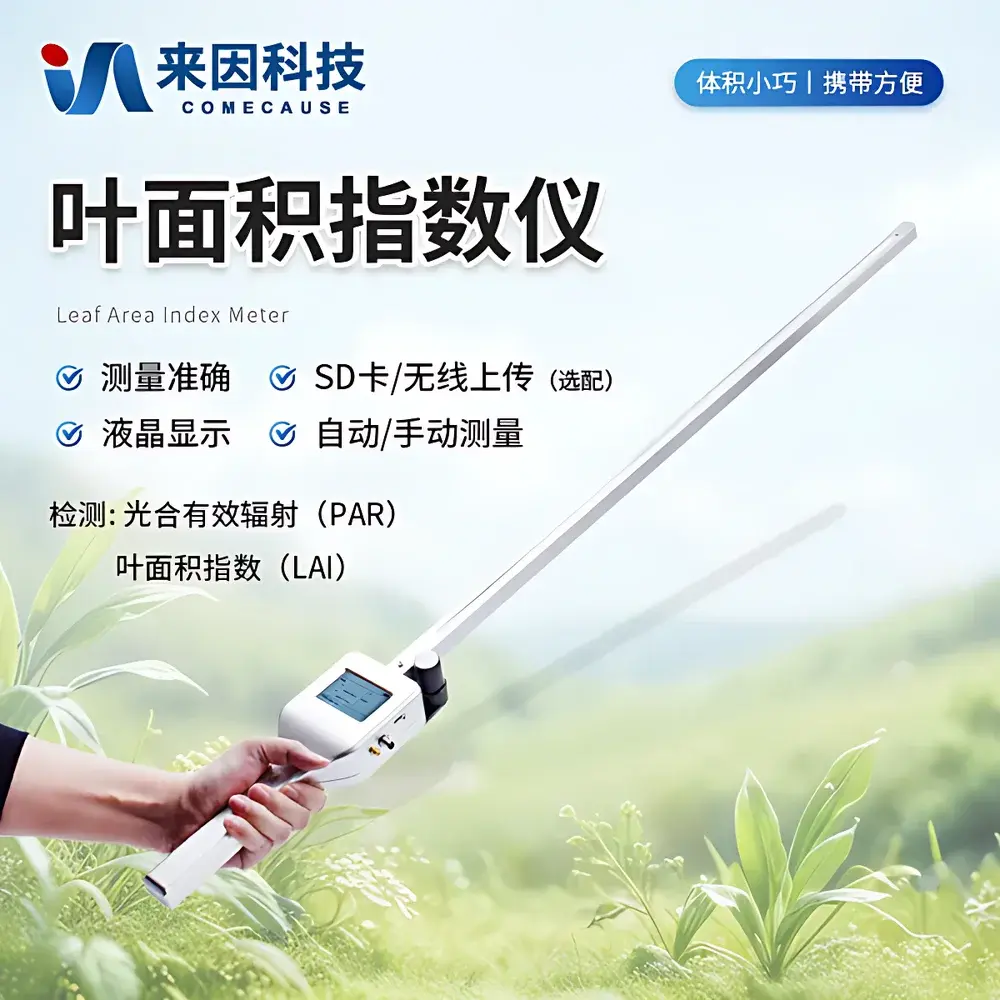
COMECAUSE IN-G10 Portable Canopy Analyzer for Leaf Area Index (LAI) and Photosynthetically Active Radiation (PAR) Measurement
| Brand | COMECAUSE |
|---|---|
| Origin | Shandong, China |
| Manufacturer Type | Direct Manufacturer |
| Country of Origin | China |
| Model | IN-G10 |
| Price | USD 1,200 (FOB) |
| Principle | Quantum Sensor–Based Canopy Radiometric Analysis |
| Type | Portable Handheld Instrument |
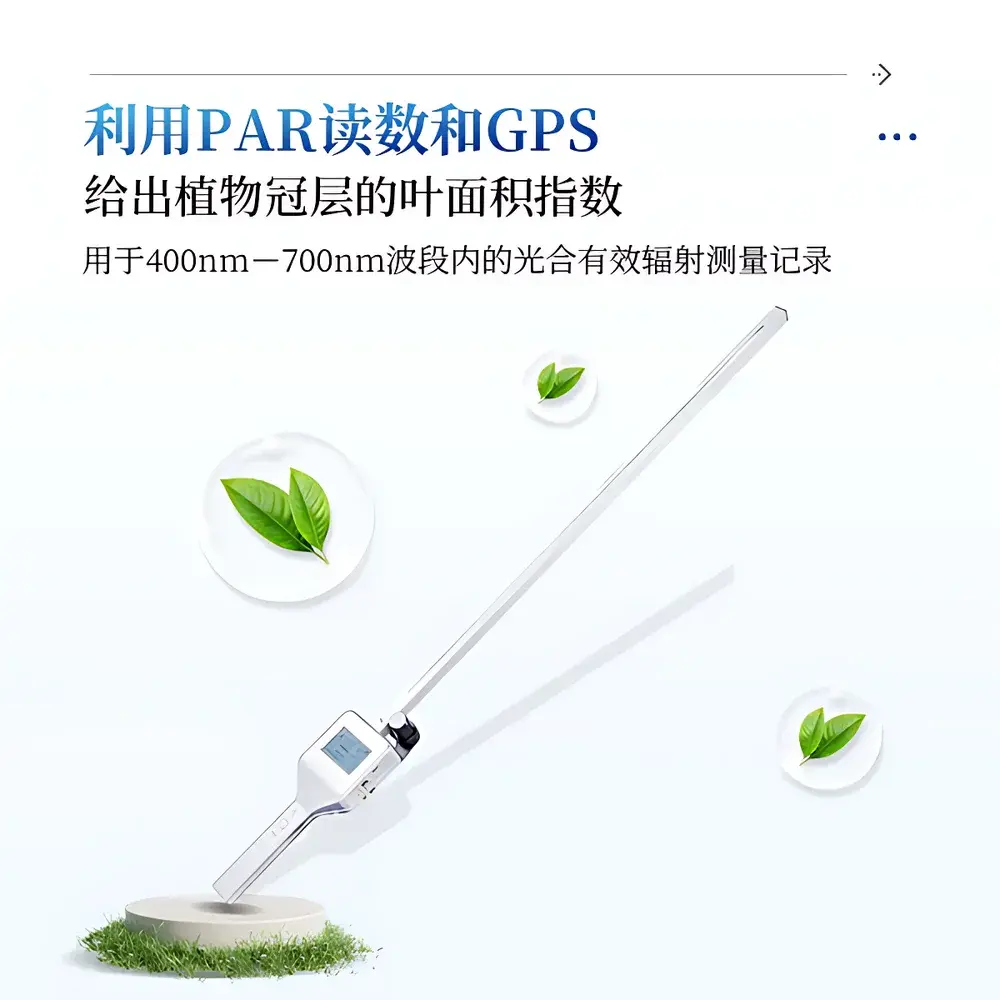
| PAR Wavelength Range | 400–700 nm |
| PAR Measurement Range (Probe) | 0–2700 μmol·m⁻²·s⁻¹ |
| Resolution | 1 μmol·m⁻²·s⁻¹ |
| Integrated PAR Sensors | 80 (linear array probe), 1 (external reference sensor) |
| Probe Length | 100 cm |
| Total Unit Length | 128 cm |
| Cable Length (External Sensor) | 2 m |
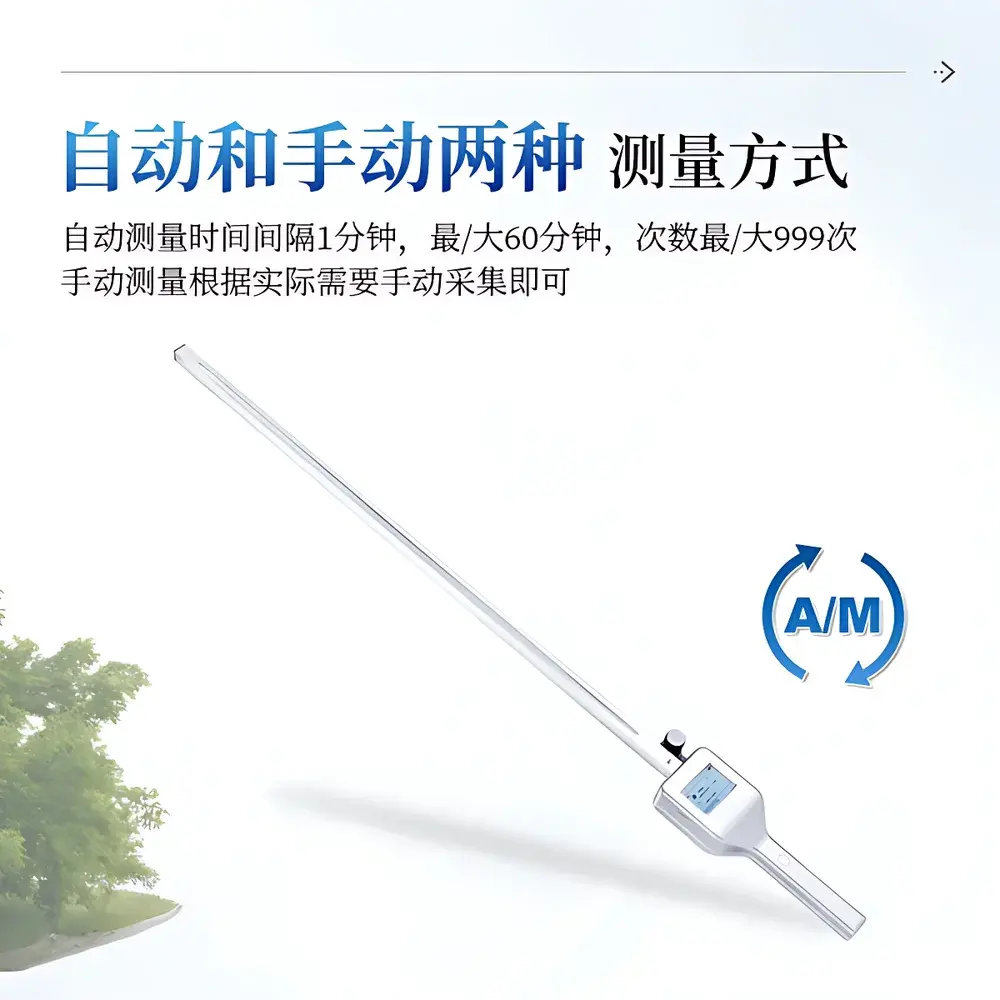
| Sampling Interval | 1–60 min (programmable) |
| Max. Auto-Sampling Events | 999 |
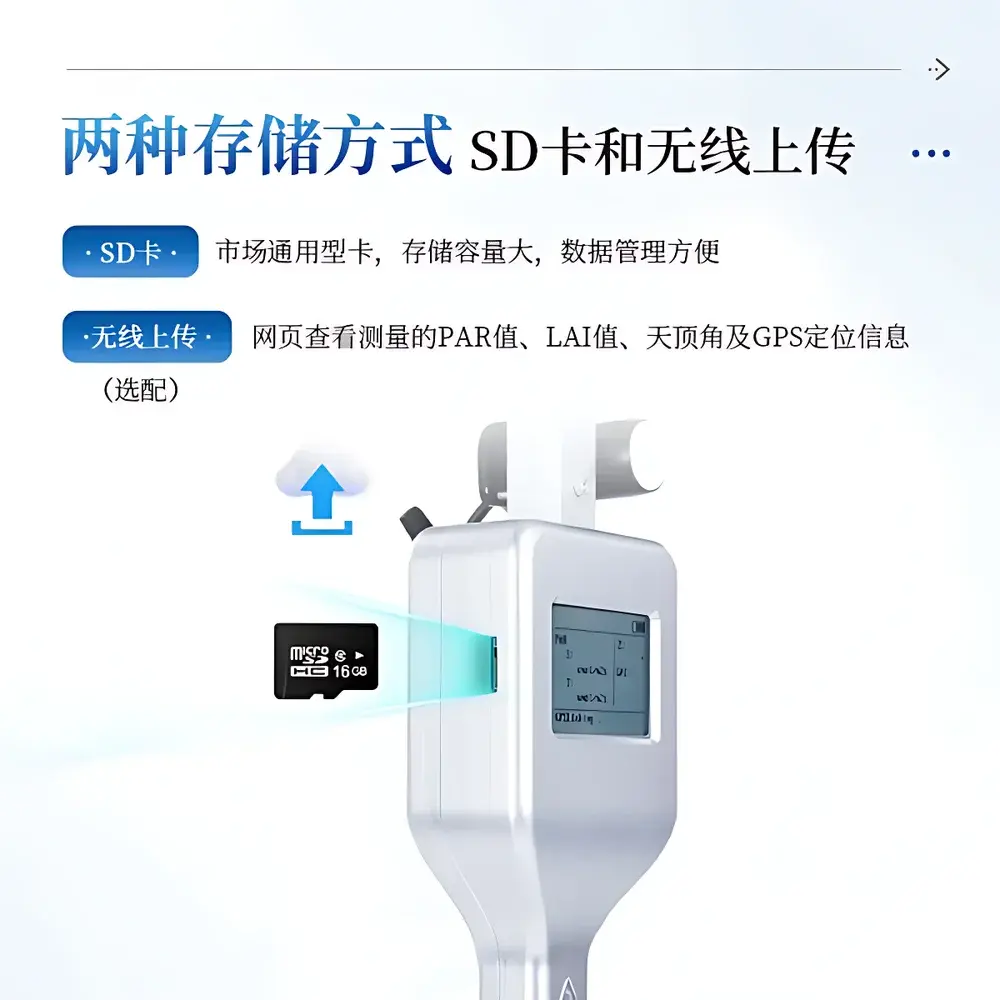
| Data Storage | 16 GB Internal SD Card (removable, standard microSDHC) |
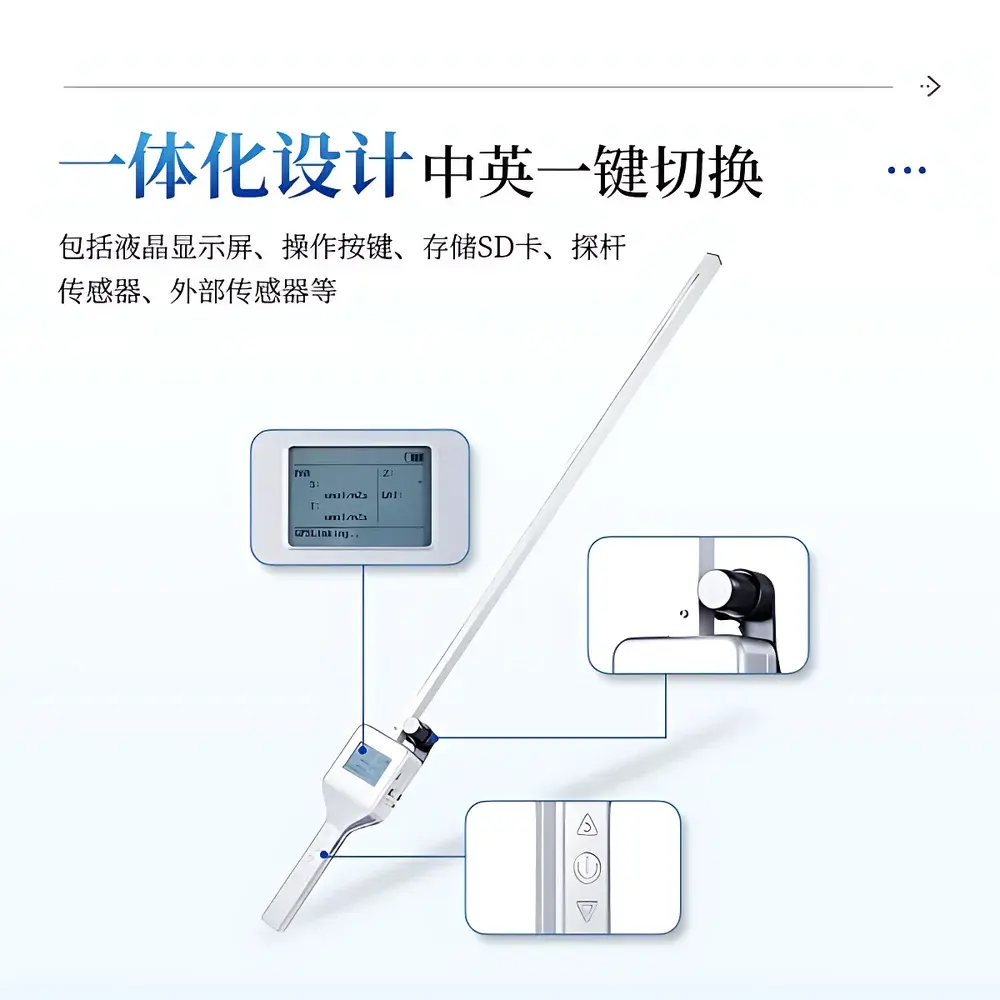
| Display | Dual-language (English/Chinese) LCD with one-touch toggle |
| Power Supply | Two 18650 Li-ion batteries (3500 mAh each) |
| Charging Interface | DC 5 V via USB-C |
| Operating Temperature | 0–60 °C |
| Relative Humidity | 0–100 % RH (non-condensing) |
Overview
The COMECAUSE IN-G10 Portable Canopy Analyzer is an engineered field instrument designed for quantitative assessment of plant canopy structure and light interception dynamics in situ. It operates on the principle of quantum radiometry—measuring photosynthetically active radiation (PAR; 400–700 nm) using calibrated silicon photodiode sensors to derive biophysically meaningful canopy parameters, most notably Leaf Area Index (LAI). LAI is defined as the one-sided green leaf area per unit ground surface area (m²·m⁻²) and serves as a critical input variable in ecosystem modeling, crop growth simulation (e.g., APSIM, DSSAT), carbon flux estimation, and evapotranspiration modeling. Unlike indirect optical methods relying on gap fraction inversion or hemispherical photography, the IN-G10 employs a high-density linear PAR sensor array (80 discrete elements) mounted along a rigid 100 cm probe, enabling spatially resolved vertical profiling of light attenuation through the canopy. Paired with a co-located external reference sensor (0–4000 μmol·m⁻²·s⁻¹ range), it computes LAI via the Beer–Lambert law under diffuse and direct irradiance conditions, supporting both manual point measurements and time-series autonomous monitoring.
Key Features
- Integrated 80-element PAR sensor array with 1 μmol·m⁻²·s⁻¹ resolution, optimized for high signal-to-noise ratio across natural diurnal irradiance gradients
- Dual-sensor architecture: internal probe array + external reference sensor ensures robustness against directional bias and sky condition variability
- Programmable autonomous sampling: interval from 1 to 60 minutes; up to 999 sequential measurements per session
- On-device dual-language (English/Chinese) graphical LCD interface with intuitive menu navigation and real-time PAR/LAI display
- Field-rugged mechanical design: aluminum-reinforced probe, IP54-rated enclosure, and thermal management for operation at 0–60 °C and 100 % RH
- Flexible data storage: 16 GB removable microSDHC card (FAT32 formatted) with timestamped CSV export; optional Wi-Fi module (not included) enables secure HTTP/HTTPS upload to cloud platforms
- Energy-efficient power architecture: intelligent sleep/wake cycle triggered by button press or scheduled wake-up; full charge supports >72 hours of intermittent field use
Sample Compatibility & Compliance
The IN-G10 is compatible with herbaceous crops (e.g., wheat, maize, soybean), shrubs, orchard canopies, and low-canopy forest understory vegetation. Its 128 cm total length and ergonomic handheld form factor permit rapid deployment in row-crop fields, greenhouse trials, and ecological transects without requiring tripods or mounting hardware. While not certified to ISO 17025 or ASTM E2912 (standard for PAR sensor calibration), the instrument’s quantum sensors are factory-calibrated traceable to NIST-standard tungsten halogen lamps and spectroradiometric reference sources. Raw PAR data output conforms to FAO-56 and ICID guidelines for agrometeorological reporting. For GLP/GMP-aligned research workflows, users may implement audit-trail protocols via external timestamp synchronization (GPS-derived UTC timestamps embedded in all measurement records).
Software & Data Management
Data files are stored in plain-text CSV format with columns: UTC timestamp, probe PAR (μmol·m⁻²·s⁻¹), reference PAR (μmol·m⁻²·s⁻¹), calculated LAI, zenith angle (°), and GPS coordinates (WGS84, if enabled). No proprietary software is required for data ingestion—files are directly importable into R (via read.csv()), Python (pandas), MATLAB, or Excel. The optional Wi-Fi module (sold separately) supports TLS 1.2-encrypted uploads to user-defined RESTful endpoints or FTPS servers. Firmware updates are delivered via microSD card and support field-based version rollback. All firmware binaries include SHA-256 checksums for integrity verification. The device does not implement FDA 21 CFR Part 11 electronic signature functionality; however, raw CSV logs meet ALCOA+ principles (Attributable, Legible, Contemporaneous, Original, Accurate, Complete, Consistent, Enduring, Available) when paired with documented field metadata.
Applications
- Agronomic optimization: Quantifying LAI dynamics across phenological stages to calibrate nitrogen application timing and irrigation scheduling in precision farming systems
- Ecophysiological research: Correlating canopy light extinction coefficients with stomatal conductance and chlorophyll fluorescence (ΦPSII) in drought-stress experiments
- Carbon cycle science: Supporting eddy covariance tower validation by providing ground-truth LAI inputs for upscaling gross primary productivity (GPP) models
- Urban forestry assessment: Mapping spatial heterogeneity of tree canopy cover and shading efficacy in municipal green infrastructure planning
- Restoration ecology: Monitoring LAI recovery trajectories in post-fire or post-mining reclamation sites over multi-year intervals
- Educational fieldwork: Enabling undergraduate students to collect reproducible biophysical datasets for hypothesis-driven plant ecology labs
FAQ
Does the IN-G10 require annual recalibration?
No mandatory annual recalibration is specified. However, COMECAUSE recommends sensor verification against a NIST-traceable PAR meter every 24 months or after exposure to extreme thermal cycling (>85 °C) or physical impact.
Can LAI be calculated under cloudy vs. clear-sky conditions?
Yes—the dual-sensor configuration and built-in zenith angle compensation allow valid LAI computation across variable sky conditions. Diffuse-dominant light improves accuracy in dense canopies where direct beam penetration is minimal.
Is GPS geotagging mandatory for LAI calculation?
No. GPS data is optional metadata. LAI derivation relies solely on the ratio of probe-to-reference PAR values and assumes Lambertian scattering assumptions inherent in the Beer–Lambert model.
What is the minimum detectable LAI value?
Theoretical lower limit is ~0.2 m²·m⁻², constrained by sensor noise floor (±0.5 μmol·m⁻²·s⁻¹) and probe positioning repeatability. Field validation studies report ±0.15 m²·m⁻² uncertainty at LAI < 1.0.
Is the SD card slot accessible during measurement?
Yes—the microSDHC slot is located beneath a rubberized weather seal on the main housing and may be accessed without powering down the unit. Hot-swapping is supported.





