


COMECAUSE IN-HT800 Portable Multi-Parameter Soil, Fertilizer & Plant Nutrient Analyzer
| Brand | COMECAUSE |
|---|---|
| Origin | Shandong, China |
| Manufacturer Type | OEM/ODM Producer |
| Model | IN-HT800 |
| Instrument Category | Portable Field Analyzer |
| Detection Channels | 4 independent fixed-position photometric channels |
| Test Parameters | N, P, K (ammonium-N, nitrate-N, available P, exchangeable K), organic matter (Tiurin & extraction methods), Ca, Mg, S, Si, B, Fe, Cu, Mn, Zn, Cl, Mo, Pb, As, Cr, Cd, Hg, Ni, Al, F, Ti, Se, pH, EC, moisture, temperature |
| Measurement Range | 0.001–9999 (unitless absorbance-based quantification scale) |
| Repeatability | ≤0.03% (as CV, measured with potassium dichromate standard) |
Overview
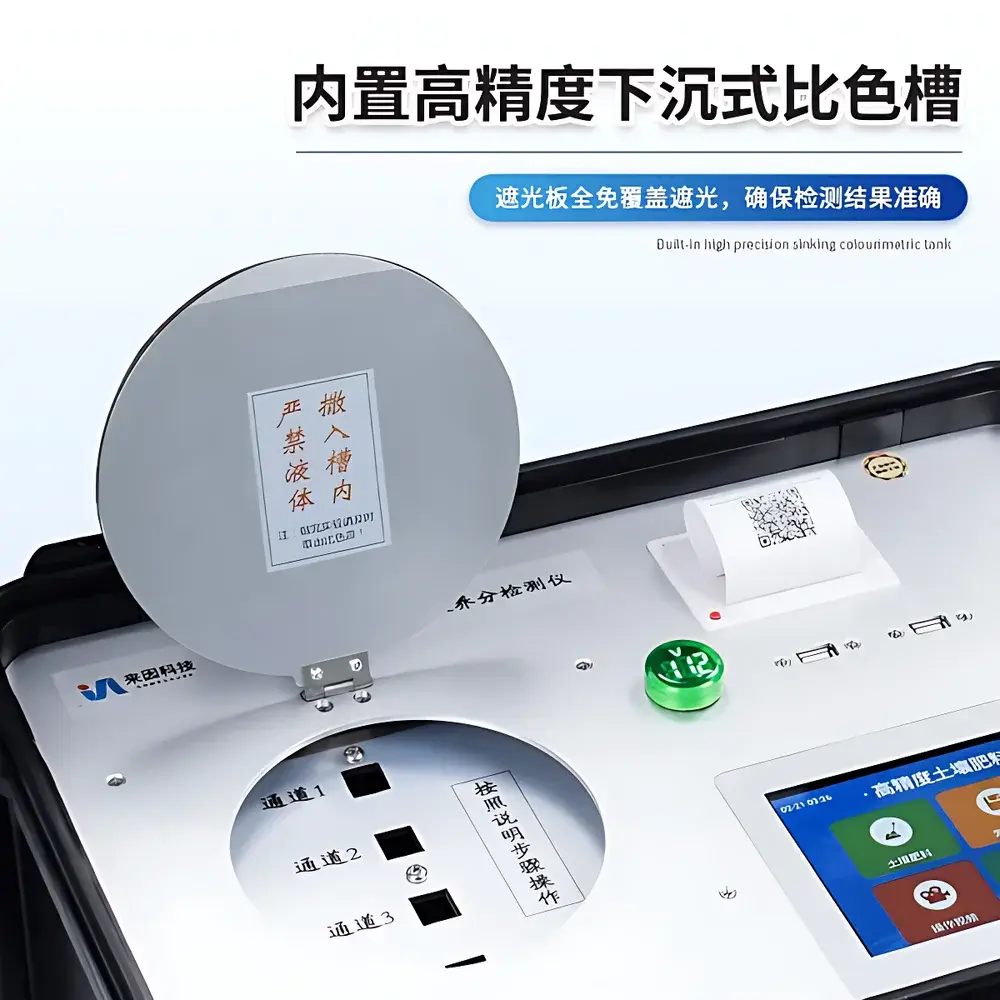
The COMECAUSE IN-HT800 is a field-deployable, multi-parameter spectrophotometric analyzer engineered for quantitative assessment of macro- and micronutrients in soil, fertilizers, and plant tissues. It operates on the principle of visible-light absorbance spectroscopy—utilizing four discrete, wavelength-stabilized LED sources (680 ±2 nm red, 420 ±2 nm blue, 510 ±2 nm green, 590 ±4 nm orange) to excite colorimetric reactions in extracted samples. Each channel employs a solid-state, fixed-position cuvette module housed within a light-tight, recessed optical chamber (15.7 cm diameter遮光 cover), eliminating mechanical drift and ensuring long-term photometric stability. The instrument integrates standardized wet-chemistry protocols—including ammonium-N via indophenol blue, available phosphorus via molybdenum blue, and potassium via sodium cobaltinitrite—directly into its guided workflow. Designed for agricultural extension services, precision farming cooperatives, and environmental monitoring agencies, the IN-HT800 delivers laboratory-grade reproducibility under variable ambient conditions while maintaining full traceability through embedded GPS, real-time clock synchronization, and audit-ready data logging.
Key Features
- Android 5.1 operating system with quad-core ≥1.8 GHz CPU, 16 GB internal storage, and responsive 7.0-inch capacitive touchscreen (1024 × 600 resolution) optimized for outdoor visibility.
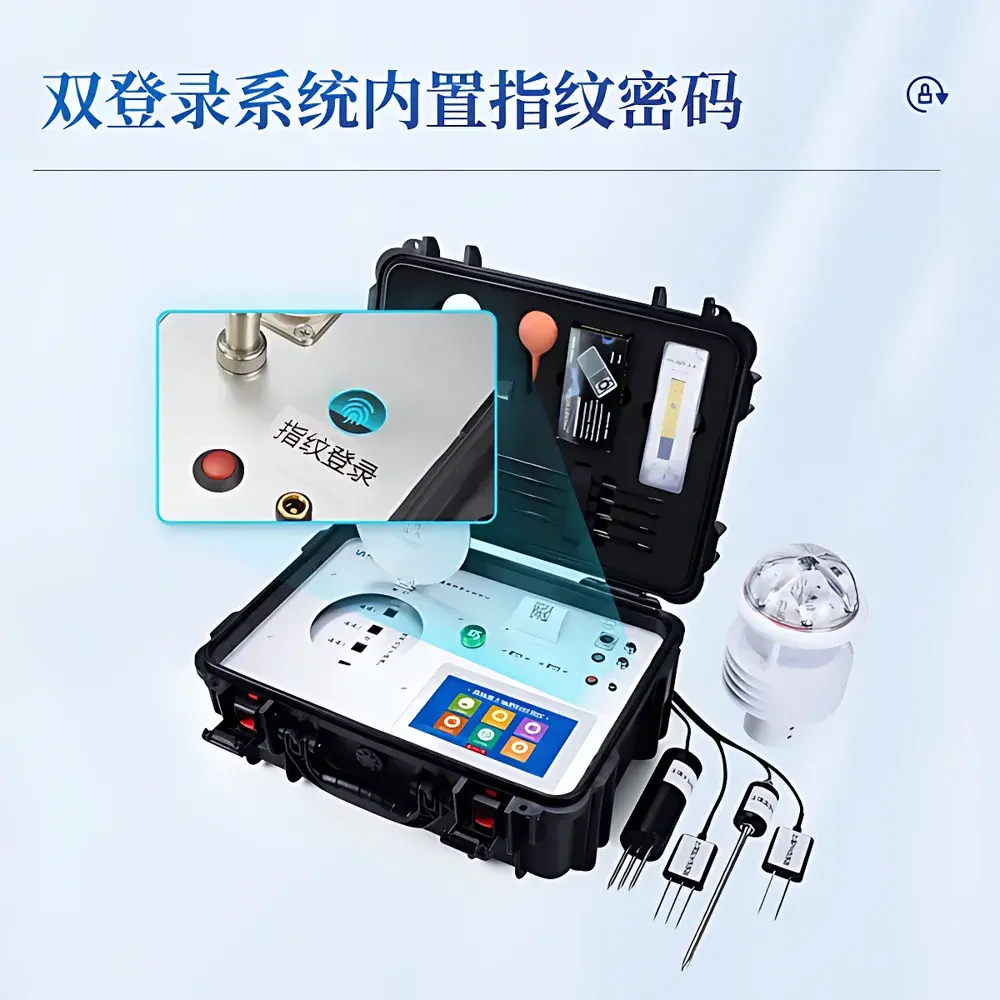
- Dual authentication: password + fingerprint login supporting multi-user role-based access control for data security and regulatory compliance (e.g., GLP-aligned user accountability).
- Integrated 12-in-1 environmental sensor suite: PM2.5/PM10, CO, SO2, NO2, O3, air temperature/humidity, barometric pressure, ultrasonic wind speed/direction, and optical rainfall—enabling concurrent agro-meteorological profiling.
- Field-optimized physical design: IP65-rated rugged housing, high-strength PVC carry case (470 × 340 × 210 mm), built-in 4800 mAh Li-ion battery (≥10 h continuous operation), and AC/DC dual-power capability with voltage monitoring and auto-save on power interruption.
- Embedded procedural guidance: step-by-step on-screen instructions, instructional video library, and automated calibration routines eliminate reliance on paper manuals—critical for technician-level users in remote deployment scenarios.
- Four-channel photometric architecture with thermally stabilized LEDs (rated >100,000 h lifetime) and fixed optical path geometry ensures inter-channel consistency and eliminates positional error inherent in rotating filter systems.
Sample Compatibility & Compliance
The IN-HT800 supports standardized sample preparation workflows aligned with widely accepted agronomic reference methods, including ISO 11260 (soil ammonium), ISO 13878 (total nitrogen), ISO 14254 (available phosphorus), and ASTM D512/D519 (chloride and sulfate in fertilizers). Soil moisture, pH, and salinity are measured in situ using dedicated probes: a 6.5 cm stainless-steel capacitance probe (volumetric water content: 0–100% m³/m³, ±2% accuracy in 0–50% range), a glass-body pH electrode (0–14 pH, ±0.2), and a graphite-conductivity sensor (0–20 mS/cm, ±1%). Heavy metal screening (Pb, As, Cd, Hg, Cr, Ni) follows EPA Method 6010D-compliant digestion protocols prior to colorimetric detection. All measurement outputs comply with FAO/WHO Codex Alimentarius guidelines for fertilizer quality control and are compatible with national soil testing standards in China (NY/T 1121 series), India (ICAR protocols), and ASEAN harmonized frameworks.
Software & Data Management
Data acquisition, processing, and reporting are managed via an embedded Android application with native support for CSV export, cloud synchronization, and encrypted local storage. Upon network connection (Wi-Fi or Ethernet), results automatically upload to a tenant-isolated cloud agriculture data platform—assigning each organization a dedicated, GDPR- and CCPA-compliant instance. The platform enforces 21 CFR Part 11–compatible audit trails: every action (user login, test initiation, result modification, print event) is timestamped, attributed, and immutable. Integrated tools include: (1) a soil-test-based fertilizer recommendation engine referencing >120 crop-specific nutrient sufficiency ranges and yield-targeted application rates; (2) diagnostic leaf deficiency atlas covering N, P, K, Ca, Mg, S, Fe, Zn, and B; and (3) cross-device interoperability via web portal, iOS/Android mobile app, and WeChat Mini Program. All printed reports include QR-coded metadata (location, time, operator ID, channel ID, raw absorbance, concentration in mg/kg or %) for field-to-lab traceability.
Applications
The IN-HT800 serves as a primary analytical tool across decentralized agricultural value chains. It enables rapid pre-plant soil fertility mapping to inform variable-rate fertilizer prescriptions; real-time verification of blended fertilizer composition at distribution centers; in-season tissue testing for corrective foliar interventions; and post-harvest residue analysis to guide crop rotation planning. Its meteorological integration supports irrigation scheduling via evapotranspiration modeling and early-warning detection of air pollution events impacting canopy physiology. Regulatory agencies use it for routine surveillance of heavy metal accumulation in peri-urban farmland and verification of organic certification claims (e.g., absence of synthetic NPK inputs). Research applications include longitudinal studies on biochar amendment effects on nutrient retention and validation of low-cost sensor networks against reference-grade instrumentation.
FAQ
Does the IN-HT800 require external lab validation for regulatory reporting?
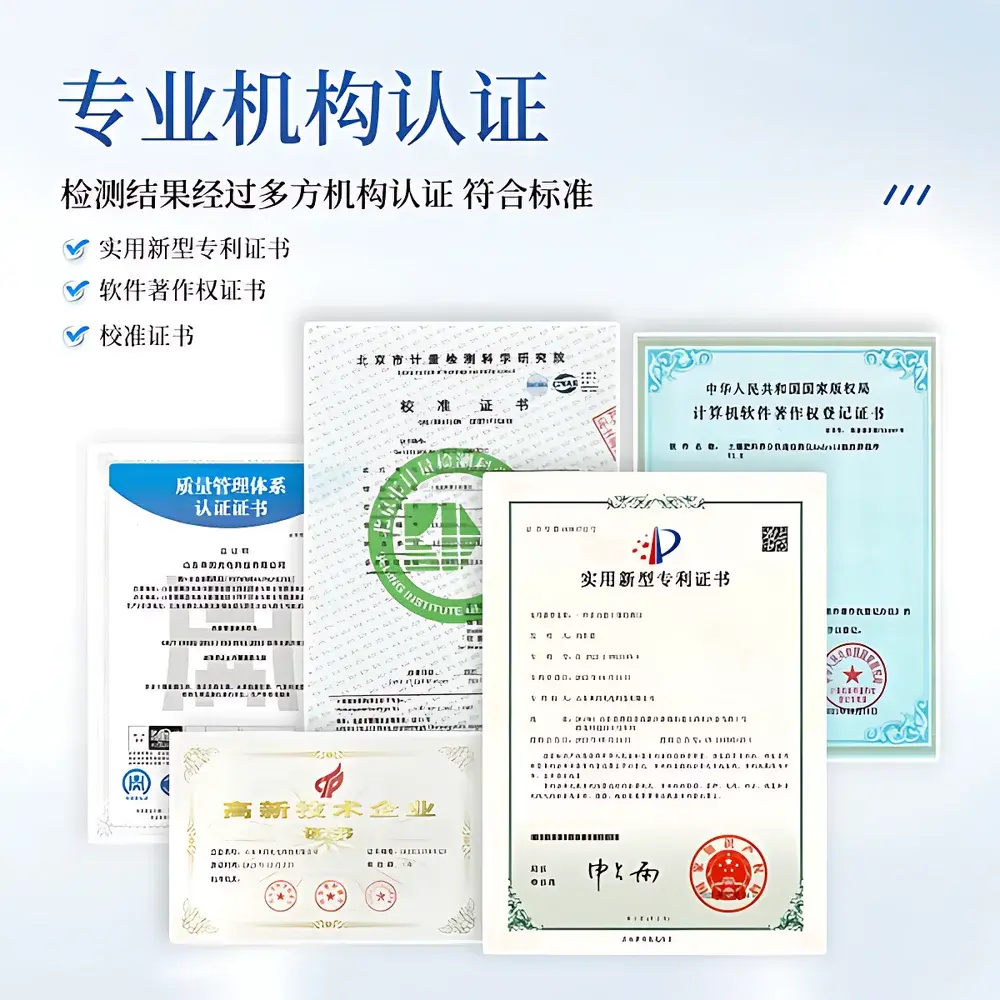
No—its photometric performance (repeatability ≤0.03%, linearity ≤0.1% on CuSO4, stability <0.3% drift over 60 min) meets ISO/IEC 17025 preconditions for field-use instruments. However, formal accreditation requires site-specific method validation per ISO 17025 Clause 7.2.2.
Can the instrument measure nutrients in turbid water samples?
Yes—dedicated algorithms compensate for suspended solids interference in aqueous N/P/K assays, validated per ISO 7888 (turbidity-corrected spectrophotometry).
Is firmware update supported remotely?
Yes—over-the-air (OTA) updates are delivered via the cloud platform, preserving configuration integrity and requiring no manual SD card intervention.
What is the calibration frequency requirement?
Zero scheduled calibration: the system performs automatic dark-current and reference-zero compensation before each measurement cycle, eliminating manual recalibration per ISO 8655-7.
How are detection limits determined for trace elements like boron or molybdenum?
Method detection limits (MDLs) are derived empirically per EPA 40 CFR Part 136 Appendix B—using 7 replicate analyses of reagent blanks and calculating 3.14 × standard deviation; typical MDLs range from 0.2–1.5 mg/kg depending on matrix and extraction efficiency.
Related Products







