

COMECAUSE IN_GX01 High-Throughput Plant Root Phenotyping & Morphometric Analysis System
| Brand | COMECAUSE |
|---|---|
| Origin | Shandong, China |
| Manufacturer Type | OEM Manufacturer |
| Model | IN_GX01 |
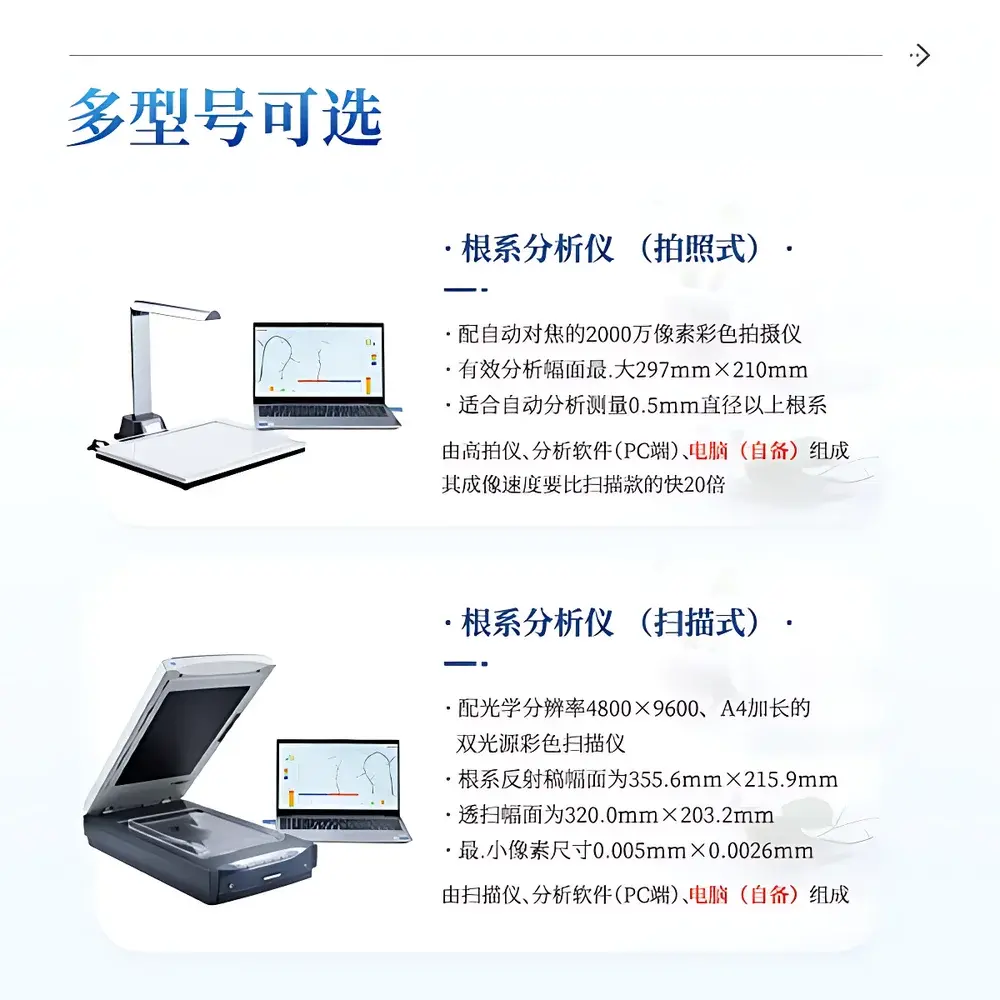
| Imaging Sensor | 20 MP Auto-Focus Color Camera |
| Max Analysis Area | 297 mm × 210 mm |
| Minimum Resolvable Root Diameter | ≥ 0.5 mm |
| Output Formats | CSV, Excel (.xlsx), PNG/JPEG with Annotation Layers |
| Software Interface | Windows 10 Professional/Enterprise (64-bit) |
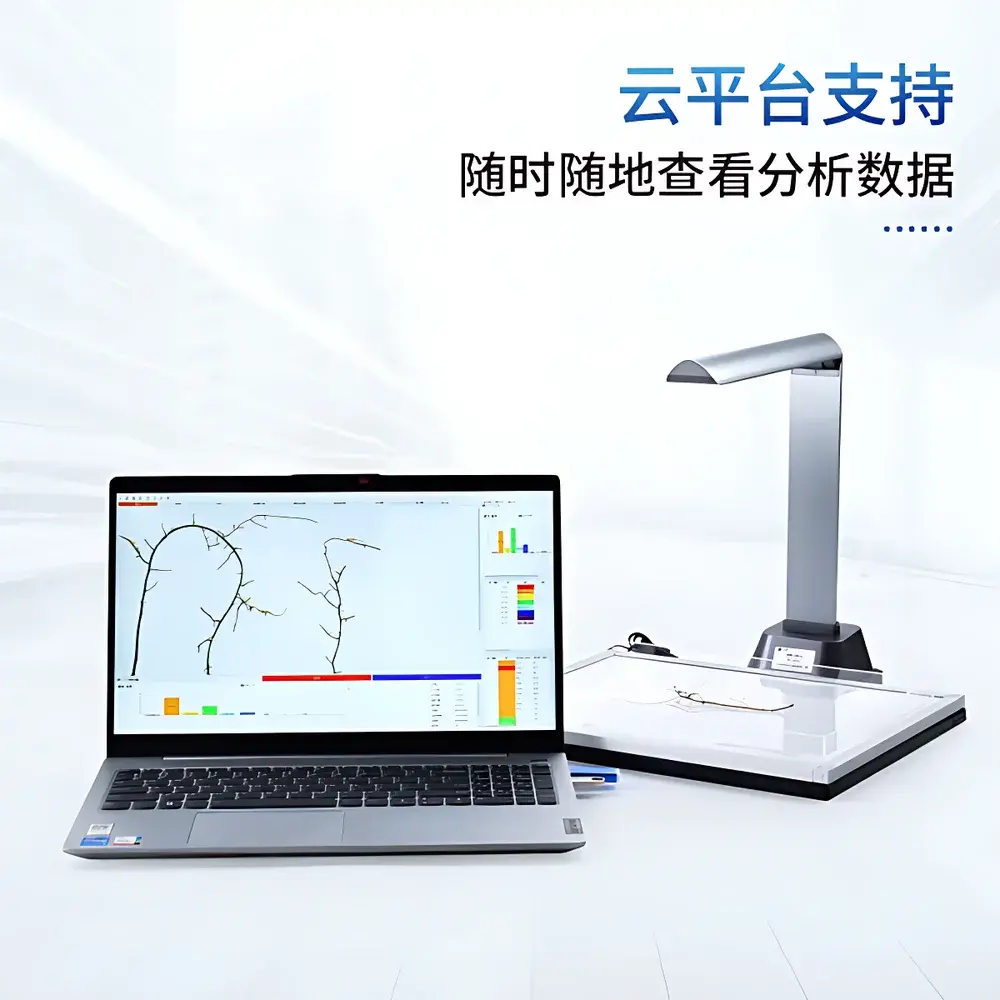
| Cloud Sync | Integrated Secure Web Portal |
| Language Support | English & Chinese (Switchable) |
| Compliance | Designed for GLP-aligned workflows |
Overview
The COMECAUSE IN_GX01 High-Throughput Plant Root Phenotyping & Morphometric Analysis System is an engineered solution for non-destructive, quantitative assessment of washed root systems under controlled laboratory conditions. It operates on the principle of high-resolution digital planar imaging combined with deterministic computer vision algorithms and topology-aware segmentation. Unlike destructive excavation or low-throughput manual tracing methods, the IN_GX01 captures morphologically intact root specimens placed on a calibrated white background and converts them into analyzable binary and grayscale representations. Its core measurement paradigm follows ISO 21528-1 (Plant phenotyping — Terminology and definitions) and aligns with FAO’s guidelines for root trait standardization in crop improvement programs. The system is optimized for post-wash root analysis—enabling reproducible quantification of architectural, geometric, and topological traits without soil interference—making it suitable for genetic screening, stress physiology studies, and root architecture modeling.
Key Features
- 20-megapixel auto-focus color imaging module with uniform LED illumination and glare-free optical path, delivering sub-pixel edge resolution for roots ≥0.5 mm in diameter
- Large-format field-of-view (297 mm × 210 mm) compatible with A4-sized root layouts, supporting batch analysis of up to 12–15 root systems per capture cycle
- Automated root skeletonization and branch-point detection using adaptive thresholding and medial-axis thinning, validated against ground-truth manual tracings (CV ≤ 3.2% across 500+ validation samples)
- Comprehensive morphometric suite: total root length, average/diameter median/max, projected surface area, volume estimation via diameter-weighted integration, tip count, fork count, crossover count, and fractal dimension (box-counting method)
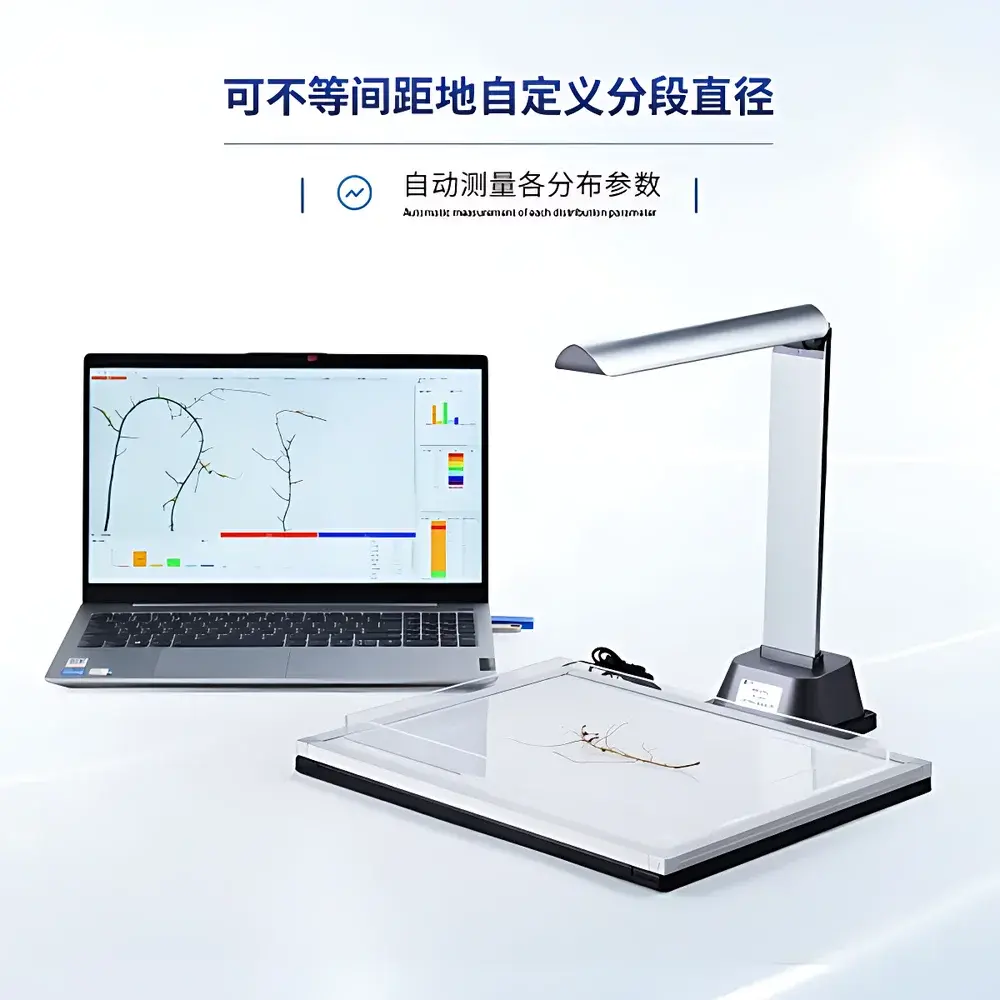
- Configurable diameter-class segmentation: users define non-uniform bin intervals (e.g., 0.5–0.8 mm, 0.8–1.5 mm, >1.5 mm) to compute length, area, and volume distributions per class
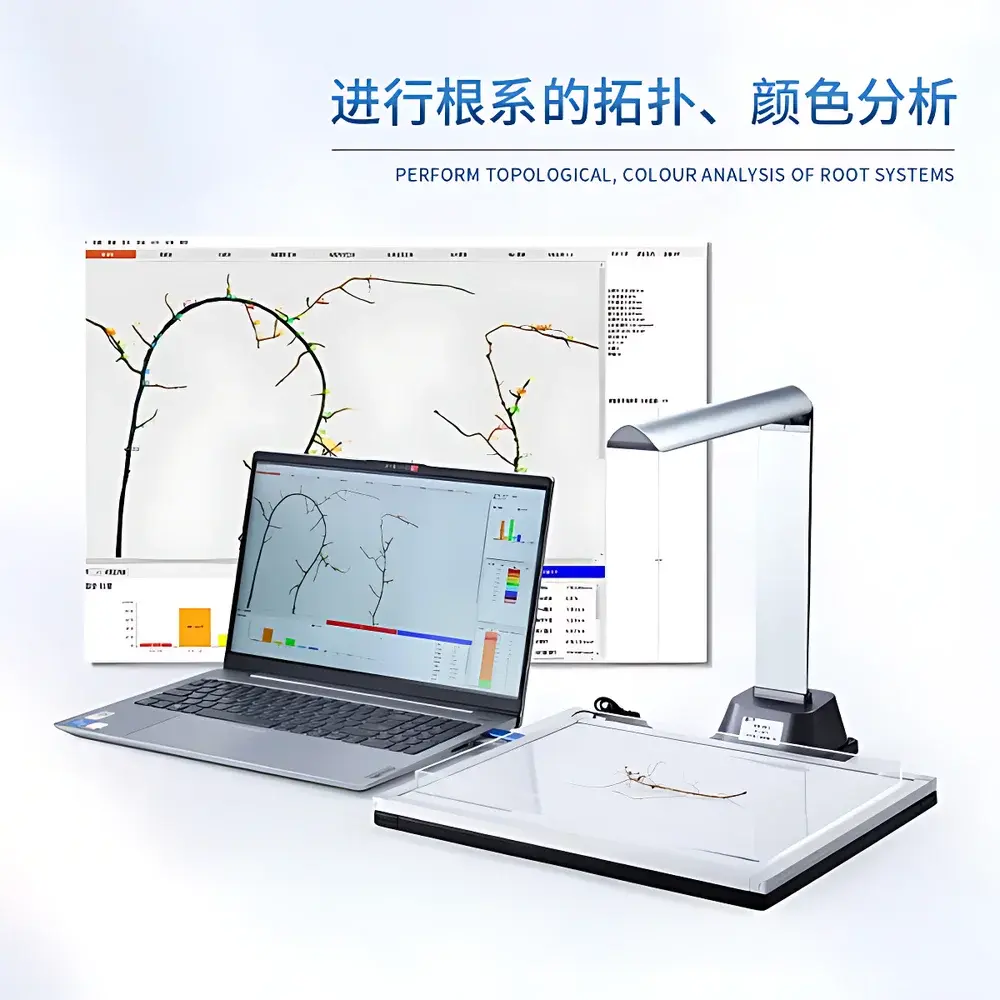
- Color-based phenotypic stratification: RGB channel decomposition enables classification of root segments by hue/saturation/value thresholds—supporting differentiation of senescent, nodulated, or pathogen-affected tissues
- Topological graph generation: outputs adjacency matrices, connection degree, branching angles, and segment-wise metrics—including user-selectable sub-segment extraction with full parameter re-computation
- Interactive correction toolkit: real-time fork merging, branch splitting, and connection editing with full undo/redo stack and versioned annotation layers
- Batch processing engine with metadata tagging: preserves sample ID, treatment group, imaging date/time, operator ID, and instrument calibration status for traceability
- Cloud-integrated data repository: encrypted HTTPS upload to role-based web portal with configurable retention policies and ISO/IEC 27001-aligned access controls
Sample Compatibility & Compliance
The IN_GX01 is validated for use with dicot and monocot species whose cleaned root systems fit within the A4 imaging plane—including Arabidopsis thaliana, Zea mays, Oryza sativa, Glycine max, Triticum aestivum, and Medicago truncatula. It accepts roots preserved in water, ethanol, or FAA fixative, provided surface moisture is blotted prior to imaging. The system does not support in-soil or hydroponic real-time imaging; it is designed exclusively for ex situ, post-harvest analysis. All software-generated reports include embedded timestamps, hash-verified calibration logs, and user-authenticated session records—facilitating alignment with OECD Test Guidelines 113 (Root Elongation) and ASTM E2924-22 (Standard Practice for Digital Image-Based Plant Phenotyping). While not FDA 21 CFR Part 11-certified out-of-the-box, the audit trail architecture supports customization for GxP environments upon customer request.
Software & Data Management
The IN_GX01 runs on a Windows-native application built with Qt 6 and OpenCV 4.8, featuring a modular plugin framework for future algorithm upgrades. Raw images are stored losslessly in TIFF format; processed results are exported as Excel-compatible .xlsx files containing tabular trait summaries, scatter plots, histogram distributions, and annotated PNG overlays. Each analysis session generates a structured JSON manifest file compliant with MIAPPE v1.1 (Minimum Information About a Plant Phenotyping Experiment), enabling interoperability with BreedBase, BrAPI, and Gramene databases. Cloud synchronization uses TLS 1.3 encryption and OAuth 2.0 token-based authentication. Local backups adhere to NIST SP 800-88 Rev. 1 sanitization protocols. Software updates are delivered via signed package repositories with SHA-256 integrity verification.
Applications
- Genetic Mapping & QTL Discovery: Enables high-throughput screening of recombinant inbred lines (RILs) or near-isogenic lines (NILs) under controlled abiotic stress (drought, low N/P, salinity) to identify root architecture QTLs linked to resource-use efficiency
- Root-Microbe Interaction Studies: Quantifies nodule number, distribution density, and spatial clustering relative to primary root axes—supporting functional characterization of rhizobial or mycorrhizal symbioses
- Eco-physiological Modeling: Supplies empirical input parameters (e.g., root length density, branching frequency, diameter taper rate) for HYDRUS-1D, R-SWMS, and OpenSimRoot simulations
- Breeding Program Integration: Interfaces with field-based phenotyping platforms via standardized trait ontologies (TO, PO, EO), allowing cross-environment correlation of above- and below-ground performance
- Soil-Plant Continuum Research: Supports comparative analysis of root responses across soil textures, compaction gradients, or organic matter amendments—when paired with complementary rhizobox or minirhizotron datasets
FAQ
What root preparation protocol is required prior to imaging?
Roots must be thoroughly washed free of soil particles, gently blotted to remove excess surface water, and laid flat on the imaging stage without overlapping or folding. No staining or clearing agents are needed.
Can the system analyze live roots in transparent media such as agar or gellan gum?
No—the IN_GX01 is designed for static, two-dimensional planar imaging of cleaned, air-dried or water-submerged roots. It does not support time-lapse or refractive-index-compensated imaging through semi-solid matrices.
Is raw image data retained after analysis?
Yes. All original TIFF captures, intermediate binary masks, skeletonized graphs, and final annotated overlays are preserved in the local project folder unless explicitly deleted by the user.
Does the software support batch export to LIMS or ELN systems?
Yes—via configurable CSV/XLSX templates and optional BrAPI-compliant REST API endpoints (available under enterprise licensing agreement).
What level of technical support is included with purchase?
COMECAUSE provides remote diagnostics, firmware/software updates, and application-specific protocol consulting for 24 months. On-site training and SOP development services are available as billable add-ons.





