
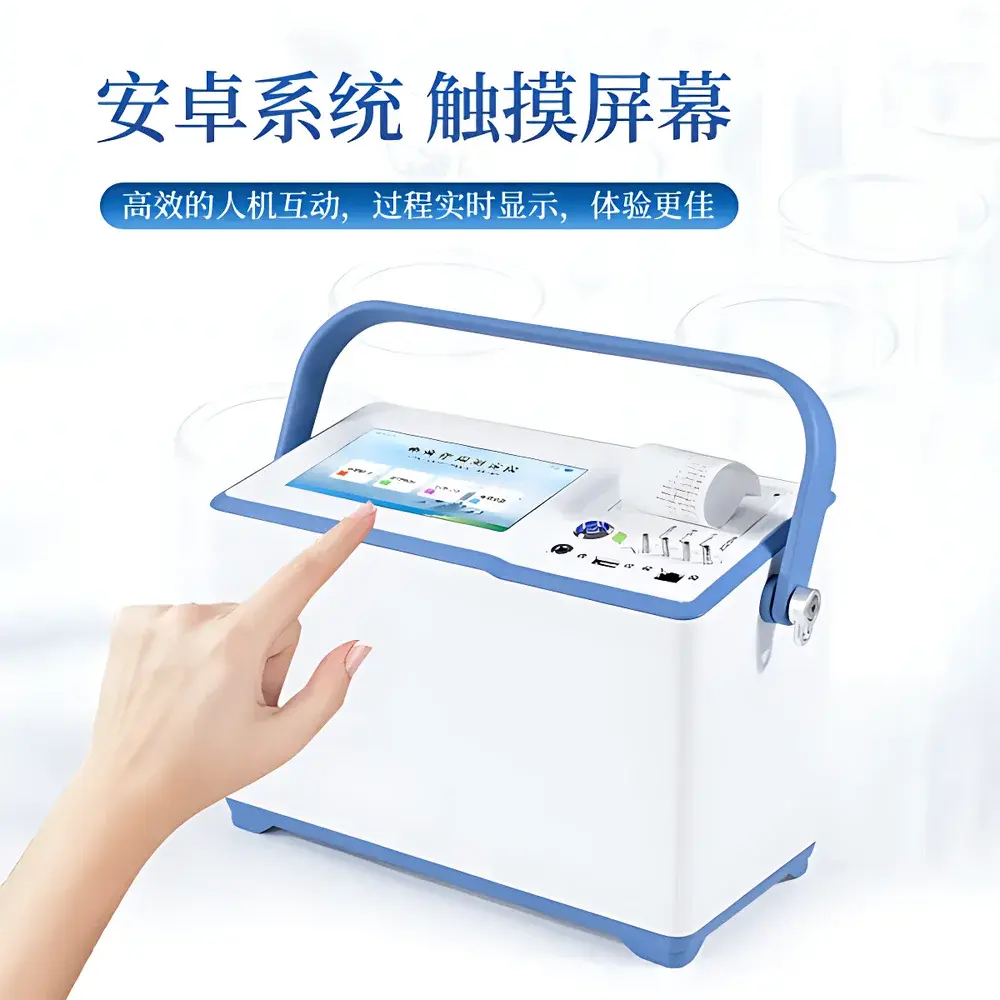
COMECAUSE IN~GH3 Portable Photosynthesis System
| Brand | COMECAUSE |
|---|---|
| Origin | Shandong, China |
| Manufacturer Type | Direct Manufacturer |
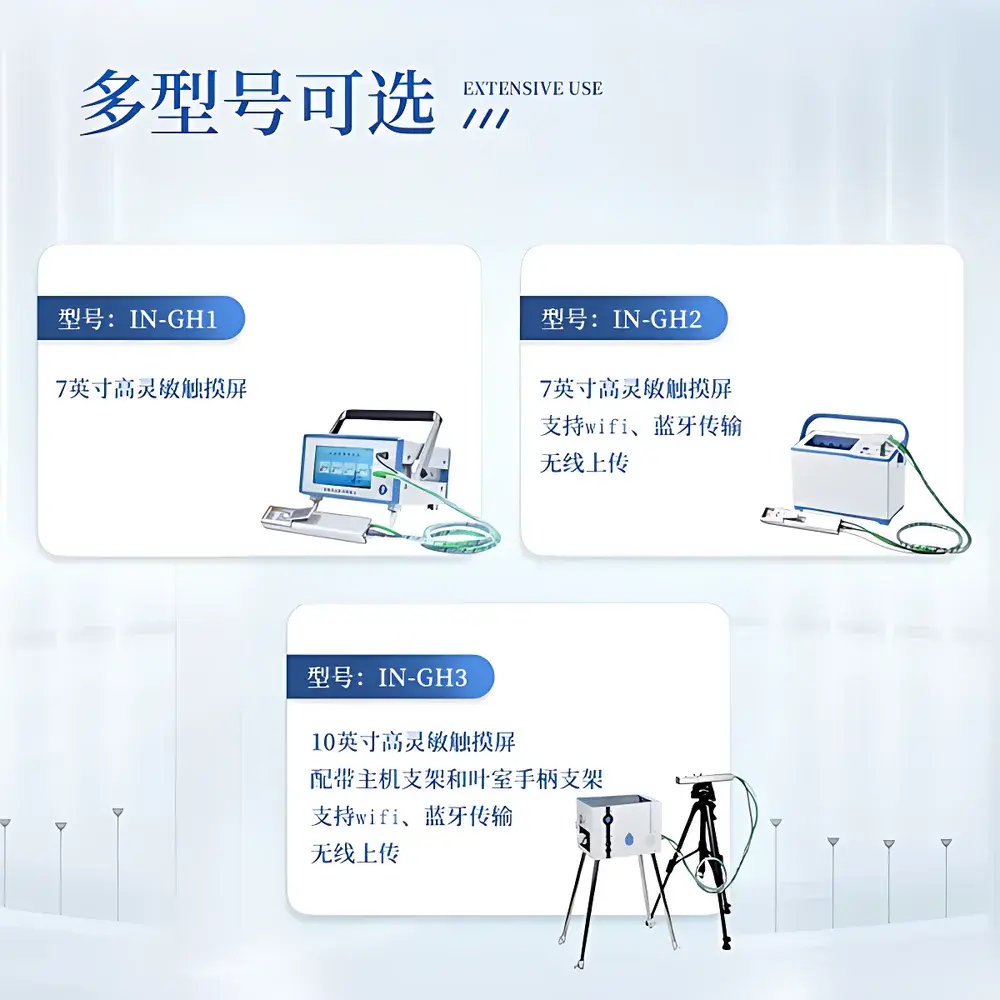
| Model | IN~GH3 |
| CO₂ Measurement Range | 0–3000 µmol/mol (ppm) |
| CO₂ Accuracy | ≤3% FS |
| Operating Temperature Range | 0–50 °C |
| Relative Humidity Range | 0–100% RH |
| PAR Range | 0–3000 µmol/(m²·s) |
| Battery Life | 10–12 h (fully charged) |
| Display | 10-inch capacitive touchscreen |
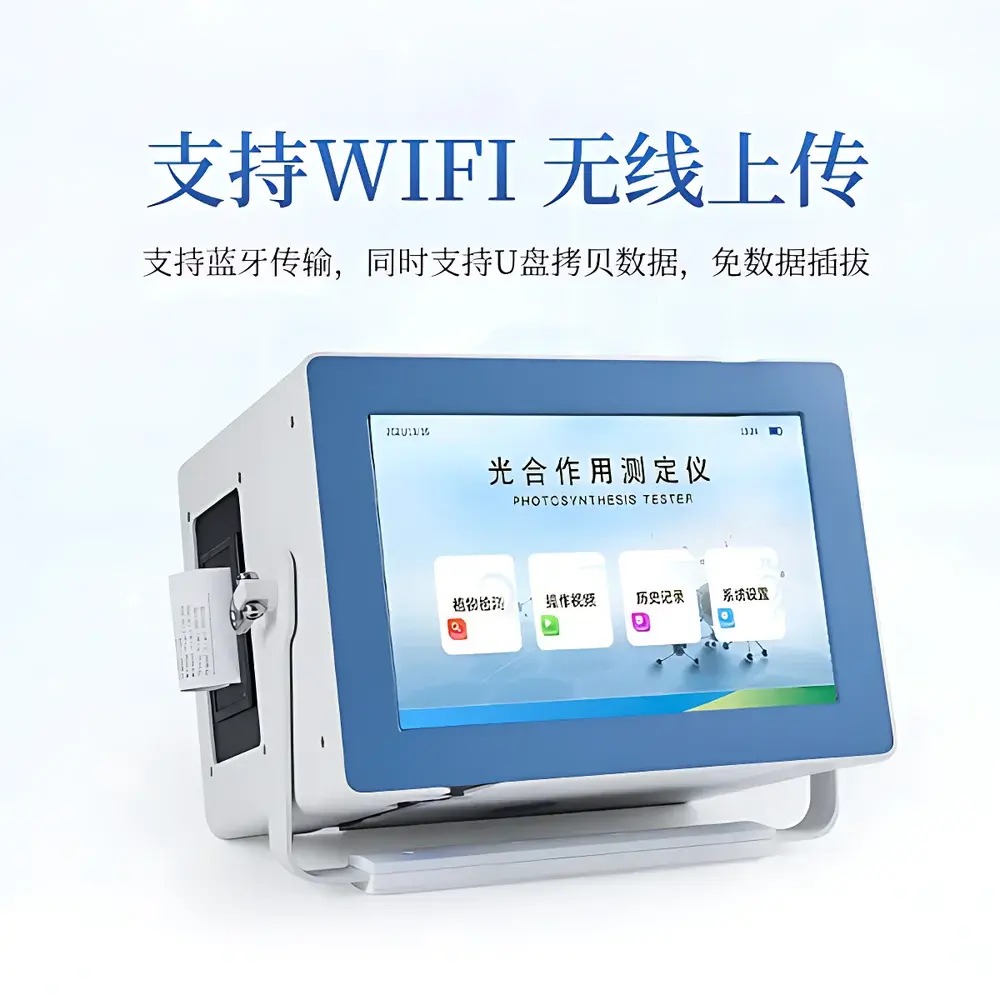
| Data Connectivity | Wi-Fi, Bluetooth, USB, Ethernet |
| Cloud Platform Integration | Yes |
| Weight | 4.5 kg (main unit), 0.7 kg (handheld chamber handle) |
| Dimensions (H×W×D) | 325 × 160 × 230 mm |
Overview
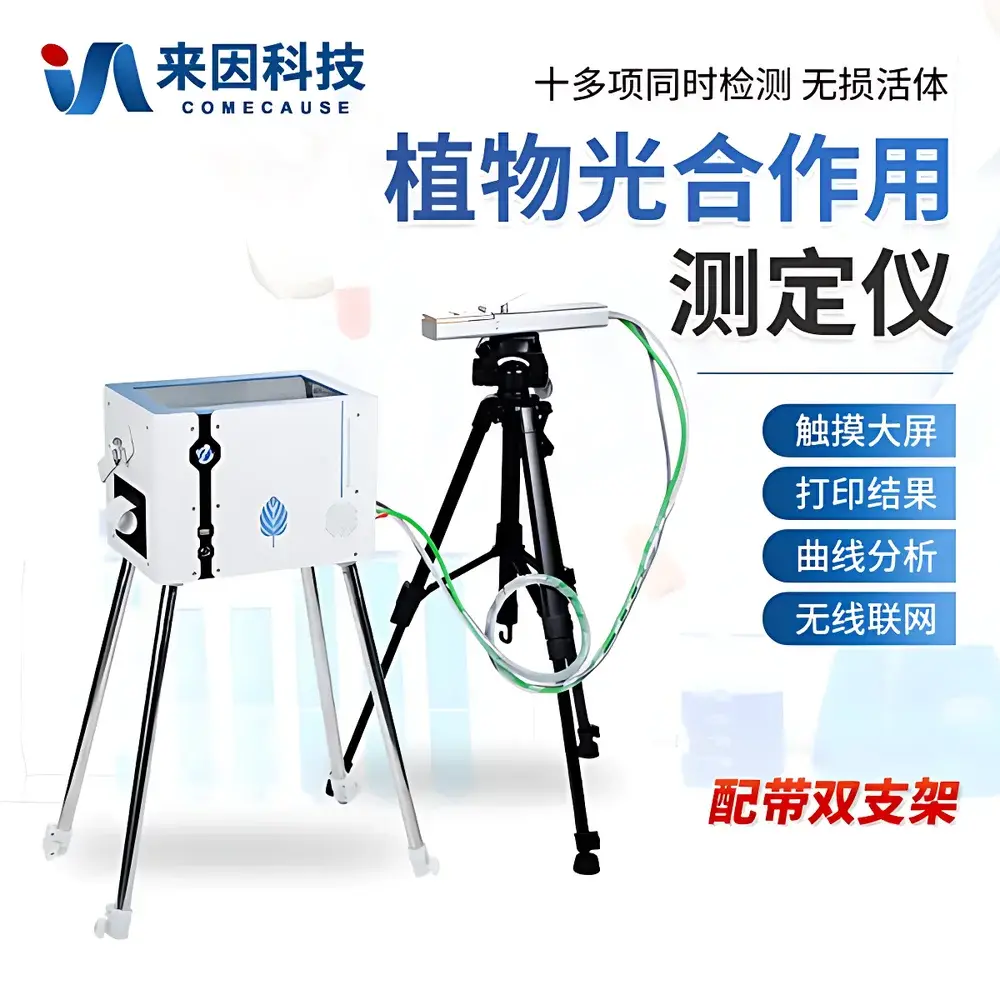
The COMECAUSE IN~GH3 Portable Photosynthesis System is a field-deployable, closed-path infrared gas analyzer (IRGA)-based instrument engineered for real-time, non-destructive measurement of leaf-level photosynthetic gas exchange under natural or controlled environmental conditions. It operates on the principle of dual-wavelength non-dispersive infrared absorption spectroscopy to quantify CO₂ concentration differentials across a leaf chamber, enabling calculation of net photosynthetic rate (Pn), stomatal conductance (Gs), transpiration rate (Tr), intercellular CO₂ concentration (Ci), and derived physiological indices including water use efficiency (WUE), dark respiration rate (Rd), and transpiration ratio (TR). Designed for rigorous plant physiology research, the system integrates high-precision environmental sensing—ambient and cuvette temperature/humidity, leaf surface temperature, atmospheric pressure, and photosynthetically active radiation (PAR)—to support robust environmental correction and physiological interpretation in accordance with established methodologies described in ASTM E2913-13 and ISO 11737-1 guidelines for biological response assessment.
Key Features
- Android-based operating system with ARM Cortex-A7 quad-core processor (RK3288, 1.88 GHz), 1 GB RAM and 16 GB onboard storage for local data logging and real-time visualization
- Dual-wavelength IRGA CO₂ sensor with integrated temperature stabilization and barometric pressure compensation, delivering ≤3% full-scale accuracy across 0–3000 µmol/mol range
- 10-inch high-resolution capacitive touchscreen with intuitive UI; supports dynamic real-time curve plotting (e.g., Pn vs. PAR, Tr vs. RH)
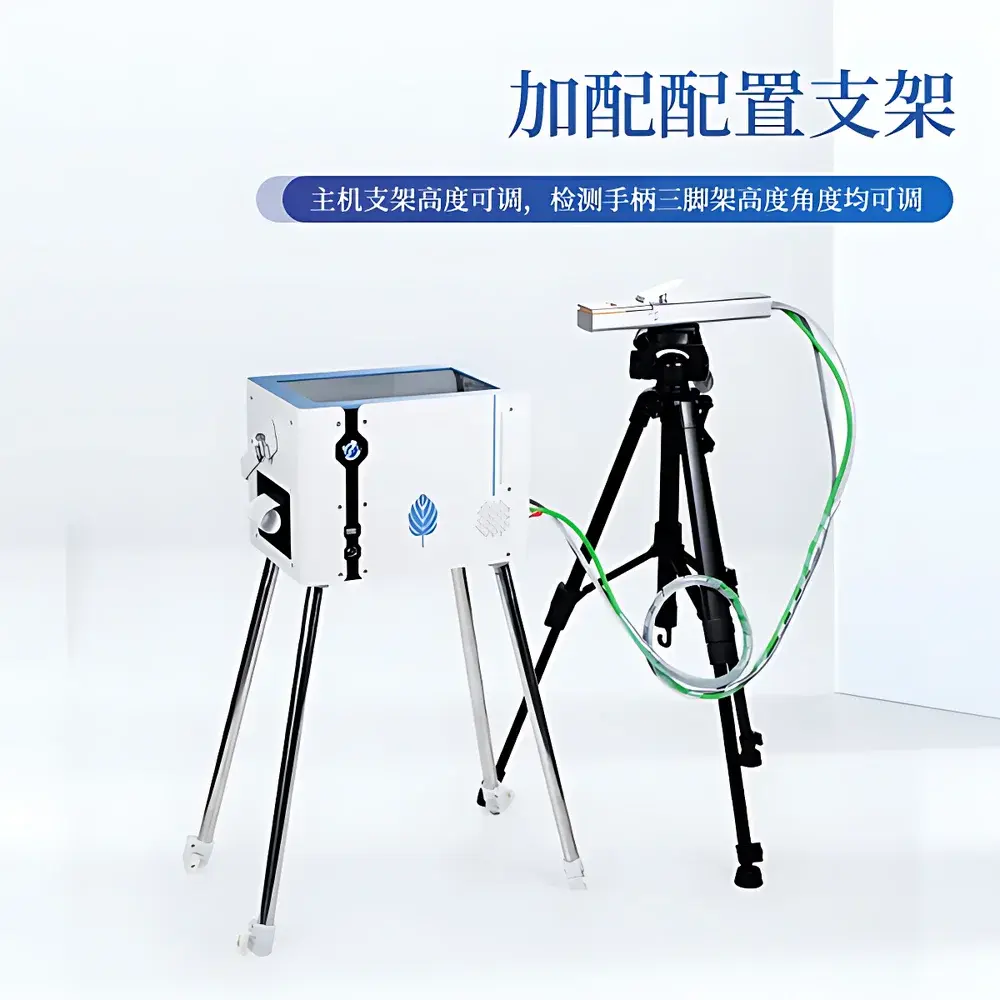
- Modular handheld leaf chamber (3.3 × 3.3 cm standard aperture) with adjustable tripod mount and ergonomic handle for single-operator field deployment
- Comprehensive environmental monitoring suite: ambient/cuvette T/RH (±0.2 °C / ±1% RH), leaf surface temperature (±0.2 °C), atmospheric pressure (30–110 kPa, ±0.06 kPa), and PAR (0–3000 µmol/(m²·s), ±5 µmol/(m²·s))
- Extended battery life: 8000 mAh Li-ion pack enables 10–12 hours of continuous operation in remote field settings without external power
- Multi-modal data export: direct wireless transmission via Wi-Fi/Bluetooth to cloud platform; offline transfer via plug-and-play USB flash drive (no driver required)
Sample Compatibility & Compliance
The IN~GH3 accommodates broad leaf morphology—including monocot and dicot species, herbaceous and woody plants—with minimal leaf area requirements (≥10.89 cm²). Its sealed cuvette design ensures stable boundary layer control and minimizes leakage-induced measurement artifacts. All sensors undergo factory calibration traceable to NIST-certified reference standards. The system complies with GLP-aligned data integrity requirements: time-stamped measurements, operator ID tagging, and audit-trail-enabled cloud synchronization support regulatory readiness for USDA ARS, FAO, and academic grant-funded projects. While not FDA 21 CFR Part 11 certified out-of-box, its encrypted data pipeline and user-access controls facilitate customization for GxP environments upon request.
Software & Data Management
Embedded firmware supports on-device data visualization, multi-curve overlay (up to 8 concurrent datasets), and customizable annotation fields for experimental metadata (e.g., cultivar, treatment, phenological stage). Raw and derived parameters—including Pn, Gs, Tr, Ci, WUE, Rd, and TR—are exported in CSV and Excel-compatible formats. The optional COMECAUSE Cloud Platform provides secure HTTPS-hosted dashboards with role-based access, automated trend analysis, geotagged sampling maps, and API-driven integration with R, Python, or MATLAB for advanced statistical modeling (e.g., Farquhar-von Caemmerer-Berry model fitting). All cloud-uploaded data retain immutable timestamps and version-controlled revision history.
Applications
- Field-based screening of drought, heat, or salinity stress responses across crop germplasm collections
- Long-term monitoring of carbon assimilation dynamics in agroforestry systems and grassland restoration trials
- Validation of canopy-scale eddy covariance flux tower data through ground-truthing campaigns
- Teaching laboratories: hands-on instruction in plant ecophysiology, photosynthetic biochemistry, and climate–plant interaction modeling
- Controlled-environment studies in growth chambers and greenhouses where rapid, repeatable leaf-level quantification is required
- Post-harvest physiology assessments of horticultural commodities under modified atmosphere storage
FAQ
What environmental corrections are applied during Pn calculation?
The system applies real-time corrections for cuvette humidity, leaf temperature, atmospheric pressure, and CO₂ diffusion coefficients using the Ball–Berry conductance model framework and standard thermodynamic equations per von Caemmerer & Farquhar (1981).
Can the IN~GH3 operate in low-light or shaded field conditions?
Yes—the PAR sensor maintains linearity down to 1 µmol/(m²·s), and the IRGA’s signal-to-noise ratio remains sufficient for reliable CO₂ differential detection even at sub-50 µmol/(m²·s) irradiance.
Is firmware upgradable in the field?
Yes—over-the-air (OTA) updates are supported via Wi-Fi; users receive version notifications and can schedule installation without requiring PC connectivity.
Does the system support automatic light-response curve generation?
Yes—programmable PAR ramping (e.g., 0 → 2000 µmol/(m²·s) in 10-step increments) with auto-triggered data capture at each irradiance level is fully configurable in the Android interface.
How is data security handled on the cloud platform?
All data transmissions use TLS 1.2+ encryption; stored datasets reside in ISO 27001-compliant AWS S3 buckets with AES-256 server-side encryption and granular IAM policy enforcement.





