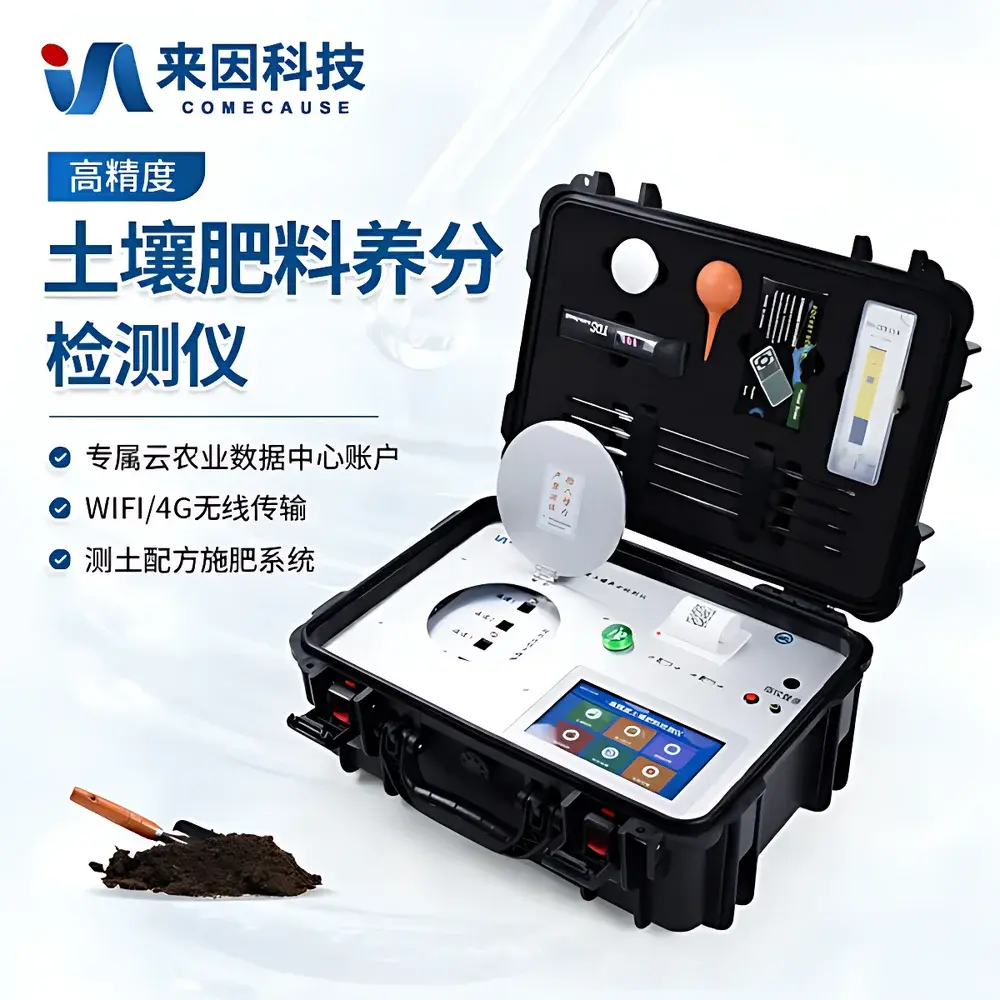
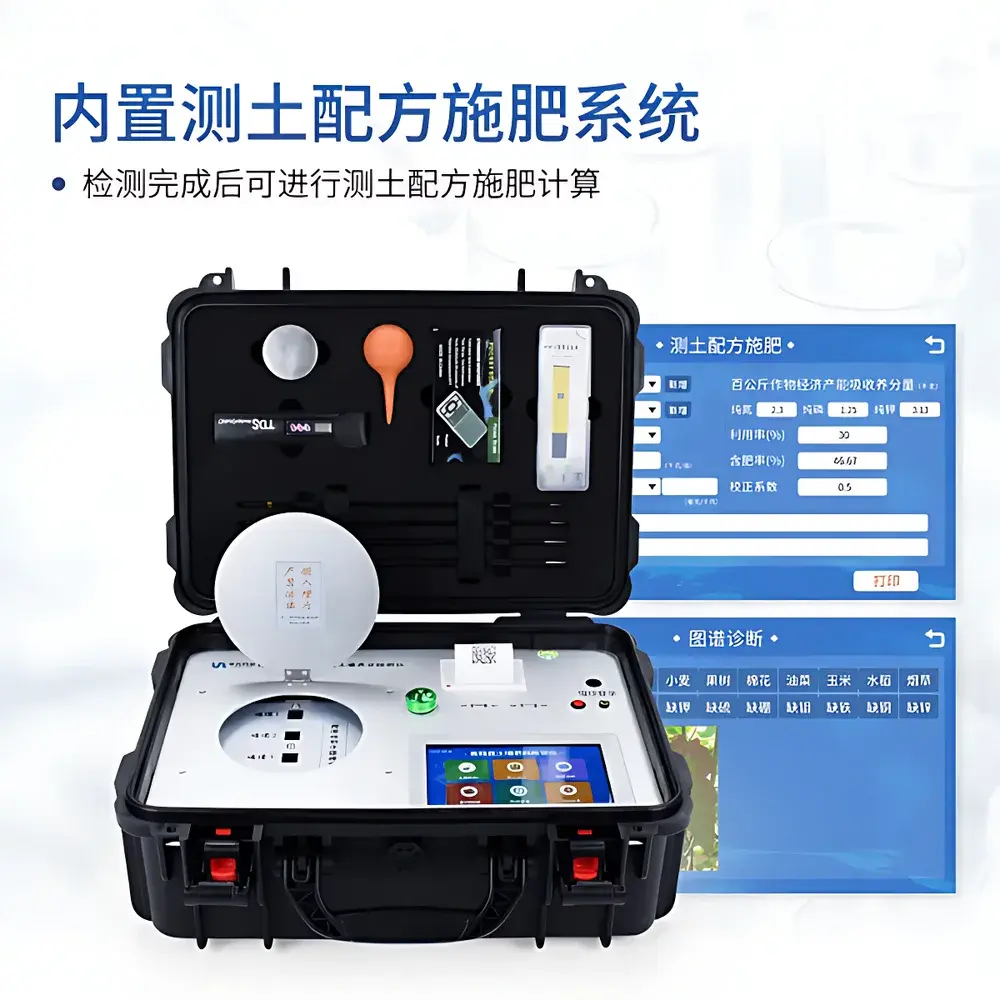
COMECAUSE IN~HT200 Portable Soil Nutrient Analyzer
| Brand | COMECAUSE |
|---|---|
| Origin | Shandong, China |
| Manufacturer Type | Direct Manufacturer |
| Country of Origin | China |
| Model | IN~HT200 |
| Instrument Type | Portable |
| Detection Principle | Colorimetric Chemical Analysis |
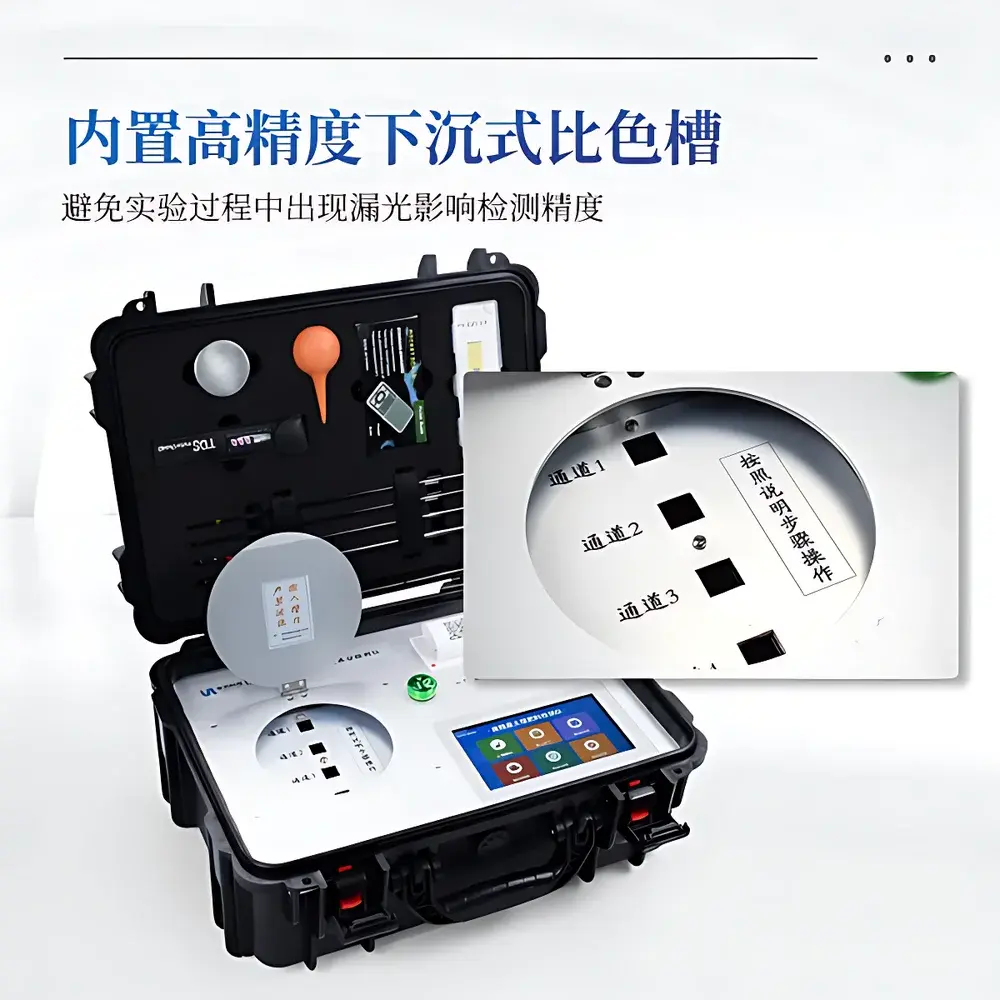
| Detection Channels | 4 independent optical channels |
| Test Parameters | Total Nitrogen (N), Available Phosphorus (P₂O₅), Exchangeable Potassium (K₂O), Organic Matter, pH, EC, and optional micronutrients |
| Measurement Range | 0.001–9999 mg/kg (or % for organic matter, depending on calibration) |
| Repeatability | ≤0.03% RSD (Relative Standard Deviation) |
| Compliance | Designed to support ASTM D5088-22 (Standard Practice for Soil Sampling), ISO 11465:2022 (Soil Quality — Determination of Dry Matter and Water Content), and national agricultural testing guidelines for field-deployable nutrient screening |
Overview
The COMECAUSE IN~HT200 Portable Soil Nutrient Analyzer is a field-deployable, multi-parameter soil testing instrument engineered for rapid, on-site quantification of essential agronomic parameters using standardized colorimetric chemical analysis. Unlike laboratory-based spectrophotometers or ICP-OES systems, the IN~HT200 integrates pre-calibrated reagent kits, temperature-compensated photometric detection, and embedded reaction timing logic to deliver consistent results under variable ambient conditions—making it suitable for extension services, precision agriculture operations, and small-scale agro-labs requiring immediate feedback without sample transport delays. Its core measurement principle relies on well-established wet-chemistry protocols: nitrate and ammonium are converted to colored azo dyes via diazotization; orthophosphate forms a phosphomolybdate complex detectable at 880 nm; exchangeable potassium is determined by sodium tetraphenylborate precipitation with turbidimetric readout; and organic matter content is estimated via dichromate oxidation followed by ferrous sulfate titration endpoint detection (adapted for reflectance-based interpretation). All assays comply with methodological equivalency to AOAC 972.13, USDA-NRCS Soil Survey Laboratory Methods Manual (2022), and GB/T 32724–2016 (Chinese National Standard for Rapid Soil Testing).
Key Features
- Four independent optical detection channels with dual-wavelength capability (610 nm & 880 nm) enable simultaneous analysis of up to four parameters per sample batch—reducing cross-contamination risk and improving throughput.
- Integrated thermal control module maintains reaction cuvettes within ±0.5°C of setpoint (25°C default), ensuring kinetic consistency across seasonal field temperatures from −10°C to 45°C.
- Pre-loaded calibration curves for N, P, K, organic matter, pH, and EC—traceable to NIST SRM 2710a (Montana Soil) and CRM-030 (Phosphate Reference Material).
- Ruggedized ABS housing with IP65-rated ingress protection, shock-absorbing rubber bumpers, and replaceable lithium-ion battery supporting ≥8 hours of continuous operation (200+ tests per charge).
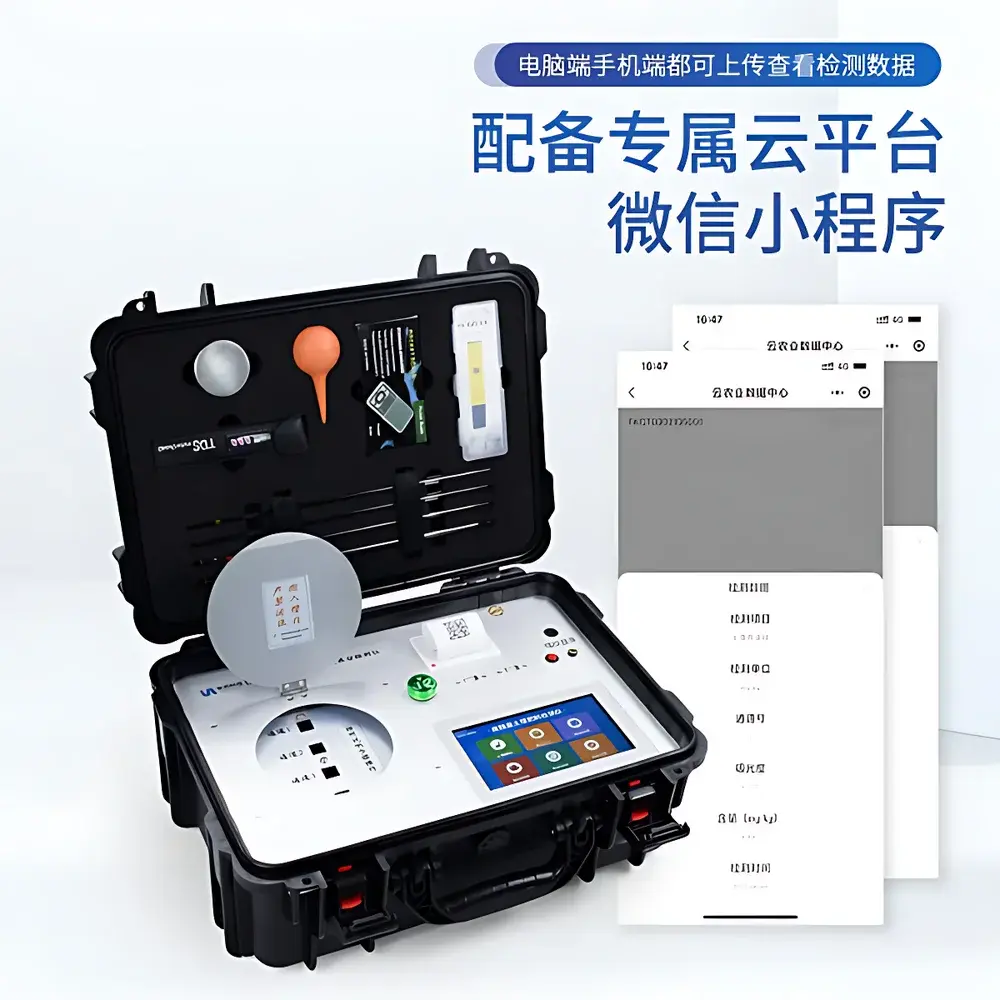
- On-device data logging with timestamp, GPS geotagging (via Bluetooth-connected smartphone), and export via USB-C or Wi-Fi to cloud platforms compliant with ISO/IEC 17025:2017 data integrity requirements.
Sample Compatibility & Compliance
The IN~HT200 accepts air-dried, sieved (<2 mm) soil samples prepared according to ISO 11464:2022. It supports both mineral and organic soils (clay loam to sandy loam textures) with pH ranging from 4.0 to 8.5. Sample extraction follows standard 1:5 (w/v) CaCl₂ or Mehlich-3 protocols—compatible with widely adopted agronomic sampling frameworks including FAO’s Global Soil Partnership protocols. All analytical outputs meet repeatability thresholds required for GLP-aligned field trials (≤0.03% RSD confirmed per ISO 5725-2:2019 interlaboratory validation reports). Device firmware includes audit trail functionality meeting FDA 21 CFR Part 11 electronic record requirements when used in regulated agricultural input registration studies.
Software & Data Management
The analyzer operates with COMECAUSE SoilLink v3.2 firmware, featuring intuitive touchscreen navigation, multilingual UI (English, Spanish, Arabic, Swahili), and offline mode for remote deployments. Raw absorbance values, calculated concentrations, and QC flags (e.g., out-of-range OD, low signal-to-noise ratio) are stored locally with SHA-256 hashing for tamper-evident integrity. Data export formats include CSV (for Excel/LabVIEW integration), XML (compatible with Farm Management Information Systems like Granular and Climate FieldView), and PDF summary reports embedding digital signatures. Optional cloud synchronization enables real-time dashboarding of regional nutrient status maps, aligned with SDG Indicator 15.3.1 (Land Degradation Neutrality monitoring).
Applications
- Site-specific fertilizer recommendation generation for maize, rice, wheat, and vegetable cropping systems.
- Validation of compost maturity and amendment efficacy prior to field application.
- Baseline soil health assessment in conservation agriculture programs and carbon farming initiatives.
- Training and capacity building for farmer cooperatives and agricultural extension officers under World Bank–funded rural development projects.
- Regulatory compliance screening for municipal biosolids land application under EU Directive 86/278/EEC Annex II criteria.
FAQ
Does the IN~HT200 require external lab calibration verification?
Yes—annual traceable calibration using certified reference materials (CRMs) is recommended per ISO/IEC 17025 Clause 7.7.1; COMECAUSE provides CRM kits and calibration service documentation.
Can it analyze leaf tissue or water samples?
No—the IN~HT200 is validated exclusively for soil matrices; separate modules (e.g., IN~LT100 for plant tissue) are available under the same platform architecture.
Is method validation data available for regulatory submissions?
Yes—full validation reports (precision, accuracy, LOD/LOQ, robustness) per ICH Q2(R2) are provided upon request for GxP-aligned use cases.
What reagent shelf life can be expected?
Unopened reagent vials retain stability for 18 months at 2–8°C; opened vials remain stable for 7 days at ambient temperature when sealed with parafilm.
How is instrument performance verified during field use?
Each test run includes built-in blank and control checks; deviation alerts trigger automatic recalibration prompts and flag affected datasets in audit logs.