


COMECAUSE IN*HT200 Portable Soil Nutrient Analyzer with Integrated Fertilizer & Crop Tissue Testing Capability
| Brand | COMECAUSE |
|---|---|
| Origin | Shandong, China |
| Manufacturer Type | Direct Manufacturer |
| Country of Origin | China |
| Model | IN*HT200 |
| Instrument Type | Portable |
| Detection Principle | Colorimetric Chemistry (Absorbance-Based Quantification) |
| Detection Channels | 4 Fixed-Position Solid-State Cuvette Slots |
| Test Parameters | N, P, K, Organic Matter, pH, EC, Moisture, Ca, Mg, S, Si, B, Fe, Cu, Mn, Zn, Cl, NO₃⁻, NH₄⁺, Total N/P/K, Water-Soluble Humic Substances, and More |
| Measurement Range | 0.001–9999 (unitless absorbance-derived scale, calibrated to mg/kg or % as applicable) |
| Repeatability | ≤0.03% (as CV, measured with K₂Cr₂O₇ standard solution) |
Overview
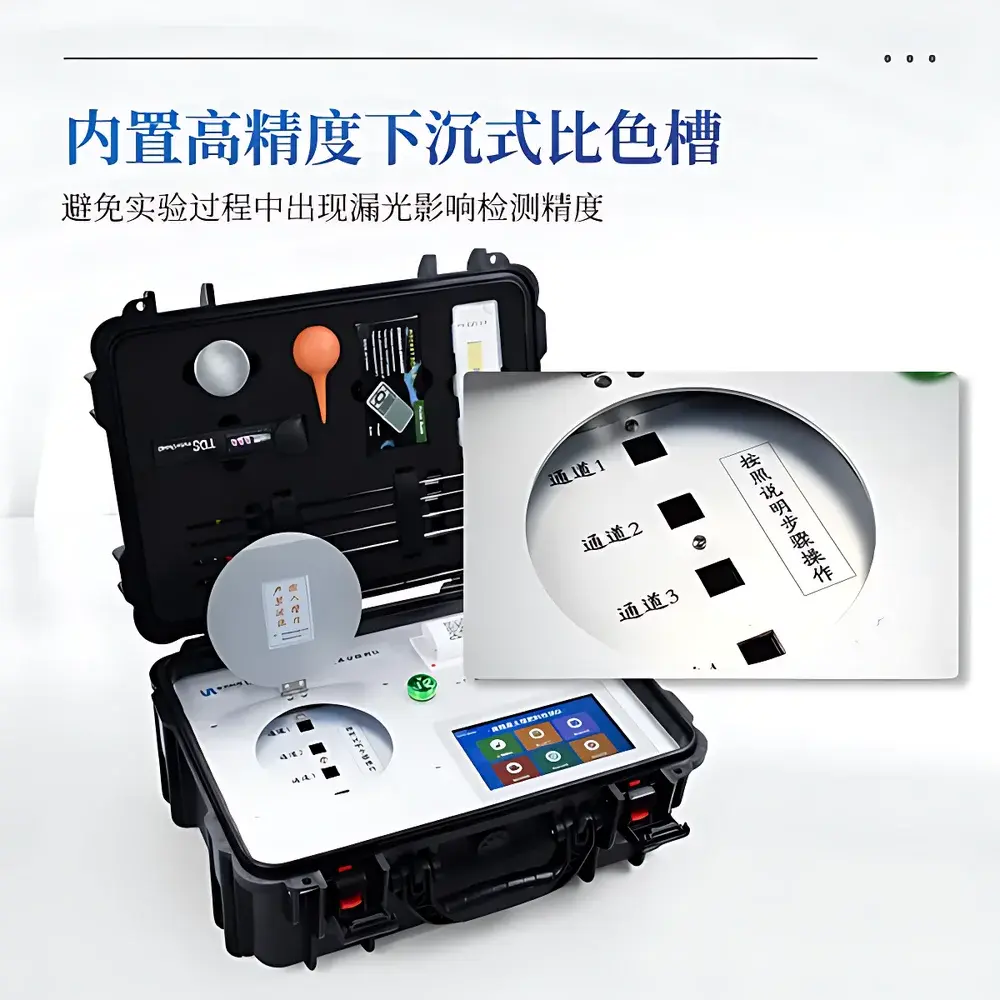
The COMECAUSE IN*HT200 is a field-deployable, multi-parameter soil nutrient analyzer engineered for precision agricultural diagnostics and on-site fertilizer formulation support. It operates on standardized colorimetric chemistry principles—quantifying analyte concentrations via spectrophotometric absorbance measurements at four discrete, thermally stabilized wavelengths (680 nm red, 420 nm blue, 510 nm green, 590 nm orange). Each optical channel integrates a fixed-position, solid-state cuvette module housed within a light-tight,下沉式 (sunken) sealed chamber—eliminating mechanical alignment drift and ensuring long-term photometric stability. Designed for compliance with routine agronomic testing protocols—including those aligned with ISO 11260 (soil phosphorus), ISO 14253-1 (measurement uncertainty), and ASTM D512/D519 (water-soluble nutrients)—the IN*HT200 delivers traceable, reproducible results without laboratory infrastructure. Its core function is not merely measurement, but closed-loop decision support: integrating real-time soil, fertilizer, and crop tissue data to generate empirically grounded, yield-targeted nutrient recommendations.
Key Features
- Android 5.1 operating system powered by quad-core CPU (≥1.8 GHz) and 16 GB internal storage—enabling responsive UI navigation, offline protocol execution, and local data caching without latency.
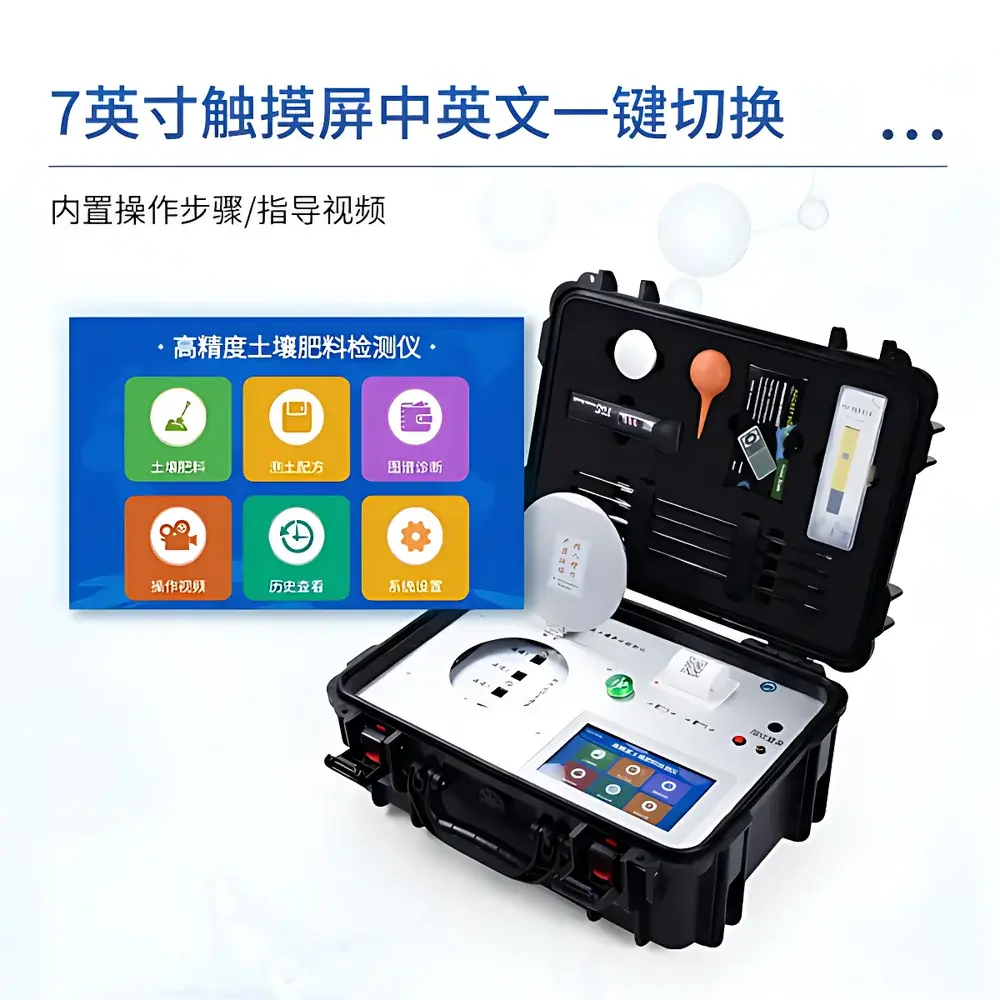
- 7.0-inch high-resolution TFT-LCD display (1024 × 600) with adjustable backlight—optimized for daylight readability during field operations.
- Dual authentication: password + fingerprint login with role-based multi-user account management—ensuring audit-ready data ownership and access control per GLP-aligned workflows.
- Integrated GPS module providing real-time georeferenced coordinates (WGS84) for spatially explicit sampling records—critical for zone-based nutrient mapping and regulatory traceability.
- Onboard thermal printer generating tamper-evident reports including sample ID, test parameters, units (e.g., mg/kg), absorbance values, calculated concentrations, QR-coded metadata, operator ID, timestamp, and GPS coordinates.
- Four independently calibrated LED light sources (±2 nm wavelength tolerance) with >100,000-hour service life—guaranteeing spectral consistency across field deployments and multi-year calibration intervals.
- IP65-rated ruggedized PVC housing with integrated carry handle—validated for shock resistance, dust ingress protection, and operation in ambient temperatures from −10 °C to 50 °C.
- Rechargeable 4800 mAh Li-ion battery supporting ≥10 hours continuous operation; AC/DC dual-power architecture with voltage monitoring and auto-save power-fail recovery.
Sample Compatibility & Compliance
The IN*HT200 supports direct analysis of air-dried, sieved soil extracts (e.g., Mehlich-3, Olsen, ammonium acetate), liquid fertilizers (NPK solutions, humic concentrates), aqueous plant tissue digests, and irrigation water. It accommodates standard agronomic extraction methods—including the Tyurin (organic matter), Kjeldahl (total N), and molybdenum blue (phosphate) assays—without modification to reagent chemistry. All reported metrics adhere to internationally recognized tolerances: pH accuracy ±0.1 (1–14 range), EC error ±2% (0–9999 ppm), moisture error <0.5% (0–100%), and primary macronutrient (N/P/K) repeatability ≤1% RSD. The instrument’s firmware and software are validated against ISO/IEC 17025 documentation requirements, and its data structure conforms to FAO’s Digital Soil Mapping metadata standards. While not FDA 21 CFR Part 11 certified out-of-box, its audit trail functionality (timestamped user logins, GPS-stamped results, immutable print logs) provides foundational readiness for GxP-aligned environments.
Software & Data Management
Data acquisition, processing, and reporting occur through an embedded application that enforces procedural guidance—step-by-step visual prompts for sample preparation, reagent addition, and measurement sequence—reducing operator-dependent variability. All measurements are time- and location-stamped via onboard RTC and GPS. Raw absorbance data, processed nutrient concentrations, and diagnostic interpretations are stored locally and synchronized via Wi-Fi to a secure cloud-based Agricultural Data Hub. This hub provides role-based dashboards, CSV/XLSX export, cross-sample statistical comparison, historical trend visualization, and integration with third-party GIS platforms. A companion WeChat Mini-Program enables remote access to uploaded datasets, while built-in crop deficiency symptom atlases (covering N, P, K, Ca, Mg, S, Fe, Mn, Zn) support visual diagnosis via leaf image reference libraries. Firmware updates and method library expansions are delivered over-the-air.
Applications
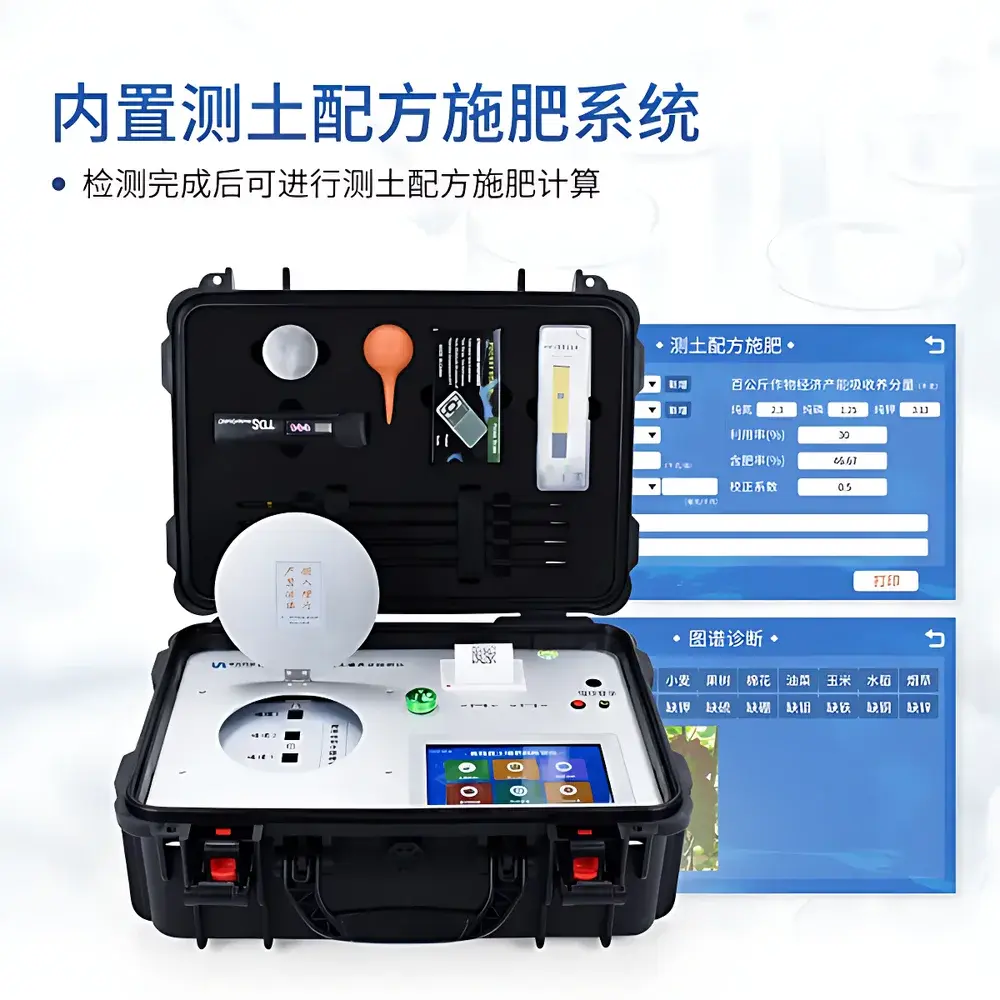
The IN*HT200 serves as a primary tool in precision agriculture extension services, cooperative farm networks, agrochemical QA/QC labs, and university extension programs. Typical use cases include: rapid pre-plant soil fertility screening across field zones; validation of commercial fertilizer batch homogeneity; in-season crop tissue nutrient status assessment (e.g., petiole nitrate monitoring); irrigation water quality verification prior to fertigation; organic amendment characterization (compost, manure, biochar); and participatory farmer training on nutrient budgeting. Its ability to compute site-specific, yield-targeted fertilizer prescriptions—using built-in databases of 100+ economic crops, regional response coefficients, and nutrient uptake curves—directly supports Sustainable Development Goal 2.4 (sustainable food production systems) and national soil health initiatives aligned with China’s “Soil Pollution Prevention and Control Action Plan.”
FAQ
What extraction methods are compatible with the IN*HT200?
The instrument accepts standard aqueous extracts prepared using Mehlich-3, Olsen, ammonium acetate, or Kjeldahl digestion protocols. Pre-packaged reagent kits (sold separately) ensure method consistency.
Does the device require daily calibration?
No. The optical system features automatic zero-point referencing before each measurement cycle. Factory calibration is performed at manufacture; field recalibration is only required annually or after physical impact.
Can it measure heavy metals or pesticide residues?
No. The IN*HT200 is optimized for macro- and micronutrient cations/anions and organic carbon proxies. Heavy metal analysis requires AAS/ICP-OES instrumentation.
Is cloud data storage compliant with GDPR or China’s PIPL?
Data residency options include region-locked private cloud instances. End-to-end encryption and anonymized user identifiers meet baseline requirements under both frameworks.
What is the warranty coverage and service model?
Three-year comprehensive hardware warranty; lifetime technical support; repair service with parts-cost-only billing; free remote troubleshooting and method consultation.
Related Products







